 Preview
 Send
Send Share
Share
 Details

 Download
 Similars
 X-Ray
X-Ray Diaporama
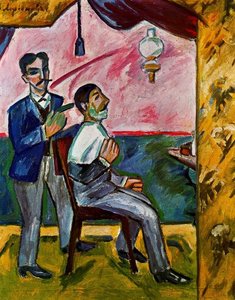
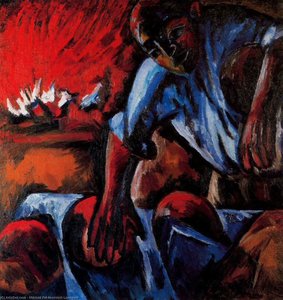
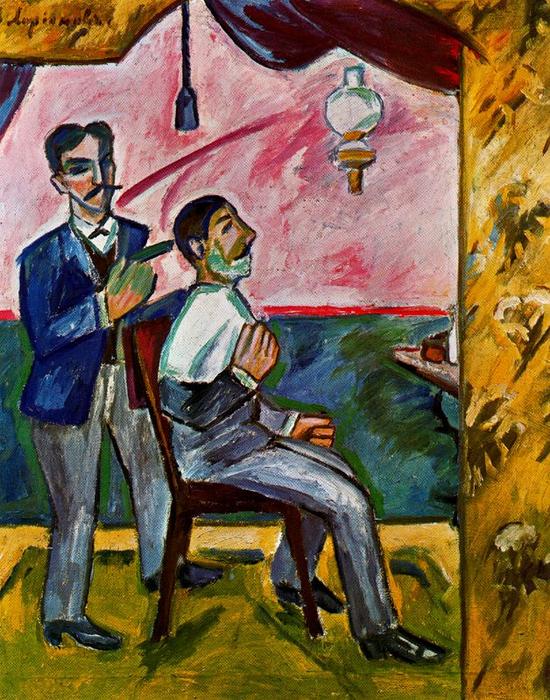
Gentlemen Barber


 Read More
Giclée / Art Print
Museum-quality giclée or canvas print with fast production and flexible finish options. ( Buy Hand Made Painting Buy Image)




P118B $10

P118H $10

P118W $10

P438Z $10

P508JH $12

P508YH $12

P805H $10

P805Z $10

P919BZ $10

P919G $10

P919XJ $10

P959ZH $10

P968JZ $12

W106C $8

W218G $10

W218JH $8

W218Y $10

W307PJ $10

W316G $10

W316PJ $8

W316Y $10

W398PJ $8

W4111J $10

W500HY $15

W500JH $15

W692G $12

W849H $8

W940BG $15

W953PJ $8




Pick from our preset sizes that match the artwork's original proportions.

You may enter your own dimensions to fit a specific frame or space. If your selected size does not match the original image's proportions, we will either crop the artwork or extend the image with a mirrored or solid-fill edge. A digital mockup will be sent for your approval before production begins.
Please note that the on-screen preview does not reflect the actual cropping or extension. Only the mockup will accurately show the final composition.
While custom sizes are available, we recommend selecting a dimension from the predefined list to preserve the original proportions.
Worldwide Delivery () in 2 weeks instead of standard 4/5 weeks. (23 August)

Free Worldwide Express Shipping

High-Quality Linen Canvas

Full Shipping Insurance

Customs Tax Refund Guarantee

True Color Matching Guarantee

60-Day Return Policy (Defects Only)

100% Money-Back Guarantee

Bulk Discount Offer
 Glass option is only available in size under 110 CM

Gentlemen Barber
Giclée / Art Print
Reproduction Size
-


Total Price
$ 63
Collectible Description
A Symphony of Color and Chaos: Reimagining the Barber Shop
In the vibrant, restless era of early 20th-century Russian modernism, Mikhail Fiodorovich Larionov captured a moment of mundane ritual and transformed it into an explosion of sensory experience. His masterpiece, Gentlemen Barber, is far more than a mere depiction of a commercial transaction; it is a rhythmic dance of light and pigment. At first glance, the viewer is met with a scene that feels both intimate and chaotic, as if peering through a window into a bustling, energetic world where the boundaries between reality and abstraction begin to dissolve. The painting centers on the quiet, focused interaction between a seated client and a standing barber, yet this central human connection is enveloped in a whirlwind of expressive color that defies the stillness of the subject matter.
The technique employed by Larionov is nothing short of visceral. Eschewing the polished, academic finish of his contemporaries, he embraced a style that leans toward the raw energy of Fauvism and the structural experimentation of early Abstract Expressionism. Through the use of thick, impasto brushstrokes, the artist creates a tactile landscape upon the canvas. One can almost feel the weight of the paint as it builds up in layers, particularly in the background where pinks, yellows, and blues collide with unbridled enthusiasm. These broken, expressive lines do not merely outline forms; they breathe life into them, creating a sense of perpetual motion that keeps the eye wandering across the canvas, discovering new textures and unexpected contrasts in every corner.
The Emotional Resonance of Light and Form
Beyond its technical prowess, Gentlemen Barber serves as a profound exploration of emotional impact over realistic representation. Larionov utilizes an unconventional color palette to evoke the psychological atmosphere of the setting. The intense, almost artificial lighting—suggestive of a low-hanging lamp within the shop—casts dramatic shadows that carve out simplified, abstracted volumes. This flattened perspective strips away the illusion of deep space, forcing the viewer to confront the painting's surface and its immediate emotional truth. The interplay between warm yellows and cool blues creates a visual tension that mirrors the dynamic energy of modern urban life.
For the discerning collector or interior designer, this piece offers a unique opportunity to introduce a focal point of profound character into a space. It is an artwork that demands attention, providing a sophisticated layer of complexity to any room. Whether placed in a contemporary gallery setting or a classic study, the painting’s ability to balance heavy texture with luminous color makes it a versatile and inspiring choice. To possess a reproduction of this work is to hold a fragment of the Russian avant-garde—a piece that celebrates the beauty found in the fragmented, the colorful, and the beautifully unrefined.
Related Artworks
Artist Biography
Early Life and Artistic Beginnings
Mikhail Fiodorovich Larionov, born in 1881 in Tiraspol, a city then within the Russian Empire (now Moldova), emerged as a pivotal figure in the tumultuous landscape of early 20th-century Russian art. His initial artistic training was somewhat unconventional; he briefly studied at the Moscow School of Painting, Sculpture and Architecture but found its academic rigor stifling. He gravitated instead towards the vibrant, independent atmosphere of private studios, notably those of Konstantin Korovin and Isaak Levitan—though his spirit proved too restless for strict adherence to their established styles. These early experiences instilled in him a foundational understanding of technique, yet Larionov quickly sought to forge his own path, one that would challenge conventional notions of representation and embrace the dynamism of modern life.
The Moscow art scene at the turn of the century was a breeding ground for innovation, and Larionov rapidly became immersed in its burgeoning avant-garde. He wasn’t content merely to observe; he actively participated in forming artistic groups and challenging established norms. His early works reflected this exploratory spirit, often depicting scenes of everyday life with a bold, expressive brushstroke and a growing interest in the decorative qualities of Russian folk art—a fascination that would become central to his evolving aesthetic.
Neo-Primitivism and the Rejection of Western Influence
Around 1907, Larionov, alongside his lifelong partner Natalia Goncharova, embarked on a radical artistic journey that they termed Neo-Primitivism. This movement represented a deliberate rejection of Western European influences—particularly Impressionism and Post-Impressionism—in favor of the raw energy and authenticity of Russian peasant art, icons, and *lubki* (Russian woodcut prints). They believed that true artistic innovation lay not in imitating foreign styles but in rediscovering and revitalizing Russia’s own unique visual heritage. This wasn't simply a nostalgic return to tradition; rather, it was a conscious effort to extract the essential forms and expressive power of these sources and translate them into a distinctly modern language.
Paintings from this period are characterized by their vibrant colors, flattened perspectives, and deliberately “naive” rendering. Subjects often included scenes of rural life, religious motifs reimagined with bold distortions, and depictions of everyday objects imbued with symbolic significance. Larionov’s work during this phase wasn't merely about depicting these subjects; it was about capturing the *spirit* of Russian culture—its vitality, its mysticism, and its inherent connection to the land. He sought to create a uniquely Russian modernism that resonated with the nation’s soul.
Rayonism: A New Vision of Light and Space
Larionov's artistic exploration took an even more radical turn around 1912 with the development of Rayonism (also known as Luchizm). This abstract style, conceived in collaboration with Goncharova, aimed to depict not objects themselves but rather the rays of light that emanate from them. Inspired by scientific theories about radiation and the fourth dimension, Larionov sought to capture the dynamic interplay of these invisible forces—the very essence of energy and movement.
Rayonist paintings are characterized by intersecting lines and planes of color, creating a sense of fractured space and luminous energy. The subject matter often dissolved into pure abstraction, with recognizable forms becoming secondary to the overall composition of radiating light. Larionov believed that Rayonism represented a new way of seeing—a way of perceiving the world not as static objects but as fields of intersecting forces. He theorized extensively about the principles of Rayonism, arguing that it was a more accurate representation of reality than traditional painting.
Later Life and Legacy
Larionov’s influence extended beyond painting into stage design, particularly through his collaborations with Sergei Diaghilev's Ballets Russes. He created innovative sets and costumes for productions such as *The Three Dances* (1914), bringing his abstract aesthetic to the world of performance art. Following the Russian Revolution, Larionov and Goncharova spent much of their later lives in Paris, where they continued to work and exhibit, though their style evolved away from the radical abstraction of Rayonism.
Despite periods of relative obscurity, Mikhail Larionov’s contribution to the development of abstract art remains significant. He was a pioneer who challenged conventional artistic boundaries, embraced the richness of Russian culture, and sought to create a new visual language that reflected the dynamism of the modern world. His work paved the way for subsequent generations of artists and continues to inspire with its bold experimentation, vibrant energy, and enduring spirit of innovation. He left behind a legacy not only as a painter but also as a theorist, stage designer, and a key figure in shaping the Russian avant-garde.
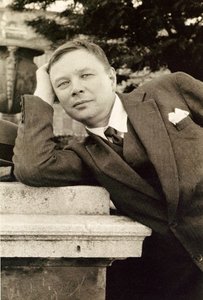
mikhail fiodorovich larionov
1881 - 1964 , Russia
Quick Facts
- Artistic Movement Or Style: Abstract Art, Rayonism
- Date Of Birth: 1881
- Date Of Death: 1964
- Full Name: Mikhail Fiodorovich Larionov
- Nationality: Russian
- Notable Artworks:
- Dancing Soldiers
- Prokofiev at the piano
- Tuque scene
- Place Of Birth: Tiraspol, Russia
Related Articles
Blush & Brilliance: 10 Iconic Paintings Dominated by Light Pink Tones |
Explore 10 iconic paintings bathed in captivating light pink tones! From Monet's Impressionism to Renoir’s romance, discover the stories behind these blush-hued masterpieces. Find museum-quality art reproductions & decor inspiration at .
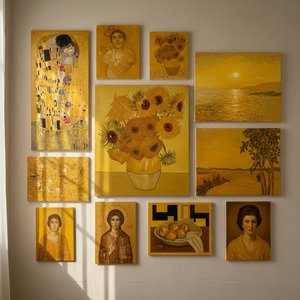
Golden Hues: Top 10 Paintings Dominated by Yellow Ochre |
Explore 10 iconic paintings bathed in golden yellow ochre! From Van Gogh's sunflowers to Monet’s haystacks, discover the stories behind these masterpieces. Find museum-quality art reproductions & elevate your home decor on .
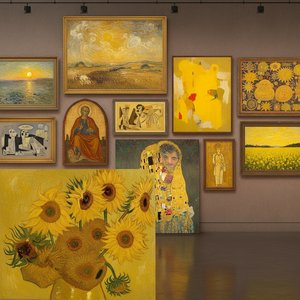
Golden Hues: 10 Masterpieces Dominated by Chrome Yellow | ArtsDot
Immerse yourself in golden light! Explore 10 famous paintings dominated by 'Chrome Yellow', from Van Gogh’s Sunflowers to Monet's Haystacks. Discover the stories behind these iconic Impressionist & Post-Impressionist masterpieces and find museum-quality art reproductions at ArtsDot.com.
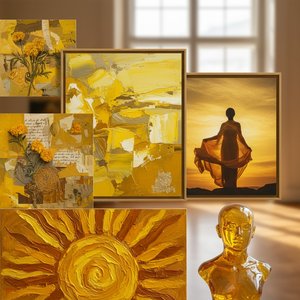
The Golden Hue: Exploring Symbolism & Emotion in Yellow Art
Explore the rich symbolism & emotional power of yellow in art history! From Van Gogh to Kandinsky, discover how artists used this vibrant hue. Expert analysis & high-quality reproductions at ArtsDot.
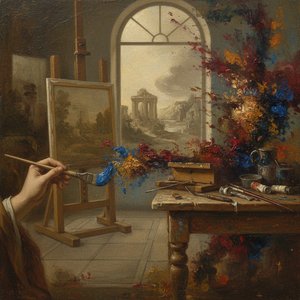
The Eloquent Brushstroke: A Historical & Technical Exploration of Texture, Intent & Expression in Painting
Explore the rich history & techniques of impasto painting – from Renaissance masters to Van Gogh's expressive strokes. Discover how artists use texture to convey emotion and create lasting impact. Learn more!