

 Preview
 Send
Send Share
Share
 Details

 Download
 Similars
 X-Ray
X-Ray Diaporama
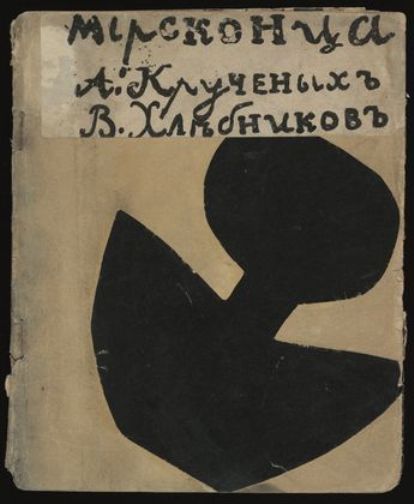
Mirskontsa 1


 Read More
Purchase a high-resolution, enhanced digital image, far superior to the online preview.
Each file is meticulously prepared by our in-house specialists using advanced tools and expert manual retouching. We ensure every image has exceptional clarity, precise color accuracy, and fine detail.
The final file is delivered via email within 72 hours, optimized for immediate use in professional, editorial, and print environments. This is the same quality trusted by top-tier design studios, publishers, and galleries.
Digital Image
Download a high-resolution file for personal display, printing, and creative projects. ( Buy Print Buy Hand Made Painting)
Included in Every Digital Image Order
Expert Digital Delivery, Guaranteed
When you choose ArtsDot.com, you're not just getting an image - you're receiving a professionally enhanced digital artwork, crafted with precision and backed by a satisfaction guarantee. Here's everything that comes with your order, automatically:

Fast Email Delivery
Your high-resolution digital image file will be emailed to you within 72 hours of ordering - ready for immediate use.

AI-Enhanced Digital File
Your artwork is professionally optimized using advanced AI tools and manual editing, ensuring maximum detail, clarity, and color accuracy.

Free Lifetime Re-Delivery
Accidentally deleted or lost your file? No worries - we'll resend it to you anytime, free of charge.

No Import Fees - Ever
Enjoy your artwork instantly with zero customs, duties, or delivery fees - digital downloads are always tax-free.

Color Accuracy Guarantee
We ensure your digital image reflects the original colors as closely as possible using professional tools and color management.

60-Day Satisfaction Guarantee
If you're not satisfied with your digital image, we'll revise it or refund 100% within 60 days - no questions asked.

100% Money-Back Guarantee
Not satisfied? Get a full refund within 60 days of receiving your digital file - no questions asked.

Bulk Order Discounts
Buy 3 images, save 10% - Buy 5, save 15% - Buy 10+, save 20%. Great for creative projects, galleries, and agencies.
Collectible Description
The Essence of Abstraction: A Study of Mirskontsa 1
In the vast, turbulent landscape of the early twentieth-century Russian avant-garde, few names resonate with as much revolutionary fervor as Mikhail Fiodorovich Larionov. His work, Mirskontsa 1, stands as a profound testament to this era of radical experimentation. At first glance, the painting presents a striking simplicity that belies its deep complexity. A singular, dark, and enigmatic shape dominates a muted, beige expanse, creating a visual dialogue that is both stark and hypnotic. This is not merely an exercise in minimalism; it is an exploration of the very boundaries of form and space. The composition eschews the distractions of the material world, inviting the viewer into a meditative state where the weight of the black silhouette meets the quiet breath of the neutral background.
The technique employed in Mirskontsa 1 reflects Larionov’s mastery over the raw elements of his medium. The application of paint appears deliberate yet organic, with a texture that suggests a tactile, lived-in quality. There is a subtle unevenness to the surface, a characteristic of the artist's bold brushwork that lends the piece an almost sculptural presence. By stripping away color and detail, Larionov focuses the viewer's attention entirely on the tension between the edges of the central figure and the surrounding void. The sharp boundaries of the black shape act as a focal point of intense energy, while the soft, tan backdrop provides a sense of infinite, quiet depth, despite the painting’s inherent flatness.
Historical Resonance and Symbolic Depth
To understand Mirskontsа 1, one must look toward the historical currents of Rayonism and Primitivism that Larionov helped pioneer. During a time when the art world was fracturing away from academic realism, Larionov sought to capture the "rays" of light and movement that define our perception of reality. While this specific piece leans toward a more stabilized, geometric abstraction, it retains the spirit of that search for essence. The stylized, elongated form—reminiscent of a simplified human silhouette or perhaps a primordial creature—serves as a bridge between the recognizable world and the purely abstract. It evokes themes of transformation and the fundamental structures of life, stripped of all superficial ornament.
For the discerning collector or interior designer, this artwork offers more than just aesthetic beauty; it provides a sophisticated anchor for modern environments. The limited color palette of black and beige allows the piece to integrate seamlessly into diverse decor styles, from the austere elegance of contemporary minimalism to the warm, textured layers of mid-century modernism. It functions as a silent protagonist in a room, commanding attention through its sheer presence rather than through clamor. Owning a high-quality reproduction of such a seminal work is an opportunity to possess a fragment of art history—a piece that continues to challenge, inspire, and provoke thought long after the first encounter.
Related Artworks

Artist Biography
Early Life and Artistic Beginnings
Mikhail Fiodorovich Larionov, born in 1881 in Tiraspol, a city then within the Russian Empire (now Moldova), emerged as a pivotal figure in the tumultuous landscape of early 20th-century Russian art. His initial artistic training was somewhat unconventional; he briefly studied at the Moscow School of Painting, Sculpture and Architecture but found its academic rigor stifling. He gravitated instead towards the vibrant, independent atmosphere of private studios, notably those of Konstantin Korovin and Isaak Levitan—though his spirit proved too restless for strict adherence to their established styles. These early experiences instilled in him a foundational understanding of technique, yet Larionov quickly sought to forge his own path, one that would challenge conventional notions of representation and embrace the dynamism of modern life.
The Moscow art scene at the turn of the century was a breeding ground for innovation, and Larionov rapidly became immersed in its burgeoning avant-garde. He wasn’t content merely to observe; he actively participated in forming artistic groups and challenging established norms. His early works reflected this exploratory spirit, often depicting scenes of everyday life with a bold, expressive brushstroke and a growing interest in the decorative qualities of Russian folk art—a fascination that would become central to his evolving aesthetic.
Neo-Primitivism and the Rejection of Western Influence
Around 1907, Larionov, alongside his lifelong partner Natalia Goncharova, embarked on a radical artistic journey that they termed Neo-Primitivism. This movement represented a deliberate rejection of Western European influences—particularly Impressionism and Post-Impressionism—in favor of the raw energy and authenticity of Russian peasant art, icons, and *lubki* (Russian woodcut prints). They believed that true artistic innovation lay not in imitating foreign styles but in rediscovering and revitalizing Russia’s own unique visual heritage. This wasn't simply a nostalgic return to tradition; rather, it was a conscious effort to extract the essential forms and expressive power of these sources and translate them into a distinctly modern language.
Paintings from this period are characterized by their vibrant colors, flattened perspectives, and deliberately “naive” rendering. Subjects often included scenes of rural life, religious motifs reimagined with bold distortions, and depictions of everyday objects imbued with symbolic significance. Larionov’s work during this phase wasn't merely about depicting these subjects; it was about capturing the *spirit* of Russian culture—its vitality, its mysticism, and its inherent connection to the land. He sought to create a uniquely Russian modernism that resonated with the nation’s soul.
Rayonism: A New Vision of Light and Space
Larionov's artistic exploration took an even more radical turn around 1912 with the development of Rayonism (also known as Luchizm). This abstract style, conceived in collaboration with Goncharova, aimed to depict not objects themselves but rather the rays of light that emanate from them. Inspired by scientific theories about radiation and the fourth dimension, Larionov sought to capture the dynamic interplay of these invisible forces—the very essence of energy and movement.
Rayonist paintings are characterized by intersecting lines and planes of color, creating a sense of fractured space and luminous energy. The subject matter often dissolved into pure abstraction, with recognizable forms becoming secondary to the overall composition of radiating light. Larionov believed that Rayonism represented a new way of seeing—a way of perceiving the world not as static objects but as fields of intersecting forces. He theorized extensively about the principles of Rayonism, arguing that it was a more accurate representation of reality than traditional painting.
Later Life and Legacy
Larionov’s influence extended beyond painting into stage design, particularly through his collaborations with Sergei Diaghilev's Ballets Russes. He created innovative sets and costumes for productions such as *The Three Dances* (1914), bringing his abstract aesthetic to the world of performance art. Following the Russian Revolution, Larionov and Goncharova spent much of their later lives in Paris, where they continued to work and exhibit, though their style evolved away from the radical abstraction of Rayonism.
Despite periods of relative obscurity, Mikhail Larionov’s contribution to the development of abstract art remains significant. He was a pioneer who challenged conventional artistic boundaries, embraced the richness of Russian culture, and sought to create a new visual language that reflected the dynamism of the modern world. His work paved the way for subsequent generations of artists and continues to inspire with its bold experimentation, vibrant energy, and enduring spirit of innovation. He left behind a legacy not only as a painter but also as a theorist, stage designer, and a key figure in shaping the Russian avant-garde.
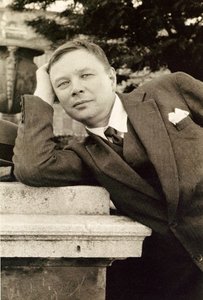
mikhail fiodorovich larionov
1881 - 1964 , Russia
Quick Facts
- Artistic Movement Or Style: Abstract Art, Rayonism
- Date Of Birth: 1881
- Date Of Death: 1964
- Full Name: Mikhail Fiodorovich Larionov
- Nationality: Russian
- Notable Artworks:
- Dancing Soldiers
- Prokofiev at the piano
- Tuque scene
- Place Of Birth: Tiraspol, Russia

