 Preview
 Send
Send Share
Share
 Details

 Download
 Similars
 X-Ray
X-Ray Diaporama
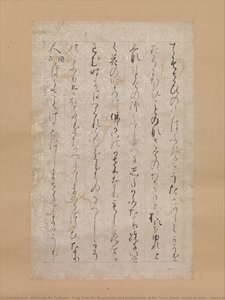
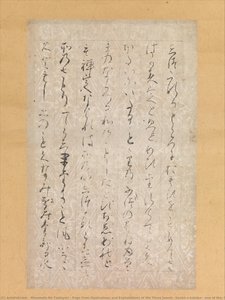
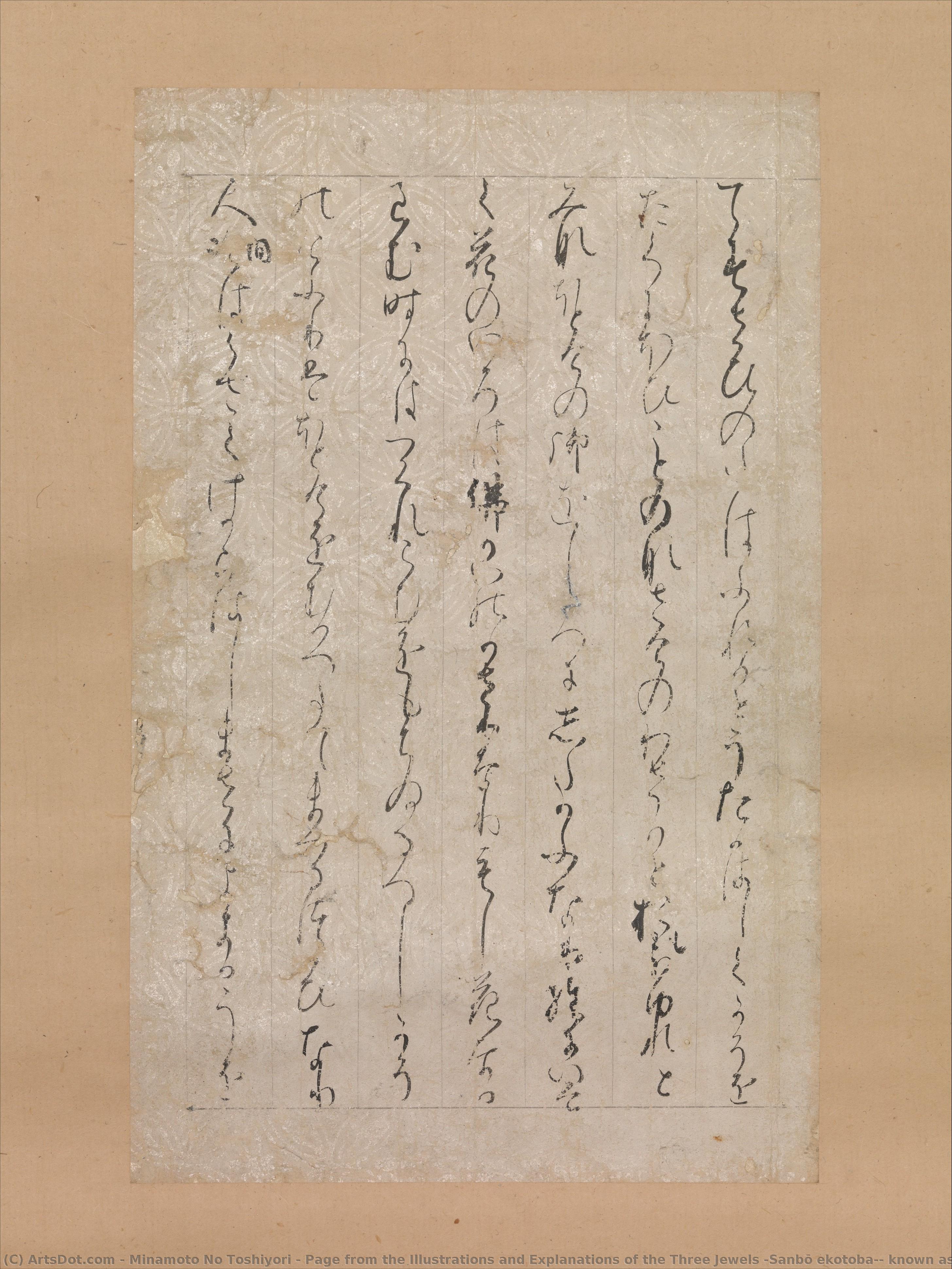
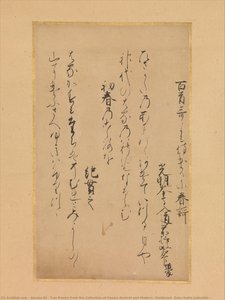
Page from the Illustrations and Explanations of the Three Jewels (Sanbō ekotoba), known as the Tōdaiji Fragment (Tōdaiji-gire)
 1120
1120 24.0 x 14.0 cm
 Read More
Hand Made Oil Reproduction
Hand-painted oil on canvas in your size and frame, made to order by our artists. ( Buy Print Buy Image)




































Pick from our preset sizes that match the artwork's original proportions.

You may enter your own dimensions to fit a specific frame or space. If your selected size does not match the original image's proportions, we will either crop the artwork or extend the painting with additional hand-painted elements. A digital mockup will be sent for your approval before production begins.
Please note that the on-screen preview does not reflect the actual cropping or extension. Only the mockup will accurately show the final composition.
While custom sizes are available, we recommend selecting a dimension from the predefined list to preserve the original proportions.
After order, ArtsDot.com team will email client for instructions and provide a mockup preview
Worldwide Delivery () in 3/4 weeks instead of standard 5 weeks. (24 August). No compromise on quality.

Free Worldwide Express Shipping

High-Quality Linen Canvas

Full Shipping Insurance

Customs Tax Refund Guarantee

True Color Matching Guarantee

60-Day Return Policy (Defects Only)

100% Money-Back Guarantee

Bulk Discount Offer
 Glass option is only available in size under 110 CM

Page from the Illustrations and Explanations of the Three Jewels (Sanbō ekotoba), known as the Tōdaiji Fragment (Tōdaiji-gire)
Reproduction Medium
Reproduction Size
-


Total Price
$ 263
Related Artworks





Artist Biography
Minamoto no Toshiyori: A Poet and Painter of the Heian Court
Minamoto no Toshiyori, born in Kyoto in 1055 and tragically passing away in 1129, stands as a pivotal figure in late Heian-era Japanese art and literature. More than simply a poet or painter, he was an innovator who skillfully blended the established traditions of his time with emerging artistic sensibilities, leaving behind a legacy that continues to resonate today. His life was inextricably linked to the powerful Minamoto clan, whose influence extended deep into the imperial court, and shaped by the political machinations of the era. His father, Minamoto no Tsunenobu, held a prestigious position as Grand Counsellor, affording Toshiyori access to the highest echelons of power – though not always the opportunities he desired.Early Life and Artistic Beginnings
Toshiyori’s early years were marked by a close relationship with Emperor Go-Sanjo, who recognized his potential and fostered his artistic development. However, despite this royal favor, he was initially passed over for the prestigious task of compiling the Goshūi Wakashū, a monumental collection of poetry that typically fell to established figures within the Fujiwara clan. This perceived slight fueled a period of intense creative exploration. Instead, Toshiyori produced the *Toshiyori zuinō* (俊頼髄脳) in 1113 – a poetic treatise considered a masterful demonstration of his command over Japanese verse and a testament to his intellectual depth. The title itself, “Brain of Toshiyori,” suggests a profound understanding of the very essence of poetry, reflecting his meticulous approach to its creation.A Master of Nihonga and Traditional Materials
Toshiyori’s artistic output spanned both poetry and painting, though it is in his paintings that he truly shines. He was deeply committed to utilizing traditional Japanese materials – mineral pigments ground from precious stones, organic inks derived from plants, and the delicate texture of Japanese paper. This dedication resulted in works imbued with a unique beauty and tactile quality. His style leaned heavily into *nihonga*, the indigenous form of Japanese painting that contrasted sharply with the imported Chinese styles prevalent at the time. Notable among his paintings is “Pomegranates,” a stunning example of *nihonga* technique, showcasing his ability to capture subtle nuances of color, texture, and form. The work’s vibrant hues and meticulous detail demonstrate a profound understanding of how to translate natural subjects onto paper using traditional methods.The Gosen Wakashū and Lasting Influence
Despite initial setbacks, Toshiyori ultimately achieved his most significant accomplishment: the compilation of the *Gosen Wakashū* (後編和歌集), a collection that solidified his reputation as a leading poet of his time. This anthology, completed in 1129 shortly before his death, is considered one of the finest examples of late Heian poetry and profoundly influenced subsequent generations of poets. His work served as an inspiration for artists like Inshō Dōmoto, whose own “Pomegranates” painting echoes Toshiyori’s masterful use of color and texture. The legacy of Minamoto no Toshiyori extends far beyond his individual works; he represents a bridge between tradition and innovation, embodying the spirit of artistic experimentation within the constraints of established conventions.Historical Significance and Continued Appreciation
Minamoto no Toshiyori’s impact on Japanese art is undeniable. His innovative approach to *nihonga*, his mastery of traditional materials, and his profound understanding of poetry have ensured his place as a significant figure in the nation's artistic history. His work continues to be studied and admired by art enthusiasts worldwide, serving as a reminder of the rich cultural heritage of Japan’s Heian period. The meticulous reproductions offered by ArtsDot.com allow viewers today to experience the beauty and artistry of Toshiyori’s paintings firsthand, connecting them with a pivotal figure in Japanese artistic development.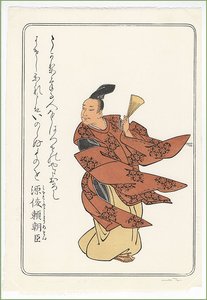
minamoto no toshiyori
1055 - 1129 , Japan
Quick Facts
- Artistic Movement Or Style: Nihonga
- Artists Or Movements Influenced By This Artist: ['Inshō Dōmoto']
- Date Of Birth: 1055
- Date Of Death: 1129
- Full Name: Minamoto no Toshiyori
- Nationality: Japanese
- Notable Artworks: ['Pomegranates']
- Place Of Birth: Kyoto, Japan