 Preview
 Send
Send Share
Share
 Details

 Download
 Similars
 X-Ray
X-Ray Diaporama
Costume of Beder Khan Bey


 Read More
Purchase a high-resolution, enhanced digital image, far superior to the online preview.
Each file is meticulously prepared by our in-house specialists using advanced tools and expert manual retouching. We ensure every image has exceptional clarity, precise color accuracy, and fine detail.
The final file is delivered via email within 72 hours, optimized for immediate use in professional, editorial, and print environments. This is the same quality trusted by top-tier design studios, publishers, and galleries.
Digital Image
Download a high-resolution file for personal display, printing, and creative projects. ( Buy Print Buy Hand Made Painting)
Included in Every Digital Image Order
Expert Digital Delivery, Guaranteed
When you choose ArtsDot.com, you're not just getting an image - you're receiving a professionally enhanced digital artwork, crafted with precision and backed by a satisfaction guarantee. Here's everything that comes with your order, automatically:

Fast Email Delivery
Your high-resolution digital image file will be emailed to you within 72 hours of ordering - ready for immediate use.

AI-Enhanced Digital File
Your artwork is professionally optimized using advanced AI tools and manual editing, ensuring maximum detail, clarity, and color accuracy.

Free Lifetime Re-Delivery
Accidentally deleted or lost your file? No worries - we'll resend it to you anytime, free of charge.

No Import Fees - Ever
Enjoy your artwork instantly with zero customs, duties, or delivery fees - digital downloads are always tax-free.

Color Accuracy Guarantee
We ensure your digital image reflects the original colors as closely as possible using professional tools and color management.

60-Day Satisfaction Guarantee
If you're not satisfied with your digital image, we'll revise it or refund 100% within 60 days - no questions asked.

100% Money-Back Guarantee
Not satisfied? Get a full refund within 60 days of receiving your digital file - no questions asked.

Bulk Order Discounts
Buy 3 images, save 10% - Buy 5, save 15% - Buy 10+, save 20%. Great for creative projects, galleries, and agencies.
Collectible Description
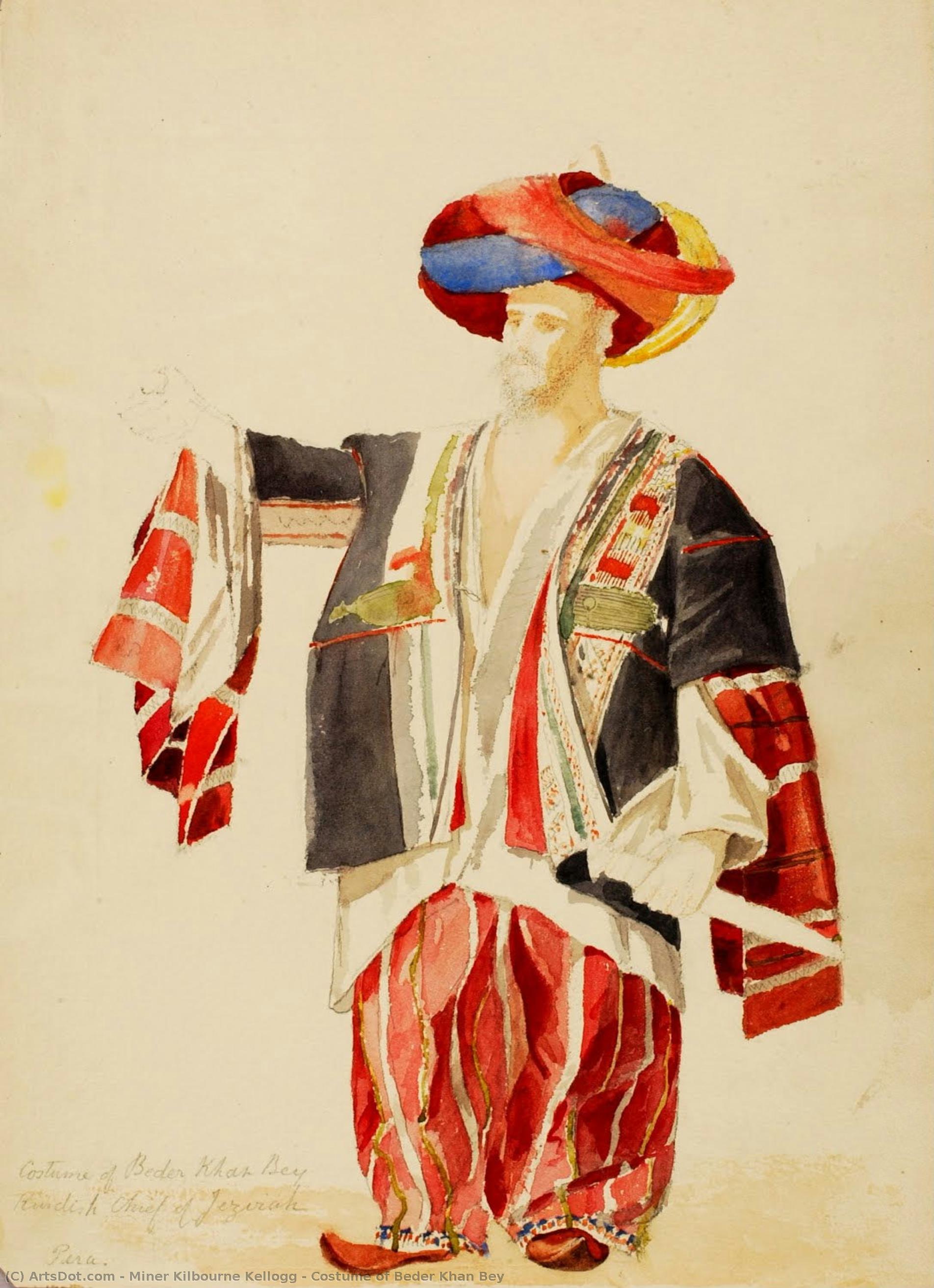
Costume of Beder Khan Bey: An Orientalist Portrait by Miner Kilbourne Kellogg
Miner Kilbourne Kellogg’s “Costume of Beder Khan Bey” stands as a testament to the burgeoning fascination with the Middle East during the Victorian era and exemplifies the stylistic hallmarks of American tonalism. Painted around 1879, this watercolor on paper captures not merely an individual likeness but also embodies a broader cultural preoccupation with exotic landscapes and aristocratic figures—a trend that reflects the intellectual currents shaping late nineteenth-century art.
Subject Matter & Composition
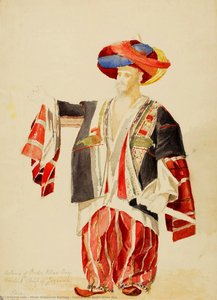
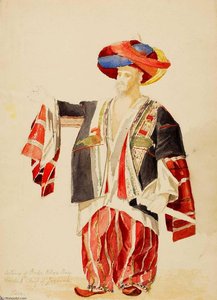
The artwork depicts Beder Khan Bey, a prominent chieftain of Jezirah Province in Persia (modern Iran), rendered in meticulous detail against a muted tonal backdrop. Kellogg’s focus is squarely on capturing the subject's appearance—specifically his attire—emphasizing the importance of visual representation as a conduit for conveying status and identity. The pose is dignified yet relaxed, suggesting a contemplative gaze directed outwards.
Technique & Style: Tonalism Revisited
Kellogg’s masterful use of watercolor demonstrates an unwavering commitment to tonal harmony—a technique championed by American tonalist painters like Frederic Church and Albert Pinkham Ryder. Rather than striving for vibrant color palettes, Kellogg employs subtle gradations of tone to create atmospheric depth and evoke a sense of mood. This approach prioritizes capturing the essence of light and shadow, mirroring the Impressionists’ influence while retaining a distinctly American sensibility.
Historical Context & Cultural Significance
The painting emerged during a period marked by intense scholarly interest in Persia—fueled by expeditions led by figures like Sir Richard Burton and James Baikie. Kellogg's depiction aligns with this broader cultural enthusiasm, reflecting the Victorian fascination for Orientalism – an artistic movement that sought to portray Eastern cultures as both alluring and mysterious. The costume itself speaks volumes about social hierarchy and ceremonial dress within Persian society.
Symbolism & Emotional Impact
"Costume of Beder Khan Bey" transcends mere portraiture; it communicates a profound appreciation for visual beauty and an astute observation of human character. Kellogg’s careful rendering of texture—particularly the folds of the turban and robe—adds to the artwork's tactile quality, inviting viewers to contemplate not only what is seen but also how it feels. Ultimately, the painting evokes a sense of serenity and contemplation, mirroring the artist’s own contemplative spirit.
Further Research & Resources
- Costume of Beder Khan Bey | Smithsonian American Art Museum
- Miner Kilbourne Kellogg: Costume of Beder Khan Bey
- Costume of Beder Khan Bey
- Costume of Beder Khan Bey | Smithsonian American Art Museum
- Costume of Beder Khan Bey | Smithsonian American Art Museum
- Miner Kilbourne Kellogg
- Miner Kilbourne Kellogg: A Study in American Tonalism & Atmospheric Landscape
Explore more about Miner Kilbourne Kellogg and his artistic legacy at ArtsDot.
Related Artworks

Artist Biography
The Visionary Wanderer: The Life and Art of Miner Kilbourne Kellogg
Miner Kilbourne Kellogg was an artist whose life unfolded as a grand, sweeping tapestry, much like the diverse landscapes he so meticulously captured on canvas. Born in 1814 in the quiet enclave of Manlius Square, New York, his early years were defined by movement and discovery. As his family journeyed toward Ohio, Kellogg’s artistic soul began to take root in the vibrant cultural landscape of Cincinnati. It was here, amidst the burgeoning art scene of the Midwest, that he sought formal training at the Academy of Fine Arts under Frederick Eckstein. This foundational period instilled in him a rigorous discipline and an eye for the subtle nuances of light and form—qualities that would later allow him to navigate the complex visual languages of both the American frontier and the ancient Near East. His path was never a singular one, marked by roles as varied as those of a land surveyor in Texas and a diplomatic courier for the United States Department of State. These professional excursions served as more than mere interludes; they were essential pilgrimages that expanded his aesthetic horizons. Traveling through Europe, Kellogg encountered the profound legacies of the Old Masters and the burgeoning Romantic movement. His time in Florence, where he forged a friendship with the renowned sculptor Hiram Powers, provided him with an intimate connection to the classical traditions of Italy. These travels infused his work with a sense of historical weight and a deep-seated reverence for the enduring beauty of antiquity.An Orientalist Odyssey and the Mastery of Detail
Perhaps the most defining chapter of Kellogg’s career was his profound engagement with the Orient. Unlike many of his contemporaries who approached Eastern subjects through a lens of mere fantasy, Kellogg sought a more authentic, almost scholarly connection to the lands he visited. His travels through Egypt and Palestine were driven by an intense desire to document the sites of biblical significance with unparalleled accuracy. He famously described himself and his colleagues as working "like beabilities" to ensure that every ruin, every texture of the desert sand, and every architectural detail was rendered with truth. This commitment to realism transformed his landscapes into more than just scenery; they became historical documents imbued with atmosphere. In his Orientalist works, one finds a masterful blend of expressive color and precise observation. He possessed a unique ability to capture the bustling energy of marketplaces and the serene, sun-drenched stillness of ancient ruins alike. His paintings do not merely depict a place; they evoke the very heat, dust, and spiritual resonance of the Middle East, bridging the gap between the viewer’s world and the exotic allure of the Levant.A Legacy of Portraiture, Scholarship, and Collection
While his landscapes captured the grandeur of distant lands, Kellogg’s mastery of portraiture allowed him to capture the essence of human character. He was a proficient portraitist whose talent earned him commissions from some of the most influential figures of his era, including Presidents Andrew Jackson and Martin Van Buren. These portraits are characterized by a psychological depth that reflects his training in the classical tradition, capturing not just the likeness of his sitters but their perceived authority and presence. Beyond the brush, Kellogg’s contribution to the art world was multifaceted:- Art Historian and Collector: His intellectual pursuits were as significant as his creative ones. He was a dedicated art historian and an avid collector, possessing a personal collection that included works attributed to legends such as Leonardo da Vinci and Raphael.
- Exhibition Organizer: Kellogg played a vital role in the dissemination of art, working to arrange exhibitions that brought significant works to the American public.
- Academic Recognition: His standing in the artistic community was solidified in 1851 when he was elected as an Honorary Academician of the National Academy of Design.
Miner Kilbourne Kellogg
1814 - 1889
Quick Facts
- Artistic Movement Or Style: Orientalist
- Date Of Birth: 1814
- Date Of Death: 1889
- Full Name: Miner Kilbourne Kellogg
- Nationality: American
- Notable Artworks:
- Moli at Palermo
- Castle of Corfu
- Place Of Birth: Manlius Square, New York