 Preview
 Send
Send Share
Share
 Details

 Download
 Similars
 X-Ray
X-Ray Diaporama
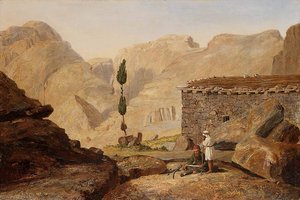
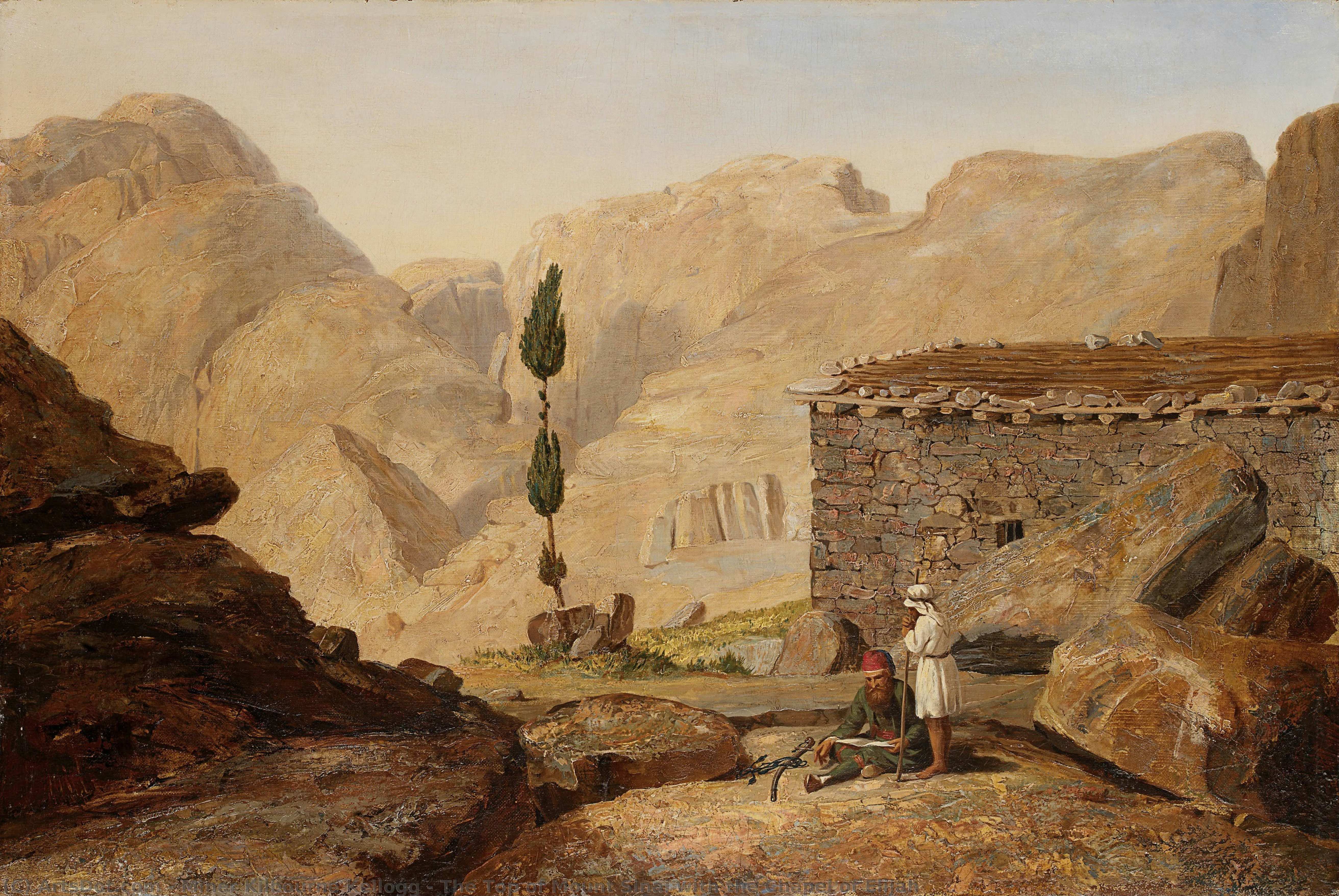
The Top of Mount Sinai with the Chapel of Elijah
 Oil
Oil- WallArt
- Orientalism
 1844
1844- 19th Century
 72.0 x 49.0 cm
 Smithsonian American Art Museum
 Read More
Hand Made Oil Reproduction
Hand-painted oil on canvas in your size and frame, made to order by our artists. ( Buy Print Buy Image)




P118B $10

P118H $10

P118W $10

P438Z $10

P508JH $12

P508YH $12

P805H $10

P805Z $10

P919BZ $10

P919G $10

P919XJ $10

P959ZH $10

P968JZ $12

W106C $8

W218G $10

W218JH $8

W218Y $10

W307PJ $10

W316G $10

W316PJ $8

W316Y $10

W398PJ $8

W4111J $10

W500HY $15

W500JH $15

W692G $12

W849H $8

W940BG $15

W953PJ $8




Pick from our preset sizes that match the artwork's original proportions.

You may enter your own dimensions to fit a specific frame or space. If your selected size does not match the original image's proportions, we will either crop the artwork or extend the painting with additional hand-painted elements. A digital mockup will be sent for your approval before production begins.
Please note that the on-screen preview does not reflect the actual cropping or extension. Only the mockup will accurately show the final composition.
While custom sizes are available, we recommend selecting a dimension from the predefined list to preserve the original proportions.
After order, ArtsDot.com team will email client for instructions and provide a mockup preview
Worldwide Delivery () in 3/4 weeks instead of standard 5 weeks. (16 August). No compromise on quality.

Free Worldwide Express Shipping

High-Quality Linen Canvas

Full Shipping Insurance

Customs Tax Refund Guarantee

True Color Matching Guarantee

60-Day Return Policy (Defects Only)

100% Money-Back Guarantee

Bulk Discount Offer
 Glass option is only available in size under 110 CM

The Top of Mount Sinai with the Chapel of Elijah
Reproduction Medium
Reproduction Size
-


Total Price
$ 263
Artwork Description
A Journey to the Sacred Heights
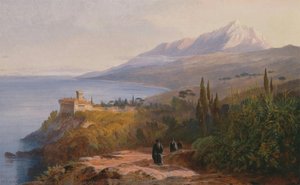
In his evocative 1844 masterpiece, The Top of Mount Sinai with the Chapel of Elijah, Miner Kilbourne Kellogg invites the viewer on a profound pilgrimage through both landscape and spirit. The painting captures a moment of serene transcendence atop one of the world's most hallowed peaks, where the rugged, sun-drenched terrain of the Sinai Peninsula meets the celestial. Kellogg, an American Orientalist with a keen eye for the atmospheric nuances of the Middle East, masterfully depicts the Chapel of Elijah nestled within the craggy architecture of the mountain. The scene is far from a desolate wilderness; instead, it breathes with a quiet, rhythmic vitality. Figures are scattered across the landscape, some engaged in contemplative stillness while others move with purpose, creating a tapestry of human presence that feels both intimate and eternal. A solitary horse rests near the periphery, adding a touch of pastoral tranquility to this high-altitude sanctuary.
The technical brilliance of Kellogg’s work lies in his ability to balance the monumental scale of the geological formations with the delicate details of human life. Through a meticulous application of light and shadow, he renders the textures of the rocky precipices, making the heat of the desert sun almost palpable against the cool shadows of the chapel's stone walls. His style, rooted in the traditions of 19th-century landscape painting, utilizes a soft yet precise brushwork that allows the vastness of the sky to merge seamlessly with the earth. This mastery of light creates an ethereal glow that illuminates the scene, suggesting a divine presence hovering just beyond the visible horizon, perfectly capturing the "Orientalist" fascination with the exotic and the sacred.
Symbolism and the Spirit of Discovery
Beyond its topographical accuracy, the painting serves as a profound meditation on the intersection of the earthly and the divine. The Chapel of Elijah acts as a powerful symbol of faith anchored within a wild, untamed world. By placing human figures and animals amidst such formidable natural grandeur, Kellogg explores the concept of sanctuary—the idea that even in the most rugged and inhospitable environments, there exist pockets of peace and spiritual refuge. For the collector or art enthusiast, this piece offers more than just a beautiful vista; it provides a window into the 19th-century romanticized view of the Levant, where every mountain peak held the potential for a miraculous encounter.
For interior designers and connoisseurs of fine art, this reproduction offers an unparalleled opportunity to introduce a sense of historical depth and contemplative calm into a living space. The muted, earthy palette of ochre, sand, and slate blue provides a sophisticated foundation for any decor, while the subject matter serves as a sophisticated conversation piece. Whether placed in a sunlit library or a grand hallway, The Top of Mount Sinai brings with it an aura of timelessness and wanderlust, making it an exquisite choice for those who seek to surround themselves with art that inspires both the intellect and the soul.
Related Artworks
Artist Biography
The Visionary Wanderer: The Life and Art of Miner Kilbourne Kellogg
Miner Kilbourne Kellogg was an artist whose life unfolded as a grand, sweeping tapestry, much like the diverse landscapes he so meticulously captured on canvas. Born in 1814 in the quiet enclave of Manlius Square, New York, his early years were defined by movement and discovery. As his family journeyed toward Ohio, Kellogg’s artistic soul began to take root in the vibrant cultural landscape of Cincinnati. It was here, amidst the burgeoning art scene of the Midwest, that he sought formal training at the Academy of Fine Arts under Frederick Eckstein. This foundational period instilled in him a rigorous discipline and an eye for the subtle nuances of light and form—qualities that would later allow him to navigate the complex visual languages of both the American frontier and the ancient Near East. His path was never a singular one, marked by roles as varied as those of a land surveyor in Texas and a diplomatic courier for the United States Department of State. These professional excursions served as more than mere interludes; they were essential pilgrimages that expanded his aesthetic horizons. Traveling through Europe, Kellogg encountered the profound legacies of the Old Masters and the burgeoning Romantic movement. His time in Florence, where he forged a friendship with the renowned sculptor Hiram Powers, provided him with an intimate connection to the classical traditions of Italy. These travels infused his work with a sense of historical weight and a deep-seated reverence for the enduring beauty of antiquity.An Orientalist Odyssey and the Mastery of Detail
Perhaps the most defining chapter of Kellogg’s career was his profound engagement with the Orient. Unlike many of his contemporaries who approached Eastern subjects through a lens of mere fantasy, Kellogg sought a more authentic, almost scholarly connection to the lands he visited. His travels through Egypt and Palestine were driven by an intense desire to document the sites of biblical significance with unparalleled accuracy. He famously described himself and his colleagues as working "like beabilities" to ensure that every ruin, every texture of the desert sand, and every architectural detail was rendered with truth. This commitment to realism transformed his landscapes into more than just scenery; they became historical documents imbued with atmosphere. In his Orientalist works, one finds a masterful blend of expressive color and precise observation. He possessed a unique ability to capture the bustling energy of marketplaces and the serene, sun-drenched stillness of ancient ruins alike. His paintings do not merely depict a place; they evoke the very heat, dust, and spiritual resonance of the Middle East, bridging the gap between the viewer’s world and the exotic allure of the Levant.A Legacy of Portraiture, Scholarship, and Collection
While his landscapes captured the grandeur of distant lands, Kellogg’s mastery of portraiture allowed him to capture the essence of human character. He was a proficient portraitist whose talent earned him commissions from some of the most influential figures of his era, including Presidents Andrew Jackson and Martin Van Buren. These portraits are characterized by a psychological depth that reflects his training in the classical tradition, capturing not just the likeness of his sitters but their perceived authority and presence. Beyond the brush, Kellogg’s contribution to the art world was multifaceted:- Art Historian and Collector: His intellectual pursuits were as significant as his creative ones. He was a dedicated art historian and an avid collector, possessing a personal collection that included works attributed to legends such as Leonardo da Vinci and Raphael.
- Exhibition Organizer: Kellogg played a vital role in the dissemination of art, working to arrange exhibitions that brought significant works to the American public.
- Academic Recognition: His standing in the artistic community was solidified in 1851 when he was elected as an Honorary Academician of the National Academy of Design.
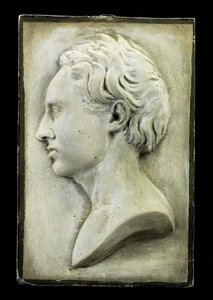
Miner Kilbourne Kellogg
1814 - 1889
Quick Facts
- Artistic Movement Or Style: Orientalist
- Date Of Birth: 1814
- Date Of Death: 1889
- Full Name: Miner Kilbourne Kellogg
- Nationality: American
- Notable Artworks:
- Moli at Palermo
- Castle of Corfu
- Place Of Birth: Manlius Square, New York
Related Articles
Michelangelo's Masterpieces: Explore 25 Iconic Artworks for Your Home | ArtsDot
Journey through Michelangelo's 25 greatest artworks – from David’s strength to the Sistine Chapel’s beauty. Explore Renaissance masterpieces, art history & find museum-quality reproductions for your home at ArtsDot.com.

Giotto's Masterpieces: 25 Renaissance Artworks for Your Home | ArtsDot
Explore 25 breathtaking artworks by Giotto di Bondone, a Renaissance master. Discover the stories behind iconic frescoes & paintings like the Scrovegni Chapel cycle. Find museum-quality Giotto reproductions and elevate your home decor with ArtsDot.com.
Beyond Exoticism: Unveiling the Complex Legacy of Orientalist Painting
Explore the fascinating & complex world of Orientalist painting! Discover its history, key artists like Gérôme & Lewis, and Edward Said's influential critique. Uncover nuance beyond stereotypes with ArtsDot.

Hokusai's Masterpieces: 25 Iconic Prints & Paintings for Art Lovers | ArtsDot
Journey through Katsushika Hokusai’s 25 most iconic artworks, including *The Great Wave*. Explore the ukiyo-e master's history, style & timeless Japanese woodblock prints. Find museum-quality reproductions for your home at ArtsDot.com.

ArtsDot.com F.A.Q.: Elevating Your Art Investment – Framing & Mounting for Discerning Collectors
Elevate your art investment with ArtsDot.com's expert framing & mounting guide. Discover museum-quality options, custom solutions, and preservation techniques for discerning collectors. Protect & showcase your masterpieces.