 Preview
 Send
Send Share
Share
 Details

 Download
 Similars
 X-Ray
X-Ray Diaporama
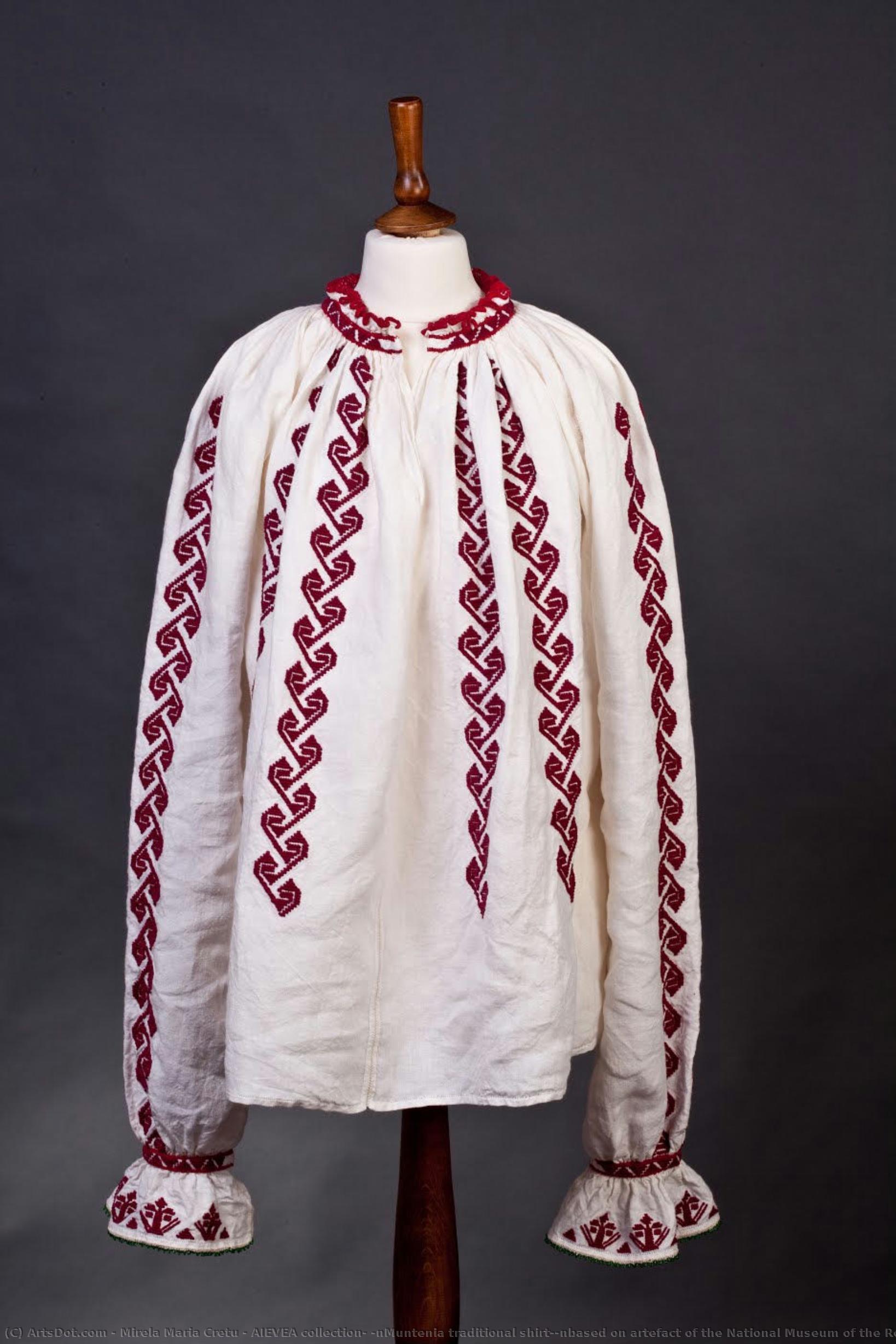
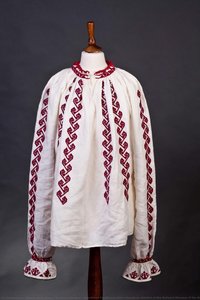
AIEVEA collection; \nMuntenia traditional shirt;\nbased on artefact of the National Museum of the Romanian Peasant


 Read More
Giclée / Art Print
Museum-quality giclée or canvas print with fast production and flexible finish options. ( Buy Hand Made Painting Buy Image)




































Pick from our preset sizes that match the artwork's original proportions.

You may enter your own dimensions to fit a specific frame or space. If your selected size does not match the original image's proportions, we will either crop the artwork or extend the image with a mirrored or solid-fill edge. A digital mockup will be sent for your approval before production begins.
Please note that the on-screen preview does not reflect the actual cropping or extension. Only the mockup will accurately show the final composition.
While custom sizes are available, we recommend selecting a dimension from the predefined list to preserve the original proportions.
Worldwide Delivery () in 2 weeks instead of standard 4/5 weeks. (29 August)

Free Worldwide Express Shipping

High-Quality Linen Canvas

Full Shipping Insurance

Customs Tax Refund Guarantee

True Color Matching Guarantee

60-Day Return Policy (Defects Only)

100% Money-Back Guarantee

Bulk Discount Offer
 Glass option is only available in size under 110 CM

AIEVEA collection; \nMuntenia traditional shirt;\nbased on artefact of the National Museum of the Romanian Peasant
Giclée / Art Print
Reproduction Size
-


Total Price
$ 63
Related Artworks








Artist Biography
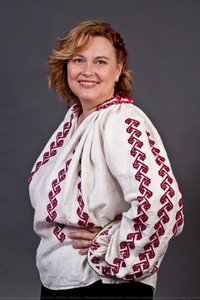
The Weaver of Narratives: The Artistic Journey of Mirela Maria Cretu
Born in the historic city of Galati, Romania, in 1988, Mirela Maria Cretu has cultivated a creative practice that serves as a profound bridge between the ancestral echoes of Romanian ethnomuseumology and the tactile intimacy of contemporary linen painting. Her artistic identity is not merely defined by the brush or needle, but by a multidisciplinary soul that draws heavily from her background in dance and anthropological research. This unique convergence of disciplines allows her to approach the canvas with a rhythmic sensibility, where every stitch and stroke is informed by an innate understanding of movement, storytelling, and the preservation of cultural memory.
Cretu’s early life was marked by a disciplined exploration of motion, serving as the president of the children and junior division of the Romanian Federation of Sport Dance. This formative experience in the world of dance instilled within her a meticulous observational skill and a profound respect for structural precision—qualities that would later become the bedrock of her visual language. As she transitioned into academic pursuits at Dunarea de Jos University of Galati, her focus shifted toward the scholarly study of anthropological methodologies. This academic rigor provided her with the tools to investigate intangible cultural heritage, transforming her from a mere observer of tradition into a dedicated custodian of it.
A Tapestry of Tradition and Technique
The heart of Cretu’s oeuvre lies in her mastery of linen painting, a technique deeply rooted in the centuries-old craftsmanship of Romania. Her work transcends simple landscape depiction; instead, she seeks to embody the very essence of the land through a delicate interplay of embroidery and pigment. By utilizing linen as her primary medium, she honors the organic textures of Romanian folk life, creating pieces that feel less like static images and certainly more like living artifacts. Her process is one of painstaking reconstruction, where she meticulously translates cultural symbols onto fabric to convey deep-seated symbolic meanings.
One of her most significant artistic achievements is found in her Aievea Collection. This series represents a breathtaking synthesis of art and history, as she draws direct inspiration from the traditional Muntenia shirt and various artifacts housed within the National Museum of the Romanian Peasant. Through this collection, Cretu does not simply replicate historical patterns; she reimagines them, using embroidery to breathe new life into the motifs of the past. Her work serves as a vital dialogue between the museum archive and the modern gallery, ensuring that the spirit of the Muntenia region remains vibrant and accessible to contemporary audiences.
Legacy and Cultural Significance
The significance of Mirela Maria Cretu’s contribution to the contemporary art scene lies in her ability to navigate the delicate balance between innovation and preservation. In an era often characterized by rapid globalization and the erosion of local identities, her dedication to Romanian folklore and ethnographic studies offers a necessary anchor. She recognizes that documenting cultural diversity is not merely an act of nostalgia, but a vital necessity for the survival of human heritage.
Through her evocative landscapes and symbolic embroideries, Cretu achieves several profound artistic goals:
- Preservation of Heritage: She utilizes modern artistic techniques to safeguard the visual language of Romanian peasant art.
- Interdisciplinary Synthesis: Her work merges the discipline of dance, the precision of research, and the fluidity of painting into a singular, cohesive narrative.
- Cultural Dialogue: By referencing museum-grade artifacts, she invites viewers to engage with history through a sensory, tactile experience.
Ultimately, Cretu’s art stands as a testament to the power of looking backward to move forward. Her landscapes are more than just scenery; they are embroidered chronicles of a people, woven with the threads of memory, research, and an unyielding passion for the beauty of tradition.
mirela maria cretu
1988 - , Romania
Quick Facts
- Artistic Movement Or Style: Ethnomuseology
- Date Of Birth: 1988
- Full Name: Mirela Maria Cretu
- Nationality: Romanian
- Notable Artworks: ['Aievea Collection; Muntenia traditional shirt; based on artefact of the National Museum of the Romanian Peasant']
- Place Of Birth: Galati, Romania