 Send
Send Share
Share
 Details

 Download
 Similars
 Diaporama
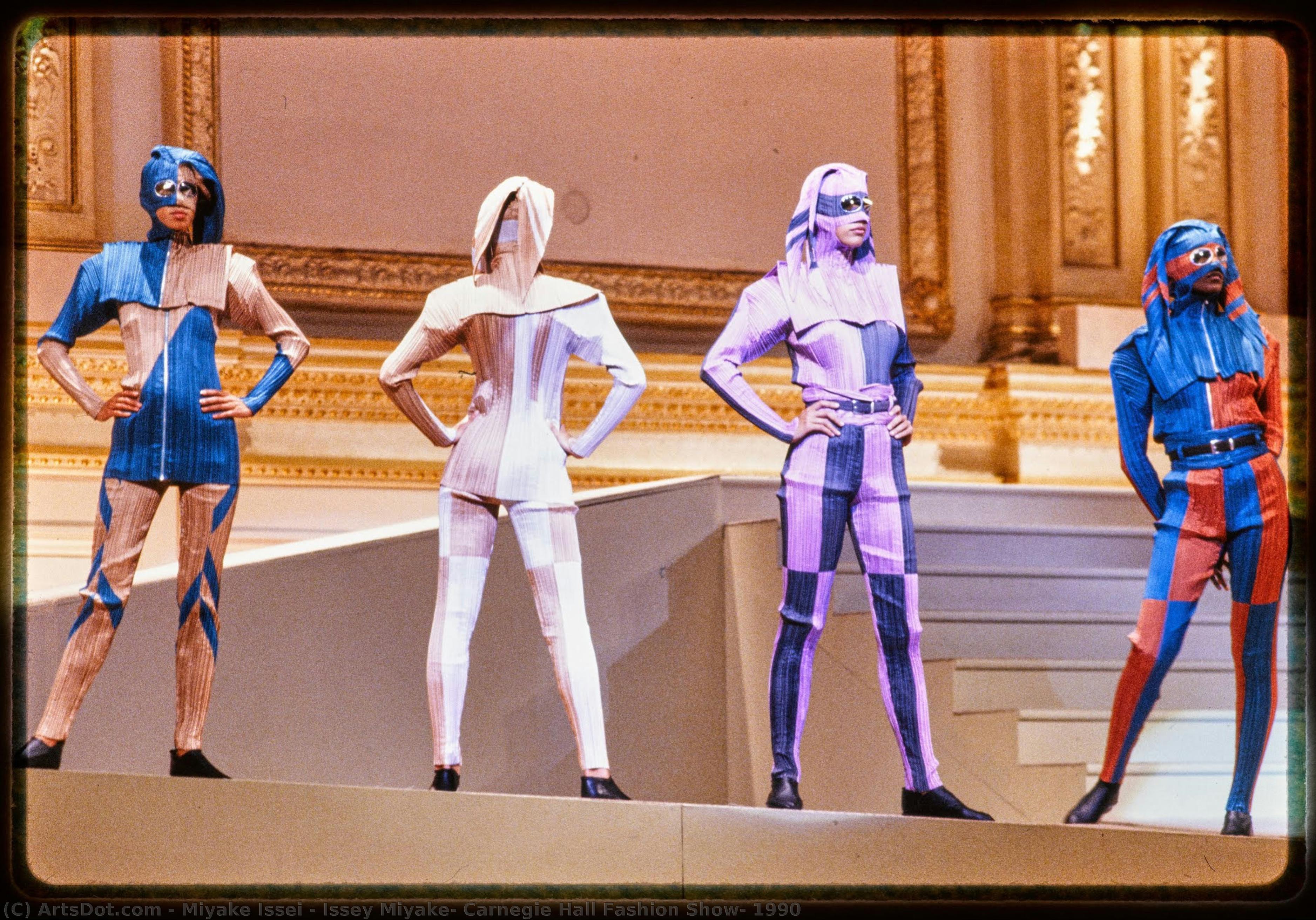
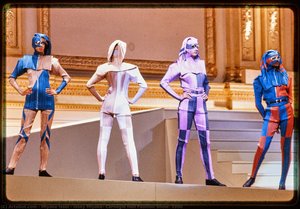
Issey Miyake, Carnegie Hall Fashion Show, 1990


 Read More
Giclée / Art Print
Museum-quality giclée or canvas print with fast production and flexible finish options. ( Buy Hand Made Painting Buy Image)




































Pick from our preset sizes that match the artwork's original proportions.

You may enter your own dimensions to fit a specific frame or space. If your selected size does not match the original image's proportions, we will either crop the artwork or extend the image with a mirrored or solid-fill edge. A digital mockup will be sent for your approval before production begins.
Please note that the on-screen preview does not reflect the actual cropping or extension. Only the mockup will accurately show the final composition.
While custom sizes are available, we recommend selecting a dimension from the predefined list to preserve the original proportions.
Worldwide Delivery () in 2 weeks instead of standard 4/5 weeks. (3 September)

Free Worldwide Express Shipping

High-Quality Linen Canvas

Full Shipping Insurance

Customs Tax Refund Guarantee

True Color Matching Guarantee

60-Day Return Policy (Defects Only)

100% Money-Back Guarantee

Bulk Discount Offer
 Glass option is only available in size under 110 CM

Issey Miyake, Carnegie Hall Fashion Show, 1990
Giclée / Art Print
Reproduction Size
-


Total Price
$ 63
A Moment Frozen in Avant-Garde Motion
In the electric atmosphere of New York City’s legendary Carnegie Hall, a transformative moment in fashion history was captured in a single, monochrome frame. The photograph Issey Miyake, Carnegie Hall Fashion Show, 1990 serves as more than just a documentation of a runway event; it is a visceral window into the dawn of a new era in textile innovation. As the models glide across the stage, the image captures the palpable tension between tradition and rebellion. The stark black and white medium strips away the distraction of color, forcing the viewer to confront the raw geometry of the garments and the architectural silhouettes that defined Miyake’s vision during this pivotal season.
The composition presents a rhythmic parade of movement, where the models act as living sculptures against the backdrop of an expectant audience. There is a profound sense of anticipation etched into the very grain of the photograph, as if the spectators are witnessing the birth of a new language of dress. The interplay of light and shadow emphasizes the experimental textures of the collection—specifically the daring use of stretch polyesters that allowed for unprecedented structural freedom. Through this lens, we see the intersection of high art and wearable technology, where the human form is both celebrated and reimagined through the medium of fabric.
The Architecture of Fabric and Form
To understand this piece is to understand the genius of Issey Miyake, a designer who approached clothing with the precision of a graphic artist and the soul of a philosopher. Having been shaped by the profound history of Hiroshima and refined by the sartorial rigor of Paris, Miyake brought a unique structuralism to the 1989-19 90 seasons. This particular showcase at Carnegie Hall highlights his departure from the loose, unstructured drapery that had become his hallmark, moving instead toward a more provocative experimentation with cropped bodices and daringly short shorts. The technique visible in these garments relies on the tension between the body and the material; the stretch polyesters create a second skin that responds to every movement, blurring the line between clothing and anatomy.
For the discerning collector or interior designer, this image offers a sophisticated focal point that embodies the spirit of avant-garde modernism. The way the light catches the edges of the experimental bodices creates a sense of depth and dimension that is particularly striking in a high-quality reproduction. It is an evocative piece for any space dedicated to the celebration of design, fashion, or the cultural history of the twentieth century. The image does not merely decorate a wall; it invites a conversation about the evolution of identity through the medium of cloth.
A Legacy of Innovation and Emotion
Beyond the technical mastery of the garments lies an emotional resonance that speaks to the universal human desire for reinvention. There is a certain vulnerability in the models' presentation, balanced by the sheer confidence of Miyake’s structural innovations. The photograph captures the "architect of fabric" at a moment when he was successfully bridging the gap between Japanese aesthetic sensibilities and Western structuralism. It evokes the excitement of a cultural milestone, reminding us of the era when fashion moved from the mere covering of the body to a profound exploration of space and movement.
Integrating a reproduction of this historical moment into a curated collection allows for an infusion of intellectual depth and stylistic elegance. Whether placed in a contemporary gallery setting or a refined residential study, the image serves as a tribute to the enduring legacy of Issey Miyake. It remains a powerful testament to a time when the runway was a stage for radical thought, and when every stitch held the potential to redefine the very silhouette of modern life.
Related Artworks


Artist Biography
The Architect of Fabric: The Life and Legacy of Issey Miyake
Born amidst the profound historical weight of Hiroshima in 1938, Issey Miyake emerged as a visionary who would forever alter the silhouette of modern fashion. His journey was not merely one of aesthetic pursuit but a deep, philosophical exploration of the relationship between the human form and the materials that drape it. After honing his sensibilities through studies that bridged the gap between traditional Japanese aesthetics and Western structuralism, Miyake moved to Tokyo, where early professional encounters with designers like Guy Laroche began to shape his burgeoning identity. His subsequent voyage to Paris in 1960 served as a transformative crucible; there, amidst the avant-garde energy of Pierre Cardin and Christian Dior, he absorbed the complexities of European couture while maintaining a steadfast commitment to his Japanese roots.
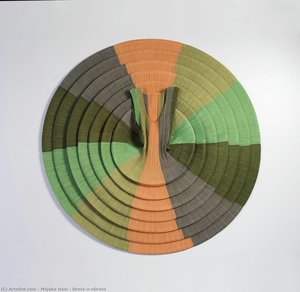
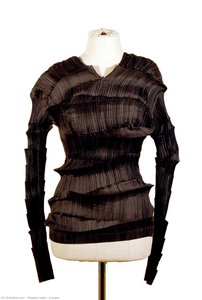
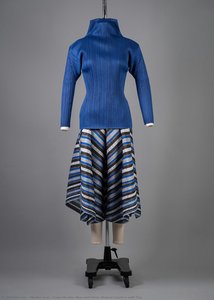
Miyake’s design philosophy was never confined by the traditional boundaries of a garment. Instead, he viewed clothing as a dynamic medium for technological experimentation. He sought to move away from the restrictive, structured tailoring of the past, favoring instead a sense of freedom, movement, and comfort. This pursuit led to his most iconic contribution to the sartorial world: the mastery of pleating. By utilizing innovative heat-treatment processes on fabric, he created garments that possessed an organic, sculptural quality—pieces that could expand, contract, and breathe alongside the wearer. His work became a dialogue between the static nature of textile and the kinetic energy of the human body, making his clothing feel less like a costume and로 more like a second, more expressive skin.
Innovation through Technology and Tradition
The brilliance of Miyake lay in his ability to marry ancient craftsmanship with futuristic technology. He was a pioneer of the A-POC (A Piece of Cloth) concept, a revolutionary method that utilized computer-aided design and knitting technology to create garments from a single continuous tube of fabric, minimizing waste and maximizing structural integrity. This approach reflected a profound respect for the lifecycle of materials and an avant-garde spirit that anticipated the sustainable movements of the modern era. His collections often featured bold, rhythmic patterns and vibrant colors that paid homage to Japanese cultural motifs while remaining resolutely contemporary.
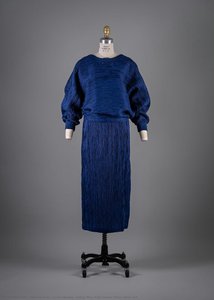
His achievements were recognized globally by the most prestigious institutions in fashion and art. Throughout his illustrious career, he was honored with the Neiman Marcus Award in 1996 and the CFDA Award in 1997, cementing his status as a titan of the industry. His work transcended the runway to enter the hallowed halls of museums, with exhibitions at the Metropolitan Museum of Art in New York showcasing his ability to bridge the gap between wearable art and high fashion. Notable collections, such as his celebrated "Dress Dress" series, continue to be studied for their intricate folds and structural complexity, preserved in institutions like the Powerhouse Museum in Sydney.
A Lasting Impression on Global Design
The historical significance of Issey Miyake extends far beyond the garments he produced. He inspired a generation of designers to view textiles not as passive surfaces, but as active participants in the design process. By integrating technology into the very fiber of his creations, he paved the way for the digital revolution in fashion. His legacy is defined by several key pillars:
- The Fusion of East and West: He successfully synthesized the minimalist elegance of Japanese tradition with the structural boldness of Western couture.
- Technological Pioneering: His use of heat-pressed pleating and automated knitting redefined the possibilities of textile manufacturing.
- Human-Centric Design: He prioritized the wearer's comfort and movement, breaking the mold of restrictive high fashion.
- Sustainable Vision: Through concepts like A-POC, he introduced early iterations of zero-waste design principles to the global stage.
Though he passed away in 2022, the spirit of Issey Miyake remains vibrant in every fold and pleat of his enduring work. He did not just design clothes; he designed a new way for humanity to inhabit space through fabric. His life stands as a testament to the power of innovation when tempered by a deep respect for tradition and an unwavering curiosity about the future.
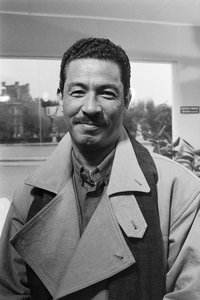
miyake issei
1938 - 2022 , Japan
Quick Facts
- Artistic Movement Or Style: Innovative, technology-driven, pleated
- Artists Or Movements Influenced By This Artist: ['Modern fashion designers']
- Artists Who Influenced This Artist:
- Guy Laroche
- Pierre Cardin
- Christian Dior
- Date Of Birth: April 22, 1938
- Date Of Death: 2022
- Full Name: Issey Miyake
- Nationality: Japanese
- Notable Artworks:
- Dress dress collection
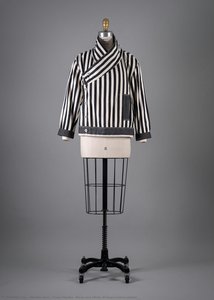
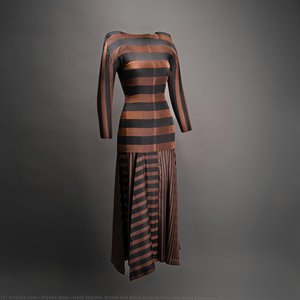
- Brown and black striped polyester skirt
- Place Of Birth: Hiroshima, Japan
Related Articles

White on Canvas: 10 Masterpieces & Timeless Elegance for Your Home Decor
Explore 10 iconic white paintings by Monet, Whistler & Rothko! Discover the stories behind these serene masterpieces and their impact on art history. Find museum-quality reproductions for your home decor at .

Dark Masterpieces: 10 Iconic Paintings Dominated by Black Tones |
Explore 10 iconic paintings dominated by black tones, from Rembrandt’s chiaroscuro to Goya's dark expressions. Discover the stories behind these masterpieces & find museum-quality art reproductions for your home at .

Monochrome Visions: Exploring the Aesthetic & Historical Significance of Black & White Photography
Explore the rich history & artistic power of black and white photography. From early techniques to iconic masters like Ansel Adams, discover why monochrome continues to captivate art lovers today. Expert insights for collectors.
Mikhail Larionov: Rayonism, Primitivism & the Dawn of Russian Avant-Garde Painting
Explore the revolutionary art of Mikhail Larionov & the Russian Avant-Garde. Discover Rayonism, Primitivism's influence, and his lasting impact on modern painting. Expert insights for collectors.
Gianfranco Ferré: Deconstructing Haute Couture – A Legacy of Architectural Form
Explore the revolutionary world of Gianfranco Ferré, 'the architect of fashion.' Discover his architectural approach to haute couture, iconic Dior designs, and lasting influence on luxury style. A deep dive for collectors & enthusiasts.
![Dress [Left]\nDress [Right]](/media/artworks/images-thumb/7e/1f/7e1ff5a4e5bb9818b88d0532309a5f62.jpg)