 Preview
 Send
Send Share
Share
 Details

 Download
 Similars
 X-Ray
X-Ray Diaporama
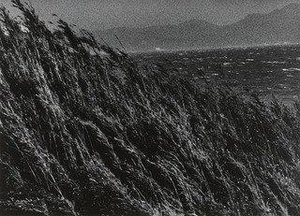
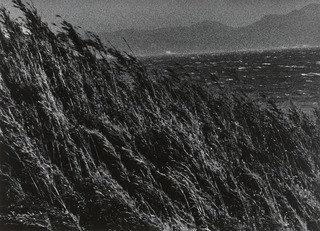
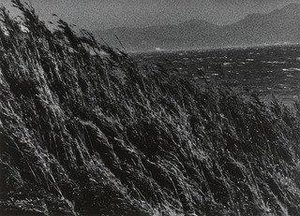
Untitled 5 from the series Yokosuka Story
 1977
1977 36.0 x 50.0 cm
 Read More
Giclée / Art Print
Museum-quality giclée or canvas print with fast production and flexible finish options. ( Buy Hand Made Painting Buy Image)




































Pick from our preset sizes that match the artwork's original proportions.

You may enter your own dimensions to fit a specific frame or space. If your selected size does not match the original image's proportions, we will either crop the artwork or extend the image with a mirrored or solid-fill edge. A digital mockup will be sent for your approval before production begins.
Please note that the on-screen preview does not reflect the actual cropping or extension. Only the mockup will accurately show the final composition.
While custom sizes are available, we recommend selecting a dimension from the predefined list to preserve the original proportions.
Worldwide Delivery () in 2 weeks instead of standard 4/5 weeks. (30 August)

Free Worldwide Express Shipping

High-Quality Linen Canvas

Full Shipping Insurance

Customs Tax Refund Guarantee

True Color Matching Guarantee

60-Day Return Policy (Defects Only)

100% Money-Back Guarantee

Bulk Discount Offer
 Glass option is only available in size under 110 CM

Untitled 5 from the series Yokosuka Story
Giclée / Art Print
Reproduction Size
-


Total Price
$ 63
Related Artworks





Artist Biography
The Texture of Memory: The Visionary World of Miyako Ishiuchi
To look through the lens of Miyako Ishiube is to witness a profound dialogue between the tangible and the ephemeral. Born in 1947 in the Nitta District of Gunma Prefecture, Ishiuchi’s artistic consciousness was forged in the complex atmosphere of postwar Japan. Growing up in Yokosuka, a city defined by the heavy presence of the American naval base, she inhabited a landscape marked by societal shifts and the lingering shadows of nuclear anxiety. This early exposure to a world caught between occupation and reconstruction instilled in her a lifelong fascination with the concept of trauma—not merely as a historical event, but as a physical residue left upon objects, skin, and urban landscapes.
Her journey into the visual arts began not with a camera, but with the tactile intimacy of textiles. While studying at Tama Art University, she specialized in textile dyeing and weaving, a discipline that would fundamentally shape her photographic eye. This background in craft gifted her an unparalleled sensitivity to texture; where others might see a simple surface, Ishiuchi perceives a narrative of decay, strength, and time. Her photographs often possess a sculptural quality, treating the grain of a print or the wrinkles of aging skin with the same reverence one might accord to a woven fabric.
The Yokosuka Story and the Aesthetic of Decay
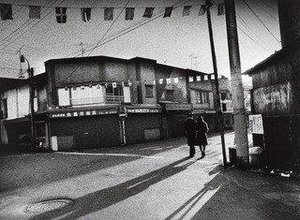
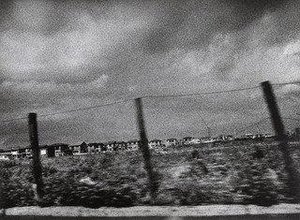
Ishiuchi’s emergence onto the international stage was marked by her seminal series, Yokosuka Story (1976–1977). In this work, she turned her gaze toward the streets and structures of her youth, documenting a city grappling with its own identity. Eschewing the polished clarity of traditional portraiture, she embraced an aesthetic often described as are-bure, boke—grainy, blurry, and out-of-focus. This technique was far from accidental; the gritty, high-contrast textures served to mirror the raw, unvarnished reality of urban existence and the psychological weight of the postwar era.
Through her work, the mundane becomes monumental. A weathered wall or a discarded object is transformed into a vessel for collective memory. Her ability to fuse the personal with the political allowed her to navigate the complex history of Japan’s relationship with the West, using the intimate details of daily life to comment on larger societal transformations. This period also saw her organizing Hyakka Ryoran (All-Women Photography), an exhibition that asserted her presence within a male-dominated photographic establishment and highlighted her role in shaping the discourse of contemporary Japanese photography.
Legacy and the Weight of the Image
As her career progressed, Ishiuchi’s themes expanded from the urban landscape to the deeply intimate. Her later works often explore the concept of the trace—the marks left behind by life, death, and passage. Whether she is documenting the artifacts of Hiroshima or capturing the intricate patterns of aging skin, her work remains a meditation on vulnerability and the persistence of memory. She possesses a rare ability to find beauty in the unsettling, inviting viewers to confront the inevitable processes of erosion and loss.
The significance of Miyako Ishiuchi’s contribution to art cannot be overstated. Her accolades reflect a global recognition of her mastery:
- Hasselblad Foundation International Award in Photography (2014): One of the highest honors in the photographic world, recognizing her profound impact on the medium.
- Venice Biennale Representation (2005): A testament to her status as a leading voice in contemporary global art.
- Institutional Recognition: Her work is preserved in the permanent collections of the Museum of Modern Art (MoMA), the J. Paul Getty Museum, and the Art Institute of Chicago.
Ultimately, Ishiuchi’s photography serves as a bridge between the seen and the felt. She teaches us that every scar, every grain, and every shadow holds a story, urging us to look closer at the textures of our own existence and the fragile histories we carry with us.
miyako ishiuchi
1947 -
Quick Facts
- Artistic Movement Or Style: Gritty Realism
- Artists Or Movements Influenced By This Artist: ['Postwar Photography']
- Artists Who Influenced This Artist:
- Daido Moriyama
- Shomei Tomatsu
- Date Of Birth: March 27, 1947
- Full Name: Miyako Ishiuchi
- Nationality: Japanese
- Notable Artworks:
- Untitled 30
- Yokosuka Story
- Place Of Birth: Nitta District, Gunma