

 Send
Send Share
Share
 Details

 Download
 Similars
 Diaporama
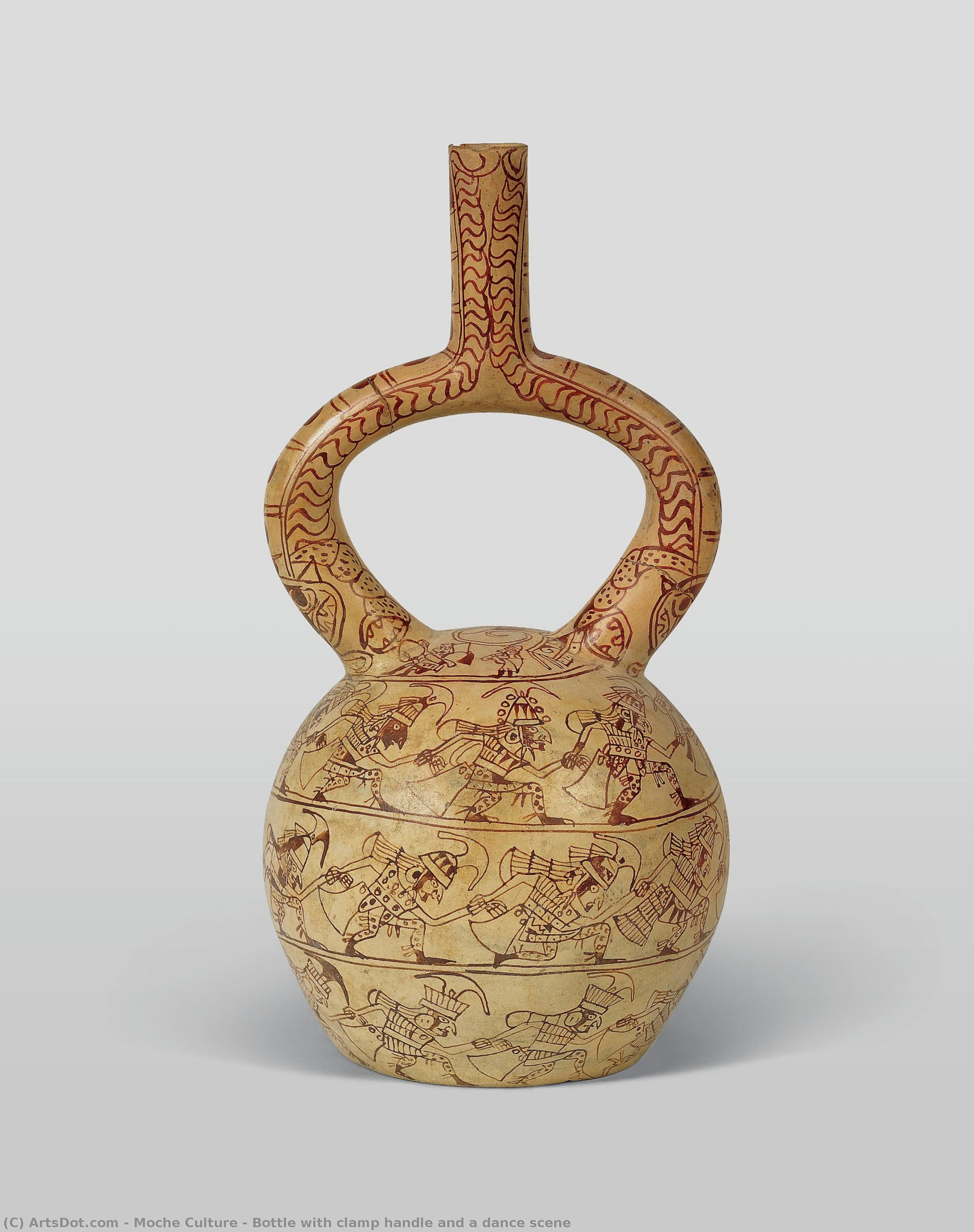
Bottle with clamp handle and a dance scene


 Read More
Purchase a high-resolution, enhanced digital image, far superior to the online preview.
Each file is meticulously prepared by our in-house specialists using advanced tools and expert manual retouching. We ensure every image has exceptional clarity, precise color accuracy, and fine detail.
The final file is delivered via email within 72 hours, optimized for immediate use in professional, editorial, and print environments. This is the same quality trusted by top-tier design studios, publishers, and galleries.
Digital Image
Download a high-resolution file for personal display, printing, and creative projects. ( Buy Print Buy Hand Made Painting)
Included in Every Digital Image Order
Expert Digital Delivery, Guaranteed
When you choose ArtsDot.com, you're not just getting an image - you're receiving a professionally enhanced digital artwork, crafted with precision and backed by a satisfaction guarantee. Here's everything that comes with your order, automatically:

Fast Email Delivery
Your high-resolution digital image file will be emailed to you within 72 hours of ordering - ready for immediate use.

AI-Enhanced Digital File
Your artwork is professionally optimized using advanced AI tools and manual editing, ensuring maximum detail, clarity, and color accuracy.

Free Lifetime Re-Delivery
Accidentally deleted or lost your file? No worries - we'll resend it to you anytime, free of charge.

No Import Fees - Ever
Enjoy your artwork instantly with zero customs, duties, or delivery fees - digital downloads are always tax-free.

Color Accuracy Guarantee
We ensure your digital image reflects the original colors as closely as possible using professional tools and color management.

60-Day Satisfaction Guarantee
If you're not satisfied with your digital image, we'll revise it or refund 100% within 60 days - no questions asked.

100% Money-Back Guarantee
Not satisfied? Get a full refund within 60 days of receiving your digital file - no questions asked.

Bulk Order Discounts
Buy 3 images, save 10% - Buy 5, save 15% - Buy 10+, save 20%. Great for creative projects, galleries, and agencies.
Collectible Description
Related Artworks
Artist Biography
The Moche Culture: Masters of Ceramic Art and Ritual Imagery
The Moche culture, flourishing along Peru’s arid coast between 100 AD and 700 AD, stands as a testament to artistic innovation and complex social organization. Unlike many contemporaneous civilizations that consolidated into empires, the Moche comprised a constellation of independent polities united by shared traditions—primarily centered around their unparalleled mastery of ceramic art and their profound engagement with religious beliefs. Their legacy continues to fascinate archaeologists and artists alike, offering glimpses into a vibrant society grappling with questions of power, fertility, and the afterlife.- Origins and Geography: Situated in what is now Peru’s Lambayeque Region, the Moche thrived amidst challenging environmental conditions—primarily reliant on irrigation agriculture to cultivate crops like maize, quinoa, and beans. This dependence fostered a sophisticated understanding of botany and animal husbandry, which subtly informed their artistic representations.
- Ceramic Innovation: The Moche’s fame rests principally upon their ceramic production, particularly the stirrup-spout vessels—a revolutionary technique involving molds cast from bronze patterns. These vessels weren't merely utilitarian objects; they served as canvases for extraordinarily detailed figurative scenes depicting daily life, ritual processions, and mythological narratives. Artists meticulously rendered human figures, animals (especially birds), plants, and geometric motifs with astonishing precision.
- Iconography and Symbolism: Moche art is rife with symbolism reflecting their cosmology. Recurring motifs include serpents representing fertility and regeneration, stylized birds symbolizing divine messengers, and depictions of rulers engaged in ceremonial activities. These images convey not just visual information but also spiritual concepts—beliefs about creation myths, ancestor veneration, and the cyclical nature of existence.
- Monumental Architecture: Beyond ceramics, the Moche constructed impressive adobe pyramids and temples adorned with elaborate murals. Sites like Huaca Puclaro and Kuahuaynamarca showcase remarkable architectural skill and artistic ambition. The monumental scale of these structures underscores the importance of religion and social hierarchy in Moche society.
- Legacy and Influence: Although the Moche civilization collapsed abruptly around 700 AD, its artistic achievements endured, influencing subsequent cultures in Peru and beyond. The stirrup-spout technique continued to be practiced for centuries after the Moche’s decline, demonstrating the lasting impact of their innovations. Furthermore, Moche iconography—particularly depictions of birds and serpents—appears in Andean art traditions that persist today.
Notable Achievements: Stirrup Spout Vessels and Murals
The stirrup-spout vessel represents the zenith of Moche ceramic artistry. These vessels, ranging from diminutive figurines to colossal monuments, achieved unparalleled levels of realism and detail—a feat unmatched by contemporary cultures. Artists utilized a complex process involving bronze molds and meticulous glazing techniques to produce surfaces that captured subtle textures and colors with remarkable accuracy. The murals adorning Huaca Puclaro and Kuahuaynamarca are equally impressive, showcasing vibrant pigments derived from minerals like cinnabar and hematite. These murals depict scenes of ritual processions, royal ceremonies, and mythological narratives—providing invaluable insights into Moche beliefs and artistic conventions.Religious Beliefs and Ritual Practices
Moche religion centered on a pantheon of deities associated with fertility, agriculture, and celestial phenomena. Serpents played a prominent role in Moche iconography, symbolizing regeneration and embodying divine power. Birds—particularly hummingbirds and raptors—were venerated as messengers of the gods and depicted frequently in art. Ritual practices included offerings to appease deities and elaborate ceremonies commemorating important events—such as births, deaths, and agricultural harvests. Evidence suggests that child sacrifice was practiced during religious rituals—a controversial aspect of Moche culture that continues to provoke scholarly debate.Influence on Andean Art Traditions
The artistic innovations of the Moche culture reverberated throughout Andean art traditions for centuries after their decline. The stirrup-spout technique persisted as a dominant ceramic form, demonstrating the enduring legacy of Moche craftsmanship. Moreover, Moche iconography—particularly depictions of birds and serpents—appeared in textiles, sculptures, and murals produced by subsequent cultures—such as the Nazca and Chimú civilizations. These artistic borrowings underscore the interconnectedness of Andean art history and testify to the lasting influence of the Moche masters.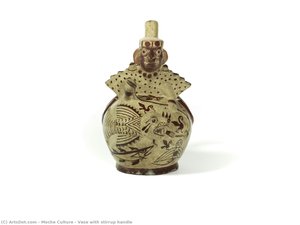
moche culture
Peru
Quick Facts
- Artistic Movement Or Style: Ceramic Art
- Full Name: Moche Culture
- Nationality: Peruvian
- Notable Artworks:
- Stirrup-spout bottle
- Vase with stirrup handle
- Place Of Birth: Peru

