 Preview
 Send
Send Share
Share
 Details

 Download
 Similars
 X-Ray
X-Ray Diaporama
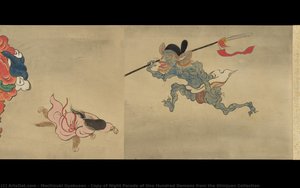
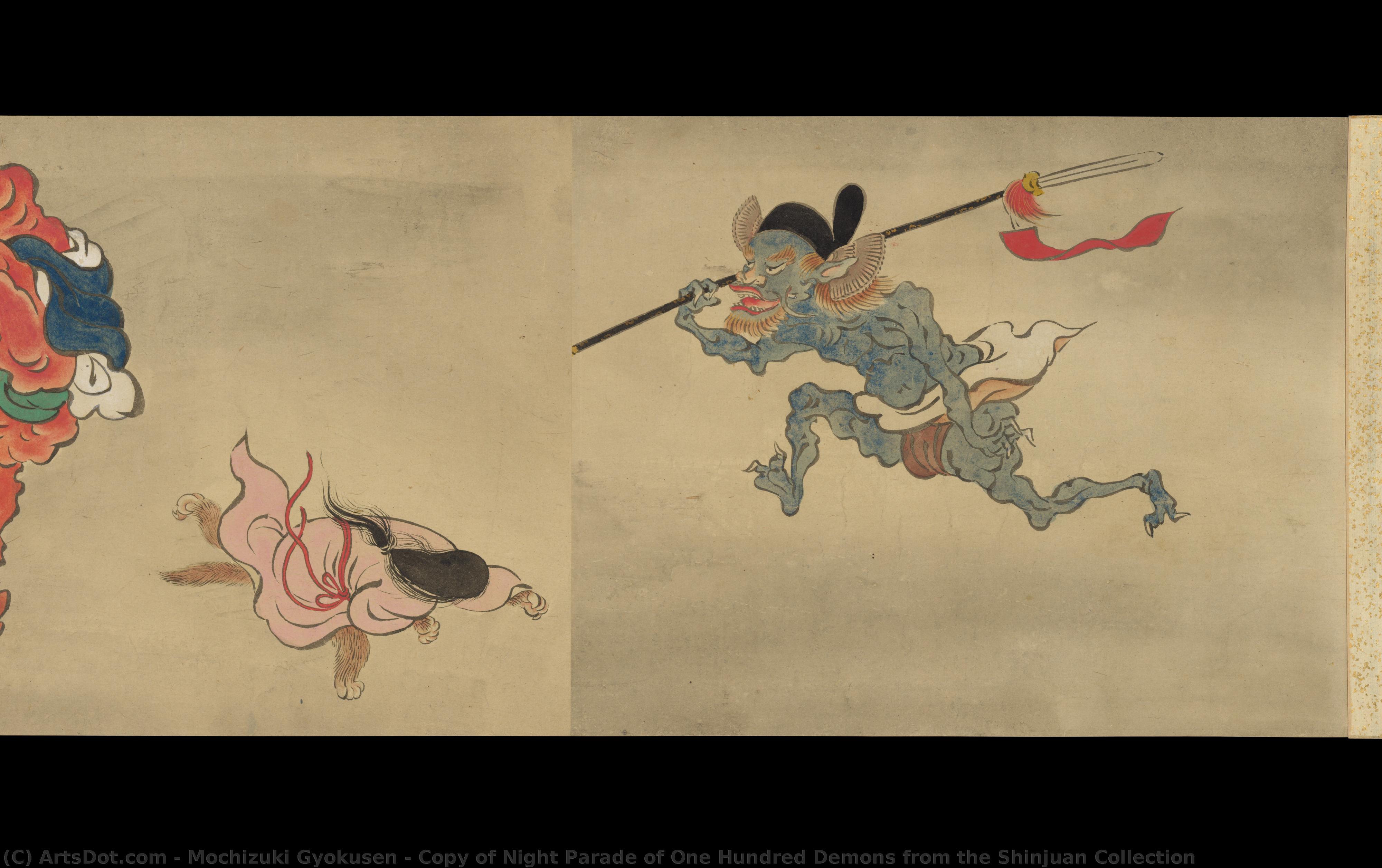
Copy of Night Parade of One Hundred Demons from the Shinjuan Collection


 Read More
Hand Made Oil Reproduction
Hand-painted oil on canvas in your size and frame, made to order by our artists. ( Buy Print Buy Image)




































Pick from our preset sizes that match the artwork's original proportions.

You may enter your own dimensions to fit a specific frame or space. If your selected size does not match the original image's proportions, we will either crop the artwork or extend the painting with additional hand-painted elements. A digital mockup will be sent for your approval before production begins.
Please note that the on-screen preview does not reflect the actual cropping or extension. Only the mockup will accurately show the final composition.
While custom sizes are available, we recommend selecting a dimension from the predefined list to preserve the original proportions.
After order, ArtsDot.com team will email client for instructions and provide a mockup preview
Worldwide Delivery () in 3/4 weeks instead of standard 5 weeks. (17 August). No compromise on quality.

Free Worldwide Express Shipping

High-Quality Linen Canvas

Full Shipping Insurance

Customs Tax Refund Guarantee

True Color Matching Guarantee

60-Day Return Policy (Defects Only)

100% Money-Back Guarantee

Bulk Discount Offer
 Glass option is only available in size under 110 CM

Copy of Night Parade of One Hundred Demons from the Shinjuan Collection
Reproduction Medium
Reproduction Size
-


Total Price
$ 288
Artwork Description
Related Artworks

Artist Biography
The Legacy of a Kyoto Clan: Mochizuki Gyokusen and the Nanga Tradition
Mochizuki Gyokusen, born in Kyoto in 1794 and passing away in 1852, represents not merely an individual artist but the continuation of a vibrant lineage within the Japanese art world. He was the third generation principal of the Mochizuki school, a clan deeply rooted in the aesthetic principles of Nanga painting – a style that embraced literati traditions imported from China and infused them with uniquely Japanese sensibilities. To understand Gyokusen is to trace the evolution of this artistic approach through the Edo period, witnessing its adaptation, refinement, and enduring appeal.
The origins of the Mochizuki school lie with Gyokusen’s grandfather, also named Mochizuki Gyokusen (1692-1755), a samurai who initially honed his skills in lacquer work before dedicating himself to painting. This early training instilled a meticulous attention to detail that would become a hallmark of the family style. The first Gyokusen's journey began with studies under masters of both the Tosa and Kano schools, but he ultimately found resonance in the expressive freedom of Chinese art, particularly the works of the literati painters. He established a distinctive voice characterized by landscapes imbued with poetic nuance, delicate flower paintings, and refined portraiture. This foundation was crucial; it set the stage for his successors to build upon.
A Family Style: Continuity and Nuance
The second generation, Mochizuki Gyokusen (1744-1795), continued the school’s trajectory with remarkable consistency. He skillfully navigated a range of techniques – from sumi ink painting to richly colored compositions – maintaining the family's reputation for versatility and quality. However, distinguishing between the works of the first two Gyokusens can be challenging, as they often employed similar signatures and stylistic approaches. This continuity speaks to the school’s commitment to preserving its core aesthetic principles, but also highlights a potential complexity for modern scholars seeking to attribute specific pieces.
It was with Mochizuki Gyokusen III – our subject – that the school reached a new level of prominence. Born into this established artistic heritage, he benefited from exposure to diverse influences throughout his career. He initially studied at Ninomaru Palace in Kanazawa Castle under Kishi Ganku and later with Matsumura Goshun of the Shijo School. Further studies with Murakami Tōshu and Saeki Ganku broadened his perspective, culminating in a period of apprenticeship with the influential Tani Bunchō in Edo. This eclectic training shaped Gyokusen’s mature style – a harmonious blend of literati painting, landscape traditions, and a distinctly Japanese sensibility.
Themes and Techniques: A Poetic Vision
Gyokusen's paintings often depict serene landscapes, evocative scenes from nature, and subjects drawn from classical Chinese literature. His mastery of ink wash techniques allowed him to create atmospheric depth and subtle gradations of tone, capturing the essence of the natural world with remarkable precision. He was particularly adept at portraying bamboo, plum blossoms, and other symbols associated with resilience, integrity, and scholarly pursuits. His “Night Parade of One Hundred Demons” (1801), a woodblock print based on earlier handscroll versions from the Shinjuan temple, exemplifies his ability to blend traditional motifs with a captivating visual narrative. The work showcases Ukiyo-e style, rich colors and folklore – a testament to his versatility.
Gyokusen’s skill extended beyond painting to calligraphy, further solidifying his position as a true literati artist. He believed that painting and calligraphy were inseparable arts, each enhancing the expressive power of the other. His calligraphic works often accompanied his paintings, adding layers of meaning and poetic context.
Historical Significance: Patronage and Legacy
Mochizuki Gyokusen enjoyed patronage from both private collectors and the Imperial Palace, a testament to the quality and refinement of his work. He played a key role in the modernization of art in Kyoto and was instrumental in founding the Kyoto Prefectural School of Arts, contributing significantly to the education of future generations of artists. The school continued through subsequent generations – Gyokusen IV (1834-1913) becoming an official artist to the emperor and blending nihonga with Western realism, and Gyokkei (1874-1938) further refining the family style.
While perhaps not as widely recognized internationally as some of his contemporaries, Mochizuki Gyokusen’s contribution to Japanese art is significant. He embodied the spirit of Nanga painting – a reverence for tradition, a commitment to artistic excellence, and a profound appreciation for the beauty of nature. His legacy lives on through the works preserved in museums and private collections, offering a glimpse into the rich cultural landscape of Edo-period Japan.
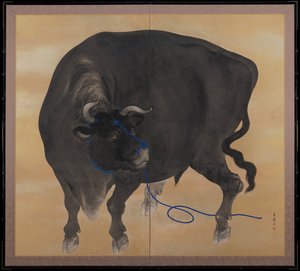
mochizuki gyokusen
1794 - 1852 , Japan
Quick Facts
- Artistic Movement Or Style: Nanga painting
- Artists Who Influenced This Artist: ['Chinese painters']
- Date Of Birth: 1794
- Date Of Death: 1852
- Full Name: Mochizuki Gyokusen
- Nationality: Japanese
- Notable Artworks: ['Night Parade of Demons']
- Place Of Birth: Kyoto, Japan
Related Articles

Hokusai's Masterpieces: 25 Iconic Prints & Paintings for Art Lovers | ArtsDot
Journey through Katsushika Hokusai’s 25 most iconic artworks, including *The Great Wave*. Explore the ukiyo-e master's history, style & timeless Japanese woodblock prints. Find museum-quality reproductions for your home at ArtsDot.com.
The Enduring Legacy of Woodblock Printmaking: Technique, History & Artistic Expression
Explore the rich history of woodblock printmaking – from ancient techniques to Ukiyo-e masterpieces. Discover expert insights on collecting, preserving & appreciating this enduring art form.

Giclée Prints: Archival Quality & Aesthetic Nuances for the Discerning Collector
Explore the world of giclée prints with ArtsDot. Learn about archival quality, aesthetic nuances & investment potential. Expert guidance for discerning art collectors seeking museum-quality reproductions and lasting value.
Ukiyo-e's Greatest Hits: 10 Masterpieces That Shaped a Movement | ArtsDot
Journey into Japan's 'Floating World'! Explore 10 Ukiyo-e masterpieces by Hokusai, Hiroshige & more. Discover the stories behind these iconic woodblock prints and bring timeless Japanese art to your home with ArtsDot.com. Explore the full collection online.
Tsukioka Yoshitoshi: A Master of Ukiyo-e's Final Flourish – Narrative, Innovation, and the Meiji Transition
Explore the life & art of Tsukioka Yoshitoshi, the last great master of ukiyo-e woodblock printing. Discover his dramatic warrior prints, innovative series like 'One Hundred Aspects of the Moon,' and legacy reflecting Japan's Meiji transition.