 Preview
 Send
Send Share
Share
 Details

 Download
 Similars
 X-Ray
X-Ray Diaporama
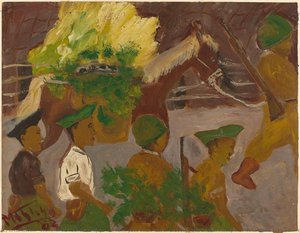
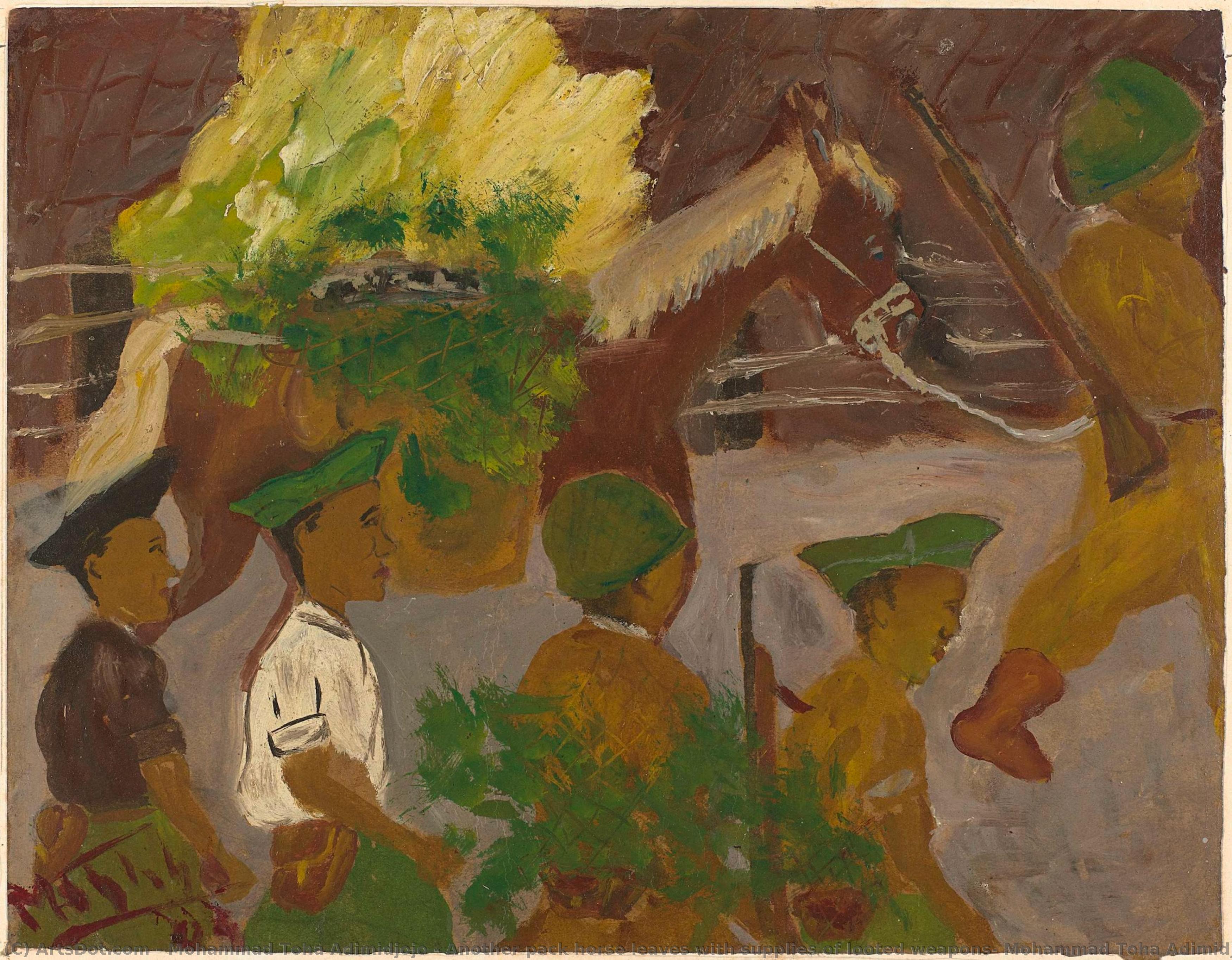
Another pack horse leaves with supplies of looted weapons, Mohammad Toha Adimidjojo, 1949
 1949
1949 25.0 x 33.0 cm
 Read More
Hand Made Oil Reproduction
Hand-painted oil on canvas in your size and frame, made to order by our artists. ( Buy Print Buy Image)




































Pick from our preset sizes that match the artwork's original proportions.

You may enter your own dimensions to fit a specific frame or space. If your selected size does not match the original image's proportions, we will either crop the artwork or extend the painting with additional hand-painted elements. A digital mockup will be sent for your approval before production begins.
Please note that the on-screen preview does not reflect the actual cropping or extension. Only the mockup will accurately show the final composition.
While custom sizes are available, we recommend selecting a dimension from the predefined list to preserve the original proportions.
After order, ArtsDot.com team will email client for instructions and provide a mockup preview
Worldwide Delivery () in 3/4 weeks instead of standard 5 weeks. (3 September). No compromise on quality.

Free Worldwide Express Shipping

High-Quality Linen Canvas

Full Shipping Insurance

Customs Tax Refund Guarantee

True Color Matching Guarantee

60-Day Return Policy (Defects Only)

100% Money-Back Guarantee

Bulk Discount Offer
 Glass option is only available in size under 110 CM

Another pack horse leaves with supplies of looted weapons, Mohammad Toha Adimidjojo, 1949
Reproduction Medium
Reproduction Size
-


Total Price
$ 263
Related Artworks




Artist Biography
A Witness to Revolution: The Life and Art of Mohammad Toha Adimidjojo
Mohammad Toha Adimidjojo (born 1937, still living) is a name inextricably linked with the Indonesian struggle for independence. More than simply an artist, he was a young chronicler, a visual historian who documented the tumultuous years of revolution through a series of poignant watercolor paintings created while living under occupation. His work offers a rare and deeply personal perspective on a period defined by conflict, displacement, and unwavering national spirit. Born into a world already simmering with unrest, Toha’s artistic journey began not in formal training but amidst the chaos of war and resistance. He was just eleven years old when the Dutch launched their second military offensive against Yogyakarta in December 1948 – an event that would forever shape his life and art.Early Life and Artistic Beginnings
Yogyakarta, a cultural heartland of Java, became Toha’s open-air studio during this period. Before the invasion, he had already begun receiving lessons from Dullah, a prominent Social Realist painter who recognized the young boy's talent. However, it was the unfolding events of 1948 that truly ignited his artistic purpose. Dullah conceived a daring plan: to train a group of boys – including Toha – as “documentary painters,” tasked with secretly recording the realities of life under siege and occupation. This wasn’t merely about creating art; it was an act of resistance, a way to preserve a visual record of events that authorities sought to control or erase. Equipped with basic watercolor supplies, these young artists navigated the dangerous streets of Yogyakarta, becoming silent observers and courageous recorders of their surroundings. Their work provided invaluable insight into the daily struggles and resilience of the Indonesian people during this critical time. The inherent risk involved – capture meant potential imprisonment or worse – underscores the bravery and dedication that characterized Toha’s early artistic endeavors.Painting Under Occupation: A Chronicle of Conflict
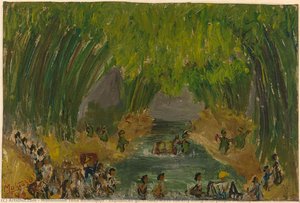
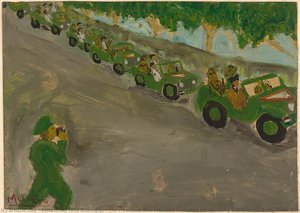
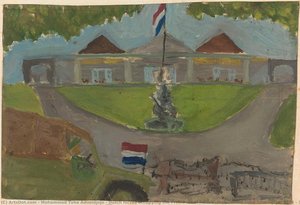
Toha's paintings from 1948-1949 are remarkable for their immediacy and emotional depth, despite being created by a child. He captured scenes of Dutch military operations, the forced transportation of Republican leaders to Sumatra, and the desperate exodus of civilians fleeing the city along the Code River. His palette is restrained, often employing somber blacks and whites that reflect the gravity of the situation. The compositions are direct and unadorned, focusing on conveying the human cost of conflict. “Dutch forces occupying the Presidential Palace”, for example, depicts a stark scene of occupation, its simplicity amplifying the sense of loss and vulnerability. Another powerful work shows the President and Vice-President being transported to exile, a symbol of national upheaval. These paintings weren’t created for galleries or exhibitions; they were born out of necessity – a desperate attempt to bear witness and preserve memory. The fact that these works survived at all is testament to their importance and the courage of those who protected them.Legacy and Historical Significance
Mohammad Toha Adimidjojo’s contribution extends beyond his artistic skill; he represents a generation of Indonesians who fought for independence through various means, including acts of quiet resistance like documenting their experiences. His paintings offer a unique counter-narrative to official accounts of the revolution, providing a ground-level perspective on the conflict and its impact on ordinary people. The Rijksmuseum in Amsterdam has recognized his significance, featuring his work in the “Revolusi” exhibition, highlighting the importance of these paintings as historical documents and artistic achievements. While he continued to paint throughout his life, it is these early watercolors – created under extraordinary circumstances – that remain his most enduring legacy. They serve as a powerful reminder of the sacrifices made during Indonesia’s struggle for freedom and the vital role art can play in preserving collective memory. His work continues to resonate today, offering valuable insights into a pivotal moment in Indonesian history and inspiring future generations of artists to use their voices to document and reflect on the world around them.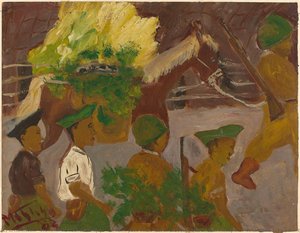
Quick Facts
- Artistic Movement Or Style: Social Realism
- Artists Who Influenced This Artist: ['Dullah']
- Date Of Death: Living
- Full Name: Mohammad Toha Adimidjojo
- Nationality: Indonesian
- Notable Artworks:
- Dutch forces occupying the Presidential Palace
- The President exiled to Sumatra
- Republican guerrillas fleeing