

 Preview
 Send
Send Share
Share
 Details

 Download
 Similars
 X-Ray
X-Ray Diaporama
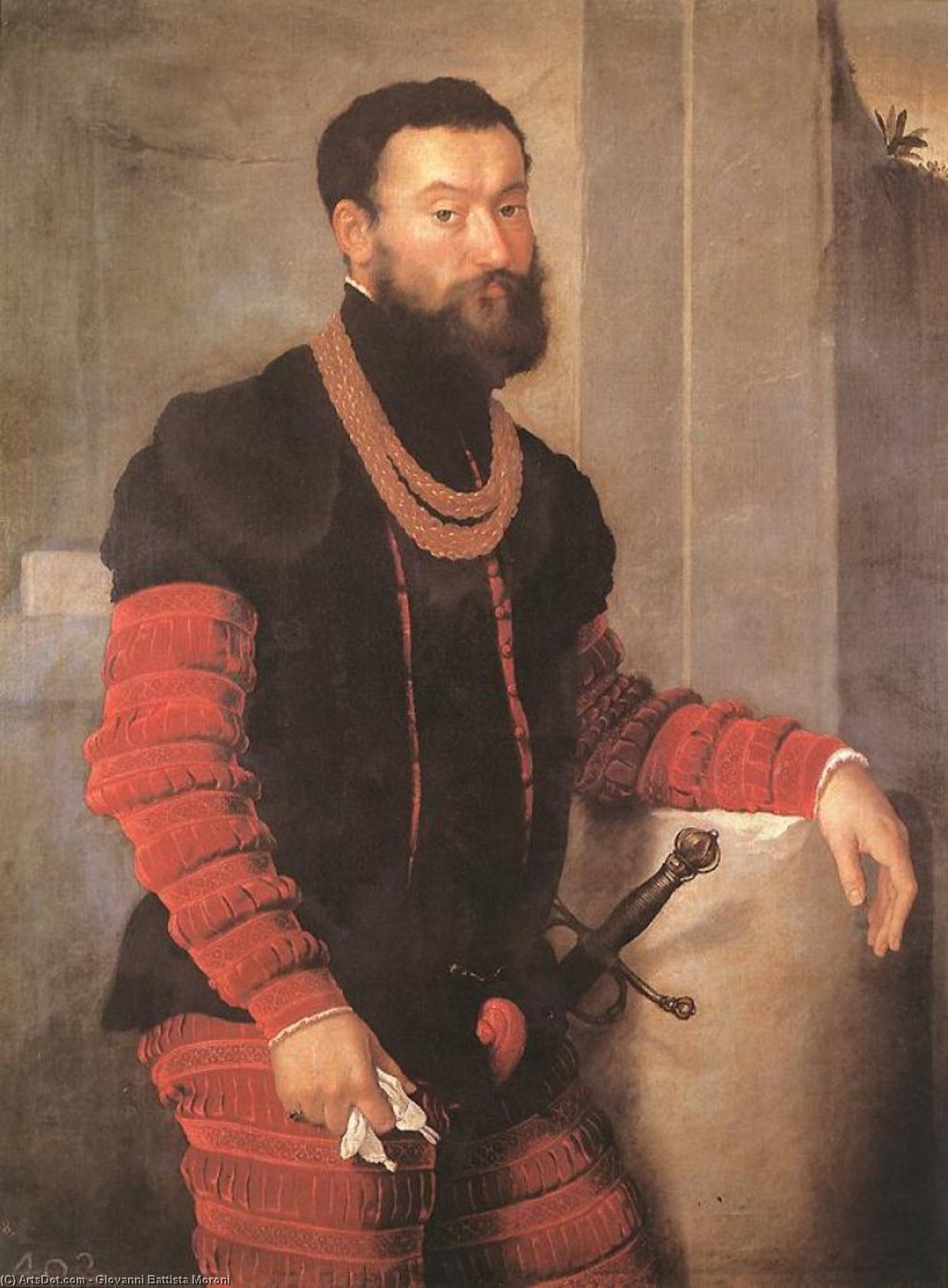
Portrait of a Soldier
 Oil On Canvas
- WallArt
- Renaissance Mannerism
 1555
1555- Renaissance
 119.0 x 91.0 cm
 Museo del Prado
 Read More
Purchase a high-resolution, enhanced digital image, far superior to the online preview.
Each file is meticulously prepared by our in-house specialists using advanced tools and expert manual retouching. We ensure every image has exceptional clarity, precise color accuracy, and fine detail.
The final file is delivered via email within 72 hours, optimized for immediate use in professional, editorial, and print environments. This is the same quality trusted by top-tier design studios, publishers, and galleries.
Digital Image
Download a high-resolution file for personal display, printing, and creative projects. ( Buy Print Buy Hand Made Painting)
Included in Every Digital Image Order
Expert Digital Delivery, Guaranteed
When you choose ArtsDot.com, you're not just getting an image - you're receiving a professionally enhanced digital artwork, crafted with precision and backed by a satisfaction guarantee. Here's everything that comes with your order, automatically:

Fast Email Delivery
Your high-resolution digital image file will be emailed to you within 72 hours of ordering - ready for immediate use.

AI-Enhanced Digital File
Your artwork is professionally optimized using advanced AI tools and manual editing, ensuring maximum detail, clarity, and color accuracy.

Free Lifetime Re-Delivery
Accidentally deleted or lost your file? No worries - we'll resend it to you anytime, free of charge.

No Import Fees - Ever
Enjoy your artwork instantly with zero customs, duties, or delivery fees - digital downloads are always tax-free.

Color Accuracy Guarantee
We ensure your digital image reflects the original colors as closely as possible using professional tools and color management.

60-Day Satisfaction Guarantee
If you're not satisfied with your digital image, we'll revise it or refund 100% within 60 days - no questions asked.

100% Money-Back Guarantee
Not satisfied? Get a full refund within 60 days of receiving your digital file - no questions asked.

Bulk Order Discounts
Buy 3 images, save 10% - Buy 5, save 15% - Buy 10+, save 20%. Great for creative projects, galleries, and agencies.
Collectible Description
The Authority and Elegance of Renaissance Portraiture
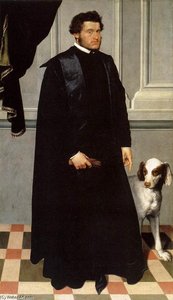
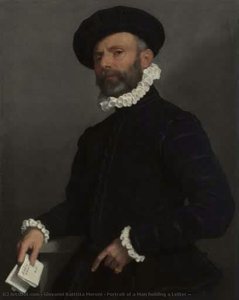
To gaze upon this portrait of a soldier is to step directly into the vibrant, complex world of the mid-sixteenth century. It is more than a mere likeness; it is a carefully constructed statement of status, authority, and enduring masculine dignity. The sitter commands attention with a direct, unwavering gaze that seems to penetrate the veil of centuries, inviting the modern viewer into an intimate moment with history itself. His attire speaks volumes—the dark doublet contrasted sharply by the rich, puffed sleeves and collar of red, suggesting not only military affiliation but also a certain elevated social standing within his time.
Mastery in Technique and Detail
The technical brilliance evident in this work is a testament to the skill of Giovanni Battista Moroni. The realism achieved is breathtaking; one can almost feel the texture of the heavy fabric, the subtle sheen on the leather accessories, or the weight of the medallion resting upon his chain. Moroni’s handling of light is particularly noteworthy. It falls across the subject's face with a soft, even luminescence, meticulously sculpting the planes of his features while allowing the deep shadows in the folds of his clothing to provide necessary depth. This attention to minute detail—from the fullness of his beard to the careful drape of the cloth held in his hand—elevates the painting from simple portraiture to a profound study in human character.
Historical Context and Symbolism
Dating to 1555, this piece emerges from a period of immense cultural flowering across Italy, where portraiture became an essential tool for commemorating lineage and power. The inclusion of the chain and medallion serves as potent symbolism; these are not just decorative elements but tangible markers of honor, rank, or civic achievement. The minimalistic background, punctuated only by a suggestion of architectural detail like a pilaster, ensures that all focus remains squarely upon the man himself. This compositional choice forces the viewer to engage with his bearing, interpreting the quiet confidence emanating from his posture.
An Enduring Presence for Modern Spaces
For the discerning collector or designer seeking an anchor of timeless sophistication, this reproduction offers unparalleled depth. It brings the gravitas and refined aesthetic of the High Renaissance into contemporary living spaces. Imagine this piece gracing a library, a formal drawing-room, or an executive office; it does not merely decorate—it elevates the atmosphere with its inherent narrative weight. Owning such a work is acquiring a dialogue with history, a tangible connection to the artistry and societal structures of a bygone era, all rendered with Moroni’s signature elegance.
Related Artworks

Artist Biography
Giovanni Battista Moroni: Life and Legacy
Early Life and Training
Giovanni Battista Moroni (also known as Giambattista Moroni) was born in Albino, near Bergamo, Italy, in 1520. His father, Andrea Moroni, was an architect, providing a formative environment for artistic development. He received his initial training under Alessandro Bonvicino (known as Moretto) in Brescia. This early apprenticeship laid the foundation for his technical skills and understanding of Renaissance painting techniques.
Artistic Development and Influences
Moroni’s artistic journey took him through various Italian cities, including Trento and Bergamo. A pivotal moment occurred during his stay in Trento where he encountered Titian and the Count-Bishop Cristoforo Madruzzo. Titian's influence is evident in Moroni’s use of color and sophisticated handling of light. While initially influenced by earlier Renaissance styles, Moroni gradually developed a distinctive Mannerist approach characterized by elegance and realism.
Key Characteristics of His Work
- Portraiture: Moroni is celebrated primarily for his portraits of the local nobility and clergy. These works are not merely likenesses but insightful studies of character, capturing the dignity and psychological depth of his sitters.
- Realism & Naturalism: He employed naturalistic techniques and a keen eye for detail, creating a sense of immediacy and presence in his portraits.
- Silvery Tonality: Moroni’s paintings are often distinguished by their exquisite silvery tonality, achieved through subtle gradations of light and shadow.
- Religious Paintings: While less numerous than his portraits, Moroni also produced religious canvases. These works exhibit a more archaic style, reminiscent of late Quattrocento compositions.
Notable Works
Among Moroni’s most renowned paintings are:
- The Tailor: Currently housed in the National Gallery, London, this painting exemplifies his realistic portrayal of everyday life and character.
- Gian Lodovico Madruzzo: A striking portrait showcasing Moroni’s ability to capture both power and introspection.
- Numerous portraits of members of the Bergamo nobility, providing a valuable visual record of 16th-century society.
Historical Significance & Legacy
Giovanni Battista Moroni’s work holds a significant place in Italian art history. He bridged the gap between High Renaissance ideals and the emerging Mannerist style, creating portraits that were both elegant and psychologically compelling. His influence extended to later artists such as Fra' Galgario and Pietro Longhi, who admired his ability to capture the essence of his subjects. Today, Moroni’s paintings are displayed in prestigious museums like the Uffizi Gallery and the National Gallery, continuing to inspire art lovers and scholars alike.
Final Thoughts
Moroni's legacy rests on his ability to elevate portraiture beyond mere representation. He infused his works with a sense of humanity and psychological depth that continues to resonate with audiences centuries later. His paintings offer a unique glimpse into the lives and personalities of 16th-century Italy, solidifying his position as a master of the Cinquecento era.
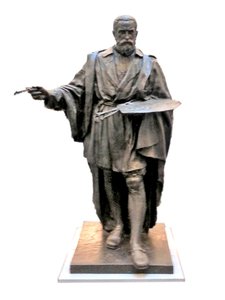
moroni, giovanni battista
1520 - 1578 , Italy
Quick Facts
- Birth Date: 1520
- Birth Place: Albino, Italy
- Death Date: 1578
- Influenced:
- Fra' Galgario
- Pietro Longhi
- Influenced By: Titian, Alessandro Bonvicino
- Movement: Mannerism
- Name: Giovanni Battista Moroni
- Nationality: Italian
- Notable Works:
- The Tailor
- Gian Lodovico Madruzzo

