

 Preview
 Send
Send Share
Share
 Details

 Download
 Similars
 X-Ray
X-Ray Diaporama
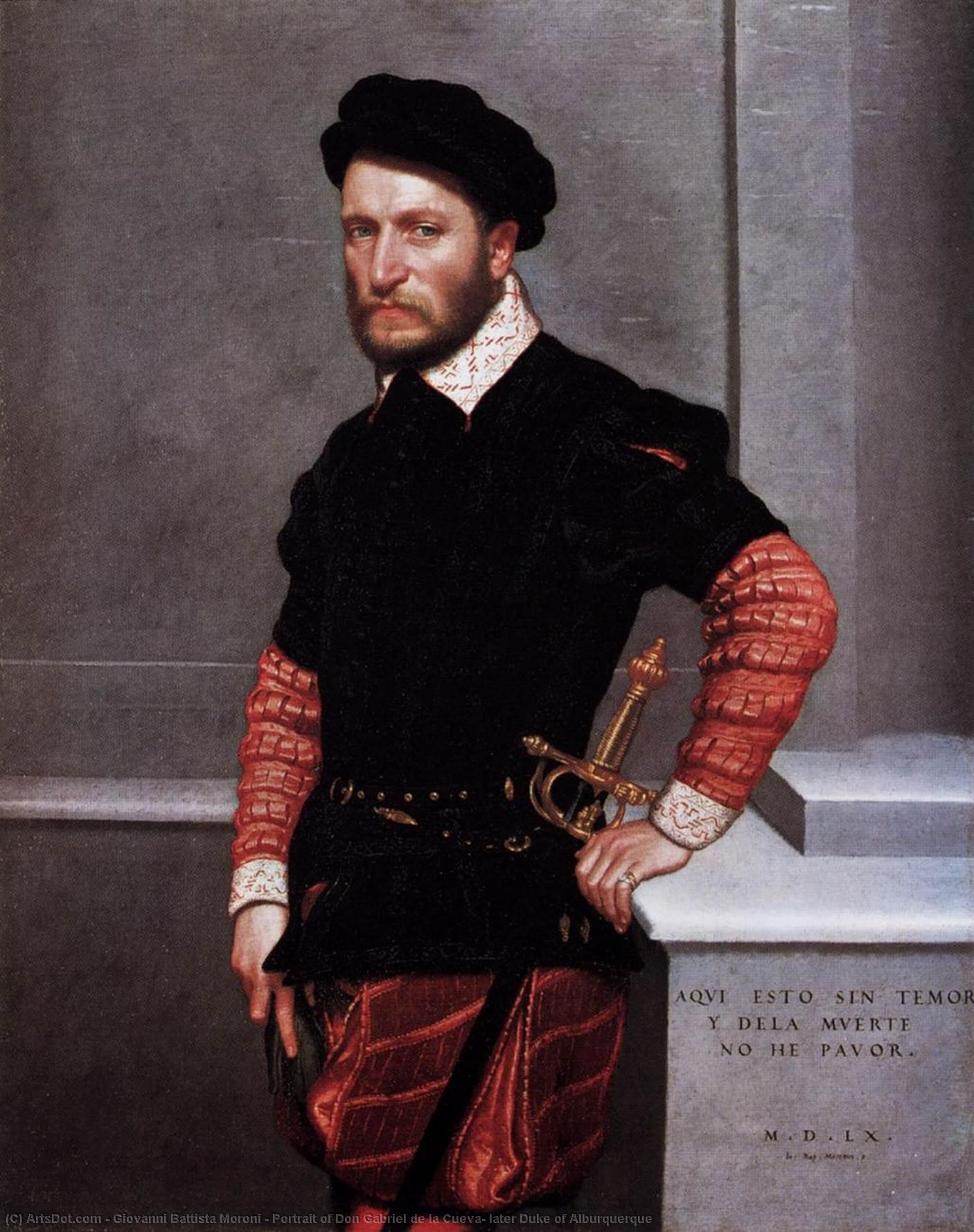
Portrait of Don Gabriel de la Cueva, later Duke of Alburquerque
 Oil On Canvas
- WallArt
- Mannerist Portraiture
 1560
1560- Renaissance
 115.0 x 91.0 cm
 Staatliche Museen
 Read More
Purchase a high-resolution, enhanced digital image, far superior to the online preview.
Each file is meticulously prepared by our in-house specialists using advanced tools and expert manual retouching. We ensure every image has exceptional clarity, precise color accuracy, and fine detail.
The final file is delivered via email within 72 hours, optimized for immediate use in professional, editorial, and print environments. This is the same quality trusted by top-tier design studios, publishers, and galleries.
Digital Image
Download a high-resolution file for personal display, printing, and creative projects. ( Buy Print Buy Hand Made Painting)
Included in Every Digital Image Order
Expert Digital Delivery, Guaranteed
When you choose ArtsDot.com, you're not just getting an image - you're receiving a professionally enhanced digital artwork, crafted with precision and backed by a satisfaction guarantee. Here's everything that comes with your order, automatically:

Fast Email Delivery
Your high-resolution digital image file will be emailed to you within 72 hours of ordering - ready for immediate use.

AI-Enhanced Digital File
Your artwork is professionally optimized using advanced AI tools and manual editing, ensuring maximum detail, clarity, and color accuracy.

Free Lifetime Re-Delivery
Accidentally deleted or lost your file? No worries - we'll resend it to you anytime, free of charge.

No Import Fees - Ever
Enjoy your artwork instantly with zero customs, duties, or delivery fees - digital downloads are always tax-free.

Color Accuracy Guarantee
We ensure your digital image reflects the original colors as closely as possible using professional tools and color management.

100-Day Satisfaction Guarantee
If you're not satisfied with your digital image, we'll revise it or refund 100% within 100 days - no questions asked.

100% Money-Back Guarantee
Not satisfied? Get a full refund within 100 days of receiving your digital file - no questions asked.

Bulk Order Discounts
Buy 3 images, save 10% - Buy 5, save 15% - Buy 10+, save 20%. Great for creative projects, galleries, and agencies.
A Glimpse into Renaissance Nobility: The Portrait of Don Gabriel de la Cueva
To stand before this portrait is to step directly across the threshold of the sixteenth century, into the rarefied air of aristocratic power and refined elegance. Giovanni Battista Moroni has captured not merely a likeness, but an entire persona—that of Don Gabriel de la Cueva, later Duke of Alburquerque. The subject confronts the viewer with an unwavering gaze, his presence commanding attention through sheer dignity. Dressed in rich hues of red and black, his attire speaks volumes of his elevated station within the Spanish courtly structure of the era. Moroni’s masterful handling ensures that every fold of fabric, every strand of beard, contributes to a narrative of enduring status.
Mastery of Form and Light: Technical Brilliance
Moroni's technique here is nothing short of breathtaking. While his early training provided him with solid Renaissance foundations, the execution seen in this piece showcases a developing Mannerist grace—a hallmark that lends the portrait its distinctive air of sophisticated artifice. Observe how the light seems to emanate from within the scene itself, catching the subtle sheen on the subject's garments and highlighting the texture of his beard. The composition is remarkably focused; the man dominates the frame, holding a sword positioned near his body—an object that functions as much as an extension of his identity as it does a mere prop. This meticulous detail, combined with Moroni’s celebrated ability to render flesh tones with such lifelike delicacy, elevates the work beyond simple portraiture into the realm of high art.
Symbolism and Status in Sixteenth-Century Portraiture
The inclusion of the sword is never accidental in a portrait of this stature. It is a potent symbol, suggesting not only martial prowess but also the inherent rights and responsibilities that accompanied noble lineage. The rich color palette itself—the deep reds often associated with passion and power, contrasted against somber blacks—reinforces the subject's gravitas. Moroni understood that in portraiture of this period, clothing was a language; it spoke of alliances, wealth, and unwavering social standing. This painting is thus a carefully constructed testament to identity, where every element serves to solidify the sitter’s place within the rigid hierarchy of his time.
An Enduring Presence for Modern Spaces
For the collector or designer seeking an anchor piece that whispers tales of history and unparalleled craftsmanship, this reproduction offers profound depth. The emotional impact is one of quiet authority; it does not shout its importance but rather demands contemplation through its sheer quality. Imagine this portrait gracing a hall or study—the subtle drama captured by Moroni will lend an immediate air of cultured sophistication to any interior. It allows the modern admirer to connect intimately with the artistic genius of Giovanni Battista Moroni, experiencing firsthand the pinnacle of Italian Renaissance portraiture.
Related Artworks
Artist Biography
Giovanni Battista Moroni: Life and Legacy
Early Life and Training
Giovanni Battista Moroni (also known as Giambattista Moroni) was born in Albino, near Bergamo, Italy, in 1520. His father, Andrea Moroni, was an architect, providing a formative environment for artistic development. He received his initial training under Alessandro Bonvicino (known as Moretto) in Brescia. This early apprenticeship laid the foundation for his technical skills and understanding of Renaissance painting techniques.
Artistic Development and Influences
Moroni’s artistic journey took him through various Italian cities, including Trento and Bergamo. A pivotal moment occurred during his stay in Trento where he encountered Titian and the Count-Bishop Cristoforo Madruzzo. Titian's influence is evident in Moroni’s use of color and sophisticated handling of light. While initially influenced by earlier Renaissance styles, Moroni gradually developed a distinctive Mannerist approach characterized by elegance and realism.
Key Characteristics of His Work
- Portraiture: Moroni is celebrated primarily for his portraits of the local nobility and clergy. These works are not merely likenesses but insightful studies of character, capturing the dignity and psychological depth of his sitters.
- Realism & Naturalism: He employed naturalistic techniques and a keen eye for detail, creating a sense of immediacy and presence in his portraits.
- Silvery Tonality: Moroni’s paintings are often distinguished by their exquisite silvery tonality, achieved through subtle gradations of light and shadow.
- Religious Paintings: While less numerous than his portraits, Moroni also produced religious canvases. These works exhibit a more archaic style, reminiscent of late Quattrocento compositions.
Notable Works
Among Moroni’s most renowned paintings are:
- The Tailor: Currently housed in the National Gallery, London, this painting exemplifies his realistic portrayal of everyday life and character.
- Gian Lodovico Madruzzo: A striking portrait showcasing Moroni’s ability to capture both power and introspection.
- Numerous portraits of members of the Bergamo nobility, providing a valuable visual record of 16th-century society.
Historical Significance & Legacy
Giovanni Battista Moroni’s work holds a significant place in Italian art history. He bridged the gap between High Renaissance ideals and the emerging Mannerist style, creating portraits that were both elegant and psychologically compelling. His influence extended to later artists such as Fra' Galgario and Pietro Longhi, who admired his ability to capture the essence of his subjects. Today, Moroni’s paintings are displayed in prestigious museums like the Uffizi Gallery and the National Gallery, continuing to inspire art lovers and scholars alike.
Final Thoughts
Moroni's legacy rests on his ability to elevate portraiture beyond mere representation. He infused his works with a sense of humanity and psychological depth that continues to resonate with audiences centuries later. His paintings offer a unique glimpse into the lives and personalities of 16th-century Italy, solidifying his position as a master of the Cinquecento era.
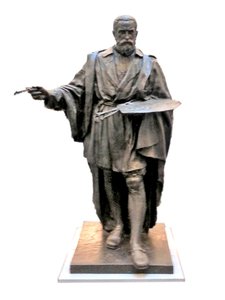
moroni, giovanni battista
1520 - 1578 , Italy
Quick Facts
- Birth Date: 1520
- Birth Place: Albino, Italy
- Death Date: 1578
- Influenced:
- Fra' Galgario
- Pietro Longhi
- Influenced By: Titian, Alessandro Bonvicino
- Movement: Mannerism
- Name: Giovanni Battista Moroni
- Nationality: Italian
- Notable Works:
- The Tailor
- Gian Lodovico Madruzzo