 Preview
 Send
Send Share
Share
 Details

 Download
 Similars
 X-Ray
X-Ray Diaporama
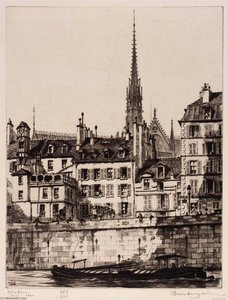
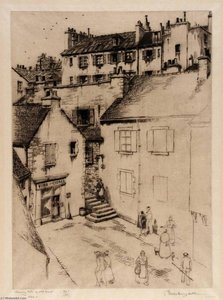
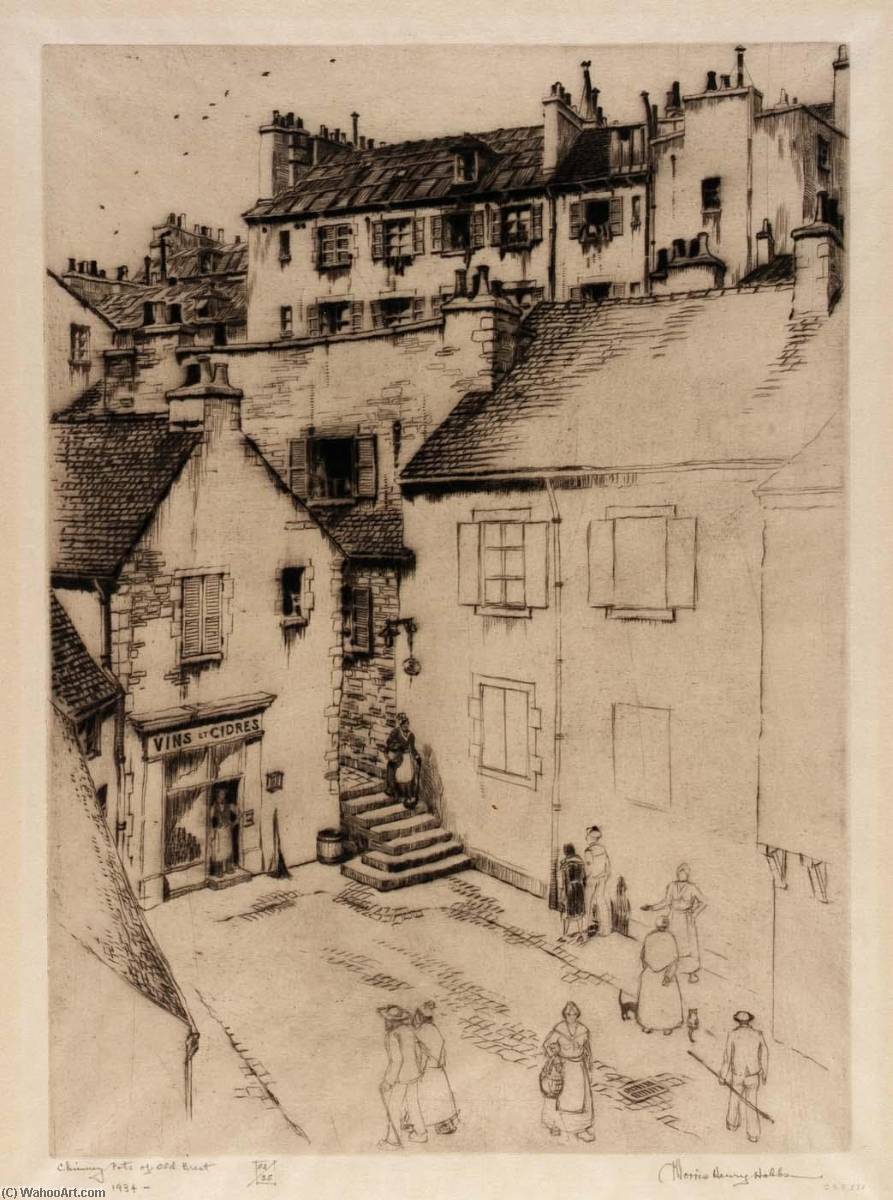
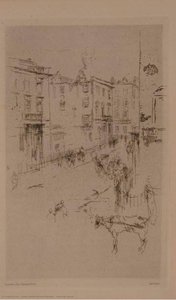
Chimney Pots of Old Brest
 1934
1934 26.0 x 18.0 cm
 Read More
Hand Made Oil Reproduction
Hand-painted oil on canvas in your size and frame, made to order by our artists. ( Buy Print Buy Image)




































Pick from our preset sizes that match the artwork's original proportions.

You may enter your own dimensions to fit a specific frame or space. If your selected size does not match the original image's proportions, we will either crop the artwork or extend the painting with additional hand-painted elements. A digital mockup will be sent for your approval before production begins.
Please note that the on-screen preview does not reflect the actual cropping or extension. Only the mockup will accurately show the final composition.
While custom sizes are available, we recommend selecting a dimension from the predefined list to preserve the original proportions.
After order, ArtsDot.com team will email client for instructions and provide a mockup preview
Worldwide Delivery () in 3/4 weeks instead of standard 5 weeks. (21 August). No compromise on quality.

Free Worldwide Express Shipping

High-Quality Linen Canvas

Full Shipping Insurance

Customs Tax Refund Guarantee

True Color Matching Guarantee

60-Day Return Policy (Defects Only)

100% Money-Back Guarantee

Bulk Discount Offer
 Glass option is only available in size under 110 CM

Chimney Pots of Old Brest
Reproduction Medium
Reproduction Size
-


Total Price
$ 263
Related Artworks
Artist Biography
Morris Henry Hobbs (1892 – 1967): A Quiet Observer of American Modernity
Morris Henry Hobbs, etcher, engraver, painter, illustrator, woodcarver and teacher was born on January 1, 1892 in Rockford, Illinois. He studied drawing at the Art Institute of Chicago and with Ernest Dean, Clarissa Keith, and Ralph Fletcher Seymour, primarily illustrators. He later branched off into the study of architecture, and was identified with that profession for many years.- Early Life & Education: Hobbs’s fascination with craftsmanship began early in life as the son of a watchmaker. George Hobbs instilled in his only child a meticulous attention to detail—a quality that would prove invaluable throughout Hobbs's artistic career. He pursued an education in architecture, studying privately and at Illinois Institute of Technology, honing skills crucial for capturing precise representations of the built environment.
- Military Service & Deafness: Hobbs enlisted in the American Expeditionary Forces during World War I, where he tragically suffered debilitating hearing loss due to influenza—a setback that profoundly impacted his life but ultimately redirected him toward printmaking as a medium suited to his diminished auditory capabilities.
- Architectural Career & Partnerships: Following his discharge from military service, Hobbs joined Frank Chase’s architectural firm in Chicago. However, the untimely deaths of Chase and his partner in 1928 brought an abrupt halt to his professional endeavors.
- The Etching Revival & Artistic Development: Recognizing the resurgence of interest in fine art prints—particularly etching—Hobbs embraced this technique as a means of artistic expression. He joined the Toledo Society of Etchers and the Chicago Society of Etchers, actively participating in exhibitions and fostering connections with fellow artists like J. Ernest Dean and Grace Dean.
- Louisiana Society & Legacy: Hobbs established the Louisiana Society of Etchers alongside Dean and Seymour, furthering his commitment to documenting architectural structures and capturing the essence of Louisiana’s landscape. His work exemplifies a dedication to realism combined with stylistic sensitivity—a hallmark of American Impressionism that continues to resonate today.
Hobbs's Artistic Style & Influences
Hobbs eschewed the avant-garde trends of the early twentieth century, preferring instead to adhere to the traditions established by James McNeil Whistler and John Taylor Arms—artists who championed tonal harmony and subtle observation. His etching technique demanded painstaking precision, mirroring his architectural training and reflecting a profound respect for accuracy and proportion. Hobbs’s prints often depict scenes from Louisiana's Creole towns and historic buildings, capturing both their grandeur and vulnerability. He skillfully employed drypoint to achieve remarkable textural detail—a testament to his mastery of printmaking as an art form.Notable Works & Exhibitions
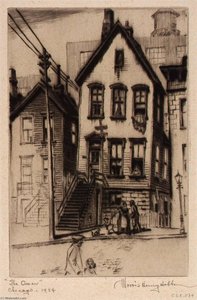
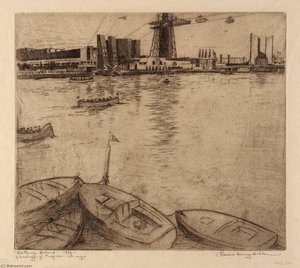
Hobbs gained recognition for *The Omen*, a haunting etching depicting a solitary figure on a stairway, demonstrating his ability to convey emotion through understated visual language. His contribution to “Northerly Island,” the centerpiece of the Century of Progress Exposition in Chicago (1933), showcased his talent for capturing the industrial spirit and natural beauty of the city—a project that cemented his place as one of Illinois’s leading artists. Hobbs's prints were exhibited extensively throughout his career, garnering critical acclaim and establishing him as a respected voice within the American printmaking community.Historical Significance & Lasting Impact
Morris Henry Hobbs represents an important figure in the history of American art—a quiet observer who championed realism while simultaneously upholding architectural principles. His unwavering dedication to documenting Louisiana’s heritage and his masterful execution of etching technique continue to inspire artists today. Hobbs's legacy resides not only in his individual artworks but also in his role as a mentor and advocate for preserving architectural landmarks—a contribution that underscores the enduring importance of artistic vision alongside civic responsibility.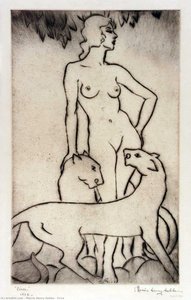
morris henry hobbs
1892 - 1967
Quick Facts
- Artistic Movement Or Style: Early 20th Century Art
- Artists Or Movements Influenced By This Artist: ['American Impressionism']
- Artists Who Influenced This Artist:
- James McNeil Whistler
- John Taylor Arms
- Date Of Birth: January 1, 1892
- Date Of Death: 1967
- Full Name: Morris Henry Hobbs
- Nationality: American
- Notable Artworks:
- The Omen
- Northerly Island, Century of Progress, Chicago
- Place Of Birth: Rockford, Illinois