

 Preview
 Send
Send Share
Share
 Details

 Download
 Similars
 X-Ray
X-Ray Diaporama
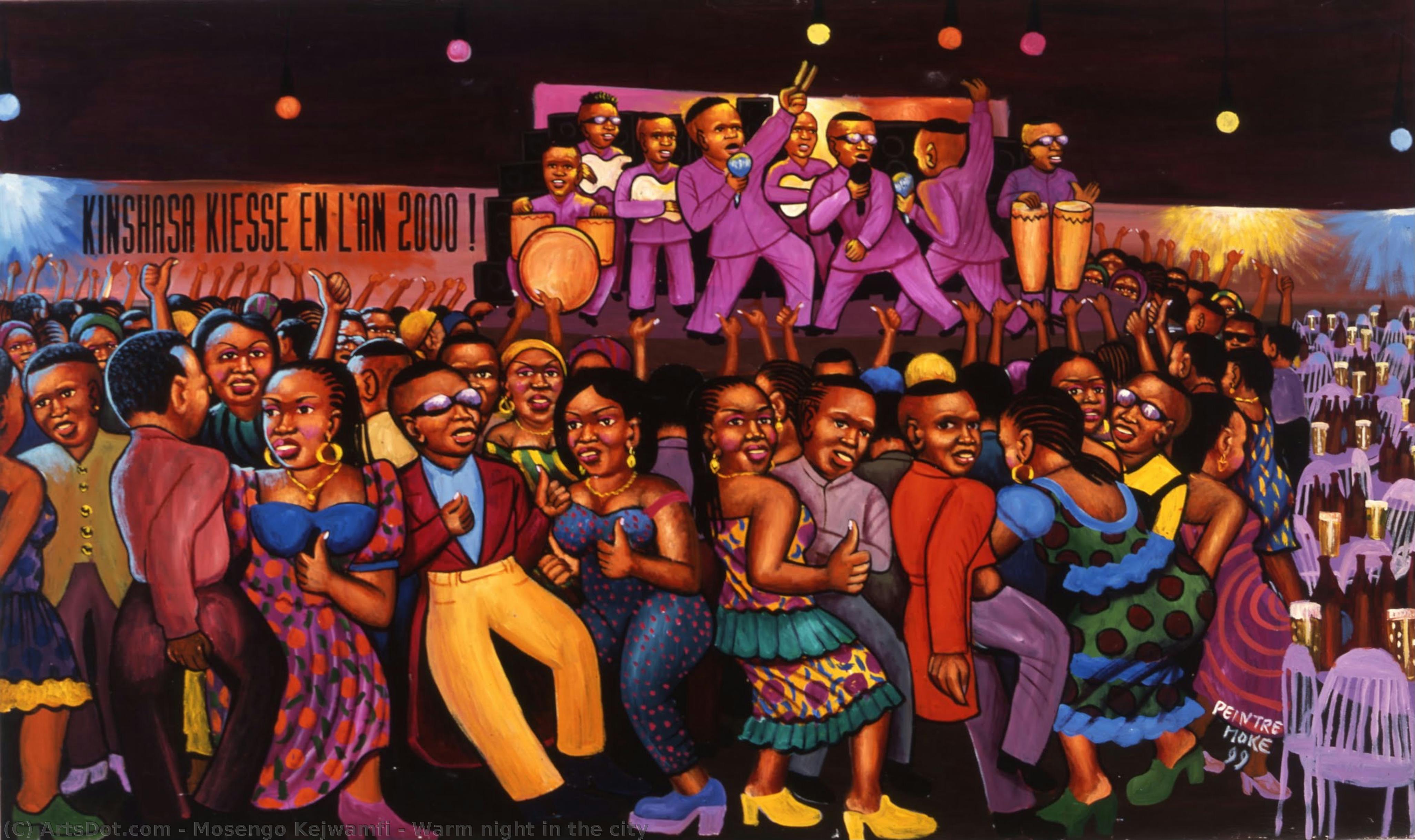
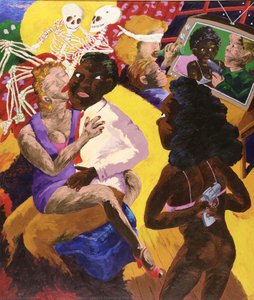
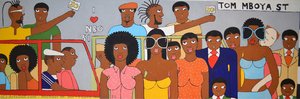
Warm night in the city
 African Expressionism
 1999
1999 148.0 x 242.0 cm
 Read More
Purchase a high-resolution, enhanced digital image, far superior to the online preview.
Each file is meticulously prepared by our in-house specialists using advanced tools and expert manual retouching. We ensure every image has exceptional clarity, precise color accuracy, and fine detail.
The final file is delivered via email within 72 hours, optimized for immediate use in professional, editorial, and print environments. This is the same quality trusted by top-tier design studios, publishers, and galleries.
Digital Image
Download a high-resolution file for personal display, printing, and creative projects. ( Buy Print Buy Hand Made Painting)
Included in Every Digital Image Order
Expert Digital Delivery, Guaranteed
When you choose ArtsDot.com, you're not just getting an image - you're receiving a professionally enhanced digital artwork, crafted with precision and backed by a satisfaction guarantee. Here's everything that comes with your order, automatically:

Fast Email Delivery
Your high-resolution digital image file will be emailed to you within 72 hours of ordering - ready for immediate use.

AI-Enhanced Digital File
Your artwork is professionally optimized using advanced AI tools and manual editing, ensuring maximum detail, clarity, and color accuracy.

Free Lifetime Re-Delivery
Accidentally deleted or lost your file? No worries - we'll resend it to you anytime, free of charge.

No Import Fees - Ever
Enjoy your artwork instantly with zero customs, duties, or delivery fees - digital downloads are always tax-free.

Color Accuracy Guarantee
We ensure your digital image reflects the original colors as closely as possible using professional tools and color management.

60-Day Satisfaction Guarantee
If you're not satisfied with your digital image, we'll revise it or refund 100% within 60 days - no questions asked.

100% Money-Back Guarantee
Not satisfied? Get a full refund within 60 days of receiving your digital file - no questions asked.

Bulk Order Discounts
Buy 3 images, save 10% - Buy 5, save 15% - Buy 10+, save 20%. Great for creative projects, galleries, and agencies.
Collectible Description
Related Artworks
Artist Biography
The Crucible of New York: Shaping Abstract Expressionism in the 1950s
The decade of the 1950s witnessed a seismic shift in the landscape of American art, largely spearheaded by a group of painters residing and working in the vibrant, often chaotic environment of post-war New York. These artists, collectively known as the Abstract Expressionists, rejected the established traditions of representational painting and sought to express profound emotions and ideas through non-objective forms. Francis Bacon’s journey during this period—a time of intense personal transformation and artistic exploration—offers a compelling lens through which to understand both the individual artist's evolution and the broader cultural currents shaping this pivotal moment in art history. His early years were marked by displacement, grappling with loss, and an increasingly dark fascination with human vulnerability, all of which profoundly influenced his distinctive visual language. Bacon’s initial sojourn to South Africa in 1951, prompted by his mother's relocation, proved a crucial period of reflection and artistic gestation. The stark landscapes and the presence of wild animals – particularly dogs – ignited a powerful response within him, manifesting in works like *Study of a Figure in a Landscape*, 1952. This early interest in animal forms would continue to inform his work throughout his career, serving as both a symbolic language and a means of exploring themes of primal instinct and the precariousness of existence. The subsequent visit to Cairo, where he was deeply moved by ancient Egyptian art – an admiration that would later permeate his oeuvre – further broadened his artistic horizons, exposing him to a tradition of monumental scale and expressive power. The mid-1950s saw Bacon grappling with a complex personal life, marked by turbulent relationships and a growing preoccupation with violence and sexuality. His series of seven paintings, *Man in Blue I-VII*, 1954, emerged from a brief encounter with a model at the Imperial Hotel, capturing a sense of both vulnerability and unsettling intensity. These works, characterized by their reductive forms and claustrophobic compositions, reveal Bacon’s fascination with the human condition—its capacity for both beauty and brutality. Simultaneously, he began to explore the nude figure in a more direct manner, culminating in *Two Figures*, 1953, and *Two Figures in the Grass*, 1954, which drew inspiration from Eadweard Muybridge’s photographs of human movement, transforming athletic poses into expressions of psychological tension. The influence of Muybridge's sequential images—documented in his extensive collection of photographic studies—became a foundational element of Bacon’s visual vocabulary, providing him with a framework for dissecting and reinterpreting the dynamics of the human body.A Network of Influence: The Social Fabric of New York Art
Bacon’s artistic development was inextricably linked to the vibrant social network that flourished within post-war New York. He moved between studios—often temporary and borrowed—and cultivated relationships with a diverse group of artists, writers, and critics who shaped his thinking and provided crucial support. Figures like Peter Pollock and Paul Danquah offered him lodging during periods of instability, while the Sainsbury family became loyal patrons, recognizing the potential of his work. His encounters with figures such as Allen Ginsberg and William Burroughs in Tangier, though ultimately less productive than anticipated, underscored the cosmopolitan nature of the New York art scene. Crucially, Bacon’s artistic trajectory was shaped by interactions with key figures within the art world. His association with Clement Greenberg, a highly influential critic who championed Abstract Expressionism, provided him with validation and helped to establish his reputation. He also maintained close ties with other prominent artists of the era, including Willem de Kooning, Mark Rothko, and Robert Motherwell, engaging in dialogues about their work and sharing ideas about artistic practice. The influence of these relationships—both supportive and challenging—contributed significantly to Bacon’s evolving style and his understanding of his place within the broader art community.The Transformation of Style: Towards a More Expressive Language
By 1957, Bacon's painting underwent a dramatic transformation, evident in the exhibition at the Hanover Gallery that year. He moved away from the stark, almost skeletal figures of earlier works, embracing bolder colors and a more gestural application of paint—a response, as art historian Alexander Nemerov suggests, to Van Gogh’s *The Painter on the Road to Tarascon*. This shift reflected not only Bacon's personal evolution but also a broader trend within Abstract Expressionism towards greater emotional intensity and physicality. The six paintings inspired by Van Gogh – including one painted the year before – demonstrated a willingness to experiment with color, texture, and composition, pushing the boundaries of his artistic expression. The remaining three works, completed under considerable pressure to meet the exhibition deadline, further accelerated this process, while the final two were added later, suggesting a deliberate effort to refine and consolidate his new approach. This transformation—characterized by coarser brushstrokes, heightened color saturation, and a more immediate sense of urgency – marked a significant departure from Bacon’s earlier work and signaled his commitment to exploring the full range of human experience through painting.Legacy and Historical Significance
Francis Bacon's contribution to 20th-century art is undeniable. His unflinching portrayal of human suffering, coupled with his masterful manipulation of form and color, established him as one of the most important artists of his generation. His work continues to resonate today, offering a profound meditation on mortality, vulnerability, and the complexities of the human psyche. Bacon’s influence extends beyond the realm of Abstract Expressionism, shaping subsequent generations of artists who have explored themes of psychological distress and existential anxiety. His legacy as a pioneer of expressive painting—a painter who dared to confront the darkest aspects of the human condition—remains firmly cemented in art history.
mosengo kejwamfi
1950 - 2001 , Democratic Republic of the Congo
Quick Facts
- Artistic Movement Or Style: Expressionism
- Artists Or Movements Influenced By This Artist: ['Abstract Expressionism']
- Artists Who Influenced This Artist:
- Eadweard Muybridge
- Van Gogh
- Date Of Death: 2001
- Full Name: Francis Bacon
- Nationality: British
- Notable Artworks:
- Study of a Figure in a Landscape
- Man in Blue I-VII
- Two Figures
- Two Figures in the Grass
- Place Of Birth: Dublin, Ireland

