Preview
 Send
Send Share
Share
 Details

 Download
 Similars
 X-Ray
X-Ray Diaporama
 Stats
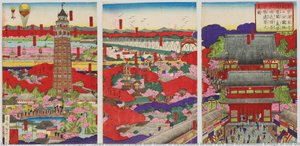
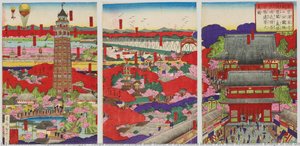
StatsTokyo Asakusa-Temple and Tower of Ryounkaku in the Park and Azumabashi Bridge in the Distance View


 Read More
Giclée / Art Print
Museum-quality giclée or canvas print with fast production and flexible finish options. ( Buy Hand Made Painting Switch to Digital Image)
































Pick from our preset sizes that match the artwork's original proportions.

You may enter your own dimensions to fit a specific frame or space. If your selected size does not match the original image's proportions, we will either crop the artwork or extend the image with a mirrored or solid-fill edge. A digital mockup will be sent for your approval before production begins.
Please note that the on-screen preview does not reflect the actual cropping or extension. Only the mockup will accurately show the final composition.
While custom sizes are available, we recommend selecting a dimension from the predefined list to preserve the original proportions.
Worldwide Delivery () in 2 weeks instead of standard 4/5 weeks. (15 September)

Free Worldwide Express Shipping

High-Quality Linen Canvas

Full Shipping Insurance

Customs Tax Refund Guarantee

True Color Matching Guarantee

100-Day Return Policy (Defects Only)

100% Money-Back Guarantee

Bulk Discount Offer
 Glass option is only available in size under 110 CM

Tokyo Asakusa-Temple and Tower of Ryounkaku in the Park and Azumabashi Bridge in the Distance View
Giclée / Art Print
Reproduction Size
-


Total Price
$ 63
Related Artworks










Artist Biography
The Enigmatic Figure of Nagashima Shungyō: A Tokyo Ukiyo-e Pioneer
Nagashima Shungyō, a name that echoes through the annals of late 19th-century Japanese art, remains shrouded in a captivating veil of mystery. Little is definitively known about his life and artistic journey, contributing to an aura of intrigue surrounding this pivotal ukiyo-e artist who captured the vibrant pulse of burgeoning Tokyo. Emerging during the tumultuous Meiji era – a period of rapid modernization and Westernization – Shungyō’s work offers a unique window into the city's transformation, blending traditional Japanese aesthetics with the emerging influences of the West.
Born around 1870 (though precise dates remain elusive), Shungyō was likely connected to the artistic lineage of Utagawa Yoshitora, a prominent Edo-era artist. While initially believed to be his son, recent scholarship suggests a more complex relationship – potentially a shared name and possibly even a collaborative partnership. Both artists utilized the pseudonym “Mōsai,” adding another layer of ambiguity to their identities. The Tahara Municipal Museum’s records indicate that Shungyō was known as Utagawa Shungyō during this period, further complicating our understanding of his origins.
A Chronicle of Modernization: Shungyō's Subject Matter
Shungyō’s artistic output is overwhelmingly defined by a fascination with the dramatic changes sweeping across Tokyo. His oeuvre primarily consists of *senso-e* (pictures of the war) and *kaika-e* (pictures of modernization), reflecting the era’s key themes: the Sino-Japanese War, the influx of Western technology and architecture, and the evolving social landscape. His most celebrated works depict scenes from the conflict, notably “The Fall of Pyongyang, the Great Victory of Japan,” a monumental triptych showcasing the surrender of Chinese generals – a powerful statement on Japanese military prowess.
However, Shungyō’s artistic vision extended beyond mere war narratives. He meticulously documented the city's rapid transformation, capturing iconic landmarks like Asakusa Temple and the Ryounkaku Tower (later renamed the Mitsubishi Takashimaya Building). These images offer a poignant juxtaposition of traditional Japanese architecture alongside the burgeoning skyscrapers that symbolized Tokyo’s embrace of modernity. The inclusion of Azumabashi Bridge in some compositions further emphasizes this interplay between old and new, creating a visual dialogue about the city's evolving identity.
Technique and Style: Echoes of Tradition, Hints of Innovation
Shungyō’s artistic style is deeply rooted in the conventions of ukiyo-e tradition. He skillfully employed *nishiki-e* techniques – vibrant color palettes, meticulous detail, and dynamic compositions – characteristic of the genre. Yet, his work also reveals subtle innovations, particularly in his use of perspective and the incorporation of Western elements into traditional landscapes. The depiction of figures in “The Fall of Pyongyang,” for instance, demonstrates a degree of realism not always present in earlier *senso-e* prints.
Furthermore, Shungyō’s compositions often feature a deliberate blurring of spatial relationships, creating a sense of depth and dynamism that was becoming increasingly prevalent in Western art. His ability to seamlessly blend traditional Japanese aesthetics with emerging modern influences solidified his position as a key figure in the transition between artistic eras.
Legacy and Historical Significance
Despite the scarcity of biographical information, Nagashima Shungyō’s contribution to Japanese art is undeniable. He stands as a crucial witness to a transformative period, documenting Tokyo's evolution with remarkable skill and sensitivity. His works offer invaluable insights into the social, political, and cultural dynamics of the Meiji era – a time of unprecedented change and upheaval.
Shungyō’s legacy is further enhanced by his connection to Utagawa Yoshitora, a renowned artist whose influence undoubtedly shaped Shungyō's artistic development. Together, they represent a fascinating chapter in Japanese art history, embodying the complex interplay between tradition and innovation that defined the late 19th century. While many questions remain unanswered about this enigmatic figure, his enduring images continue to captivate viewers and offer a compelling glimpse into the heart of a rapidly changing Tokyo.
nagashima shungyo
Japan
Quick Facts
- Artistic Movement Or Style: Ukiyo-e (Meiji era)
- Artists Who Influenced This Artist: ['Utagawa Yoshitora']
- Full Name: Nagashima Shungyō
- Nationality: Japanese
- Notable Artworks:
- Pyongyang Chinese Generals
- The Fall of Pyongyang
- Place Of Birth: Japan