

 Preview
 Send
Send Share
Share
 Details

 Download
 Similars
 X-Ray
X-Ray Diaporama
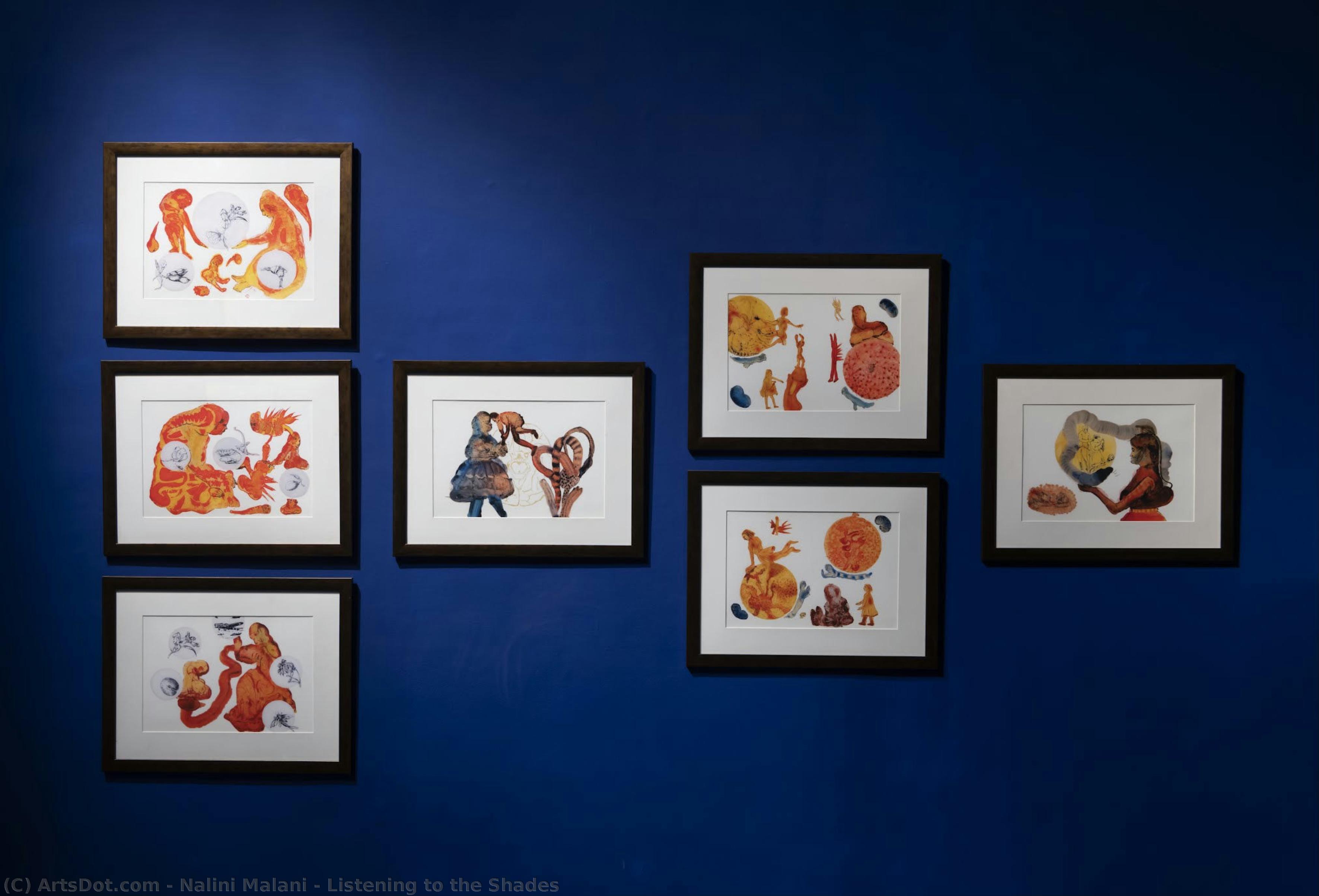
Listening to the Shades


 Read More
Purchase a high-resolution, enhanced digital image, far superior to the online preview.
Each file is meticulously prepared by our in-house specialists using advanced tools and expert manual retouching. We ensure every image has exceptional clarity, precise color accuracy, and fine detail.
The final file is delivered via email within 72 hours, optimized for immediate use in professional, editorial, and print environments. This is the same quality trusted by top-tier design studios, publishers, and galleries.
Digital Image
Download a high-resolution file for personal display, printing, and creative projects. ( Buy Print Buy Hand Made Painting)
Included in Every Digital Image Order
Expert Digital Delivery, Guaranteed
When you choose ArtsDot.com, you're not just getting an image - you're receiving a professionally enhanced digital artwork, crafted with precision and backed by a satisfaction guarantee. Here's everything that comes with your order, automatically:

Fast Email Delivery
Your high-resolution digital image file will be emailed to you within 72 hours of ordering - ready for immediate use.

AI-Enhanced Digital File
Your artwork is professionally optimized using advanced AI tools and manual editing, ensuring maximum detail, clarity, and color accuracy.

Free Lifetime Re-Delivery
Accidentally deleted or lost your file? No worries - we'll resend it to you anytime, free of charge.

No Import Fees - Ever
Enjoy your artwork instantly with zero customs, duties, or delivery fees - digital downloads are always tax-free.

Color Accuracy Guarantee
We ensure your digital image reflects the original colors as closely as possible using professional tools and color management.

60-Day Satisfaction Guarantee
If you're not satisfied with your digital image, we'll revise it or refund 100% within 60 days - no questions asked.

100% Money-Back Guarantee
Not satisfied? Get a full refund within 60 days of receiving your digital file - no questions asked.

Bulk Order Discounts
Buy 3 images, save 10% - Buy 5, save 15% - Buy 10+, save 20%. Great for creative projects, galleries, and agencies.
Collectible Description
Related Artworks







Artist Biography
A Life Shaped by Partition: The Early Years and Artistic Awakening
Nalini Malani’s artistic journey is inextricably linked to the tumultuous birth of India and Pakistan in 1947. Born in Karachi, a city that would soon become part of a newly formed nation, her earliest memories are shadowed by the trauma of Partition – the mass displacement, violence, and communal strife that irrevocably altered the lives of millions. This experience wasn’t merely a historical backdrop to her childhood; it was a foundational wound that deeply informed her artistic vision. Her family's subsequent migration to India, first to Kolkata and then to Mumbai, instilled in her a lifelong sensitivity to themes of identity, belonging, and the enduring consequences of political upheaval. The sense of loss, displacement, and the search for rootedness would become recurring motifs throughout her diverse body of work, resonating with audiences across cultures and generations. Even as a young artist, Malani recognized the power of art not just as aesthetic expression but as a means to confront difficult truths and give voice to marginalized narratives.From Painting to Pioneering Video Art
Malani initially trained as a painter, honing her skills in traditional techniques at the Sir Jamsetjee Jeejebhoy School of Art in Mumbai. However, she quickly recognized the limitations of conventional mediums in fully expressing the complex and layered realities she wished to explore. In the late 1960s, she became one of India’s first artists to embrace video art, a nascent medium that offered unprecedented possibilities for experimentation and storytelling. This transition wasn't simply a change in technique; it represented a fundamental shift in her artistic approach. Video allowed her to incorporate time, movement, and sound into her work, creating immersive experiences that challenged viewers to engage with difficult subjects on multiple levels. Her early video piece, “Dream Houses” (1969), created during a workshop led by Akbar Padamsee, stands as a testament to this pioneering spirit – a striking digital abstraction reflecting the anxieties and aspirations of a nation in transition. She didn’t abandon painting altogether; rather, she integrated it into her multimedia installations, often employing reverse painting on glass—a technique learned from Bhupen Khakhar—to create ethereal and haunting images that seemed to float between worlds.Themes of Feminism, Memory, and Social Justice
Central to Malani’s artistic practice is a profound commitment to social justice, particularly concerning issues of gender inequality and the plight of marginalized communities. Her work consistently challenges patriarchal structures and gives voice to those silenced by power dynamics. She draws inspiration from diverse sources – mythology, literature, poetry, historical events—weaving together ancient narratives with contemporary concerns. The figures of mythical women like Medea, Cassandra, and Sita frequently appear in her art, reimagined as symbols of resilience and resistance. Memory is another crucial theme, explored through fragmented images, layered projections, and evocative soundscapes. Malani’s installations often create a sense of haunting presence, inviting viewers to confront the ghosts of the past and grapple with their own personal histories. The Partition remains a potent influence, prompting her to examine not only the political consequences of forced migration but also its psychological toll on individuals and communities. Her work is never didactic; instead, it operates through suggestion, ambiguity, and emotional resonance, allowing viewers to arrive at their own interpretations.Shadows, Projections, and a Unique Visual Language
Malani’s artistic style is remarkably versatile, encompassing painting, drawing, installation, performance, and video art. However, certain techniques consistently reappear throughout her oeuvre, creating a distinctive visual language that is instantly recognizable. The use of shadows is particularly striking – often projected onto architectural surfaces or translucent materials, they create ephemeral and haunting effects, suggesting the presence of hidden histories and unspoken truths. She frequently employs stop-motion animation and erasure animations, manipulating images to reveal underlying layers of meaning. Her innovative approach extends to her digital work, where she draws directly onto tablets with her finger, building intricate compositions that reflect a deeply personal and intuitive process. This tactile engagement with the medium allows her to imbue her art with a sense of immediacy and emotional depth. Her installations are often immersive environments, enveloping viewers in a world of sound, light, and shadow, challenging them to question their perceptions and confront uncomfortable realities.Recognition and Lasting Legacy
Nalini Malani’s contributions to contemporary art have been widely recognized through numerous awards and exhibitions. She was awarded the Padma Shri, one of India's highest civilian honors, in 2014, acknowledging her significant impact on the cultural landscape. She also received the Joan Miró Prize in 2019 and, most recently, the prestigious Kyoto Prize in Arts and Philosophy in 2023—a testament to her enduring influence on artists worldwide. Her work has been exhibited internationally at esteemed institutions such as the Stedelijk Museum Amsterdam, the National Gallery in London, and the Museum of Modern Art in New York. Malani is not merely an artist; she is a cultural historian, a social commentator, and a visionary innovator who continues to push boundaries and challenge conventional artistic norms. Her art serves as a powerful reminder of the importance of memory, empathy, and the ongoing struggle for justice and equality. Platforms like ArtsDot.com and ArtsDot.com play a vital role in making her work accessible to a wider audience, ensuring that her message continues to resonate with generations to come.
Nalini Malani
1946 - , Pakistan
Quick Facts
- Artistic Movement Or Style: Video art, Installation
- Artists Or Movements Influenced By This Artist: Indian video artists
- Date Of Birth: 1946
- Full Name: Nalini Malani
- Nationality: Indian
- Notable Artworks:
- Dream Houses
- The Teller of Tales
- Listening to the Shades
- Place Of Birth: Karachi, Pakistan

