 Preview
 Send
Send Share
Share
 Details

 Download
 Similars
 X-Ray
X-Ray Diaporama
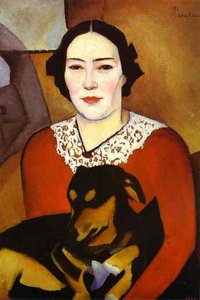
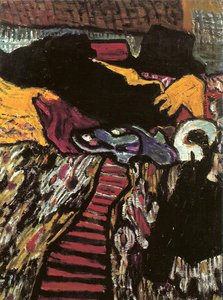
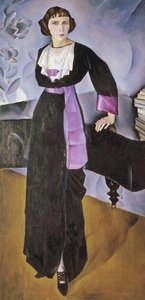
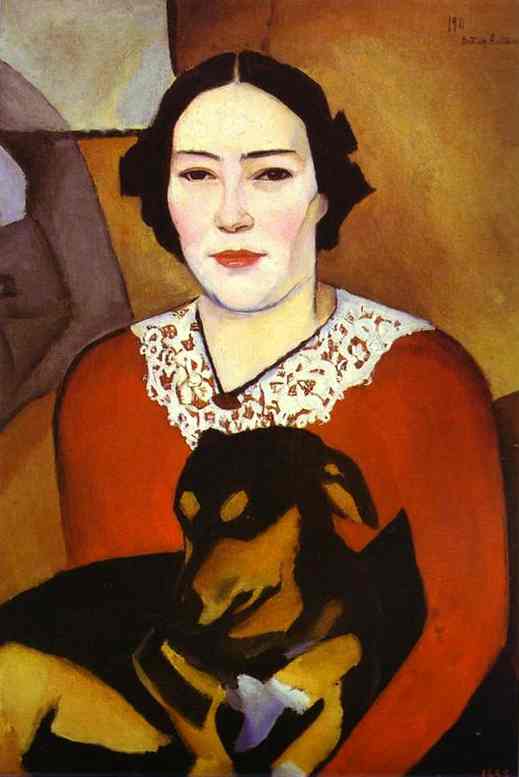
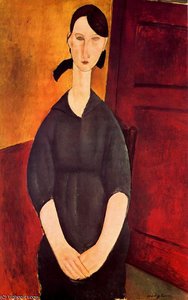
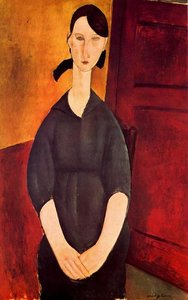
Lady with a Dog. Portrait of Esther Schwartzmann.


 Read More
Hand Made Oil Reproduction
Hand-painted oil on canvas in your size and frame, made to order by our artists. ( Buy Print Buy Image)




































Pick from our preset sizes that match the artwork's original proportions.

You may enter your own dimensions to fit a specific frame or space. If your selected size does not match the original image's proportions, we will either crop the artwork or extend the painting with additional hand-painted elements. A digital mockup will be sent for your approval before production begins.
Please note that the on-screen preview does not reflect the actual cropping or extension. Only the mockup will accurately show the final composition.
While custom sizes are available, we recommend selecting a dimension from the predefined list to preserve the original proportions.
After order, ArtsDot.com team will email client for instructions and provide a mockup preview
Worldwide Delivery () in 3/4 weeks instead of standard 5 weeks. (1 September). No compromise on quality.

Free Worldwide Express Shipping

High-Quality Linen Canvas

Full Shipping Insurance

Customs Tax Refund Guarantee

True Color Matching Guarantee

60-Day Return Policy (Defects Only)

100% Money-Back Guarantee

Bulk Discount Offer
 Glass option is only available in size under 110 CM

Lady with a Dog. Portrait of Esther Schwartzmann.
Reproduction Medium
Reproduction Size
-


Total Price
$ 263
Artist Background
Nathan Altman was a Jewish, Russian, and Soviet avant-garde artist, born in Vinnytsia, Ukraine. He studied painting and sculpture at the Art College in Odessa and later in Paris, where he was influenced by artists such as Marc Chagall and Alexander Archipenko. Altman's work is characterized by its use of bold colors, geometric shapes, and a mix of Cubist and Fauvist styles.The Painting
The Lady with a Dog. Portrait of Esther Schwartzmann painting depicts a woman sitting on the floor with her dog in front of her. The woman is wearing a red dress and has long hair, while the dog is sitting calmly beside her. The background of the painting features two other people, one on the left side and another on the right side, as well as a chair located near the center of the image. Key Features of the painting include:- Use of bold colors and geometric shapes to create a sense of intimacy and warmth
- Mix of Cubist and Fauvist styles, characteristic of Altman's work
- Depiction of everyday life, showcasing the artist's ability to capture mundane moments with elegance and sophistication
Availability and Reproduction
The original painting is housed in the Russian Museum in St. Petersburg, Russia. However, handmade oil painting reproductions of the piece are available for purchase on ArtsDot.com, allowing art lovers to own a piece of history. For more information on Nathan Altman and his work, visit Wikipedia.The Lady with a Dog. Portrait of Esther Schwartzmann painting is a testament to Altman's skill as an artist and his ability to capture the essence of everyday life with elegance and sophistication. As a piece of Cubist art, it continues to inspire and influence artists to this day.
Related Artworks
Artist Biography
The Architect of the Avant-Garde: The Life and Legacy of Nathan Altman
Nathan Isaachevich Altman stands as a monumental figure in the annals of Russian avant-garde art, embodying a unique confluence of Jewish heritage, Cubist experimentation, and fervent engagement with the shifting tides of Soviet ideology. Born in 1889 in Vinnytsia, Ukraine, to a family of Jewish merchants, Altman’s formative years instilled within him an appreciation for cultural diversity and intellectual curiosity—qualities that would profoundly shape his artistic trajectory. His early studies at Odessa Art College laid the groundwork for a burgeoning talent, culminating in his debut exhibition in 1906 where he immediately established himself as a promising artist of his generation.
The Parisian sojourn of 1910 proved pivotal, immersing Altman in the crucible of European artistic innovation. He enrolled at the Free Russian Academy under Vladimir Baranoff-Rossine, fostering connections with luminaries like Marc Chagall, Alexander Archipenko, and Ilya Shterenberg—artists who championed radical stylistic departures from traditional conventions. This exposure to Cubism ignited Altman’s creative spirit, propelling him toward a groundbreaking fusion of geometric abstraction and expressive realism. His membership in the Soyuz Molodyozhi (Union of Youth) solidified his position within the vanguard movement, cementing his commitment to challenging established artistic norms through a lens of modern dynamism.
A Mastery of Form and Portraiture
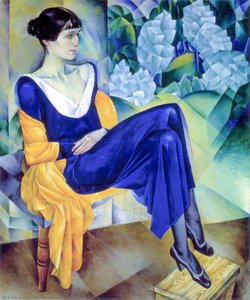
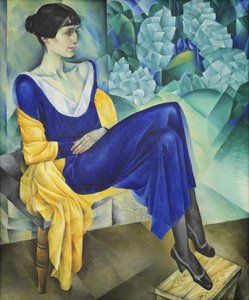
By 1912, Altman relocated to Saint Petersburg, where he embarked on a prolific period of artistic production characterized by ambitious portraiture and revolutionary theatrical design. His ability to deconstruct the human form while maintaining an emotional resonance became his hallmark. One of his most enduring achievements is the Portrait of Anna Akhmatova, executed in a striking Cubist style. In this masterpiece, Altman captures the dignified essence of the celebrated poet through fragmented planes and a sophisticated palette, demonstrating how he could utilize the language of modernism to honor the psychological depth of his subjects.
Altman's versatility extended far beyond the canvas into the realm of the stage, where he sought to transform theater into a total work of art. His designs were not mere decorations but integral components of a new visual language for the Soviet era. This period also saw him exploring themes that bridged the gap between personal identity and political reality. Whether through his delicate depictions in works like Lady with a Dog: Portrait of Esther Schwartzmann or his more politically charged sketches, such as his Drawings of Lenin, Altman navigated the complex intersection of individual expression and the collective spirit of a changing nation.
Historical Significance and Artistic Evolution
The trajectory of Nathan Altman's career reflects the turbulent history of the twentieth century itself. As the revolutionary fervor of the Soviet Union took hold, his work evolved to meet the demands of a new era, often blending the structural rigor of Cubism with the burgeoning aesthetics of Constructivism and later, elements of Art Deco. His contribution to the visual identity of the Russian avant-garde cannot be overstated; he was a bridge between the experimental freedom of pre-revolutionary Paris and the structured, ideological landscape of early Soviet art.
Ultimately, Altman's legacy is defined by his refusal to remain static. He remained a pioneer who:
- Integrated Jewish cultural motifs with Western European modernism.
- Redefined portraiture through the lens of geometric abstraction and Cubist fragmentation.
- Transformed the theatrical space into an arena for avant-garde experimentation.
- Navigated the delicate balance between artistic innovation and the socio-political pressures of his time.
nathan altman
1889 - 1970 , Ukraine
Quick Facts
- Artistic Movement Or Style: Cubist
- Artists Or Movements Influenced By This Artist: ['Futurist Art']
- Artists Who Influenced This Artist:
- Marc Chagall
- Vladimir Baranoff-Rossine
- Date Of Birth: Vinnytsia, Ukraine (1889)
- Date Of Death: 1970
- Full Name: Nathan Isaevich Altman
- Nationality: Russian
- Notable Artworks:
- Lady with a Dog.
- Portrait of Boris Kornilov.
- Lenin.
- Place Of Birth: Vinnytsia, Ukraine