

 Preview
 Send
Send Share
Share
 Details

 Download
 Similars
 X-Ray
X-Ray Diaporama
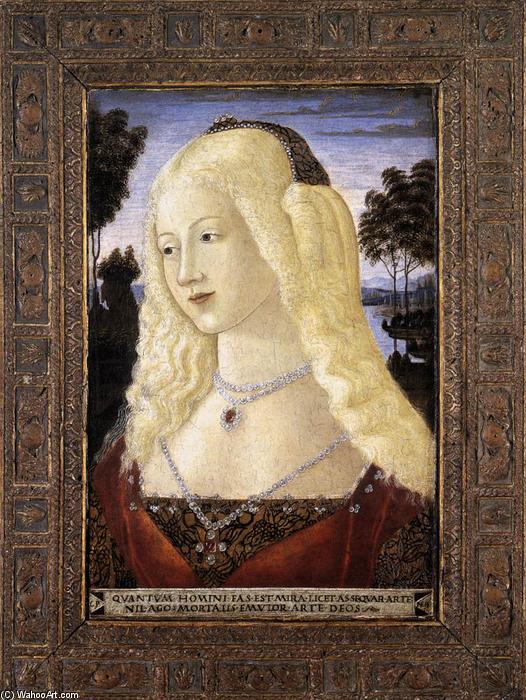
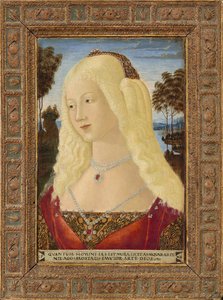
Portrait of a Lady
 Acrylic On Canvas
- WallArt
- Early Renaissance
 1480
1480 47.0 x 31.0 cm
 National Gallery of Art
 Read More
Purchase a high-resolution, enhanced digital image, far superior to the online preview.
Each file is meticulously prepared by our in-house specialists using advanced tools and expert manual retouching. We ensure every image has exceptional clarity, precise color accuracy, and fine detail.
The final file is delivered via email within 72 hours, optimized for immediate use in professional, editorial, and print environments. This is the same quality trusted by top-tier design studios, publishers, and galleries.
Digital Image
Download a high-resolution file for personal display, printing, and creative projects. ( Buy Print Buy Hand Made Painting)
Included in Every Digital Image Order
Expert Digital Delivery, Guaranteed
When you choose ArtsDot.com, you're not just getting an image - you're receiving a professionally enhanced digital artwork, crafted with precision and backed by a satisfaction guarantee. Here's everything that comes with your order, automatically:

Fast Email Delivery
Your high-resolution digital image file will be emailed to you within 72 hours of ordering - ready for immediate use.

AI-Enhanced Digital File
Your artwork is professionally optimized using advanced AI tools and manual editing, ensuring maximum detail, clarity, and color accuracy.

Free Lifetime Re-Delivery
Accidentally deleted or lost your file? No worries - we'll resend it to you anytime, free of charge.

No Import Fees - Ever
Enjoy your artwork instantly with zero customs, duties, or delivery fees - digital downloads are always tax-free.

Color Accuracy Guarantee
We ensure your digital image reflects the original colors as closely as possible using professional tools and color management.

60-Day Satisfaction Guarantee
If you're not satisfied with your digital image, we'll revise it or refund 100% within 60 days - no questions asked.

100% Money-Back Guarantee
Not satisfied? Get a full refund within 60 days of receiving your digital file - no questions asked.

Bulk Order Discounts
Buy 3 images, save 10% - Buy 5, save 15% - Buy 10+, save 20%. Great for creative projects, galleries, and agencies.
Collectible Description
A Portrait of Quietude: Neroccio de’ Landi's “Portrait of a Lady”
Within the hushed galleries of the National Gallery of Art, and now meticulously reproduced for discerning collectors, resides "Portrait of a Lady" by Neroccio de’ Landi – a painting that transcends mere likeness to embody an exquisite distillation of Renaissance ideals. Completed in Siena around 1480, this work isn't merely a depiction of a young woman; it’s a carefully constructed meditation on beauty, grace, and the subtle complexities of human expression. De’ Landi, a student of the renowned Vecchietta and later collaborating with Francesco di Giorgio, masterfully employed the techniques honed during his formative years to create an image that continues to resonate centuries later.
The painting itself is remarkably intimate, presenting the sitter – whose identity remains tantalizingly unknown – from the chest upwards. This close-quarters perspective, a convention borrowed from Flemish portraiture, immediately draws the viewer into a direct engagement with her features. Her face, bathed in soft light, reveals a delicate balance of youthful innocence and quiet contemplation. Note the subtle curve of her lips, barely hinting at a smile, and the gentle downward tilt of her eyes – gestures that speak volumes about her inner life. The artist’s meticulous attention to detail is evident in the rendering of her skin, which possesses a luminous quality achieved through careful layering of glazes, and the luxurious texture of her golden hair, cascading over her shoulders with an almost ethereal grace.
The Siena Renaissance: A World of Symbolism
To fully appreciate “Portrait of a Lady,” it’s crucial to understand the artistic landscape in which it was created – Siena during the early 15th century. This period, often overshadowed by the grandeur of Florence, nonetheless nurtured a vibrant and independent artistic tradition. Sienese painting, characterized by its rich colors, intricate details, and a penchant for depicting religious subjects alongside secular portraits, reflected the city’s proud civic identity and its deep-rooted connection to the Catholic Church. De’ Landi's work exemplifies this synthesis, blending classical influences with distinctly Sienese sensibilities.
The background landscape – a distant lake or river framed by feathery trees – serves as more than just an atmospheric element; it subtly reinforces the painting’s themes of serenity and contemplation. The use of aerial perspective, achieved through variations in color intensity and detail, creates a sense of depth and distance, drawing the viewer's eye towards the central figure. The Latin inscription at the bottom of the painting – “Quanta cura habuit artifici” (“How much care did the artist have”) and “Nihil mortalium ævum est” (“Nothing of the mortals is eternal”) – adds a layer of philosophical reflection, prompting us to consider the artist’s dedication and the fleeting nature of earthly beauty.
Technique and Materials: A Masterful Blend
De’ Landi's skill lay not only in his ability to capture likeness but also in his mastery of oil painting techniques. He employed a layering approach, building up color gradually through multiple thin glazes – a method that allowed him to achieve remarkable luminosity and depth. The use of tempera on panel, a common medium during this period, contributed to the painting’s rich colors and subtle tonal variations. The artist's careful observation of light and shadow is particularly evident in the way he renders the folds of the woman’s gown and the play of light on her skin.
Emotional Resonance: A Portrait of Timeless Grace
“Portrait of a Lady” isn’t simply a beautiful image; it's an invitation to contemplate the essence of human beauty and the complexities of inner life. The woman’s serene expression, combined with the painting’s harmonious composition, evokes a sense of quiet dignity and timeless grace. It is a testament to De’ Landi’s ability to capture not just outward appearance but also the subtle nuances of personality – a rare achievement in portraiture. Today, reproductions of this captivating work continue to inspire admiration for its elegance, technical skill, and profound emotional resonance, offering a glimpse into the artistic spirit of the early Renaissance.
Related Artworks


Artist Biography
Early Life and Apprenticeship in Sienese Tradition
Neroccio di Bartolomeo de' Landi, born in Siena in 1447, emerged from a distinguished patrician family at a pivotal moment for the city. While Siena’s golden age of medieval splendor had passed, a vibrant artistic spirit still pulsed within its walls. Neroccio inherited this legacy, beginning his formal training under Lorenzo di Pietro, known as Il Vecchietta—a master who effectively served as the central figure in shaping nearly all Sienese artists of the second half of the 15th century. This apprenticeship instilled in him a deep respect for established traditions and a meticulous approach to craftsmanship. The influence of Vecchietta is palpable in Neroccio’s early works, characterized by precise detail and a refined sense of form.
Collaboration with Francesco di Giorgio and Emerging Style
Around 1468, Neroccio entered into a significant collaboration with Francesco di Giorgio Martini, an architect, painter, and engineer who would become a lifelong associate. Their partnership proved fruitful, resulting in commissions such as the scenes from the life of Saint Benedict now housed in the Uffizi Gallery. While working alongside di Giorgio, Neroccio began to develop his own distinct style—one that subtly diverged from the prevailing trends. He demonstrated an inclination towards elegant compositions and a focus on portraying the nobility of human expression. This period saw him explore both panel painting and polychrome sculpture, showcasing a versatility that would become a hallmark of his career.
Mature Works: Devotional Panels and Portraiture
By the 1470s, Neroccio had established himself as an independent artist in Siena. He received numerous commissions for altarpieces, including the *Madonna and Child with Saints* (Pinacoteca Nazionale, Siena) and the *Annunciation* lunette (Yale University Art Gallery). These works reveal a growing sophistication in his use of color and composition. However, it was his portraiture that truly set him apart. The *Portrait of a Lady* (National Gallery of Art, Washington D.C.), dating from around 1485, is considered a rare and exceptional example of Quattrocento Sienese portraiture—a captivating depiction of serene beauty and intricate detail. Neroccio’s ability to capture the inner life of his subjects, combined with his refined technique, made him highly sought after by the Sienese aristocracy.
Later Commissions and Artistic Legacy
The 1480s and 90s saw Neroccio undertake increasingly ambitious projects. In 1483, he designed the *Hellespontine Sybil* for the mosaic pavement of Siena Cathedral—a testament to his skill as a designer and draftsman. He also created the tomb for Bishop Tommaso Piccolomini del Testa, further solidifying his reputation as a leading artist in the region. Throughout his career, Neroccio consistently produced small-scale devotional paintings characterized by delicately outlined figures set within lyrical atmospheres. His sophisticated forms, refined chromaticism, and ability to work with diverse materials cemented his position as one of the most coveted artists in Siena.
Historical Significance and Rediscovery
Neroccio de' Landi’s art reflects a conscious effort to connect with the artistic traditions of earlier Sienese masters like Simone Martini. While he acknowledged innovations in perspective and modeling, he prioritized harmonious composition and the rich beauty of detail over strict realism. His work offers a fascinating glimpse into the unique character of Renaissance painting outside of Florence—a style that valued elegance, refinement, and devotional piety. For centuries, Neroccio’s contributions were somewhat overshadowed by the dominance of Florentine art history. However, in recent decades, scholars have increasingly recognized his importance as a key figure in the Sienese Quattrocento, appreciating his distinctive voice and enduring artistic legacy.
neroccio de landi
1447 - 1500 , Italy
Quick Facts
- Artistic Movement Or Style: Early Renaissance
- Artists Who Influenced This Artist:
- Vecchietta
- Francesco di Giorgio
- Date Of Birth: 1447
- Date Of Death: 1500
- Full Name: Neroccio di Bartolomeo de' Landi
- Nationality: Italian
- Notable Artworks:
- St. Benedict scenes
- Madonna and Child
- Hellespontine Sybil
- Place Of Birth: Siena, Italy

