 Preview
 Send
Send Share
Share
 Details

 Download
 Similars
 X-Ray
X-Ray Diaporama
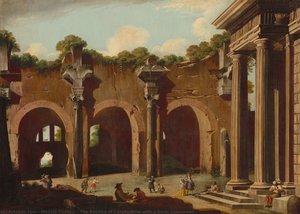
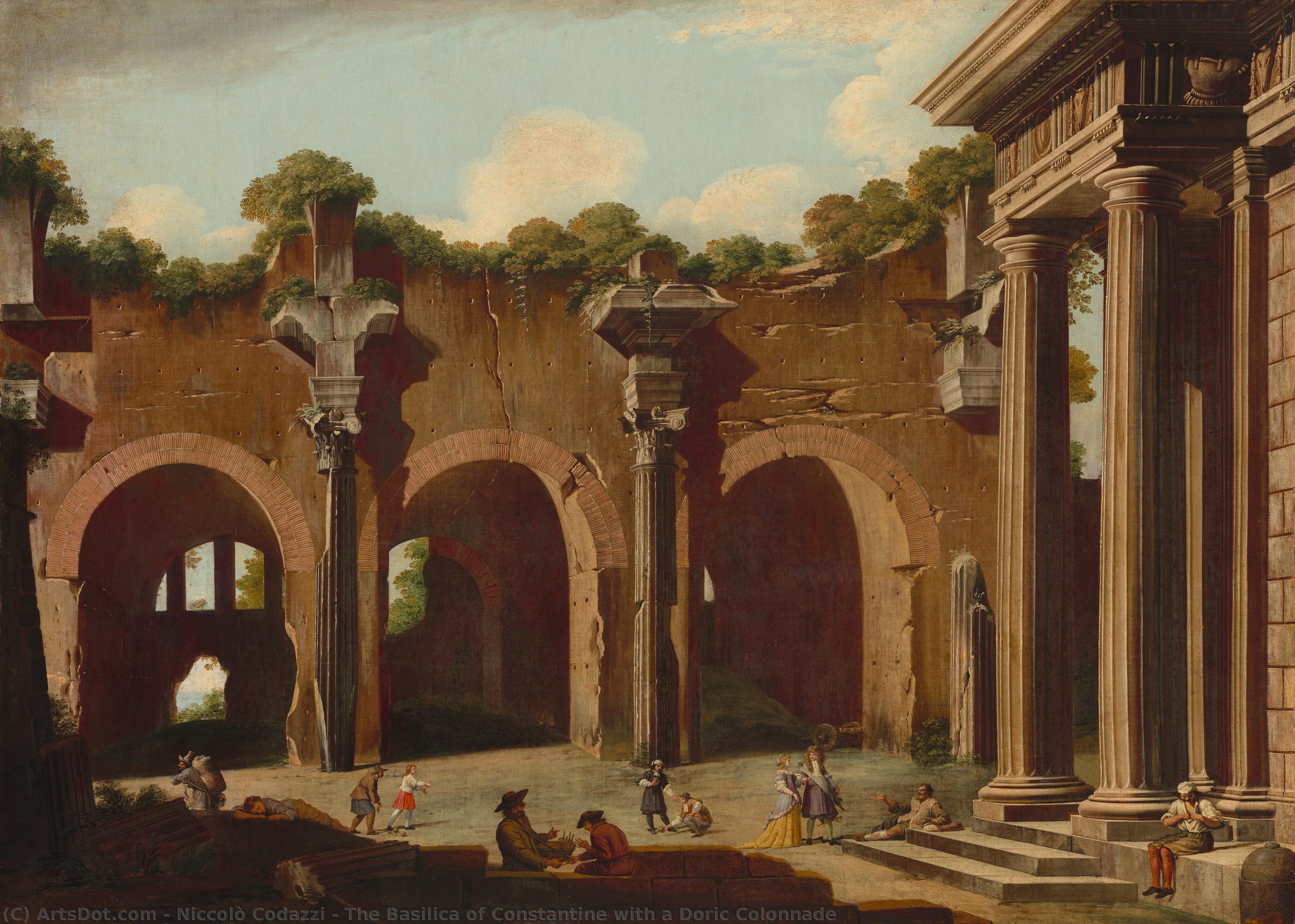
The Basilica of Constantine with a Doric Colonnade
 1690
1690 115.0 x 151.0 cm
 Read More
Hand Made Oil Reproduction
Hand-painted oil on canvas in your size and frame, made to order by our artists. ( Buy Print Buy Image)




































Pick from our preset sizes that match the artwork's original proportions.

You may enter your own dimensions to fit a specific frame or space. If your selected size does not match the original image's proportions, we will either crop the artwork or extend the painting with additional hand-painted elements. A digital mockup will be sent for your approval before production begins.
Please note that the on-screen preview does not reflect the actual cropping or extension. Only the mockup will accurately show the final composition.
While custom sizes are available, we recommend selecting a dimension from the predefined list to preserve the original proportions.
After order, ArtsDot.com team will email client for instructions and provide a mockup preview
Worldwide Delivery () in 3/4 weeks instead of standard 5 weeks. (16 August). No compromise on quality.

Free Worldwide Express Shipping

High-Quality Linen Canvas

Full Shipping Insurance

Customs Tax Refund Guarantee

True Color Matching Guarantee

60-Day Return Policy (Defects Only)

100% Money-Back Guarantee

Bulk Discount Offer
 Glass option is only available in size under 110 CM

The Basilica of Constantine with a Doric Colonnade
Reproduction Medium
Reproduction Size
-


Total Price
$ 263
Artist Biography
A Legacy of Architectural Illusion: The Life and Art of Niccolò Codazzi
Born in Naples in 1642, Niccolò Codazzi inherited a rich artistic lineage as the son of Viviano Codazzi, a pioneering painter celebrated for his evocative architectural scenes. This familial connection proved foundational to young Niccolò’s development, immersing him from an early age in a world of perspective, classical form, and the captivating interplay of light and shadow. The vibrant artistic climate of Naples during this period—a city brimming with Baroque exuberance—further shaped his sensibilities, instilling within him a passion for dramatic compositions and meticulous detail. Following his father’s relocation to Rome in 1647, Niccolò received formal training alongside Vicente Giner in Viviano's workshop, where distinguishing between the works of father and son became increasingly challenging due to their shared style and techniques. This early period was crucial in establishing Codazzi’s mastery of architectural rendering, a skill that would define his career.From Roman Grandeur to Parisian Commissions
By 1675, Niccolò had established himself within the bustling artistic community of Rome, working near the church of San Macuto and contributing to the decoration of Palazzo Altieri’s piano nobile—a testament to his growing reputation. However, the fiercely competitive Roman art scene spurred him towards new horizons. He embarked on a journey to France, initially settling in Aix-en-Provence where he collaborated with Nicolas Pinson. This move marked a significant turning point, exposing Codazzi to different artistic influences and broadening his creative scope. His arrival in Paris around 1681 proved particularly fruitful; he applied for membership to the prestigious Académie royale de peinture et de sculpture, gaining acceptance through the support of Charles Lebrun—a clear indication of the esteem he garnered within French artistic circles. A pivotal commission followed: King Louis XIV entrusted Codazzi with creating landscapes featuring architecture for the Grand appartement de la reine at Versailles. This undertaking, alongside René-Antoine Houasse, showcased his talent on a grand scale and solidified his position as a sought-after artist.The Art of Capriccio and Quadratura
Niccolò Codazzi’s artistic output centered around two primary genres: architectural views—or *vedute*—and imaginative compositions known as *capricci*. His paintings are characterized by grandiose classical ruins, often populated with bustling contemporary figures, creating a compelling juxtaposition of past and present. He possessed an exceptional ability to render perspective with remarkable accuracy, imbuing his scenes with depth and realism. However, Codazzi’s skill extended beyond mere representation; he masterfully manipulated light and shadow to create dramatic effects, evoking a sense of atmosphere and emotional resonance. Frequently, he focused on the architecture itself, leaving the addition of figures to other artists—a common practice that allowed for specialized expertise and collaborative artistry. Beyond *vedute* and *capricci*, Codazzi also excelled in *quadratura*, employing illusionistic ceiling painting techniques to create breathtaking decorative elements. This versatility demonstrated his comprehensive understanding of artistic principles and his ability to adapt to diverse commissions.Influences, Style, and Historical Significance
The influence of Viviano Codazzi is undeniably present in Niccolò’s early work, evident in their shared focus on classical ruins and meticulous detail. However, Niccolò developed a distinct style characterized by a more dynamic composition and a heightened sense of theatricality. The works of Claude Lorrain and Nicolas Poussin—prominent figures in French classicism—also exerted an impact during his time in Paris, influencing his approach to landscape and perspective. Codazzi’s paintings reflect the growing fascination with Classical Rome prevalent among 17th-century collectors, offering idealized visions of antiquity that appealed to a sophisticated clientele. His mastery of *quadratura* further aligned him with the Baroque tradition of creating immersive and visually stunning environments. He was even nicknamed “the little Caravaggio” by contemporaries for his skillful use of chiaroscuro—a testament to his dramatic lighting techniques. Niccolò Codazzi’s legacy lies in his ability to seamlessly blend architectural precision, imaginative composition, and emotional depth, leaving behind a body of work that continues to captivate audiences with its grandeur and artistry. He died in Genoa in 1693, leaving behind a significant contribution to the Baroque landscape painting tradition.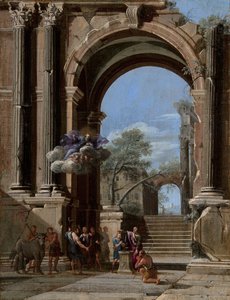
niccolò codazzi
1642 - 1693 , Italy
Quick Facts
- Artistic Movement Or Style: Baroque
- Artists Who Influenced This Artist: ['Viviano Codazzi']
- Date Of Birth: 1642
- Date Of Death: 1693
- Full Name: Niccolò Codazzi
- Nationality: Italian
- Place Of Birth: Naples, Italy