

 Preview
 Send
Send Share
Share
 Details

 Download
 Similars
 X-Ray
X-Ray Diaporama
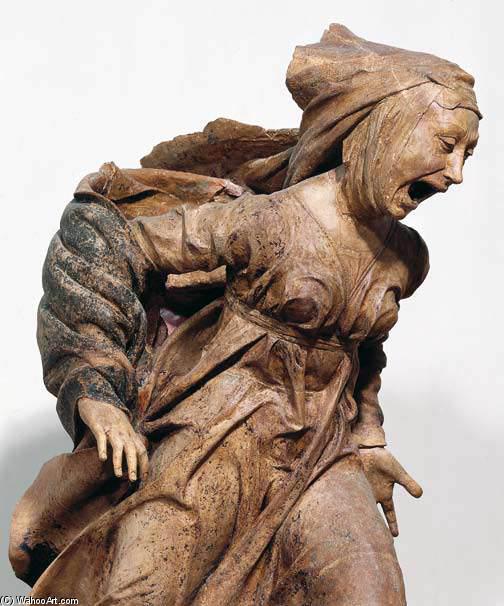
Mourning of the Marys over the Dead Christ (detail)


 Read More
Purchase a high-resolution, enhanced digital image, far superior to the online preview.
Each file is meticulously prepared by our in-house specialists using advanced tools and expert manual retouching. We ensure every image has exceptional clarity, precise color accuracy, and fine detail.
The final file is delivered via email within 72 hours, optimized for immediate use in professional, editorial, and print environments. This is the same quality trusted by top-tier design studios, publishers, and galleries.
Digital Image
Download a high-resolution file for personal display, printing, and creative projects. ( Buy Print Buy Hand Made Painting)
Included in Every Digital Image Order
Expert Digital Delivery, Guaranteed
When you choose ArtsDot.com, you're not just getting an image - you're receiving a professionally enhanced digital artwork, crafted with precision and backed by a satisfaction guarantee. Here's everything that comes with your order, automatically:

Fast Email Delivery
Your high-resolution digital image file will be emailed to you within 72 hours of ordering - ready for immediate use.

AI-Enhanced Digital File
Your artwork is professionally optimized using advanced AI tools and manual editing, ensuring maximum detail, clarity, and color accuracy.

Free Lifetime Re-Delivery
Accidentally deleted or lost your file? No worries - we'll resend it to you anytime, free of charge.

No Import Fees - Ever
Enjoy your artwork instantly with zero customs, duties, or delivery fees - digital downloads are always tax-free.

Color Accuracy Guarantee
We ensure your digital image reflects the original colors as closely as possible using professional tools and color management.

60-Day Satisfaction Guarantee
If you're not satisfied with your digital image, we'll revise it or refund 100% within 60 days - no questions asked.

100% Money-Back Guarantee
Not satisfied? Get a full refund within 60 days of receiving your digital file - no questions asked.

Bulk Order Discounts
Buy 3 images, save 10% - Buy 5, save 15% - Buy 10+, save 20%. Great for creative projects, galleries, and agencies.
Related Artworks




Artist Biography
Niccolò dell’Arca: A Sculptor of Profound Emotion
The name Niccolò dell’Arca—though a somewhat cumbersome label—identifies an artist whose work resonates with a startling immediacy, a raw emotionality rarely achieved in the early Renaissance. Born sometime between 1435 and 1440, likely in Apulia or perhaps even Dalmatia (the precise details of his origins remain shrouded in scholarly debate), Niccolò dell’Arca carved a singular path as a terracotta sculptor, primarily within the vibrant artistic landscape of Bologna. His legacy isn't one of grand, imposing monuments; rather, it lies in a series of deeply affecting figures—most notably the “Compianto sul Cristo Morto,” or Lamentation over the Dead Christ—that capture grief, sorrow, and spiritual anguish with an unprecedented level of psychological realism.
Early influences on dell’Arca are complex and debated. While some scholars point to a formative period in Dalmatia, where he may have apprenticed under Giorgio da Sebenico, others suggest a more significant connection to Burgundy, particularly through the work of Guillem Sagrera, who was active in Naples during the 1450s. The Burgundian influence is evident in dell’Arca's use of drapery—flowing, dynamic folds that seem to possess a life of their own—and his emphasis on expressive gesture and facial expression. However, it’s crucial to recognize that dell’Arca didn’t simply mimic these influences; he synthesized them with the emerging humanist ideals of Florence and the stylistic innovations of Donatello and Jacopo della Quercia, creating a distinctly Italian voice within the broader European artistic conversation.
The Heart of His Art: The “Compianto sul Cristo Morto”
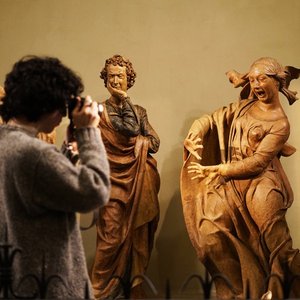
Dell’Arca's most celebrated work, the “Compianto sul Cristo Morto,” housed in the sanctuary of Santa Maria della Vita in Bologna, exemplifies his unique approach to sculpture. Completed around 1485-1490 (though some scholars propose an earlier date), this group of six figures—Joseph of Arimathea, Mary of Cleophas, Mary Magdalene, St. John the Apostle, and the Virgin Mary—is not merely a depiction of mourning; it’s a visceral experience of grief. Each figure is rendered with painstaking detail, their faces etched with profound sorrow, their bodies contorted in postures of anguish. The terracotta itself, chosen for its ability to capture subtle nuances of expression, becomes a vehicle for intense emotion.
What distinguishes this work from earlier depictions of the Pietà is dell’Arca's masterful use of space and composition. The figures are arranged in a semi-circle around the lifeless Christ, creating a sense of intimacy and immediacy. The viewer is drawn into the scene, compelled to share in their collective sorrow. The drapery—again, heavily influenced by Burgundian aesthetics—adds to the drama, swirling and billowing as if mirroring the emotional turbulence within the figures themselves. It’s a testament to dell'Arca's skill that he could imbue such a seemingly simple subject with such profound psychological depth.
Beyond Bologna: Other Notable Works
While the “Compianto sul Cristo Morto” remains his most famous achievement, dell’Arca produced a number of other significant works throughout his career. In 1474, he sculpted a bust of Saint Dominic for the Basilica of San Domenico in Bologna—a remarkably lifelike portrait that captures the saint's solemnity and piety. He also contributed to the elaborate decoration of the Arca di San Domenico, including a complex spiral superstructure adorned with figures representing the Evangelists, Saints Anne, John the Baptist, St. Procolo and St. Vitale. These works demonstrate his versatility as a sculptor and his ability to adapt his style to different commissions and patrons.
Furthermore, dell’Arca created a terracotta high relief of Madonna di Piazza on the wall of the Palazzo Comunale in Bologna, showcasing his skill in capturing movement and emotion within a limited space. His work on the Arca di San Domenico—a project that spanned nearly two decades—is considered one of the most ambitious artistic undertakings of the 15th century, reflecting dell’Arca's dedication to his craft and his profound understanding of human emotion.
Legacy and Historical Significance
Niccolò dell’Arca stands as a pivotal figure in the development of Italian Renaissance sculpture. He was one of the first artists to fully embrace terracotta as a medium for expressive portraiture and religious sculpture, pushing its boundaries with his innovative glazing techniques and his masterful rendering of human emotion. His work foreshadowed the emotional intensity that would characterize later generations of sculptors, including Luca della Robbia and Michelangelo.
Dell’Arca's influence extends beyond his individual works; he helped to establish a new standard for realism and psychological depth in sculpture, paving the way for future artists to explore the complexities of human experience through their art. His legacy endures not only in the surviving sculptures themselves but also in the profound emotional impact they continue to have on viewers centuries later. He remains a testament to the power of art to evoke empathy, sorrow, and ultimately, a deeper understanding of the human condition.
niccolò dell' arca
1438 - 1494 , Italy
Quick Facts
- Artistic Movement Or Style: Early Renaissance
- Artists Or Movements Influenced By This Artist:
- Luca della Robbia
- Renaissance Sculpture
- Artists Who Influenced This Artist:
- Giorgio da Sebenico
- Jacopo della Quercia
- Donatello
- Date Of Birth: c. 1435-1440
- Date Of Death: 1494
- Full Name: Niccolò dell’Arca
- Nationality: Italian
- Notable Artworks:
- Lamentation Christ
- Compianto sul Cristo Morto
- Santa Giuliana de’ Banzi
- Place Of Birth: Bari, Italy

