 Preview
 Send
Send Share
Share
 Details

 Download
 Similars
 X-Ray
X-Ray Diaporama
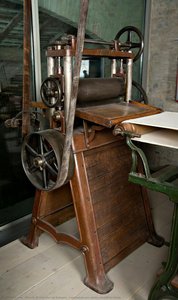
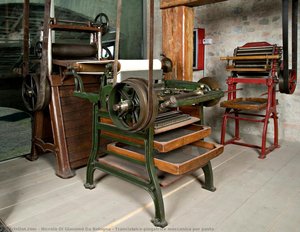
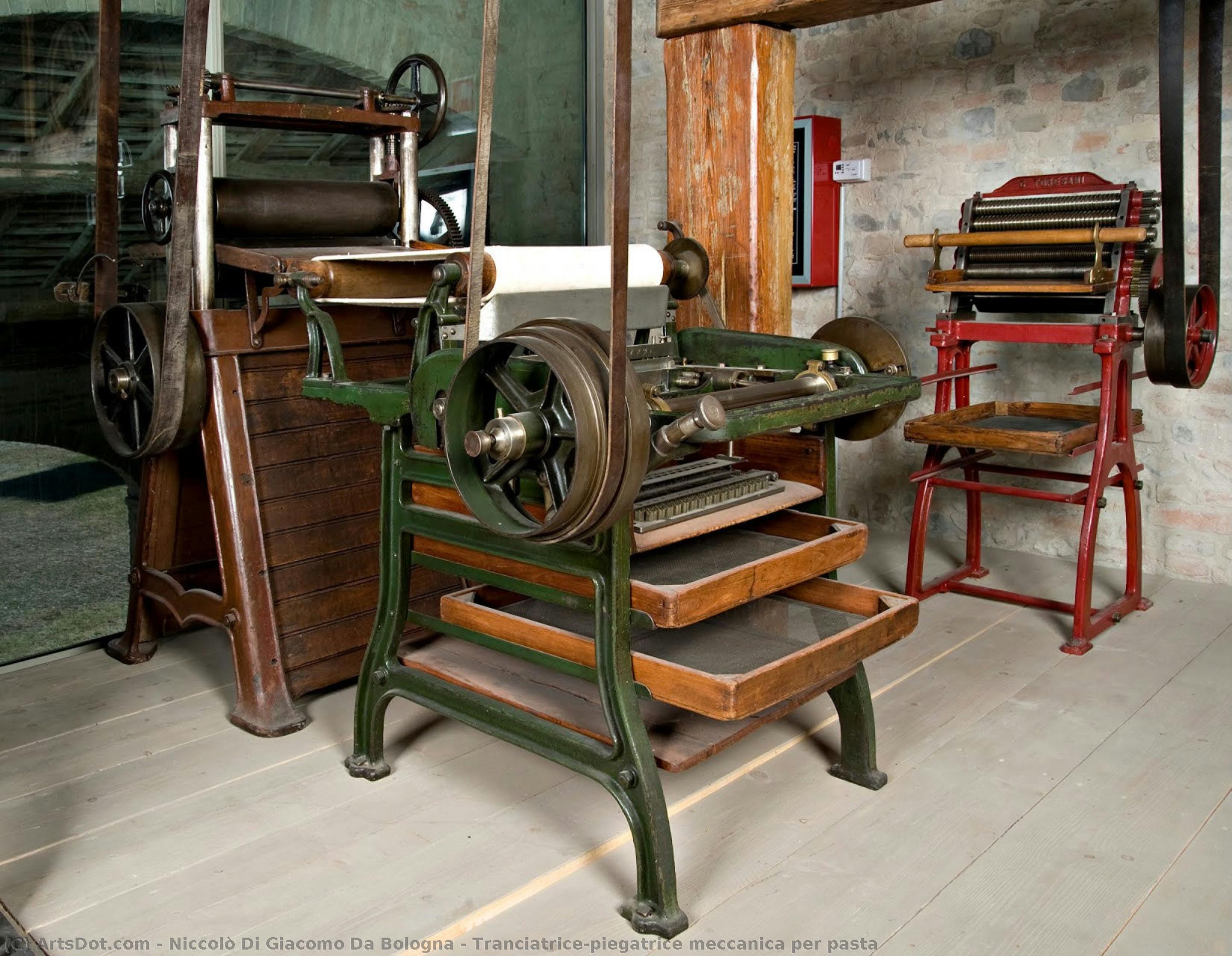
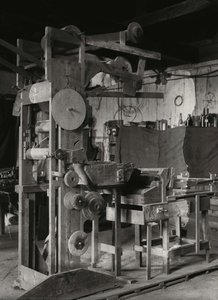
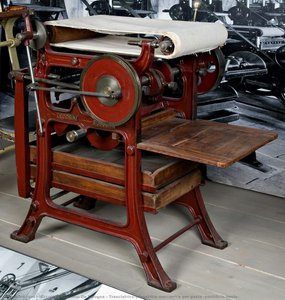
Tranciatrice-piegatrice meccanica per pasta

 Read More
Giclée / Art Print
Museum-quality giclée or canvas print with fast production and flexible finish options. ( Buy Hand Made Painting Buy Image)




































Pick from our preset sizes that match the artwork's original proportions.

You may enter your own dimensions to fit a specific frame or space. If your selected size does not match the original image's proportions, we will either crop the artwork or extend the image with a mirrored or solid-fill edge. A digital mockup will be sent for your approval before production begins.
Please note that the on-screen preview does not reflect the actual cropping or extension. Only the mockup will accurately show the final composition.
While custom sizes are available, we recommend selecting a dimension from the predefined list to preserve the original proportions.
Worldwide Delivery () in 2 weeks instead of standard 4/5 weeks. (29 August)

Free Worldwide Express Shipping

High-Quality Linen Canvas

Full Shipping Insurance

Customs Tax Refund Guarantee

True Color Matching Guarantee

60-Day Return Policy (Defects Only)

100% Money-Back Guarantee

Bulk Discount Offer
 Glass option is only available in size under 110 CM

Tranciatrice-piegatrice meccanica per pasta
Giclée / Art Print
Reproduction Size
-


Total Price
$ 63
Related Artworks








Artist Biography
The Radiant Legacy of Niccolò da Bologna
In the golden twilight of the fourteenth century, within the scholarly and vibrant streets of Bologna, a master emerged whose brush would breathe life into the silent pages of history. Niccolò di Giacomo da Bologna, more affectionately known to his contemporaries and posterity as Niccolò da Bologna, was not merely an illuminator; he was a storyteller of the highest order. Born around 1325, Niccolò operated during a period of profound intellectual awakening in Italy, where the burgeoning prestige of the University of Bologna demanded art that could match the gravity and complexity of its legal and theological texts. His workshop became a sanctuary of creativity, producing manuscripts that were as much works of fine art as they were vessels of knowledge.
The early years of Niccolò’s career are inextricably linked to the rigorous academic atmosphere of his home city. His first documented triumphs can be found in the meticulous copies of Gratian’s Decretals, a foundational text of canon law. In these legal manuscripts, one begins to witness the seeds of his burgeoning genius. While many of his peers were content with static, symbolic representations, Niccolò sought to capture the pulse of human experience. He possessed an uncanny ability to transform a flat parchment surface into a stage for high drama, utilizing expressive figures and densely populated narrative scenes that seemed to vibrate with an internal energy.
A Symphony of Color and Motion
To gaze upon a manuscript illuminated by Niccolò is to enter a world of controlled chaos and breathtaking elegance. His technique was a masterful blend of precision and passion. He moved beyond the rigid, stylized conventions of the early medieval period, embracing a more naturalistic approach that prioritized emotional resonance. His compositions are often characterized by a sense of crowded, action-filled movement, where every figure plays a vital role in the unfolding drama. This was achieved through a sophisticated use of:
- Flowing Drapery: The rhythmic, sweeping lines of clothing that suggest wind, motion, and the physical presence of the subjects.
- Vibrant Pigments: A palette rich with deep blues, brilliant golds, and intense reds that commanded the viewer's attention.
- Architectural Depth: The clever use of framing elements to create a sense of space within the confines of an initial or border.
- Emotional Intensity: Faces and gestures that convey the harrowing weight of martyrdom or the serene grace of divine intervention.
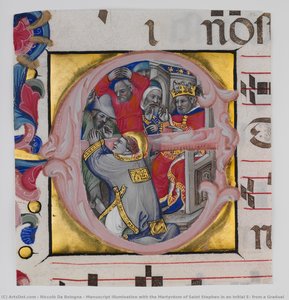
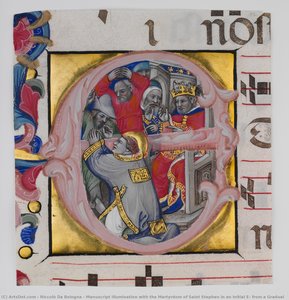
One particularly poignant example of his skill can be seen in his illumination of the Martyrdom of Saint Stephen. In this work, Niccolò achieves a rare feat: he compresses intense, violent action into a singular, elegant moment. The stoning of the saint is rendered with such grace—through the delicate application of gold and the fluid movement of the figures—that the horror of the event is elevated to a state of spiritual transcendence.
Historical Significance and Enduring Influence
The influence of Niccolò da Bologna extended far beyond the walls of his Bolognese workshop. As his reputation grew, so did the diversity of his commissions. His hand touched everything from university treatises exploring complex theological debates to liturgical choir books intended for the most sacred ecclesiastical ceremonies. He even found favor with private patrons, creating intimate devotional books that allowed for a personal connection to the divine. This versatility ensured that his stylistic innovations permeated various strata of society, leaving an indelible mark on the evolution of Italian manuscript illumination.
Though the era of large-scale manuscript illumination eventually gave way to the rise of the printed word, the legacy of Niccolò remains a cornerstone of fourteenth-century art history. He bridged the gap between the symbolic rigidity of the Middle Ages and the burgeoning humanism of the Renaissance. By infusing sacred and secular texts with narrative power and human emotion, he helped redefine the purpose of the illuminated page—transforming it from a mere container of text into a window onto the soul. Today, his works stand as a testament to a period when art, intellect, and faith converged in a brilliant display of Bolognese mastery.
Quick Facts
- Artistic Movement Or Style: Manuscript illumination
- Artists Who Influenced This Artist:
- Giorgio de Chirico
- Carlo Carrà
- Date Of Birth: c. 1325
- Date Of Death: c. 1403
- Full Name: Niccolò di Giacomo da Bologna
- Nationality: Italian
- Notable Artworks:
- Madonna and Child Enthroned
- Laminatoio per pasta
- Manuscript Illumination with the Martyrdom of Saint Stephen
- Place Of Birth: Bologna, Italy