 Preview
 Send
Send Share
Share
 Details

 Download
 Similars
 X-Ray
X-Ray Diaporama
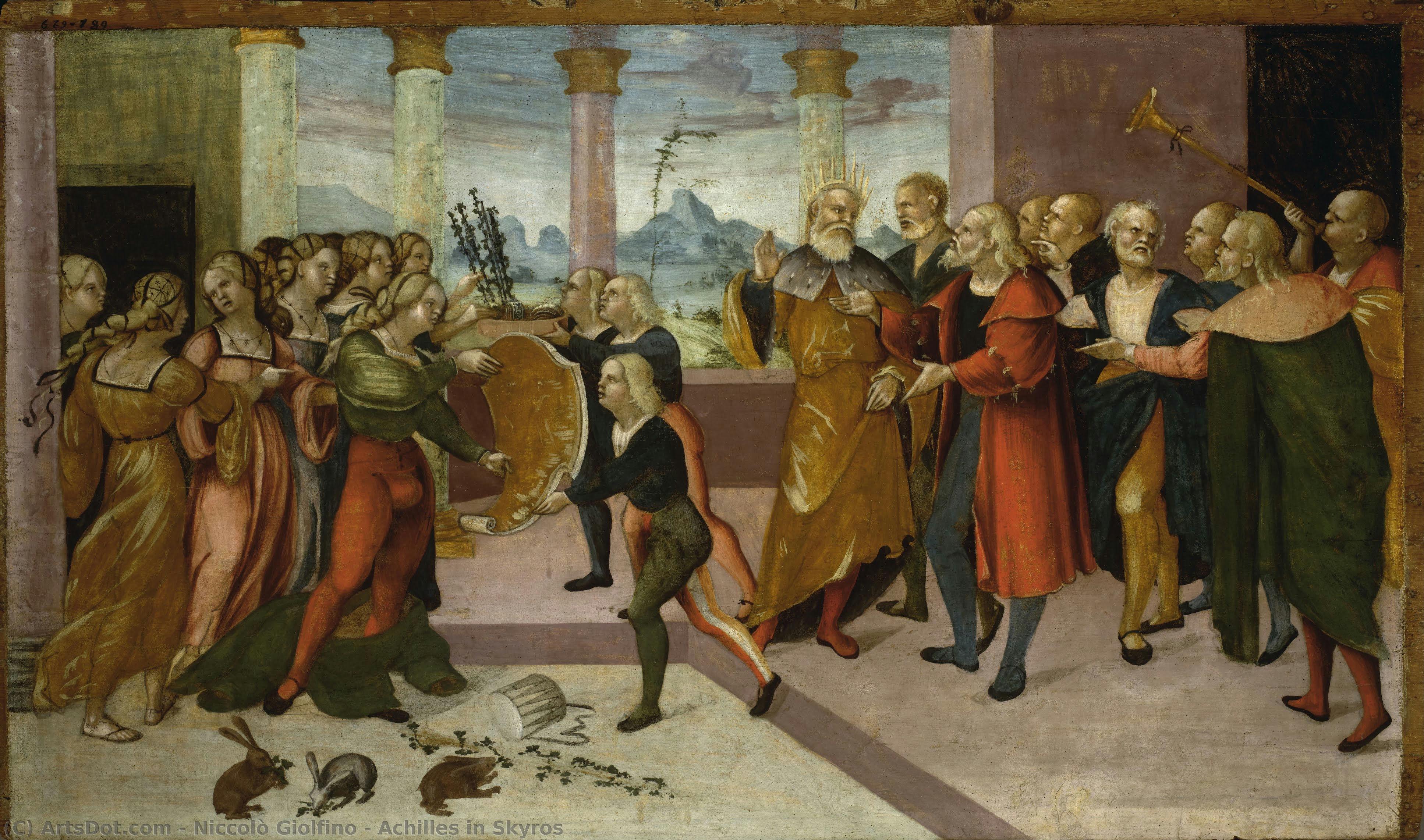
Achilles in Skyros


 Read More
Hand Made Oil Reproduction
Hand-painted oil on canvas in your size and frame, made to order by our artists. ( Buy Print Buy Image)




































Pick from our preset sizes that match the artwork's original proportions.

You may enter your own dimensions to fit a specific frame or space. If your selected size does not match the original image's proportions, we will either crop the artwork or extend the painting with additional hand-painted elements. A digital mockup will be sent for your approval before production begins.
Please note that the on-screen preview does not reflect the actual cropping or extension. Only the mockup will accurately show the final composition.
While custom sizes are available, we recommend selecting a dimension from the predefined list to preserve the original proportions.
After order, ArtsDot.com team will email client for instructions and provide a mockup preview
Worldwide Delivery () in 3/4 weeks instead of standard 5 weeks. (24 August). No compromise on quality.

Free Worldwide Express Shipping

High-Quality Linen Canvas

Full Shipping Insurance

Customs Tax Refund Guarantee

True Color Matching Guarantee

60-Day Return Policy (Defects Only)

100% Money-Back Guarantee

Bulk Discount Offer
 Glass option is only available in size under 110 CM

Achilles in Skyros
Reproduction Medium
Reproduction Size
-


Total Price
$ 263
Related Artworks








Artist Biography
Leonardo da Vinci: A Renaissance Polymath and Artistic Genius
Leonardo da Vinci, born April 15, 1452, in Anchiano, near Vinci, Italy, remains one of the most iconic figures in human history. More than simply a painter, he was a true polymath – an artist, scientist, inventor, anatomist, architect, and engineer whose boundless curiosity and innovative spirit shaped the course of the Renaissance and continues to inspire awe centuries later. His life, spanning from 1452 to 1519, embodies the very essence of the “Renaissance man,” a figure defined by intellectual breadth and artistic mastery.
Leonardo’s early years were marked by an unconventional upbringing. He was born out of wedlock to Ser Piero da Vinci, a notary, and Caterina, a peasant woman. He received limited formal education, primarily in Florence under the tutelage of Andrea del Verrocchio, a renowned sculptor and painter. Within Verrocchio’s workshop, Leonardo honed his skills in drawing, painting, and technical design, absorbing the artistic principles and techniques of the era. It was here that he began to develop his distinctive style – characterized by meticulous observation, anatomical accuracy, and an innovative use of light and shadow.
Early Works and Florentine Influences
Leonardo’s early works in Florence reveal a burgeoning talent and a fascination with human form and perspective. Paintings like the “Annunciation” (c. 1472-75) demonstrate his mastery of sfumato, a technique that employs subtle gradations of tone to create soft, hazy effects – a hallmark of his style. The "Adoration of the Magi" (c. 1481-82), though unfinished, showcases his ambitious compositional skills and his ability to capture complex narratives with emotional depth. These works were influenced by the prevailing artistic trends of the time, particularly the work of Masaccio and Botticelli, but Leonardo quickly established a unique voice through his meticulous detail and psychological insight.
His anatomical studies, driven by an insatiable desire to understand the human body, profoundly impacted his art. Leonardo meticulously dissected corpses – a practice considered taboo at the time – documenting his findings in detailed drawings that were remarkably accurate for their era. These studies informed his depictions of musculature and skeletal structure, contributing significantly to the realism and expressiveness of his paintings.
The High Renaissance and Beyond
Leonardo’s career took a significant turn when he accepted commissions from powerful patrons, including Ludovico Sforza, Duke of Milan. During his time in Milan (1482-1499), he undertook numerous projects – designing stage sets for court performances, creating military fortifications, and painting iconic works such as “The Last Supper” (c. 1495-98) in the refectory of Santa Maria delle Grazie. “The Last Supper,” with its revolutionary use of perspective and dramatic portrayal of Christ’s revelation, remains one of the most celebrated paintings in art history.
Following his departure from Milan, Leonardo spent time in Florence and Rome, continuing to work on various projects while also pursuing scientific investigations. He developed designs for flying machines, tanks, and other inventions that were centuries ahead of their time. His notebooks are filled with sketches, diagrams, and observations spanning a vast range of subjects – demonstrating his relentless pursuit of knowledge and innovation.
Legacy and Lasting Impact
Leonardo da Vinci died on May 2, 1519, in Amboise, France, where he had spent his final years under the patronage of King Francis I. His legacy extends far beyond his artistic achievements. He is revered as a symbol of human potential and intellectual curiosity – an embodiment of the Renaissance ideal. His anatomical drawings revolutionized the study of human anatomy, while his scientific investigations laid the groundwork for future discoveries.
Leonardo’s influence on art continues to be profound. His techniques—particularly sfumato and chiaroscuro—are still studied and emulated by artists today. More importantly, he represents a shift in thinking – a move towards observation, experimentation, and the pursuit of knowledge as fundamental aspects of human endeavor. He remains an enduring testament to the power of creativity, intellect, and the boundless possibilities of the human mind.
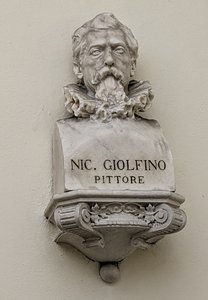
niccolò giolfino
1476 - 1555 , Italy
Quick Facts
- Artistic Movement Or Style: High Renaissance
- Artists Or Movements Influenced By This Artist: ['Da Vinci family']
- Artists Who Influenced This Artist: ['Andrea del Verrocchio']
- Date Of Birth: April 15, 1452
- Date Of Death: May 2, 1519
- Full Name: Leonardo di ser Piero da Vinci
- Nationality: Italian
- Notable Artworks:
- Mona Lisa
- The Last Supper
- Vitruvian Man
- Place Of Birth: Vinci, Italy