 Preview
 Send
Send Share
Share
 Details

 Download
 Similars
 X-Ray
X-Ray Diaporama
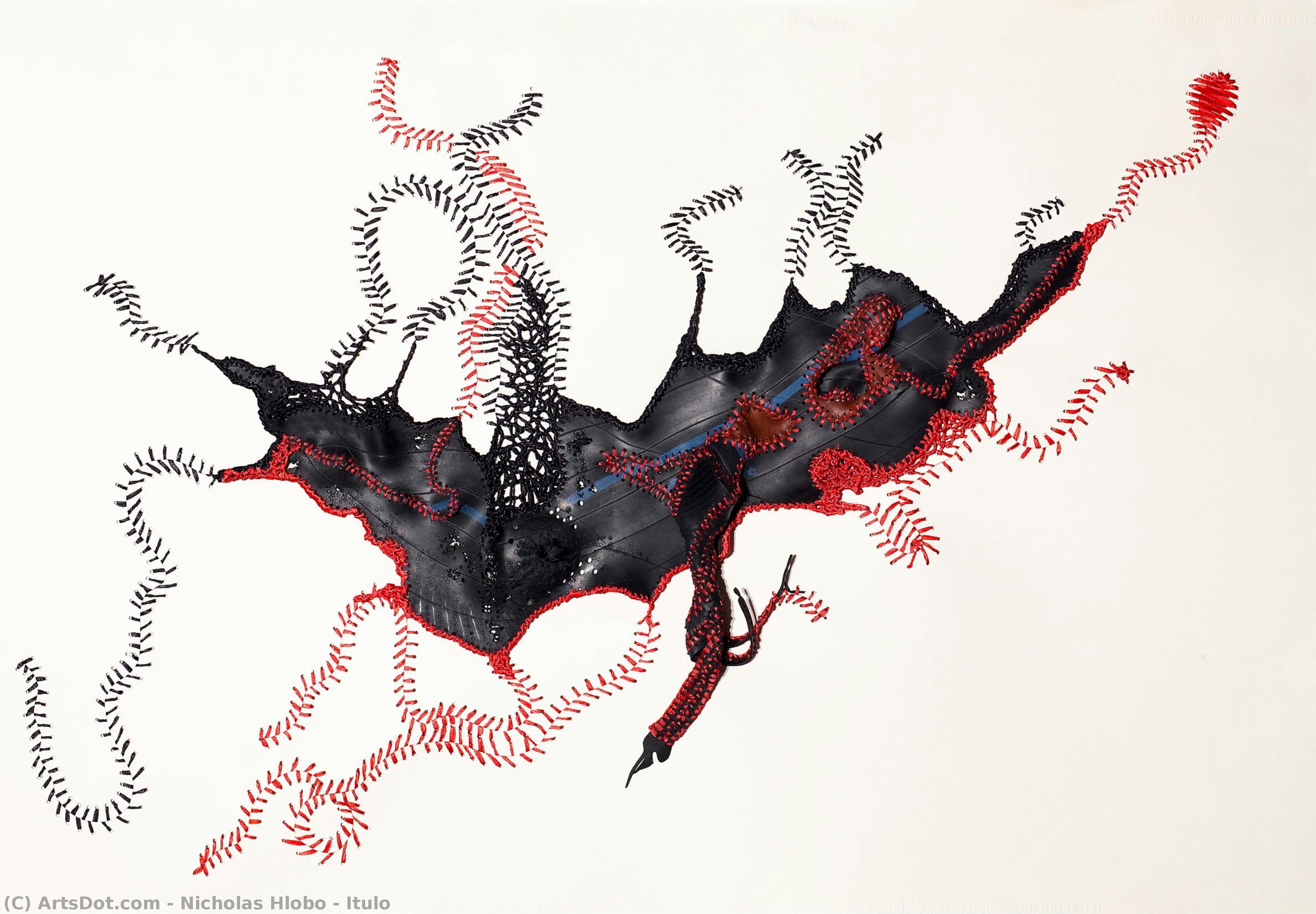
Itulo


 Read More
Giclée / Art Print
Museum-quality giclée or canvas print with fast production and flexible finish options. ( Buy Hand Made Painting Buy Image)




































Pick from our preset sizes that match the artwork's original proportions.

You may enter your own dimensions to fit a specific frame or space. If your selected size does not match the original image's proportions, we will either crop the artwork or extend the image with a mirrored or solid-fill edge. A digital mockup will be sent for your approval before production begins.
Please note that the on-screen preview does not reflect the actual cropping or extension. Only the mockup will accurately show the final composition.
While custom sizes are available, we recommend selecting a dimension from the predefined list to preserve the original proportions.
Worldwide Delivery () in 2 weeks instead of standard 4/5 weeks. (18 August)

Free Worldwide Express Shipping

High-Quality Linen Canvas

Full Shipping Insurance

Customs Tax Refund Guarantee

True Color Matching Guarantee

60-Day Return Policy (Defects Only)

100% Money-Back Guarantee

Bulk Discount Offer
 Glass option is only available in size under 110 CM

Itulo
Giclée / Art Print
Reproduction Size
-


Total Price
$ 63
Collectible Description
Related Artworks
Artist Biography
The Weaver of Identity: The Sculptural World of Nicholas Hlobo
In the vibrant, complex landscape of contemporary South African art, few voices resonate with as much visceral intensity as that of Nicholas Hlobo. Born in Cape Town in 1975 and deeply rooted in the cultural rhythms of Johannesburg, Hlobo has emerged as a master of sculptural narrative, using the very act of assembly to explore the fractures and repairs of human identity. His work does not merely sit in space; it breathes, pulses, and bleeds with the weight of history. To encounter a Hlobo installation is to witness a profound dialogue between the personal and the political, where the intimate struggles of a queer Xhosa man intersect with the broader, often traumatic, legacies of colonialism and apartheid.
Hlobo’s journey is one of profound duality and integration. Raised in Dutywa within the Eastern Cape by his maternal grandmother—a woman he remembers as a fierce, feminist force—his upbringing was steeped in both Xhosa tradition and the spiritual complexities of his heritage. This dual initiation, having been baptized in a Christian church while also undergoing the imbeleko ceremony to introduce him to the spiritual realm, provided the foundational tension found in his art. His work often navigates the space between these worlds, much like his own identity, which seeks to reconcile the traditional expectations of masculinity with the fluid realities of his sexuality.
Materiality as Metaphor: The Art of Mending
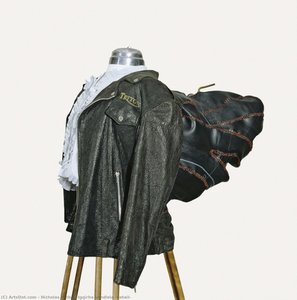
What distinguishes Hlobo’s practice is his extraordinary ability to transform the mundane and the industrial into the deeply emotive. He rejects the pristine surfaces of classical sculpture in favor of a tactile, often rugged materiality. By meticulously cutting, sewing, and weaving together disparate elements such as rubber inner tubes, ribbon, organza, lace, and leather, he creates assemblages that feel both wounded and resilient. The use of rubber—a heavy, industrial, and often black, visceral material—serves as a powerful metaphor for the scars left by historical oppression, while the delicate lightness of lace and silk introduces a subversive femininity into the sculptural form.
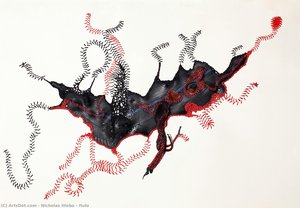
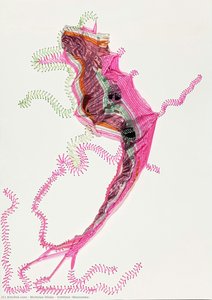
The technique of stitching is central to his artistic vocabulary. For Hlobo, the needle and thread are tools of reclamation. The act of sewing disparate pieces together symbolizes the process of regeneration after rupture. In works like Itulo or Untitled (Wazoneka), the stitches are not merely functional; they are expressive, sometimes appearing as chaotic, dense tangles that suggest a frantic attempt to hold a fragmenting self together, and at other times acting as sutures that bind the wounds of history. This deliberate juxtaposition of textures creates a sensory experience that invites the viewer to contemplate themes of fragmentation, reintegration, and the enduring strength required to heal.
Legacy and the Reimagining of Masculinity
Beyond the physical beauty of his tactile surfaces, Hlobo’s significance lies in his courageous reevaluation of social constructs. Through his art, he challenges the rigid, often colonial-imposed definitions of masculinity and sexuality in South Africa. His sculptures do not present a static identity but rather a fluid, evolving one, shaped by the continuous interplay of culture, gender, and memory. He utilizes the language of the body—often through fleshy tones, meandering tentacles, and organic shapes—to speak to the vulnerabilities and desires that exist beneath the surface of social performance.
As his career has progressed, Hlobo has moved from individual drawings to monumental installations that command entire gallery spaces, forcing a confrontation with the scale of his themes. His achievements have placed him at the forefront of global contemporary art, yet he remains anchored in the specificities of the South African experience. By weaving together the threads of Xhosa culture, queer identity, and post-apartheid reality, Nicholas Hlobo has created a body of work that is not only a testament to personal survival but a profound meditation on the possibility of creating something beautiful and cohesive from the remnants of a broken past.
nicholas hlobo
1975 - , South Africa
Quick Facts
- Artistic Movement Or Style: Sculptural Art
- Date Of Birth: 1975
- Full Name: nicholas hlobo
- Nationality: South African
- Notable Artworks:
- Igqirha Lendlela
- Untitled (Wazoneka)
- Place Of Birth: Cape Town, South Africa