 Preview
 Send
Send Share
Share
 Details

 Download
 Similars
 X-Ray
X-Ray Diaporama
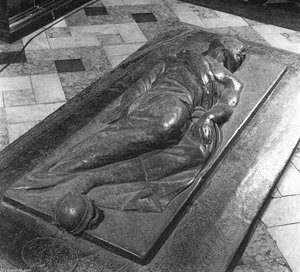
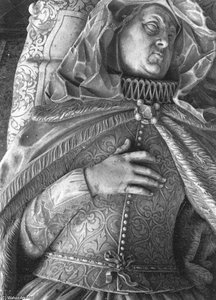
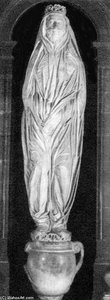
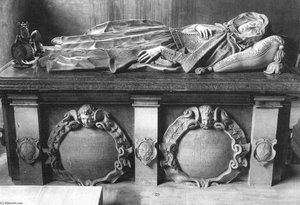
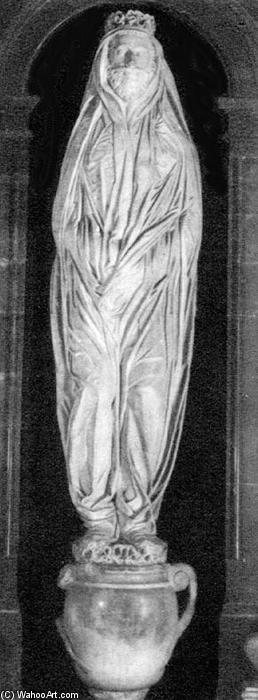
Monument to the Poet John Donne

 Read More
Hand Made Oil Reproduction
Hand-painted oil on canvas in your size and frame, made to order by our artists. ( Buy Print Buy Image)




































Pick from our preset sizes that match the artwork's original proportions.

You may enter your own dimensions to fit a specific frame or space. If your selected size does not match the original image's proportions, we will either crop the artwork or extend the painting with additional hand-painted elements. A digital mockup will be sent for your approval before production begins.
Please note that the on-screen preview does not reflect the actual cropping or extension. Only the mockup will accurately show the final composition.
While custom sizes are available, we recommend selecting a dimension from the predefined list to preserve the original proportions.
After order, ArtsDot.com team will email client for instructions and provide a mockup preview
Worldwide Delivery () in 3/4 weeks instead of standard 5 weeks. (24 August). No compromise on quality.

Free Worldwide Express Shipping

High-Quality Linen Canvas

Full Shipping Insurance

Customs Tax Refund Guarantee

True Color Matching Guarantee

60-Day Return Policy (Defects Only)

100% Money-Back Guarantee

Bulk Discount Offer
 Glass option is only available in size under 110 CM

Monument to the Poet John Donne
Reproduction Medium
Reproduction Size
-


Total Price
$ 263
Related Artworks




Artist Biography
The Master of Stone: The Life and Legacy of Nicholas Stone
In the shifting architectural landscape of seventeenth-century England, few names resonate with as much structural and sculptural authority as Nicholas Stone. Born in 1586 or 1587 to a humble quarryman near Exeter, Stone’s journey from the rugged landscapes of Devon to the royal courts of London is a testament to a singular, transformative talent. He was not merely a craftsman but a pioneer who bridged the gap between the heavy traditions of the Elizabethan era and the burgeoning, emotive grandeur of the Baroque. His life was defined by a profound connection to his medium, a deep understanding of the weight and texture of stone, and an unyielding vision that would eventually reshape the very skyline of London.
Stone’s artistic DNA was deeply rooted in the Continental traditions of Northern Europe. His early apprenticeship under the Dutch mason Isaac James provided him with a foundational mastery of stonecraft, but it was his encounter with the legendary Hendrik de Keyser that would irrevocably alter his trajectory. Drawn to the vibrant artistic pulse of Amsterdam, Stone immersed himself in the Netherlandish style, working alongside De Keyser and eventually marrying the master mason's daughter. This period of cosmopolitan apprenticeship allowed him to absorb the sophisticated decorative language of the Dutch Renaissance, a stylistic influence that he would later transplant into English soil, infusing it with a new, classical elegance.
A Vision in Marble and Monument
Upon his return to London in 1613, Stone established a prolific workshop that became the epicenter of English funerary art. He operated in an era where the role of the sculptor was often inseparable from that of the architect—the "mason-sculptor"—and he embraced this duality with unparalleled skill. His most enduring legacy lies in his ability to transform the somber necessity of death into a profound theatrical experience through elaborate funerary monuments. These works, dedicated to the most prominent figures of the Jacobean and Caroline eras, were avant-garde by English standards, moving away from stiff, heraldic displays toward more fluid, emotive, and classically inspired compositions.
His mastery was not limited to the intimate scale of a tomb; he possessed the architectural foresight to command much larger canvases. As the appointed master-mason to both James I and Charles I, Stone played a critical role in executing some of the most significant architectural projects of the age. Most notably, his hands were instrumental in the construction of Inigo Jones' Banqueting House at Whitehall. In this monumental achievement, Stone helped realize a vision of Palladian grandeur, introducing a sense of proportion and classical discipline that would serve as a precursor to the English Baroque movement.
The Architect of an Era
The significance of Nicholas Stone extends far beyond the physical monuments he carved or the buildings he helped raise. He acted as a conduit for European innovation, bringing the sophisticated aesthetics of the Continent to a nation still finding its artistic voice. While his sculptural output was often the result of a collaborative workshop environment—leading to variations in quality across different pieces—his overarching influence remained consistent: he championed the use of classical antiquity and decorative exuberance to create a sense of permanence and prestige.
As we reflect on his contributions, several key pillars of his career emerge:
- The Synthesis of Styles: His unique ability to blend Netherlandish technical precision with the emerging classical ideals of the Renaissance.
- Architectural Innovation: His pivotal role in establishing the early foundations of the Baroque style in England through monumental works like the Banqueting House.
- Funerary Artistry: The elevation of the English tomb from a mere marker of death to a sophisticated piece of sculptural narrative and emotional expression.
- Royal Patronage: His prestigious position as master-mason to the Stuart monarchs, which allowed him to shape the visual identity of the English court.
Though the Baroque style he helped introduce would face periods of ebb and flow in the decades following his death in 1647, the imprint of Nicholas Stone remains etched into the very stone of London. He was a man who understood that architecture provides the bones of a city, but sculpture provides its soul.
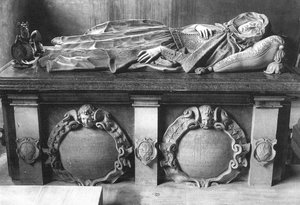
nicholas the elder stone
1587 - 1647 , United Kingdom
Quick Facts
- Artistic Movement Or Style: Baroque
- Artists Or Movements Influenced By This Artist: ['Classical Antiquities']
- Artists Who Influenced This Artist:
- Hendrik de Keyser
- Isaac James
- Date Of Birth: 1587
- Date Of Death: 1647
- Full Name: Nicholas Stone
- Nationality: English
- Notable Artworks:
- Tomb of Lady Elizabeth Carey
- Tomb of Sir William Curle
- Place Of Birth: Exeter, United Kingdom