 Preview
 Send
Send Share
Share
 Details

 Download
 Similars
 X-Ray
X-Ray Diaporama
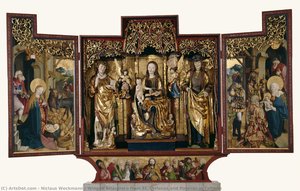
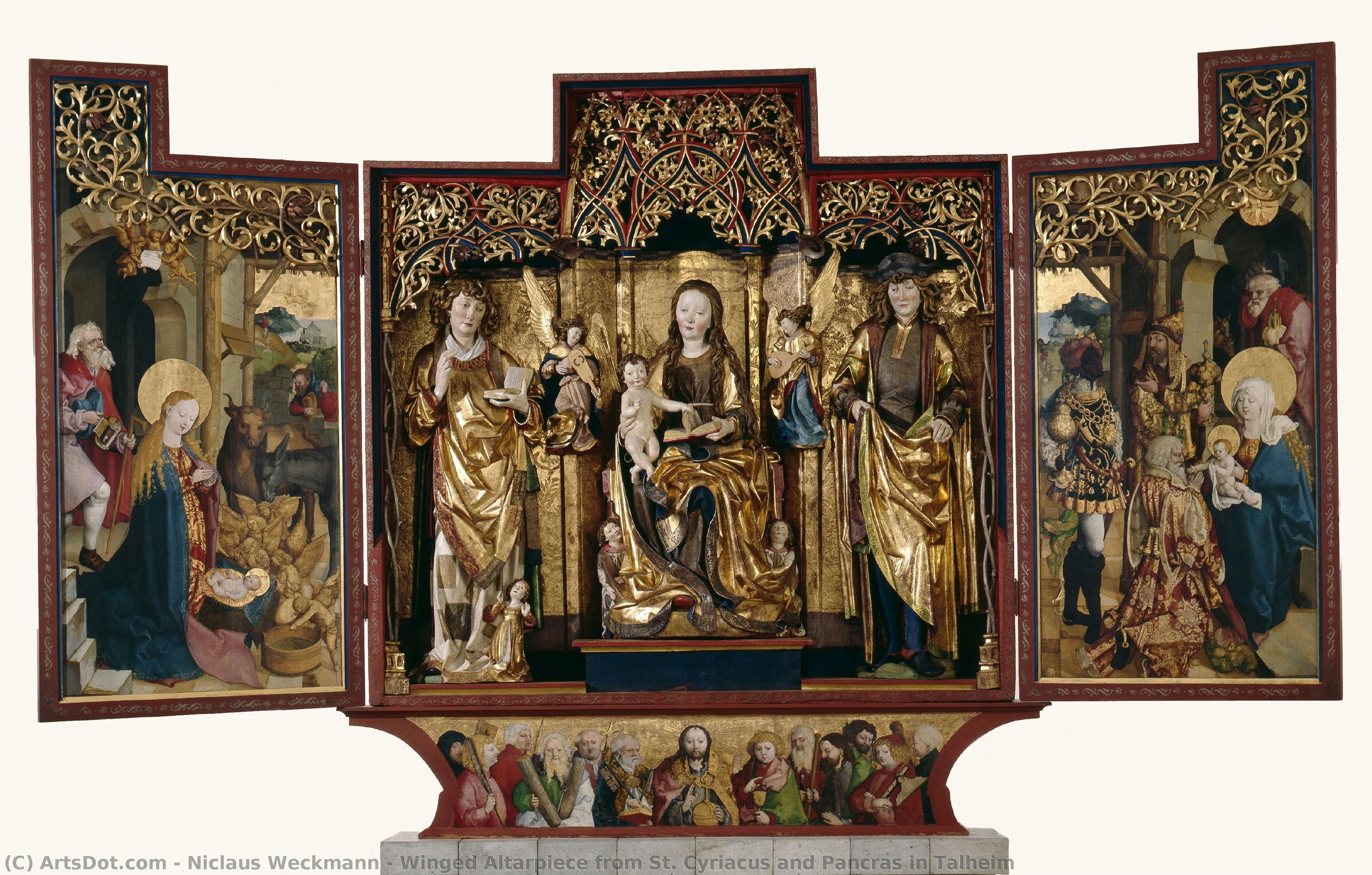
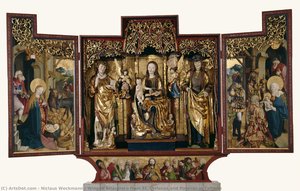
Winged Altarpiece from St. Cyriacus and Pancras in Talheim


 Read More
Giclée / Art Print
Museum-quality giclée or canvas print with fast production and flexible finish options. ( Buy Hand Made Painting Buy Image)




































Pick from our preset sizes that match the artwork's original proportions.

You may enter your own dimensions to fit a specific frame or space. If your selected size does not match the original image's proportions, we will either crop the artwork or extend the image with a mirrored or solid-fill edge. A digital mockup will be sent for your approval before production begins.
Please note that the on-screen preview does not reflect the actual cropping or extension. Only the mockup will accurately show the final composition.
While custom sizes are available, we recommend selecting a dimension from the predefined list to preserve the original proportions.
Worldwide Delivery () in 2 weeks instead of standard 4/5 weeks. (25 August)

Free Worldwide Express Shipping

High-Quality Linen Canvas

Full Shipping Insurance

Customs Tax Refund Guarantee

True Color Matching Guarantee

60-Day Return Policy (Defects Only)

100% Money-Back Guarantee

Bulk Discount Offer
 Glass option is only available in size under 110 CM

Winged Altarpiece from St. Cyriacus and Pancras in Talheim
Giclée / Art Print
Reproduction Size
-


Total Price
$ 63
Related Artworks








Artist Biography
The Sculptor of Faith and Form
Niklaus Weckmann, a master active in the vibrant artistic hub of Ulm around the turn of the sixteenth century, stands as a pivotal figure in the late Gothic landscape of Germany. His life and work were deeply embedded in an era of profound spiritual transformation, where the meticulous craftsmanship of the sculptor met the intense religious fervor of the pre-Reformation period. Born in Ulm, Weckmann emerged from a tradition that valued both technical precision and the ability to convey complex theological narratives through physical form. His artistry was not merely about the shaping of wood or stone, but about creating vessels for devotion, where every fold of drapery and every subtle expression served to bridge the gap between the earthly and the divine.
The essence of Weckmann’s genius lies in his ability to blend established Gothic traditions with an innovative, almost modern, naturalism. While many of his contemporaries remained tethered to rigid, stylized conventions, Weckmann demonstrated a remarkable sensitivity to human emotion and anatomical detail. This development was significantly enriched by the integration of Flemish influences, which brought a new level of realism and narrative depth to his compositions. In works such as his depictions of the Adoration of the Magi, one can observe a sophisticated approach to storytelling, where the grandeur of the scene is balanced by an intimate, palpable humanity that invites the viewer into a moment of sacred encounter.
Mastery of Material and Workshop Legacy
The technical prowess of Weckmann’s workshop represents the pinnacle of late Gothic sculptural achievement. Working primarily with limewood—a medium prized for its fine grain and capacity for intricate detail—he and his skilled artisans pushed the boundaries of what could be achieved through carving. The finished works were often brought to life through vibrant polychromy and lavish gilding, creating a sensory experience that would have been breathtaking in the dim, candlelit interiors of medieval churches. This mastery of texture and light allowed his sculptures to possess a lifelike quality, where the shimmering gold and painted flesh seemed to pulse with a spiritual vitality.
A defining moment in the scholarly understanding of Weckmann’s career came with the discovery of his signature on a statue of St. Stephen in Gundelfingen. This revelation transformed our perception of him from an anonymous craftsman to the recognized master of a substantial and influential workshop. It became clear that his reach extended far beyond a single commission, as his studio produced a prolific output that shaped the aesthetic character of the region. The scope of his influence is most profoundly felt in his monumental achievements, such as:
- The Winged Altarpiece from St. Cyriacus and Pancras in Talheim: A breathtaking masterpiece of Gothic design that showcases his ability to organize complex religious narratives within a grand architectural framework.
- Detailed Religious Iconography: His ability to infuse standard Christian motifs with unique, naturalistic details that elevated the didactic purpose of the art.
- The Integration of Flemish Realism: The successful marriage of German Gothic structure with the soft, emotive realism characteristic of Northern Netherlandish art.
Historical Significance and Enduring Legacy
The historical significance of Niklaus Weckmann transcends the mere aesthetic value of his sculptures; he was a chronicler of an age in transition. His work captures the tension of a period caught between the medieval devotion to symbolism and the burgeoning Renaissance interest in the natural world. Through his hands, the theological concepts of the era were rendered tangible, providing a visual language for the faithful during a time of immense social and religious upheaval. Even as the Reformation began to reshape the landscape of German Christianity, the enduring power of Weckmann’s imagery remained a testament to the strength of the Gothic tradition.
Today, art historians continue to study his oeuvre to uncover the nuances of the Ulm school of sculpture. His ability to balance the monumental with the minute, and the symbolic with the human, ensures that his name remains etched in the annals of art history. Weckmann’s legacy is not found only in museums or preserved altarpieces, but in the very way we understand the intersection of faith, craftsmanship, and the enduring human desire to give form to the intangible.
niclaus weckmann
Germany
Quick Facts
- Artistic Movement Or Style: Late Gothic
- Artists Or Movements Influenced By This Artist: ['Flemish']
- Artists Who Influenced This Artist: ['Jörg Syrlin the Younger']
- Date Of Birth: Ulm, Germany ()
- Date Of Death: Living
- Full Name: Niklaus Weckmann
- Nationality: German
- Notable Artworks:
- Holy Family
- Winged Altarpiece from St. Cyriacus and Pancras
- Place Of Birth: Germany