 Preview
 Send
Send Share
Share
 Details

 Download
 Similars
 X-Ray
X-Ray Diaporama
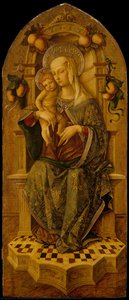
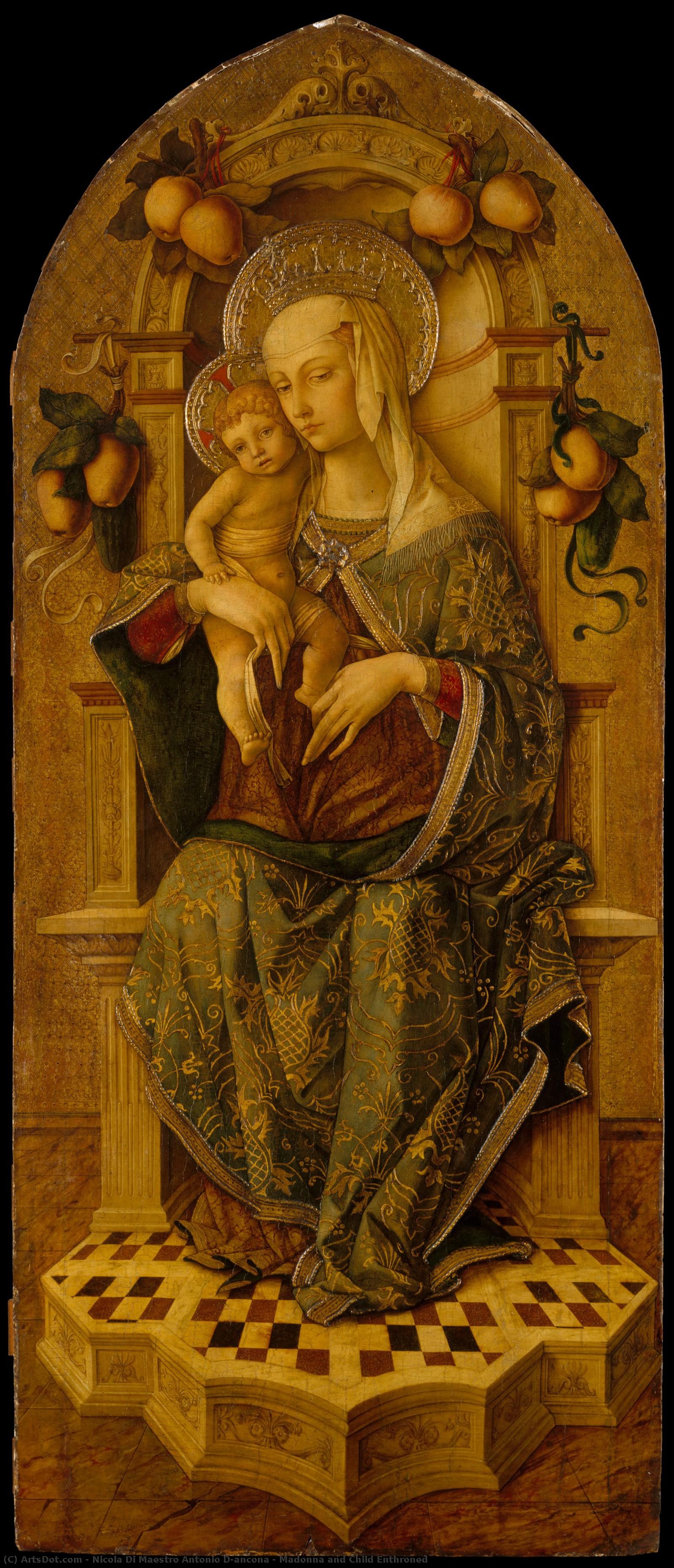
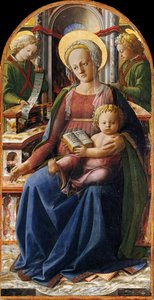
Madonna and Child Enthroned
 1475
1475 141.0 x 59.0 cm
 Read More
Giclée / Art Print
Museum-quality giclée or canvas print with fast production and flexible finish options. ( Buy Hand Made Painting Buy Image)




































Pick from our preset sizes that match the artwork's original proportions.

You may enter your own dimensions to fit a specific frame or space. If your selected size does not match the original image's proportions, we will either crop the artwork or extend the image with a mirrored or solid-fill edge. A digital mockup will be sent for your approval before production begins.
Please note that the on-screen preview does not reflect the actual cropping or extension. Only the mockup will accurately show the final composition.
While custom sizes are available, we recommend selecting a dimension from the predefined list to preserve the original proportions.
Worldwide Delivery () in 2 weeks instead of standard 4/5 weeks. (28 August)

Free Worldwide Express Shipping

High-Quality Linen Canvas

Full Shipping Insurance

Customs Tax Refund Guarantee

True Color Matching Guarantee

60-Day Return Policy (Defects Only)

100% Money-Back Guarantee

Bulk Discount Offer
 Glass option is only available in size under 110 CM

Madonna and Child Enthroned
Giclée / Art Print
Reproduction Size
-


Total Price
$ 63
Related Artworks



Artist Biography
The Luminous Devotion of Nicola di Maestro Antonio d’Ancona
In the quiet, sun-drenched corridors of the Italian Quattrocento, few artists captured the intersection of earthly piety and divine splendor as intimately as Nicola di Maestro Antonio d’Ancona. An Italian painter whose presence is felt most strongly in the Umbrian and Marchigian landscapes, d’Ancona emerged during a transformative era when the rigid structures of the Middle Ages were beginning to soften under the humanist light of the Early Renaissance. While the biographical shadows surrounding his life remain deep—much like the chiaroscuro found in his later works—the traces of his existence are etched into the very altarpieces that continue to grace the venerable churches of Italy. His life, though partially obscured by the passage of centuries, is a testament to an era where art served as a bridge between the mortal soul and the celestial realm.
The foundations of d’Ancona’s artistry were laid in the fertile artistic soil of central Italy. Records suggest his journey began with a baptism in Perugia around 1465, placing him at the heart of a burgeoning Renaissance movement. He sought mastery under the guidance of Giovanni Battista Sant’Anna, a seasoned fresco painter whose influence instilled in d’Ancona a profound respect for the monumental and the sacred. From this apprenticeship, d’Ancona inherited a sophisticated command of tempera paint—a medium that requires immense patience and precision. This technique, often layered with delicate gold leaf, allowed him to create surfaces that did not merely reflect light but seemed to emanate it from within, imbuinting his religious subjects with an ethereal, otherworldly glow.
A Tapestry of Sacred Narratives and Symbolic Mastery
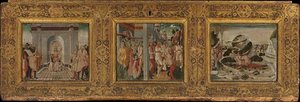
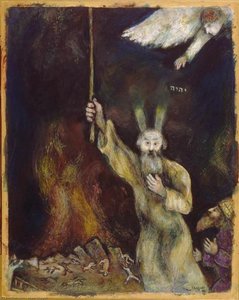
To gaze upon a work by d’Ancona is to enter a world of profound spiritual symbolism and meticulous detail. His oeuvre is characterized by a remarkable sensitivity to the human condition, even when depicting the most divine of figures. He possessed an uncanny ability to weave complex biblical chronicles into cohesive visual narratives that spoke directly to the fervent piety of his contemporary viewers. One of his most ambitious undertakings was the monumental fresco cycle “Scenes from the Life of King Nebuchadnezzar,” created for the Benedictine Abbey of San Pietro Nuovo in Assisi. In these works, he masterfully balanced the terrifying grandeur of royal siege with the intimate psychological weight of religious consequence, showcasing a compositional complexity that rivaled the greatest masters of his age.
Beyond his large-scale frescoes, d’Ancona excelled in the creation of panel paintings that functioned as windows into the divine. His portraits of saints and holy figures are marked by a serene devotion and a rhythmic use of color. Notable examples include:
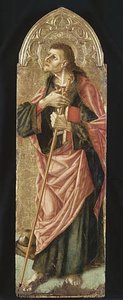
- St James of the Marches: A breathtaking display of tempera and gold leaf, where the textures of monastic habit and the brilliance of sacred light converge to evoke deep reverence.
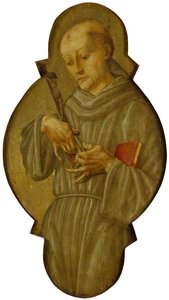
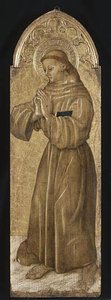
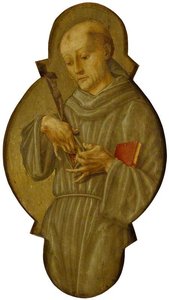
- Saint Francois: A captivating study in early Renaissance lighting, where dramatic shadows and rich pigments create a sense of profound, quiet contemplation.
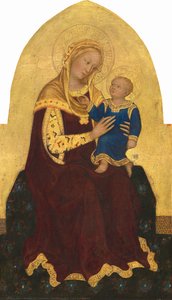
- Madonna and Child Enthroned: A masterpiece of the Marchigian style, demonstrating his ability to ground the celestial Madonna within a structured, regal, and yet deeply tender composition.
Legacy and the Enduring Spirit of the Renaissance
The historical significance of Nicola di Maestro Antonio d’Ancona lies in his role as a vital link in the evolution of Italian Renaissance painting. He stood at the crossroads of tradition and innovation, maintaining the precious goldsmith-like precision of the late Gothic period while embracing the burgeoning interest in anatomical realism and spatial depth brought about by humanism. His work reflects the transition from the purely symbolic to the more naturalistic, a shift that would eventually define the High Renaissance. Though his active years are documented only sporadically—with records placing him active through the turn of the 16th century—his influence persists in the way he taught viewers to find the sacred within the details of the natural world.
Today, the surviving fragments of his vision remain essential for understanding the religious fervor and artistic sophistication of the Umbrian and Marchigian regions. Through his use of luminous tempera, his devotion to iconographic accuracy, and his ability to evoke emotion through stillness, d’Ancona ensured that his spiritual vision would endure long after the pigments had dried. He remains a master of the illuminated soul, an artist who turned wood and pigment into eternal prayers.
Quick Facts
- Artistic Movement Or Style: Early Renaissance
- Artists Or Movements Influenced By This Artist: ['Renaissance Painting']
- Artists Who Influenced This Artist:
- Donatello
- Lorenzo Ghiberti
- Full Name: Nicola di Maestro Antonio d’Ancona
- Nationality: Italian
- Notable Artworks:
- Scenes from the Life of King Nebuchadnezzar
- St James of the Marches
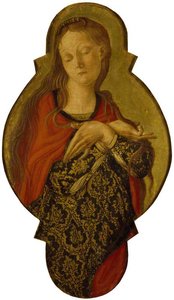
- St Mary Magdalen
- Place Of Birth: Italy