 Preview
 Send
Send Share
Share
 Details

 Download
 Similars
 X-Ray
X-Ray Diaporama
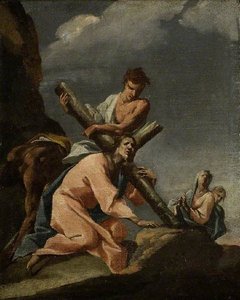
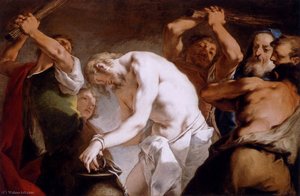
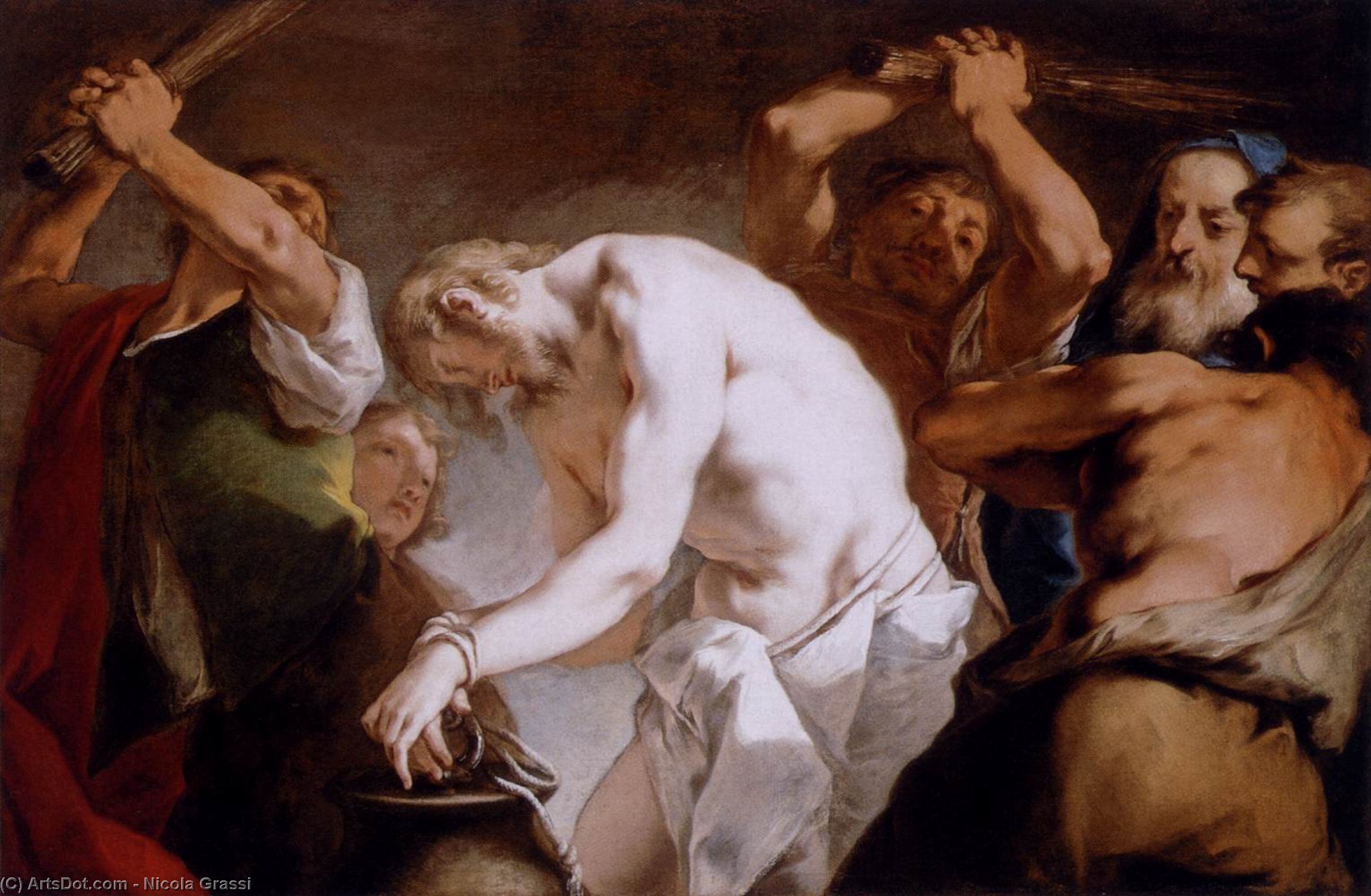
The Flagellation of Christ
 Oil
Oil- WallArt
- Baroque
 1720
1720- Early Modern
 105.0 x 159.0 cm
 Szépmûvészeti Múzeum
 Read More
Hand Made Oil Reproduction
Hand-painted oil on canvas in your size and frame, made to order by our artists. ( Buy Print Buy Image)




P118B $10

P118H $10

P118W $10

P438Z $10

P508JH $12

P508YH $12

P805H $10

P805Z $10

P919BZ $10

P919G $10

P919XJ $10

P959ZH $10

P968JZ $12

W106C $8

W218G $10

W218JH $8

W218Y $10

W307PJ $10

W316G $10

W316PJ $8

W316Y $10

W398PJ $8

W4111J $10

W500HY $15

W500JH $15

W692G $12

W849H $8

W940BG $15

W953PJ $8




Pick from our preset sizes that match the artwork's original proportions.

You may enter your own dimensions to fit a specific frame or space. If your selected size does not match the original image's proportions, we will either crop the artwork or extend the painting with additional hand-painted elements. A digital mockup will be sent for your approval before production begins.
Please note that the on-screen preview does not reflect the actual cropping or extension. Only the mockup will accurately show the final composition.
While custom sizes are available, we recommend selecting a dimension from the predefined list to preserve the original proportions.
After order, ArtsDot.com team will email client for instructions and provide a mockup preview
Worldwide Delivery () in 3/4 weeks instead of standard 5 weeks. (17 August). No compromise on quality.

Free Worldwide Express Shipping

High-Quality Linen Canvas

Full Shipping Insurance

Customs Tax Refund Guarantee

True Color Matching Guarantee

60-Day Return Policy (Defects Only)

100% Money-Back Guarantee

Bulk Discount Offer
 Glass option is only available in size under 110 CM

The Flagellation of Christ
Reproduction Medium
Reproduction Size
-


Total Price
$ 263
Artwork Description
A Symphony of Suffering and Baroque Grandeur
In the dramatic landscape of the late Venetian Baroque, few works capture the raw, visceral essence of human agony and divine sacrifice as profoundly as Nicola Grassi’s The Flagellation of Christ. Painted in 1720, this masterpiece serves as a window into a period where art was not merely meant to be observed, but to be felt within the very marrow of the viewer. The scene unfolds with a theatrical intensity, characteristic of the Venetian school, where light and shadow dance in a perpetual struggle. As the eye traverses the canvas, it is immediately drawn to the central figure of Christ, whose vulnerability is juxtaposed against the brutal, rhythmic motion of his tormentors. Grassi employs a masterful command of chiaroscuro, using deep, enveloping shadows to push the figures toward the viewer, creating an immersive experience that blurs the line between the historical event and the present moment.
The composition is a complex tapestry of human emotion and physical tension. Beyond the central act of violence, Grassi populates the scene with a diverse assembly of onlookers—men and women whose expressions range from detached indifference to profound sorrow. This layering of gazes creates a psychological depth that invites the observer to contemplate their own role as a witness to injustice. The presence of subtle symbolic elements, such as the humble bowls resting at the periphery and the heavy religious text positioned near the base of the scene, grounds the divine tragedy in a tangible, earthly reality. These details suggest a narrative of record and remembrance, implying that the suffering depicted is not just a singular moment in time, but a foundational pillar of faith and history.
For the discerning collector or interior designer, this painting offers more than mere decoration; it provides a profound focal point for spaces that demand character and intellectual weight. The technique utilized by Grassi—likely influenced by his apprenticeship under Antonio Carneo—displays a sophisticated handling of texture, from the soft, wounded flesh of the subject to the heavy, tactile folds of the period attire. The color palette, rich with the earthy tones and dramatic highlights typical of the 18th-century Italian tradition, allows the piece to integrate seamlessly into classical or even contemporary avant-garde settings. A high-quality reproduction of this work brings a sense of historical gravity and an undeniable aura of prestige to any room, serving as a conversation piece that evokes the enduring power of the human spirit amidst the darkest of trials.
Related Artworks
Artist Biography
A Venetian Legacy Forged in Shadow and Light
In the twilight of the Baroque era, a period defined by theatricality and profound emotional depth, the name Nicola Grassi emerged as a vital voice within the illustrious Venetian school. Born in 1682 in Formosa, near Trieste, Grassi’s early life was shaped by the rigorous traditions of Italian craftsmanship. His formative years were spent under the watchful eye of Antonio Carneo, an apprenticeship that instilled in him a meticulous command over detail and a deep understanding of the Venetian mastery of light. This foundational period prepared him for the competitive landscape of Venice, where he would eventually establish himself as a painter capable of translating divine narratives into visceral human experiences.As he transitioned from student to master, his work began to reflect the complex interplay of religious devotion and the burgeoning aesthetic shifts of the early 18th century. His ability to navigate the transition from the heavy, dramatic shadows of the late Baroque toward the more delicate sensibilities of the Rococo marked him as an artist of significant adaptability and vision.
Expanding Horizons: From Venice to the European Stage
Upon his arrival in Venice in 1697, Grassi did not merely exist within the city's artistic circles; he actively wove himself into its very fabric. His early career was marked by significant collaborations, most notably with the Genovese artist Nicolo Cassana. This partnership allowed Grassi to absorb the burgeoning influences of the Rococo style, blending the heavy drama of the Baroque with a new, lighter elegance. However, his ambitions were never confined to the borders of the Venetian Republic. Between 1722 and 1725, Grassi embarked on transformative journeys through Bavaria and Dalmatia. These expeditions served as more than mere travels; they were artistic pilgrimages that enriched his palette and broadened his perspective, allowing him to integrate diverse European currents into his repertoire.His professional journey is best understood through several key milestones:
- The apprenticeship under Antonio Carneo, which established his technical foundation.
- The collaborative period with Nicolo Cassana, introducing Rococo influences.
- The expansive travels through Bavaria and Dalmatia, broadening his European stylistic reach.
The Divine Narrative: Emotion and Technique
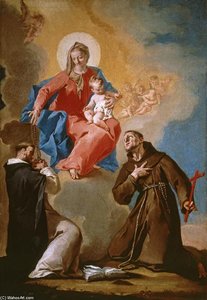
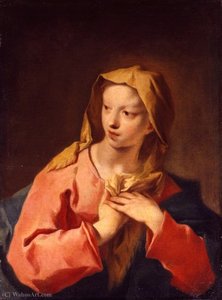
The true essence of Grassi’s artistry lies in his ability to command the viewer's soul through religious subject matter. He possessed a rare talent for capturing the profound tension between human agony and divine grace. Nowhere is this more evident than in his 1720 masterpiece, The Flagellation of Christ. In this work, Grassi employs a masterful use of chiaroscuro, where deep, enveloping shadows push the figures toward the viewer, creating an immersive, almost claustrophobic intensity. The painting is not merely a depiction of a biblical event but a symphony of suffering, where every rhythmic motion of the tormentors and every flicker of light on Christ’s vulnerable form serves to heighten the emotional stakes.His repertoire also included serene yet powerful depictions such as The Virgin with Child and two saints and Madonna Announced. Through these works, Grassi demonstrated a versatility that spanned from the intense, dramatic shadows of his more violent scenes to the soft, classical compositions of his devotional portraits. His legacy remains etched in the history of Italian art as a painter who could navigate the complexities of both the Baroque's weight and the Rococo's grace, leaving behind a body of work that continues to resonate with the raw power of the human spirit.
Nicola Grassi
1682 - 1748 , Italy
Quick Facts
- Artistic Movement Or Style: Baroque/Rococo
- Artists Or Movements Influenced By This Artist: ['Nicolo Cassana']
- Artists Who Influenced This Artist: ['Antonio Carneo']
- Date Of Birth: April 7, 1682
- Date Of Death: October 6, 1748
- Full Name: Nicola Grassi
- Nationality: Italian
- Notable Artworks:
- The Flagellation of Christ
- St. Paul the Apostle
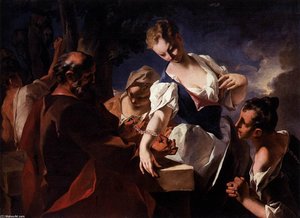
- Rebecca at the Well
- Place Of Birth: Formosa, Italy
Related Articles

Jacopo Tintoretto's Masterpieces: 25 Paintings That Define Venetian Drama | ArtsDot
Explore 25 breathtaking masterpieces by Jacopo Tintoretto, the Venetian master of drama and light. Discover the stories behind iconic Renaissance paintings & find museum-quality art reproductions to elevate your home decor on ArtsDot.com.

The Visceral Stage: Exploring Dramatic Narratives & Emotional Intensity in Baroque Art
Explore the dramatic world of Baroque art! Discover iconic masters like Caravaggio & Rembrandt, their techniques, and the movement's lasting impact. Expert insights for collectors & enthusiasts at ArtsDot.

Baroque Drama: Bringing Opulence & Emotion into Contemporary Interiors
Explore the opulent world of Baroque interior design! Discover key elements, modern applications & how to bring dramatic elegance into your home with 's authentic reproductions.

The Dramatic Flourish: Exploring the Baroque Movement's Enduring Legacy in Art History
Explore the dramatic world of Baroque art! Discover iconic artists like Caravaggio & Rubens, defining techniques, and its lasting impact on art history. Expert insights for collectors & enthusiasts at ArtsDot.

Baroque Masterpieces: 10 Paintings That Defined an Era |
Journey through the drama & grandeur of Baroque art! Explore 10 masterpieces by Caravaggio, Rembrandt, Rubens & more. Discover stunning oil paintings, rich colors & timeless stories. Find museum-quality reproductions at .