 Preview
 Send
Send Share
Share
 Details

 Download
 Similars
 X-Ray
X-Ray Diaporama
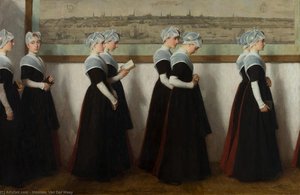
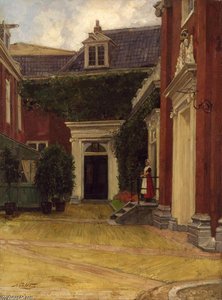
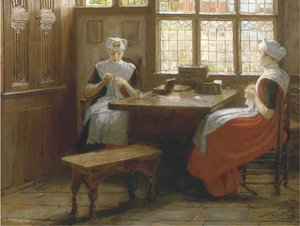
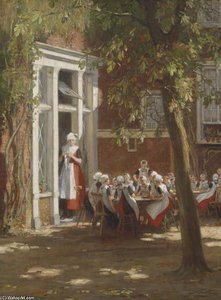
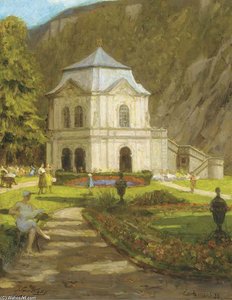
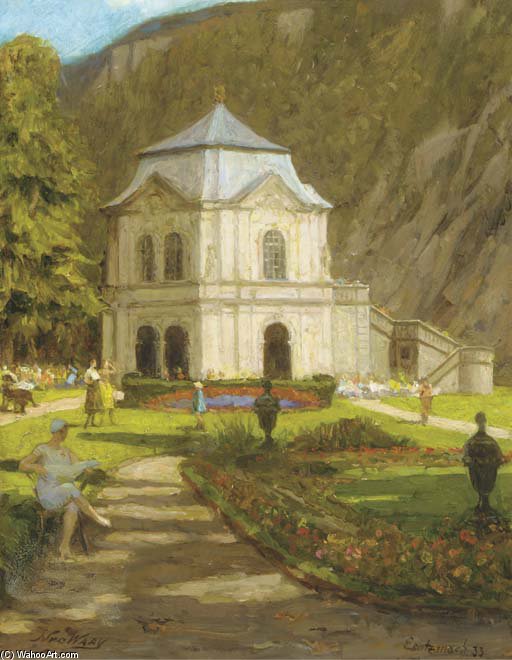
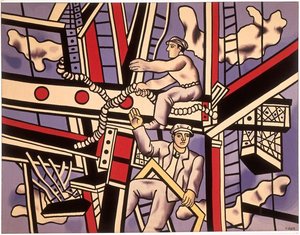
Paviljoen Te Echternach
 Read More
Hand Made Oil Reproduction
Hand-painted oil on canvas in your size and frame, made to order by our artists. ( Buy Print Buy Image)




































Pick from our preset sizes that match the artwork's original proportions.

You may enter your own dimensions to fit a specific frame or space. If your selected size does not match the original image's proportions, we will either crop the artwork or extend the painting with additional hand-painted elements. A digital mockup will be sent for your approval before production begins.
Please note that the on-screen preview does not reflect the actual cropping or extension. Only the mockup will accurately show the final composition.
While custom sizes are available, we recommend selecting a dimension from the predefined list to preserve the original proportions.
After order, ArtsDot.com team will email client for instructions and provide a mockup preview
Worldwide Delivery () in 3/4 weeks instead of standard 5 weeks. (21 August). No compromise on quality.

Free Worldwide Express Shipping

High-Quality Linen Canvas

Full Shipping Insurance

Customs Tax Refund Guarantee

True Color Matching Guarantee

60-Day Return Policy (Defects Only)

100% Money-Back Guarantee

Bulk Discount Offer
 Glass option is only available in size under 110 CM

Paviljoen Te Echternach
Reproduction Medium
Reproduction Size
-


Total Price
$ 263
Related Artworks


Artist Biography
The Soul of Amsterdam: The Artistic Legacy of Nicolaas van der Waay
In the heart of Amsterdam, where the canals reflect a storied past, the life and work of Nicolaas van der Waay (1855–1936) emerged as a profound dialogue between classical discipline and the burgeoning light of Impressionism. Born in the vibrant atmosphere of the Netherlands, Van der Waay was more than a mere chronicler of his era; he was a decorative artist whose hand moved with equal grace across lithographs, watercolors, and oil paintings. His journey began under the watchful eye of Louis Koopman, a mentor who provided the technical foundation that would later allow Van der Waay to experiment with much more expressive, emotive textures. This early period of rigorous training at the Rijksakademie instilled in him a respect for form and composition that remained the bedrock of his career, even as he sought to capture the fleeting, atmospheric qualities of the Dutch landscape.
The evolution of his style was deeply intertwined with the shifting tides of the late 19th-century art world. While his roots were firmly planted in academic tradition, a transformative encounter with Jan Hillebrand Wijsmuller introduced him to a more spontaneous way of seeing, mirroring the spirit of the Hague School. This transition from meticulous detail to a softer, more impressionistic touch allowed him to breathe life into his subjects. His early triumphs, such as receiving the prestigious Willink van Collenprijs in 1880 for his painting “Among Friends,” signaled the arrival of an artist capable of blending social intimacy with technical mastery. This period of growth was further enriched by his travels to Italy, funded by a ministerial grant, which offered him a window into the classical light and grandeur that would forever inform his palette.
A Master of Narrative and Ornamentation
Van der Waay’s versatility was perhaps his most striking attribute. He possessed a rare ability to navigate between the grand scale of public design and the delicate intimacy of personal portraiture. His contributions to Dutch civic identity were significant; he applied his artistic vision to the very fabric of daily life through intricate stamp designs, coin illustrations, and banknote artwork. This decorative prowess extended into the realm of allegory, where he utilized lithography to create evocative imagery for the Golden Coach, a symbol of Dutch heritage. His work often bridged the gap between fine art and functional beauty, making him a vital figure in the decorative arts movement of his time.
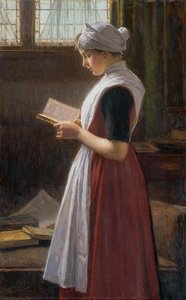
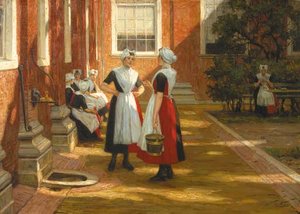
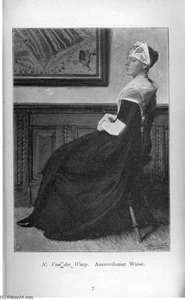
One of his most enduring and emotionally resonant themes was his series of portrayals featuring the Amsterdam orphan girls. Clad in their iconic red-and-black uniforms from the Burgerweeshuis, these figures became symbols of a certain Dutch innocence and solemnity. Although he was not permitted to paint within the orphanage itself, Van der Waay used his studio to stage romanticized, poignant scenes that captured the essence of these young lives. In works such as “Amsterdam orphan girls going to church,” one can observe a masterful use of light and reflection—the crisp glint of water in the background contrasting with the modest, downward gazes of the children. These compositions were not merely realistic depictions but were carefully crafted narratives that evoked a sense of serene, almost melancholic, beauty.
Mentorship and Historical Significance
Beyond his personal output, Van der Waay’s influence was felt through the generations of artists he nurtured. For thirty years, he held a professorship at the Rijksakademie, serving as a bridge between the old masters and the new avant-garde. His classroom was a crucible for talent, where students such as Nicolaas Pieneman, Clara Adriana van der Werff, and Jacqueline Marguerite van Nie learned to navigate the complexities of their craft. By teaching them to balance academic rigor with modern expression, he ensured that his artistic philosophy would endure long after his passing in 1936.
The historical significance of Nicolaas van der Waay lies in his role as a cultural custodian. He captured the transition of Amsterdam from a traditional stronghold into a modernizing metropolis, documenting both its institutional dignity and its quiet, human moments. His ability to weave together the decorative, the academic, and the impressionistic makes his body of work a vital tapestry of Dutch art history. Today, his paintings and drawings remain cherished in prestigious collections like the Amsterdam Museum and the Rijksmuseum, serving as enduring windows into the soul of a bygone era.
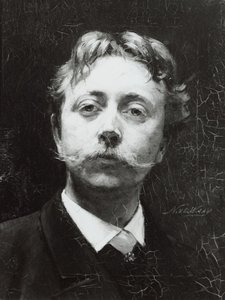
Nicolaas van der Waay
1855 - 1936 , Netherlands
Quick Facts
- Artistic Movement Or Style: Impressionism
- Artists Or Movements Influenced By This Artist: ['Louvre Impressionists']
- Artists Who Influenced This Artist: ['Isaac Israëls']
- Date Of Birth: Amsterdam, Netherlands (1855)
- Date Of Death: 1936
- Full Name: Nicolaas van der Waay
- Nationality: Dutch
- Notable Artworks:
- Among friends
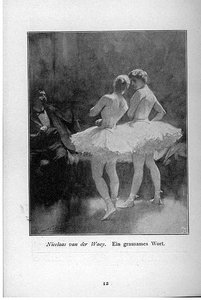
- Ein Grausames Wort
- Place Of Birth: Amsterdam