

 Preview
 Send
Send Share
Share
 Details

 Download
 Similars
 X-Ray
X-Ray Diaporama
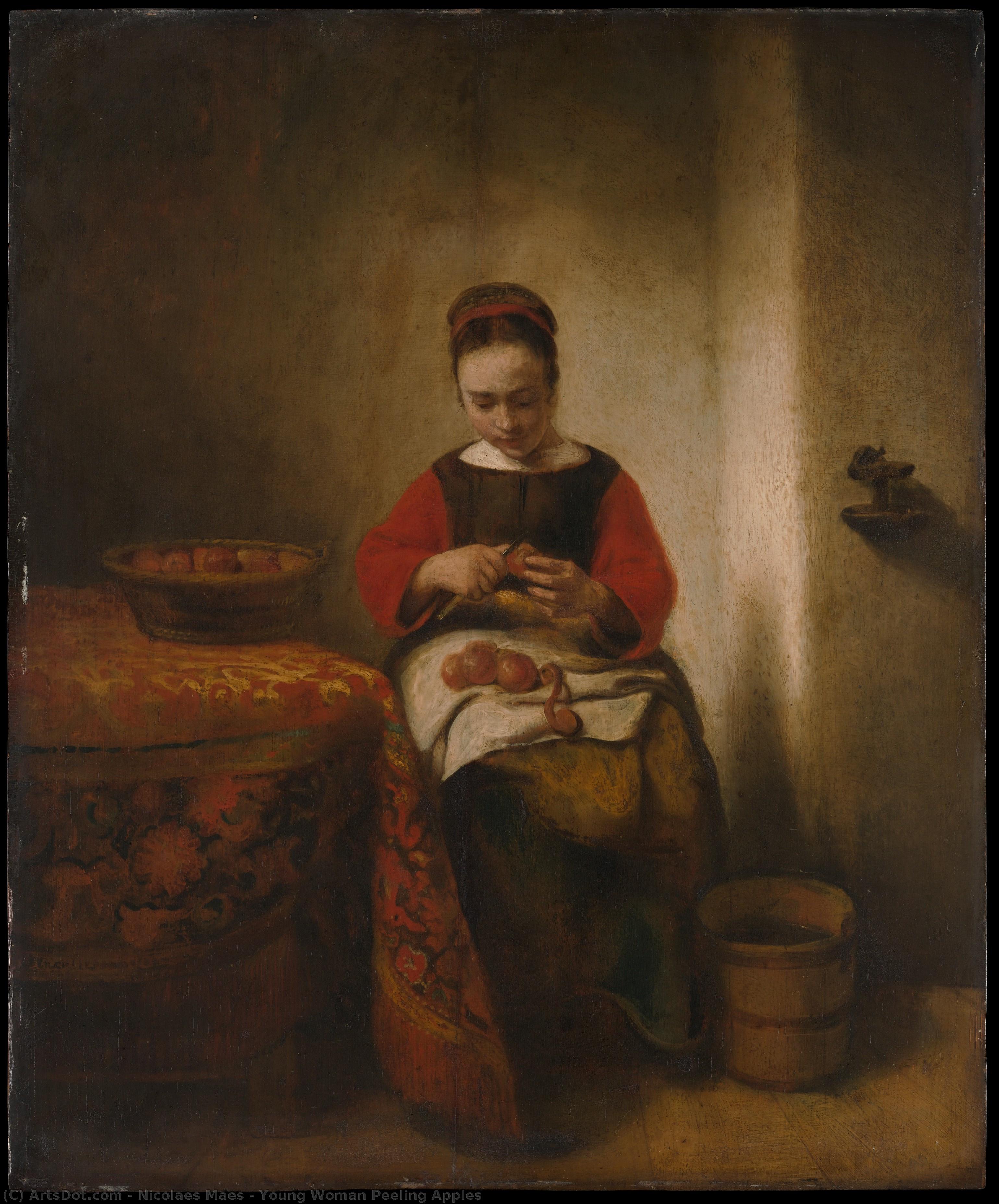
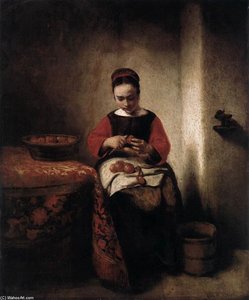
Young Woman Peeling Apples
 Oil On Canvas
- WallArt
- Baroque Painting
 1655
1655 55.0 x 46.0 cm
 Metropolitan Museum of Art
 Read More
Purchase a high-resolution, enhanced digital image, far superior to the online preview.
Each file is meticulously prepared by our in-house specialists using advanced tools and expert manual retouching. We ensure every image has exceptional clarity, precise color accuracy, and fine detail.
The final file is delivered via email within 72 hours, optimized for immediate use in professional, editorial, and print environments. This is the same quality trusted by top-tier design studios, publishers, and galleries.
Digital Image
Download a high-resolution file for personal display, printing, and creative projects. ( Buy Print Buy Hand Made Painting)
Included in Every Digital Image Order
Expert Digital Delivery, Guaranteed
When you choose ArtsDot.com, you're not just getting an image - you're receiving a professionally enhanced digital artwork, crafted with precision and backed by a satisfaction guarantee. Here's everything that comes with your order, automatically:

Fast Email Delivery
Your high-resolution digital image file will be emailed to you within 72 hours of ordering - ready for immediate use.

AI-Enhanced Digital File
Your artwork is professionally optimized using advanced AI tools and manual editing, ensuring maximum detail, clarity, and color accuracy.

Free Lifetime Re-Delivery
Accidentally deleted or lost your file? No worries - we'll resend it to you anytime, free of charge.

No Import Fees - Ever
Enjoy your artwork instantly with zero customs, duties, or delivery fees - digital downloads are always tax-free.

Color Accuracy Guarantee
We ensure your digital image reflects the original colors as closely as possible using professional tools and color management.

60-Day Satisfaction Guarantee
If you're not satisfied with your digital image, we'll revise it or refund 100% within 60 days - no questions asked.

100% Money-Back Guarantee
Not satisfied? Get a full refund within 60 days of receiving your digital file - no questions asked.

Bulk Order Discounts
Buy 3 images, save 10% - Buy 5, save 15% - Buy 10+, save 20%. Great for creative projects, galleries, and agencies.
Collectible Description
A Moment of Quietude: Nicolaes Maes’s “Young Woman Peeling Apples”
Nicolaes Maes's "Young Woman Peeling Apples," painted in 1655, isn’t merely a depiction of domestic labor; it’s a carefully constructed tableau of serenity and subtle social commentary. This intimate genre scene, housed within the hallowed halls of the Metropolitan Museum of Art, invites us into a private moment, suspended between the mundane and the profound. Maes, deeply influenced by his apprenticeship under Rembrandt, masterfully employs light and shadow – a hallmark of his teacher’s style – to imbue the painting with an almost palpable sense of warmth and stillness. The soft contours of the woman's face, the gentle curve of her hand as she peels the apple, and the diffused glow emanating from an unseen window all contribute to this atmosphere of quiet contemplation.
The scene unfolds within a modestly furnished interior – a simple wooden table bearing two bowls, a Turkish carpet adding a touch of exoticism, and a single candle providing the primary illumination. The color palette is restrained yet rich, dominated by earthy tones—russets, browns, and ochres—that evoke the textures of domestic life. The vibrant red of the apples themselves acts as a striking focal point, drawing the eye and subtly hinting at abundance and nourishment. It’s a deliberate choice, grounding the scene in the tangible realities of everyday existence while simultaneously elevating it through its careful composition.
Rembrandt's Legacy: Composition and Technique
Maes’s debt to Rembrandt is undeniable, particularly in his masterful use of *chiaroscuro* – the dramatic interplay of light and dark. He doesn’t simply illuminate the subject; he sculpts it with light, creating a sense of depth and volume that draws us into the scene. Notice how the light falls across the woman's face, highlighting her features and casting subtle shadows beneath her chin. This technique wasn’t entirely new in 17th-century Dutch painting, but Maes refined it to an extraordinary degree, imbuing his works with a remarkable sense of realism and emotional resonance.
The composition itself is remarkably balanced, reflecting the principles of Renaissance art while retaining a distinctly Dutch sensibility. The woman’s posture is relaxed yet dignified, her gaze downward suggesting introspection rather than boredom. Her hands are positioned in a way that invites our attention, emphasizing the simple act of peeling apples—a task often associated with female virtue and domesticity. The placement of the apples themselves – one close to her hand, the others further away – creates a subtle visual rhythm, guiding the eye through the scene.
Symbolism and Social Context
Beyond its aesthetic qualities, “Young Woman Peeling Apples” offers a glimpse into the social dynamics of 17th-century Dutch society. Maes’s choice to depict a maid—a member of the lower classes—as the subject of his painting was itself a significant innovation. Unlike earlier depictions of housemaids that often portrayed them as lazy or even sexually suggestive, Maes presented her with dignity and respect. This portrayal reflects a broader shift in attitudes towards women during this period, as they increasingly gained recognition for their contributions to the household and family.
The inclusion of the Turkish carpet—a luxury item at the time—suggests a connection to the burgeoning trade between Europe and the Ottoman Empire. It adds an element of exoticism to the scene, hinting at the wealth and prosperity of the household while simultaneously reinforcing the woman’s role as a caretaker of domestic space. The painting, therefore, is not simply a portrait; it's a subtle commentary on social hierarchies and the evolving roles of women in Dutch society.
A Timeless Masterpiece: Reproduction and Interpretation
“Young Woman Peeling Apples” remains a captivating work of art, offering viewers an opportunity to connect with a bygone era. Its quiet beauty and nuanced symbolism continue to resonate today, making it a favorite among collectors and interior designers alike. When considering a reproduction, pay close attention to the details—the subtle variations in color, the delicate modeling of the figures, and the masterful use of light and shadow. These elements are what give the painting its unique character and enduring appeal.
Whether displayed in a formal gallery or a cozy living room, “Young Woman Peeling Apples” serves as a reminder of the beauty and complexity of everyday life—a testament to Nicolaes Maes’s artistic vision and his profound understanding of human nature.
Related Artworks





Artist Biography
A Life Immersed in Dutch Light and Shadow
Nicolaes Maes, a name resonating softly within the pantheon of Dutch Golden Age masters, was born in Dordrecht in January 1634 into a world brimming with mercantile prosperity and artistic ferment. His father, Gerrit Maes, a successful cloth merchant and soap boiler, provided a comfortable upbringing, allowing young Nicolaes to pursue his burgeoning talent for painting. While early instruction came from a local artist of modest renown, the pivotal moment in Maes’s development arrived when he journeyed to Amsterdam around 1648 and entered the workshop of Rembrandt van Rijn. This apprenticeship proved transformative, imbuing him with an enduring appreciation for the dramatic interplay of light and shadow – *chiaroscuro* – and a masterful command of color that would define his early works. The influence was so profound that initial paintings, such as depictions of biblical scenes rendered with life-size figures and rich, glowing hues, were often mistakenly attributed to Rembrandt himself. These formative years laid the groundwork for a career marked by both technical brilliance and an intimate understanding of human emotion.From Rembrandt’s Shadow to Independent Vision
Returning to Dordrecht in 1654, Maes began to forge his own artistic path, gradually distancing himself from direct imitation of his former master. The subsequent decade witnessed a shift towards smaller-scale domestic genre scenes, yet retaining the vibrant colorism he had absorbed during his time with Rembrandt. He turned his keen eye toward the everyday lives of Dutch citizens, depicting women engaged in commonplace activities – spinning wool, reading scriptures, preparing meals – with remarkable detail and sensitivity. A particular fascination emerged with the intricate art of lacemaking, inspiring numerous variations on this theme, each a testament to Maes’s meticulous observation and skill. These paintings weren't merely depictions of daily life; they were windows into the domestic sphere, revealing the quiet dignity and subtle narratives woven into the fabric of 17th-century Dutch society. His work during this period demonstrates an ability to capture not just *what* people did, but *how* they felt while doing it.The Portraitist of Amsterdam
In 1673, Maes relocated to Amsterdam, a move that signaled both artistic ambition and astute adaptation to the evolving art market. The city, still reeling from war with England and France, presented a burgeoning demand for portraiture, and Maes swiftly established himself as one of its leading practitioners. He abandoned much of his earlier genre work, focusing instead on capturing the likenesses and personalities of Amsterdam’s prominent citizens. His portraits are characterized by a refined elegance and psychological insight, revealing not only physical resemblance but also hints of character and social standing. Works like “Portrait of Gerard Röver, Merchant and Shipowner in Amsterdam” exemplify this skill, presenting a dignified portrayal of wealth and civic pride. He became adept at conveying status through subtle details – the quality of fabrics, the cut of clothing, the confident posture of his sitters. This period marked a significant stylistic shift, moving away from the earlier warmth and intimacy towards a more polished and sophisticated aesthetic.Legacy and Enduring Appeal
Nicolaes Maes passed away in Amsterdam in December 1693, leaving behind a substantial body of work that continues to captivate audiences today. His paintings offer invaluable insights into the social customs, domestic interiors, and psychological complexities of the Dutch Golden Age. While his early works bear the unmistakable imprint of Rembrandt’s influence, Maes ultimately developed a distinctive style characterized by its meticulous detail, vibrant color palette, and sensitive portrayal of human character. His ability to elevate everyday scenes and individuals to artistic significance ensures his place among the most important painters of his era. Today, his paintings are held in prestigious collections worldwide, including the Rijksmuseum in Amsterdam, the National Gallery in London, and the National Gallery of Art in Washington D.C., readily accessible for study and appreciation through platforms like ArtsDot.com, ensuring that the legacy of this masterful Dutch artist endures for generations to come.Key Characteristics of His Work
- Rembrandtian Influence: Early works demonstrate a strong influence from Rembrandt van Rijn, particularly in the use of chiaroscuro and rich color palettes.
- Genre Scenes: Maes is renowned for his intimate depictions of everyday life, focusing on domestic interiors and activities like spinning, reading, and lacemaking.
- Portraiture Mastery: He became a leading portrait painter in Amsterdam, known for capturing the likeness and character of his sitters with precision and elegance.
- Detailed Observation: His paintings are characterized by meticulous attention to detail, particularly in rendering textures, fabrics, and facial expressions.
- Psychological Insight: Maes possessed a remarkable ability to convey the inner lives and emotions of his subjects through subtle gestures and expressions.

Nicolaes Maes
1634 - 1693 , Netherlands
Quick Facts
- Artistic Movement Or Style: Baroque, Dutch Golden Age
- Artists Or Movements Influenced By This Artist: ['Dutch genre painters']
- Artists Who Influenced This Artist: ['Rembrandt van Rijn']
- Date Of Birth: January 1634
- Date Of Death: December 1693
- Full Name: Nicolaes Maes
- Nationality: Dutch
- Notable Artworks:
- The Reverie
- Card Players
- Catharina Pottey
- Gerard Röver
- Portrait of a Woman
- Place Of Birth: Dordrecht, Netherlands

