 Preview
 Send
Send Share
Share
 Details

 Download
 Similars
 X-Ray
X-Ray Diaporama
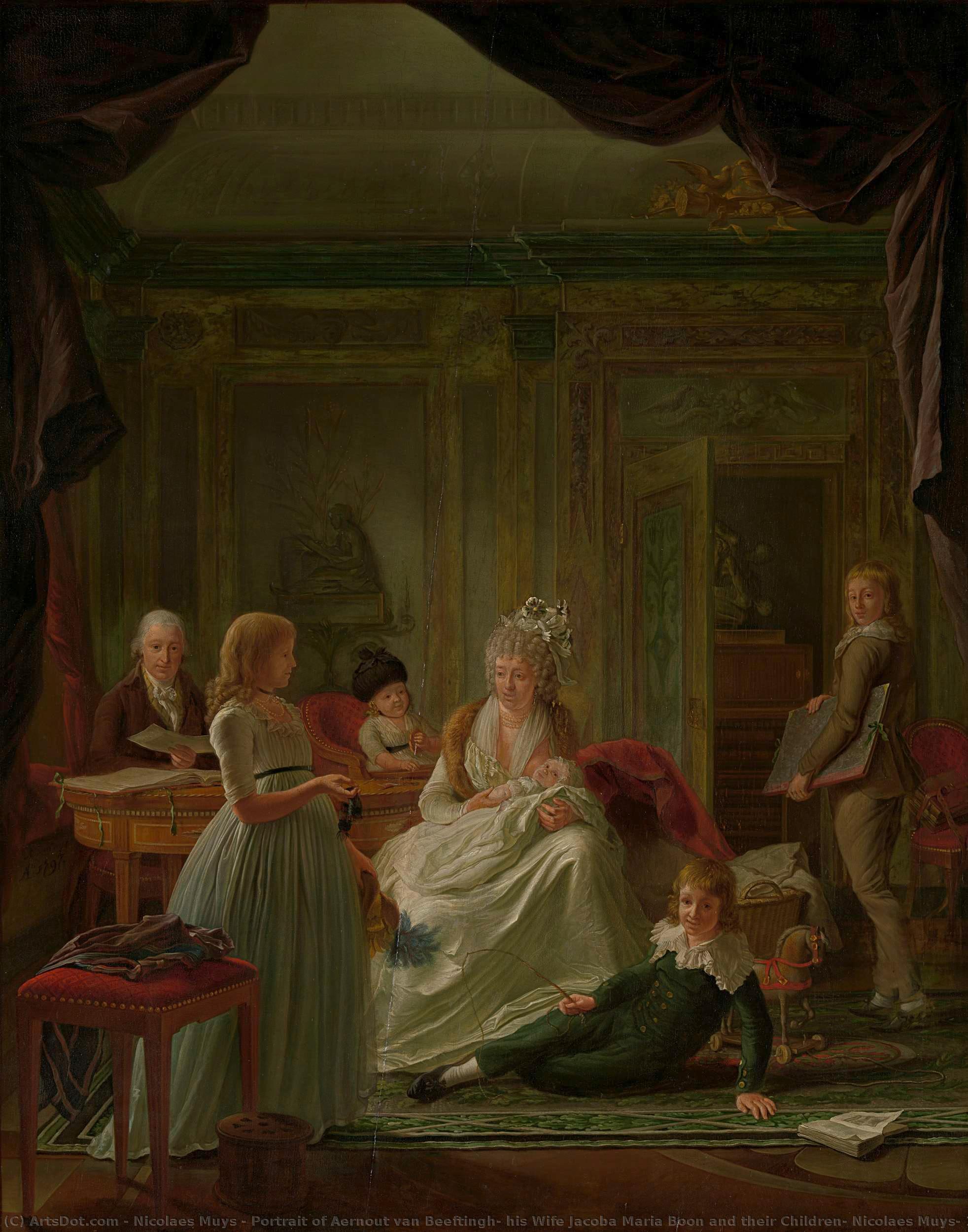
Portrait of Aernout van Beeftingh, his Wife Jacoba Maria Boon and their Children, Nicolaes Muys, 1797
 1797
1797 107.0 x 84.0 cm
 Read More
Hand Made Oil Reproduction
Hand-painted oil on canvas in your size and frame, made to order by our artists. ( Buy Print Buy Image)




































Pick from our preset sizes that match the artwork's original proportions.

You may enter your own dimensions to fit a specific frame or space. If your selected size does not match the original image's proportions, we will either crop the artwork or extend the painting with additional hand-painted elements. A digital mockup will be sent for your approval before production begins.
Please note that the on-screen preview does not reflect the actual cropping or extension. Only the mockup will accurately show the final composition.
While custom sizes are available, we recommend selecting a dimension from the predefined list to preserve the original proportions.
After order, ArtsDot.com team will email client for instructions and provide a mockup preview
Worldwide Delivery () in 3/4 weeks instead of standard 5 weeks. (17 August). No compromise on quality.

Free Worldwide Express Shipping

High-Quality Linen Canvas

Full Shipping Insurance

Customs Tax Refund Guarantee

True Color Matching Guarantee

60-Day Return Policy (Defects Only)

100% Money-Back Guarantee

Bulk Discount Offer
 Glass option is only available in size under 110 CM

Portrait of Aernout van Beeftingh, his Wife Jacoba Maria Boon and their Children, Nicolaes Muys, 1797
Reproduction Medium
Reproduction Size
-


Total Price
$ 263
Artwork Description
Related Artworks
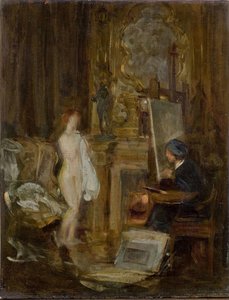
Artist Biography
Philip James de Loutherbourg: A Pioneer of Theatrical Illusion and Landscape Painting
Philip James de Loutherbourg, born in Strasbourg in 1740 and passing away in Chiswick, Middlesex (now part of Greater London) in 1812, was a truly remarkable figure – a painter, stage designer, illustrator, and ultimately, an innovator who bridged the gap between art, theatre, and scientific observation. His life’s work represents a fascinating confluence of artistic talent, theatrical ambition, and a burgeoning interest in the natural world, making him a pivotal, yet often overlooked, contributor to the cultural landscape of 18th-century England. Initially trained under Carle van Loo and Giovanni Battista Casanova in Paris, de Loutherbourg’s early career focused on landscapes, quickly gaining recognition at the Salon for his lively and evocative depictions of scenery. However, it was his move to London in 1771, facilitated by an introduction to the celebrated actor-manager David Garrick, that truly cemented his legacy.The Eidophusikon: A Revolutionary Theatrical Innovation
De Loutherbourg’s most significant contribution lay in his creation of the Eidophusikon – a theatrical spectacle unlike anything seen before. This ambitious project, launched in 1781, wasn't simply a play; it was an immersive experience designed to transport audiences into meticulously crafted environments that simulated distant lands and historical events. Utilizing elaborate sets, projected backdrops, mechanical devices, and even carefully orchestrated lighting effects – techniques remarkably advanced for the time – de Loutherbourg aimed to create a convincing illusion of reality. Garrick’s Drury Lane Theatre became the stage for this marvel, with de Loutherbourg's designs transforming the theatre into a portal to ancient Rome, exotic Persia, or the rugged landscapes of Switzerland. The Eidophusikon was a resounding success, captivating audiences and establishing de Loutherbourg as a leading figure in theatrical innovation. It demonstrated a remarkable understanding of perspective, color theory, and stagecraft – skills he honed through his earlier artistic pursuits.Landscape Painting and Scientific Observation
Despite the immense popularity of the Eidophusikon, de Loutherbourg never abandoned his passion for landscape painting. His early works, influenced by the French *paysage* tradition, evolved into a more distinctive style characterized by a vibrant sense of atmosphere and an appreciation for the picturesque. Following his move to England, he developed a keen interest in capturing the beauty of the British countryside, travelling extensively throughout Wales and England. Unlike many landscape painters of the time who focused solely on idealized representations, de Loutherbourg sought to depict scenes with a palpable sense of immediacy and dynamism. His paintings weren’t merely decorative; they reflected his growing fascination with scientific observation and the concept of “picturesque,” which emphasized the beauty of nature as it existed in reality – rather than as it was imagined or embellished.Later Years and Legacy
In 1786, de Loutherbourg became involved with the controversial occultist Count Cagliostro, a period that ultimately led to his abandonment of painting in favor of faith-healing in 1788–9. However, public opposition forced him back into the artistic realm, and he shifted his focus towards history painting, producing dramatic battle scenes and biblical subjects. He continued to illustrate books and published two significant collections: *The Picturesque Scenery of Great Britain* (1801) and *The Romantic and Picturesque Scenery of England and Wales* (1805). These works showcased his meticulous attention to detail and his ability to capture the essence of a place. De Loutherbourg’s legacy extends beyond his individual artworks; he played a crucial role in shaping theatrical design, influencing subsequent generations of stage designers and demonstrating the potential for art to engage with science and technology. His work stands as a testament to the power of imagination and innovation, bridging the gap between artistic expression and the pursuit of knowledge.Influences and Connections
De Loutherbourg’s career was intertwined with several key figures in the cultural milieu of 18th-century England. His training under Carle van Loo exposed him to the latest developments in French painting, while his association with Giovanni Battista Casanova provided insights into theatrical design and stagecraft. The influence of William Marlow, a contemporary landscape painter, is also evident in de Loutherbourg’s approach to depicting natural scenes. Furthermore, his collaboration with David Garrick—a pivotal figure in British theatre—was instrumental in establishing his reputation and providing him with the platform for his groundbreaking Eidophusikon. His work reflects a broader intellectual climate characterized by an interest in scientific observation, the picturesque, and the fusion of art and technology.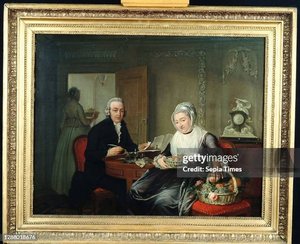
nicolaes muys
1740 - 1808 , Netherlands
Quick Facts
- Artistic Movement Or Style: Stage design, landscape
- Artists Or Movements Influenced By This Artist:
- Richard Brinsley Sheridan
- Picturesque and Sublime
- Artists Who Influenced This Artist:
- Carle van Loo
- Giovanni Battista Casanova
- Date Of Birth: 1740
- Date Of Death: 1812
- Full Name: Philip James de Loutherbourg
- Nationality: French
- Notable Artworks:
- Eidophusikon designs
- Royal Academy landscapes
- Place Of Birth: Strasbourg, France