 Preview
 Send
Send Share
Share
 Details

 Download
 Similars
 X-Ray
X-Ray Diaporama
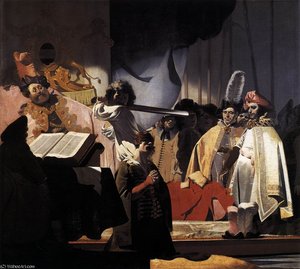
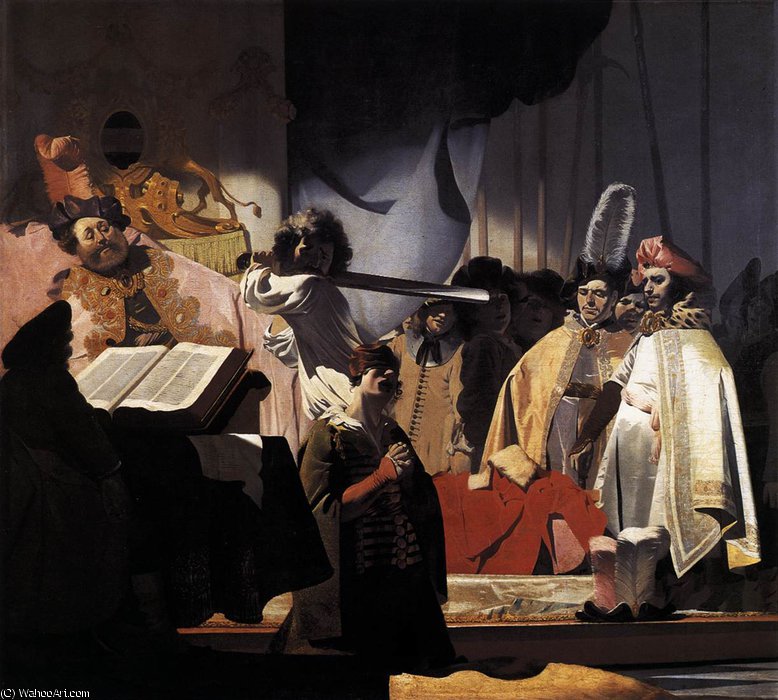
Count Willem III Presides over the Execution of the Dishones.... Bailiff in 1336
 Read More
Hand Made Oil Reproduction
Hand-painted oil on canvas in your size and frame, made to order by our artists. ( Buy Print Buy Image)




































Pick from our preset sizes that match the artwork's original proportions.

You may enter your own dimensions to fit a specific frame or space. If your selected size does not match the original image's proportions, we will either crop the artwork or extend the painting with additional hand-painted elements. A digital mockup will be sent for your approval before production begins.
Please note that the on-screen preview does not reflect the actual cropping or extension. Only the mockup will accurately show the final composition.
While custom sizes are available, we recommend selecting a dimension from the predefined list to preserve the original proportions.
After order, ArtsDot.com team will email client for instructions and provide a mockup preview
Worldwide Delivery () in 3/4 weeks instead of standard 5 weeks. (27 August). No compromise on quality.

Free Worldwide Express Shipping

High-Quality Linen Canvas

Full Shipping Insurance

Customs Tax Refund Guarantee

True Color Matching Guarantee

60-Day Return Policy (Defects Only)

100% Money-Back Guarantee

Bulk Discount Offer
 Glass option is only available in size under 110 CM

Count Willem III Presides over the Execution of the Dishones.... Bailiff in 1336
Reproduction Medium
Reproduction Size
-


Total Price
$ 263
Related Artworks
Artist Biography
Nicolaes van Galen (1620 - 1683) – A Master of Baroque Pastoralism
Nicolaes van Galen, born in Hasselt around 1620, was a Dutch painter who flourished during the Golden Age of Dutch art. His artistic legacy rests primarily on his landscapes—particularly idyllic pastoral scenes—which exemplify the stylistic ideals of the Baroque period and cemented his reputation as one of its foremost practitioners. While biographical details remain somewhat sparse due to limited surviving documentation, scholars have pieced together a portrait of an artist deeply rooted in humanist thought and profoundly influenced by the artistic currents of his time.- Early Life & Training: Van Galen’s father, Juriaen van Galen, was a wealthy merchant involved in textile trade, providing Nicolaes with a comfortable upbringing that fostered intellectual curiosity alongside artistic inclination. He received formal training under Hendrick Jacobsz. Bogaert and Frans Hals, absorbing the techniques of Haarlem Mannerism before transitioning to the more expansive vision of Baroque landscape painting.
- Haarlem Period & Artistic Style: During his formative years in Haarlem, Van Galen honed his skills in capturing atmospheric effects—misty mornings, dappled sunlight—and meticulously rendering details with astonishing accuracy. His canvases often depict serene landscapes populated by shepherds and livestock, imbued with a sense of tranquility and spiritual contemplation. Characteristic of the Baroque aesthetic is dramatic chiaroscuro – the interplay of light and shadow – which enhances the emotional impact of his compositions.
- Amsterdam Engagement & Patronage: By 1652, Van Galen moved to Amsterdam, where he established connections with prominent art dealers like Jacob Ritsma and gained patronage from influential figures within the city’s elite. This association exposed him to a wider artistic milieu and broadened his stylistic horizons. He continued to produce landscapes alongside portraits, demonstrating versatility and adapting to evolving tastes.
- Notable Works & Artistic Innovations: Among Van Galen's most celebrated paintings are “The Shepherdess” (circa 1657), housed in the Hasselt Town Hall, and “Landscape with Cattle” (circa 1660), currently residing in Kunsthistorisches Museum Wien. These works stand out for their masterful execution—particularly the luminous quality of the light—and their profound exploration of humanist themes related to nature’s beauty and moral virtue. He was a pioneer in incorporating atmospheric perspective, creating depth and realism that surpassed previous artistic conventions.
- Legacy & Influence: Nicolaes van Galen's landscapes continue to inspire admiration for their serene grandeur and technical brilliance. His work represents a cornerstone of Baroque pastoralism—a genre characterized by idealized depictions of rural life—and profoundly impacted subsequent generations of landscape painters. He is remembered as a key figure in shaping the visual culture of his era, embodying the humanist spirit that permeated Dutch art during its zenith.
Exploring Nicolaes van Galen’s Artistic Vision
Van Galen's artistic philosophy was deeply intertwined with humanist ideals prevalent during the Baroque period. He believed that nature served as a conduit for divine inspiration and sought to convey spiritual truths through his landscapes—often imbued with symbolic references to biblical narratives. His meticulous attention to detail—capturing textures, colors, and atmospheric conditions—reflected a commitment to scientific observation alongside artistic creativity. This blend of intellectual curiosity and aesthetic sensitivity distinguishes him from many of his contemporaries and underscores the significance of his contribution to art history.- Symbolism & Religious Imagery: Van Galen’s paintings frequently incorporate symbolic elements that resonate with Christian iconography—such as doves representing peace and lambs symbolizing innocence—enhancing their spiritual dimension.
- Technique & Composition: He mastered the techniques of oil painting, utilizing glazing methods to achieve luminous colors and subtle tonal gradations. His compositions are carefully balanced, guiding the viewer’s gaze across expansive vistas and emphasizing the grandeur of the natural world.
- Influence on Landscape Painting: Van Galen's pioneering use of atmospheric perspective—creating depth and realism through gradual shading—established a precedent for subsequent landscape painters who sought to emulate his stylistic achievements.
Nicolaes van Galen’s Paintings – A Showcase of Baroque Excellence
Considered one of the foremost landscape artists of his time, Nicolaes van Galen produced approximately 10 masterpieces during his career. These paintings exemplify the Baroque aesthetic's preoccupation with dramatic lighting and rich color palettes—a departure from the muted tones favored by Mannerism. His canvases convey a palpable sense of tranquility and spiritual contemplation, reflecting the humanist values that underpinned Dutch culture during the Golden Age.- “The Shepherdess” (circa 1657): This iconic painting depicts a shepherdess gazing serenely at the dawn—a scene imbued with symbolic references to divine grace and pastoral innocence.
- “Landscape with Cattle” (circa 1660): Recognized for its luminous quality of light and meticulous rendering of textures, this landscape showcases Van Galen’s mastery of atmospheric perspective and his ability to evoke a profound sense of natural beauty.
Further Research Resources
* Web Gallery of Art:http://www.wga.hu/art/g/galen/: Explore Nicolaes van Galen’s oeuvre and biographical information on the Web Gallery of Art. * Wikipedia:https://en.wikipedia.org/wiki/Nicolaes_van_Galen: Delve into a comprehensive overview of Nicolaes van Galen's life, artistic achievements, and scholarly assessments.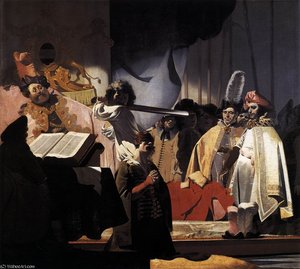
nicolaes van galen
1620 - 1683
Quick Facts
- Artistic Movement Or Style: Baroque
- Artists Or Movements Influenced By This Artist: ['Academic Portraiture']
- Artists Who Influenced This Artist:
- Caravaggio
- Rembrandt
- Vermeer
- Date Of Death: 1683
- Full Name: Nicolaes van Galen
- Nationality: Dutch
- Notable Artworks: ['Count Willem III Presides over the Execution of the Dishonest Bailiff in 1336']
- Place Of Birth: Hasselt, Belgium