

 Preview
 Send
Send Share
Share
 Details

 Download
 Similars
 X-Ray
X-Ray Diaporama
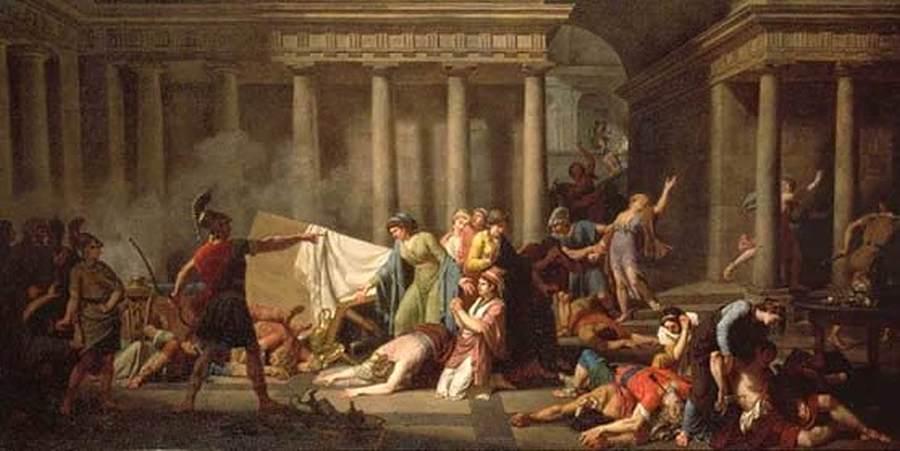
Ulysses Returning to His Palace after Slaying the Lovers of Penelope
 1791
1791 97.0 x 127.0 cm
 Read More
Purchase a high-resolution, enhanced digital image, far superior to the online preview.
Each file is meticulously prepared by our in-house specialists using advanced tools and expert manual retouching. We ensure every image has exceptional clarity, precise color accuracy, and fine detail.
The final file is delivered via email within 72 hours, optimized for immediate use in professional, editorial, and print environments. This is the same quality trusted by top-tier design studios, publishers, and galleries.
Digital Image
Download a high-resolution file for personal display, printing, and creative projects. ( Buy Print Buy Hand Made Painting)
Included in Every Digital Image Order
Expert Digital Delivery, Guaranteed
When you choose ArtsDot.com, you're not just getting an image - you're receiving a professionally enhanced digital artwork, crafted with precision and backed by a satisfaction guarantee. Here's everything that comes with your order, automatically:

Fast Email Delivery
Your high-resolution digital image file will be emailed to you within 72 hours of ordering - ready for immediate use.

AI-Enhanced Digital File
Your artwork is professionally optimized using advanced AI tools and manual editing, ensuring maximum detail, clarity, and color accuracy.

Free Lifetime Re-Delivery
Accidentally deleted or lost your file? No worries - we'll resend it to you anytime, free of charge.

No Import Fees - Ever
Enjoy your artwork instantly with zero customs, duties, or delivery fees - digital downloads are always tax-free.

Color Accuracy Guarantee
We ensure your digital image reflects the original colors as closely as possible using professional tools and color management.

60-Day Satisfaction Guarantee
If you're not satisfied with your digital image, we'll revise it or refund 100% within 60 days - no questions asked.

100% Money-Back Guarantee
Not satisfied? Get a full refund within 60 days of receiving your digital file - no questions asked.

Bulk Order Discounts
Buy 3 images, save 10% - Buy 5, save 15% - Buy 10+, save 20%. Great for creative projects, galleries, and agencies.
Related Artworks










Artist Biography
Gainsborough Dupont: A Legacy of Landscape and Light
Gainsborough Dupont (1754-1797) stands as a quietly significant figure in British art, often overshadowed by the brilliance of his uncle, Thomas Gainsborough. Born on December 20th, 1754, in Sudbury, Suffolk, Dupont’s artistic journey was inextricably linked to that of his renowned relative – initially as a pupil and later as a dedicated copyist and interpreter of Gainsborough's distinctive style. His life, though tragically brief, produced a body of work characterized by a serene beauty, masterful observation of light and atmosphere, and a subtle yet powerful connection to the English countryside. Dupont’s legacy lies not in revolutionary innovation but in his faithful embodiment of Gainsborough’s vision, elevated through his own sensitive touch and a remarkable ability to capture the fleeting effects of nature.Early Training and Apprenticeship
Dupont's artistic education began under the tutelage of his uncle, Thomas Gainsborough, at the family home in Lavenham. This formative period was crucial; it wasn’t merely instruction in technique but an immersion into Gainsborough’s philosophy – a deep respect for nature, a fascination with light and shadow, and a commitment to portraying the authentic character of rural England. Dupont's role initially revolved around assisting his uncle, meticulously copying his paintings, often working late into the night. This painstaking process wasn’t viewed as mere drudgery but as an invaluable opportunity to absorb Gainsborough’s methods, color palettes, and compositional strategies. He learned to discern the subtle nuances of brushwork, the way light bounced off foliage, and the expressive potential of a simple landscape. Crucially, Dupont also gained experience in mezzotint engraving, a skill that would later prove essential for reproducing his uncle's works.The Art of Reproduction and Expansion
Following Gainsborough’s death in 1786, Dupont assumed the responsibility of completing unfinished paintings and producing accurate reproductions of his uncle’s oeuvre through mezzotint prints. This wasn’t simply a commercial endeavor; it was an act of preservation – ensuring that Gainsborough's artistic legacy would endure. Dupont’s skill as a reproducer was exceptional, capturing not just the visual likeness but also the spirit and atmosphere of the original paintings. However, Dupont didn’t merely replicate; he expanded upon his uncle’s style, developing his own distinct approach to landscape painting. He frequently depicted scenes of rural life – wooded landscapes with riders and packhorses, idyllic farm settings, and glimpses of rolling hills – all rendered with a remarkable sense of tranquility and realism. His work demonstrates an acute awareness of the changing seasons and the subtle shifts in light throughout the day.Key Characteristics and Influences
Dupont’s paintings are immediately recognizable by their atmospheric quality, achieved through careful observation of light and color. He employed a muted palette, dominated by greens, browns, and blues, creating a sense of depth and distance. His compositions are typically balanced and harmonious, reflecting Gainsborough's influence but also displaying an independent sensibility. Dupont’s work is often described as “Gainsborough-esque,” yet it possesses a quiet dignity and understated beauty that sets it apart. The influence of Dutch landscape painters, particularly those who specialized in capturing the effects of light on water and foliage, can be discerned in his use of atmospheric perspective and his attention to detail. He also shows an appreciation for the works of Claude Lorrain, evident in his carefully constructed compositions and his emphasis on natural beauty.Legacy and Historical Significance
Despite a relatively small body of work, Gainsborough Dupont’s contribution to British art is significant. He played a vital role in preserving and disseminating Gainsborough's legacy, ensuring that the artist’s distinctive style would continue to be appreciated long after his death. His own paintings, though often overshadowed by those of his uncle, offer a valuable insight into the artistic landscape of late 18th-century England. Dupont’s ability to capture the essence of the English countryside – its beauty, tranquility, and inherent dignity – speaks to a deep connection with nature and a profound understanding of light and atmosphere. He remains a testament to the power of apprenticeship, dedication, and the enduring legacy of artistic influence. His work can be found in collections such as the Garrick Club in London, solidifying his place within British art history.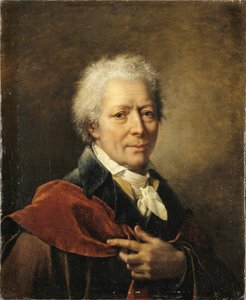
nicolas andré monsiau
1754 - 1837
Quick Facts
- Artistic Movement Or Style: Landscape painting
- Artists Or Movements Influenced By This Artist: ["Gainsborough's manner"]
- Artists Who Influenced This Artist: ['Thomas Gainsborough']
- Date Of Birth: 1754
- Date Of Death: 1797
- Full Name: Gainsborough Dupont
- Nationality: British
- Notable Artworks:
- Wooded Landscape with Riders
- Packhorses
- Place Of Birth: Sudbury, Suffolk

