 Preview
 Send
Send Share
Share
 Details

 Download
 Similars
 X-Ray
X-Ray Diaporama
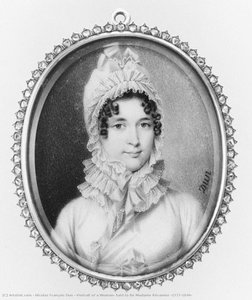
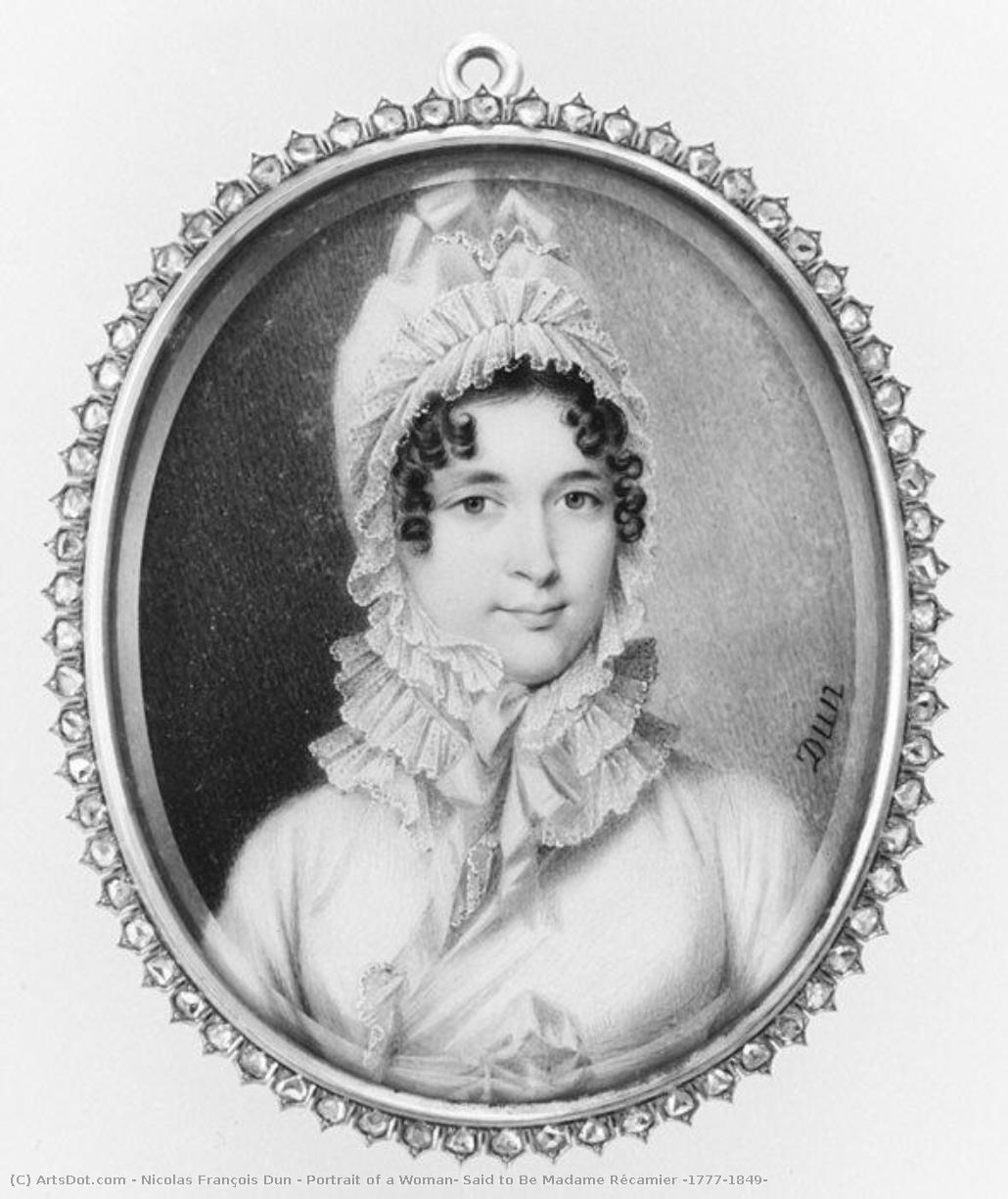
Portrait of a Woman, Said to Be Madame Récamier (1777–1849)
 1812
1812 6.0 x 5.0 cm
 Read More
Hand Made Oil Reproduction
Hand-painted oil on canvas in your size and frame, made to order by our artists. ( Buy Print Buy Image)




































Pick from our preset sizes that match the artwork's original proportions.

You may enter your own dimensions to fit a specific frame or space. If your selected size does not match the original image's proportions, we will either crop the artwork or extend the painting with additional hand-painted elements. A digital mockup will be sent for your approval before production begins.
Please note that the on-screen preview does not reflect the actual cropping or extension. Only the mockup will accurately show the final composition.
While custom sizes are available, we recommend selecting a dimension from the predefined list to preserve the original proportions.
After order, ArtsDot.com team will email client for instructions and provide a mockup preview
Worldwide Delivery () in 3/4 weeks instead of standard 5 weeks. (6 September). No compromise on quality.

Free Worldwide Express Shipping

High-Quality Linen Canvas

Full Shipping Insurance

Customs Tax Refund Guarantee

True Color Matching Guarantee

100-Day Return Policy (Defects Only)

100% Money-Back Guarantee

Bulk Discount Offer
 Glass option is only available in size under 110 CM

Portrait of a Woman, Said to Be Madame Récamier (1777–1849)
Reproduction Medium
Reproduction Size
-


Total Price
$ 263
Related Artworks





Artist Biography
A Life Painted in Water: The Delicate World of Nicolas-François Dun
Nicolas-François Dun, born in Lunéville, France in 1764, was a master of intimacy and refinement—a watercolourist and miniature painter who captured the spirit of his age with an unparalleled delicacy. His life unfolded during a period of immense social and political upheaval, from the waning days of the French aristocracy to the Napoleonic era, yet Dun’s art remained remarkably consistent in its pursuit of beauty and grace. He wasn't a painter of grand historical narratives or sweeping landscapes; instead, he focused on the human form, particularly portraits rendered with meticulous detail and subtle emotional nuance. Dun’s early training remains somewhat obscure, though it is believed he received instruction from local artists in Lunéville before moving to Paris to further hone his skills. The Parisian art scene of the late 18th century was vibrant and competitive, a crucible where artistic styles clashed and evolved. Dun quickly found his niche, specializing in miniature portraits that were highly sought after by the fashionable elite. These weren’t merely likenesses; they were exquisite objects, often encased in ornate frames and treasured as personal keepsakes.The Art of Miniature: Technique and Style
Dun excelled in the demanding art of miniature painting, a medium that requires exceptional precision and control. Working on such a small scale—often ivory or vellum no larger than a few inches—he achieved an astonishing level of realism. His technique involved layering translucent washes of watercolour to create luminous skin tones and subtle gradations of light and shadow. He possessed a remarkable ability to capture the texture of fabrics, the sheen of jewels, and the individual characteristics of his sitters. His style is characterized by its elegance and restraint. Unlike some of his contemporaries who favored bold brushstrokes and dramatic compositions, Dun’s work is marked by a quiet sophistication. He wasn't interested in ostentation or theatricality; instead, he sought to reveal the inner character of his subjects through subtle gestures, expressive eyes, and carefully chosen details. The influence of artists like Jean-Baptiste Greuze, known for his realistic portraits and depictions of everyday life, can be seen in Dun’s early work. However, Dun quickly developed a distinctive voice, moving away from Greuze's somewhat rougher style towards a more polished and refined aesthetic.Patronage and Portraits: Capturing an Era
Dun’s talent attracted the attention of a discerning clientele, including members of the French aristocracy and prominent figures in Parisian society. He became known for his ability to portray women with particular sensitivity and grace. One of his most celebrated portraits is that of Madame Récamier, the renowned beauty and salonnière. While not the only artist to depict Madame Récamier—Jacques-Louis David also painted her famous portrait—Dun’s version offers a more intimate and personal view of this iconic figure. His Récamier captures a sense of quiet contemplation, emphasizing her intelligence and inner strength rather than simply her physical beauty. Beyond portraits of the aristocracy, Dun also received commissions from wealthy merchants and members of the burgeoning bourgeoisie. This diverse patronage reflects his ability to appeal to a wide range of tastes and sensibilities. He painted not only formal portraits but also smaller, more informal miniatures intended as gifts or mementos.Naples and Later Years: A Continued Pursuit of Beauty
The political turmoil of the French Revolution and the subsequent Napoleonic Wars significantly impacted Dun’s career. He eventually relocated to Naples in 1803, where he continued to practice his art under the patronage of King Ferdinand IV and Queen Maria Carolina. The Neapolitan aristocracy provided him with a new circle of sitters, and he adapted his style to suit their tastes while maintaining his signature elegance and refinement.- He found success painting portraits of the royal family and other prominent figures in Naples.
- His work during this period often incorporated elements of Italian landscape and architecture.
- Dun continued to experiment with new techniques and materials, refining his watercolour skills.
Legacy: A Master of Intimate Portraiture
Nicolas-François Dun’s legacy lies in his ability to capture the essence of his subjects with remarkable sensitivity and grace. He was a master of intimate portraiture, creating exquisite miniatures that offer a glimpse into the lives and personalities of those he portrayed. His work provides valuable insights into the social and cultural values of late 18th-century France and early 19th-century Naples. Dun’s influence can be seen in the work of later miniature painters who admired his technical skill and refined aesthetic. Today, his paintings are held in major museums and private collections around the world, a testament to his enduring artistic talent and the timeless appeal of his delicate and beautiful creations. He stands as a reminder that true artistry often resides not in grand gestures but in the subtle nuances of human expression—a life painted in water, capturing moments of beauty and grace for posterity.
nicolas-françois dun
1764 - 1832 , France