 Preview
 Send
Send Share
Share
 Details

 Download
 Similars
 X-Ray
X-Ray Diaporama
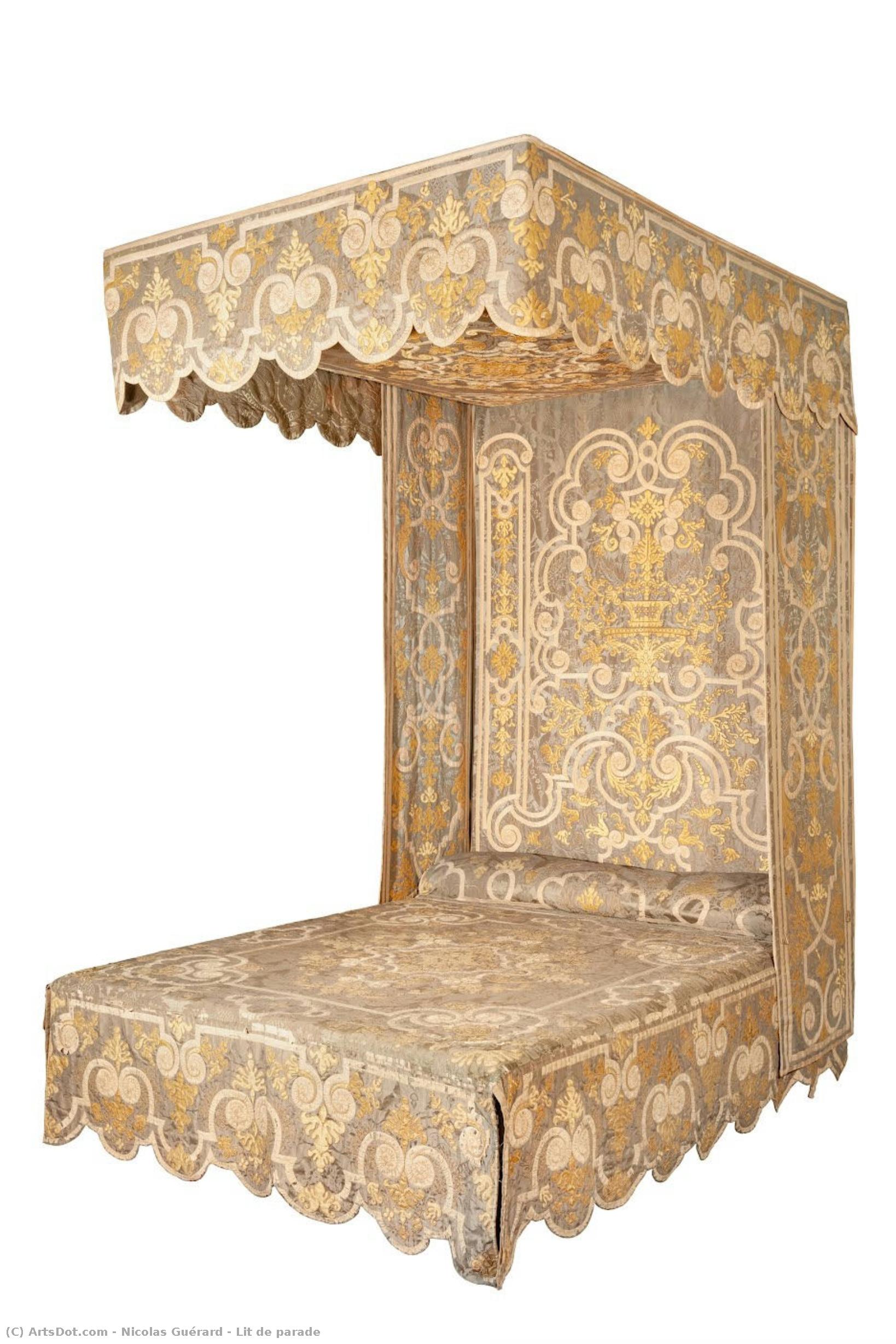
Lit de parade


 Read More
Hand Made Oil Reproduction
Hand-painted oil on canvas in your size and frame, made to order by our artists. ( Buy Print Buy Image)




































Pick from our preset sizes that match the artwork's original proportions.

You may enter your own dimensions to fit a specific frame or space. If your selected size does not match the original image's proportions, we will either crop the artwork or extend the painting with additional hand-painted elements. A digital mockup will be sent for your approval before production begins.
Please note that the on-screen preview does not reflect the actual cropping or extension. Only the mockup will accurately show the final composition.
While custom sizes are available, we recommend selecting a dimension from the predefined list to preserve the original proportions.
After order, ArtsDot.com team will email client for instructions and provide a mockup preview
Worldwide Delivery () in 3/4 weeks instead of standard 5 weeks. (26 August). No compromise on quality.

Free Worldwide Express Shipping

High-Quality Linen Canvas

Full Shipping Insurance

Customs Tax Refund Guarantee

True Color Matching Guarantee

60-Day Return Policy (Defects Only)

100% Money-Back Guarantee

Bulk Discount Offer
 Glass option is only available in size under 110 CM

Lit de parade
Reproduction Medium
Reproduction Size
-


Total Price
$ 263
Related Artworks









Artist Biography
A Shadowed Figure of the Baroque: Nicolas Guérard
Nicolas Guérard, a name that whispers through the annals of 17th-century French painting, remains an elusive figure despite his evident skill and intriguing subject matter. Born in France in 1648 and passing away in 1719, Guérard’s life is shrouded in mystery; biographical details are frustratingly scarce. What we *do* know—or rather, what survives through the few attributed works—reveals a painter deeply immersed in the Baroque aesthetic, particularly drawn to allegorical scenes and biblical narratives imbued with a subtle emotional depth. He wasn't a prolific artist leaving behind a vast oeuvre, but his surviving paintings offer compelling glimpses into a world of refined symbolism and technical prowess. The lack of extensive documentation makes reconstructing his artistic journey challenging, yet it also adds an air of romantic intrigue to his legacy.The Allure of Allegory and Religious Narrative
Guérard’s known works center around complex allegorical compositions and depictions of biblical stories. He wasn't painting portraits of the aristocracy or grand historical events; instead, he chose subjects that invited contemplation and moral reflection. His style is characterized by a delicate balance between realism and idealism. Figures are rendered with anatomical accuracy, yet possess an ethereal quality, suggesting a spiritual dimension beyond the tangible world. The color palettes employed tend towards rich, muted tones—deep reds, blues, and golds—creating a sense of drama and solemnity. Lit de parade, one of his most recognized pieces, exemplifies this approach. While the exact meaning remains open to interpretation, it’s clear that Guérard wasn't simply illustrating a scene but constructing a visual metaphor, laden with symbolic weight. The composition is intricate, filled with figures and objects that likely allude to specific virtues or vices, inviting viewers to decipher its hidden layers of meaning. This focus on allegory places him within a broader artistic tradition prevalent during the Baroque period, where art served not only as decoration but also as a vehicle for conveying complex philosophical and religious ideas.Influences and Artistic Development
Pinpointing Guérard’s specific influences is difficult given the limited information available about his training and early career. However, it's reasonable to assume he was familiar with the work of leading Baroque masters active in France at the time—artists like Charles Le Brun and Simon Vouet. The dramatic lighting and dynamic compositions found in their paintings resonate within Guérard’s own style. The influence of Italian painting is also subtly present, particularly in the use of color and the emphasis on idealized forms. It's possible he traveled to Italy during his formative years, absorbing the artistic innovations flourishing there. His work doesn’t exhibit the overt theatricality of some Baroque painters; instead, it possesses a quiet dignity and restraint. This suggests a deliberate choice to cultivate a more personal style—one that blended established techniques with a unique sensibility.A Lasting Legacy in a Fragmentary Form
Despite the scarcity of information surrounding his life, Nicolas Guérard’s work continues to captivate art historians and enthusiasts alike. His paintings offer a window into the intellectual and spiritual climate of 17th-century France—a time marked by religious fervor, philosophical inquiry, and artistic innovation. While he may not be as widely recognized as some of his contemporaries, his contribution to Baroque art is undeniable.- His intricate allegorical scenes demonstrate a mastery of symbolism and composition.
- His subtle emotional depth sets him apart from more overtly dramatic painters of the period.
- The enduring mystery surrounding his life adds an air of romantic intrigue to his legacy.
nicolas guérard
1648 - 1719 , France
Quick Facts
- Artistic Movement Or Style: Baroque Art
- Artists Or Movements Influenced By This Artist: ['Rubens Painting Style']
- Artists Who Influenced This Artist:
- Peter Paul Rubens
- Gian Lorenzo Bernini
- Date Of Death: 1719
- Full Name: Nicolas Guérard
- Nationality: French
- Notable Artworks:
- The Visitation
- Saint Jerome in His Study
- Place Of Birth: France