

 Preview
 Send
Send Share
Share
 Details

 Download
 Similars
 X-Ray
X-Ray Diaporama
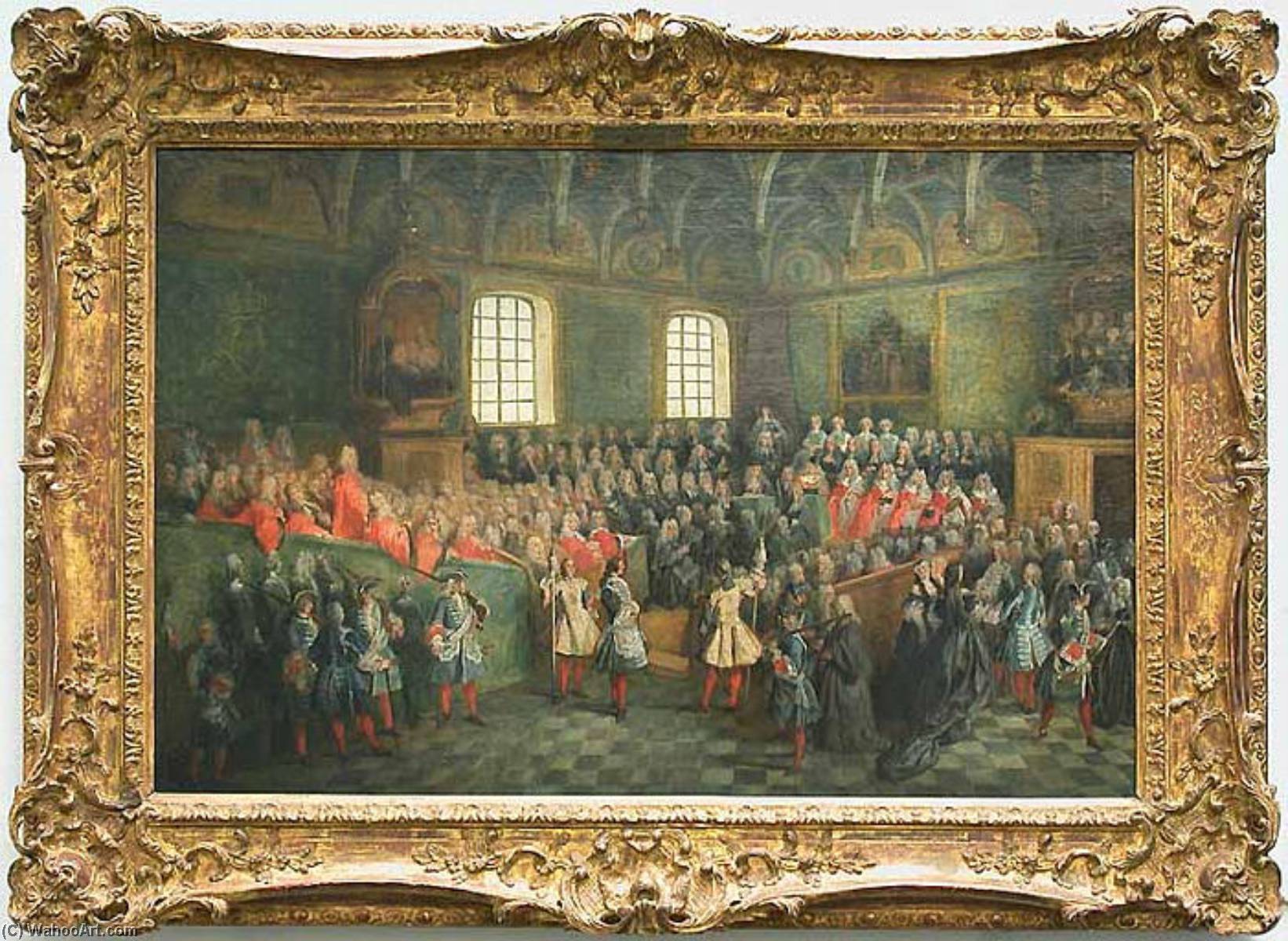
Le lit de justice tenu au parlement à la majorité de Louis XV (22 février 1723)


 Read More
Purchase a high-resolution, enhanced digital image, far superior to the online preview.
Each file is meticulously prepared by our in-house specialists using advanced tools and expert manual retouching. We ensure every image has exceptional clarity, precise color accuracy, and fine detail.
The final file is delivered via email within 72 hours, optimized for immediate use in professional, editorial, and print environments. This is the same quality trusted by top-tier design studios, publishers, and galleries.
Digital Image
Download a high-resolution file for personal display, printing, and creative projects. ( Buy Print Buy Hand Made Painting)
Included in Every Digital Image Order
Expert Digital Delivery, Guaranteed
When you choose ArtsDot.com, you're not just getting an image - you're receiving a professionally enhanced digital artwork, crafted with precision and backed by a satisfaction guarantee. Here's everything that comes with your order, automatically:

Fast Email Delivery
Your high-resolution digital image file will be emailed to you within 72 hours of ordering - ready for immediate use.

AI-Enhanced Digital File
Your artwork is professionally optimized using advanced AI tools and manual editing, ensuring maximum detail, clarity, and color accuracy.

Free Lifetime Re-Delivery
Accidentally deleted or lost your file? No worries - we'll resend it to you anytime, free of charge.

No Import Fees - Ever
Enjoy your artwork instantly with zero customs, duties, or delivery fees - digital downloads are always tax-free.

Color Accuracy Guarantee
We ensure your digital image reflects the original colors as closely as possible using professional tools and color management.

60-Day Satisfaction Guarantee
If you're not satisfied with your digital image, we'll revise it or refund 100% within 60 days - no questions asked.

100% Money-Back Guarantee
Not satisfied? Get a full refund within 60 days of receiving your digital file - no questions asked.

Bulk Order Discounts
Buy 3 images, save 10% - Buy 5, save 15% - Buy 10+, save 20%. Great for creative projects, galleries, and agencies.
Collectible Description
A Glimpse into Royal Authority: Nicolas Lancret’s “The Seat of Justice”
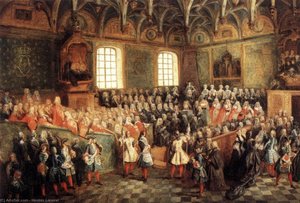
Nicolas Lancret's "Le lit de justice tenu au parlement à la majorité de Louis XV (22 février 1723)" is more than just a historical painting; it’s a meticulously crafted tableau vivant, offering a rare and intimate glimpse into the heart of 18th-century French power. Completed in 1723, this opulent scene unfolds within the grand halls of the Parlement de Paris, capturing a pivotal moment – the celebration of Louis XV's majority, a symbolic ascension to full authority within the kingdom. Lancret, a master of *fêtes galantes* and courtly life, elevates a formal legal proceeding into a captivating drama of formality, wealth, and subtle social dynamics.
The composition immediately draws the eye to the raised dais at the center, where figures representing judges, officials, and members of the royal family are arranged with deliberate precision. The sheer density of bodies—a testament to the importance of this occasion—creates a sense of overwhelming grandeur, while the carefully orchestrated layering of figures emphasizes hierarchy and social order. Lancret’s skill lies not just in depicting individuals but in conveying their status through posture, attire, and placement within the scene. Note the richly embroidered robes, the elaborate hairstyles, and the subtle gestures that reveal each figure's role and importance.
Rococo Elegance: Style and Technique
Lancret’s style is quintessential Rococo – a celebration of elegance, light, and playful ornamentation. The painting embodies the movement’s emphasis on beauty, grace, and an idealized vision of courtly life. His brushwork is remarkably fluid and delicate, creating a shimmering effect that captures the luxurious textures of velvet, silk, and brocade. The use of *glazing*, applying thin layers of translucent paint over previous ones, adds depth and luminosity to the colors, particularly in the fabrics and the polished surfaces of the architectural elements.
Technically, Lancret demonstrates a mastery of perspective, subtly guiding the viewer’s eye through the crowded hall. While the composition is undeniably dense, he skillfully employs linear perspective to create a sense of depth, with figures receding into the background and architectural details diminishing in size. The muted color palette—dominated by browns, creams, and touches of burgundy and pale blues—contributes to the painting's overall atmosphere of restrained elegance. The diffused lighting, emanating primarily from windows on the right side of the hall, casts a soft glow upon the scene, highlighting key figures while leaving others shrouded in shadow – a technique that adds drama and intrigue.
A Historical Tableau: Context and Symbolism
“Le lit de justice” is not merely a depiction of a legal ceremony; it’s a carefully constructed symbol of royal authority. The “lit de justice,” or throne, itself represents the seat of power within the Parlement, signifying Louis XV's formal assumption of responsibility for governing France. The event took place on the eve of his thirteenth birthday, marking a significant milestone in his journey to becoming king. The inclusion of the Retable du Parlement—a ceremonial table used during official proceedings—underscores the gravity and importance of the occasion.
Beyond its political significance, the painting offers insights into 18th-century French society. The elaborate costumes, the refined manners, and the carefully orchestrated setting reflect the values and priorities of the court – a world of wealth, privilege, and intricate social rituals. Lancret’s ability to capture this atmosphere with such precision and elegance makes “Le lit de justice” a valuable historical document, offering a window into a bygone era.
Emotional Resonance: A Moment Frozen in Time
Despite its formal subject matter, "Le lit de justice" possesses a remarkable emotional resonance. Lancret doesn’t simply record an event; he captures the *feeling* of it – the sense of solemnity, tradition, and perhaps even a hint of restrained tension. The faces of the figures are carefully rendered, conveying subtle expressions of authority, respect, and formality. The painting invites us to contemplate not just the political significance of the moment but also the human drama unfolding within it.
Reproductions of this masterpiece offer an opportunity to bring a touch of Rococo elegance into any space. Whether displayed in a grand salon or a more intimate setting, “Le lit de justice” serves as a reminder of France’s rich artistic heritage and its enduring fascination with the complexities of power and social order.
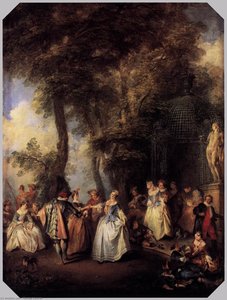
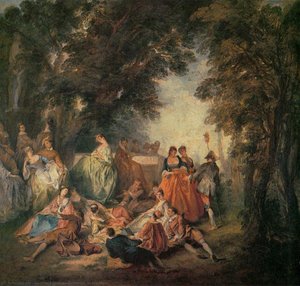
Related Artworks

Artist Biography
Nicolas Lancret: A Life in Rococo Charm
- Born: Paris, France (January 22, 1690)
- Died: Paris, France (September 14, 1743)
Early Life and Training
Nicolas Lancret's artistic journey began in Paris, where he was born in 1690. While detailed records of his early life are scarce, it is known that he received initial training under Pierre d’Ulin, a respected history painter. A pivotal moment arrived when he encountered the work of Antoine Watteau, whose influence profoundly shaped Lancret's artistic direction. He subsequently studied with Jean-Baptiste Gillot, who himself had been a student of Watteau, further solidifying his connection to this influential artistic lineage. This period of training laid the foundation for Lancret’s distinctive style, characterized by its lighthearted depictions of Parisian society and celebrations of *fêtes galantes*.Artistic Style and Notable Works
Lancret became renowned as a brilliant portrayer of everyday life within French society during the Regency of the Duke of Orleans and the early reign of King Louis XV. His artistic style is marked by charming scenes of balls, fairs, village weddings, and other social gatherings, reflecting the tastes and manners of his time. He excelled at capturing the spirit of Rococo elegance and frivolity.- Notable Works:
- *Le Déjeuner de Jambon* (Chantilly, Musée Condé, 1735): A quintessential example of his genre scenes, depicting a convivial ham breakfast with lively figures.
- *La Servante Justifiée* (1735-1740): Showcases Lancret's ability to portray domestic scenes with wit and charm.
- *Le Jeu des Quatre-Coins*: A playful depiction of a popular game, capturing the energy and amusement of social interaction.
- *Marie-Anne de Camargo* (1730): A portrait demonstrating his skill in depicting fashionable figures.
Influences and Legacy
Lancret’s artistic style bears a clear resemblance to that of Watteau, often leading art historians to compare the two. While some critics have considered Lancret's work to be somewhat less profound than Watteau's, his ability to capture the essence of French society in the 18th century has secured him a significant place in art history. His paintings are celebrated for their lightheartedness and charm, offering valuable insights into the social customs and aesthetics of the Rococo period. Lancret’s influence can be seen in later artists like François Boucher. His works reside in prestigious collections worldwide, including the National Gallery and the Musée d'Orsay, ensuring his legacy continues to inspire appreciation for French Rococo art.Development and Historical Significance
Throughout his career, Lancret demonstrated a gradual evolution in his artistic approach. While initially heavily influenced by Watteau, he developed a more distinctive style characterized by livelier colors and a greater sense of harmony between figures and their surroundings. His later works, such as *Montreir de lanterne magique* and *Family in a Garden*, are considered to represent the peak of his artistic achievement, showcasing an increasing ability to create depth and intimacy within his compositions. Lancret’s historical significance lies in his contribution to the Rococo movement and his ability to document the social life and cultural values of 18th-century France through his charming and accessible paintings.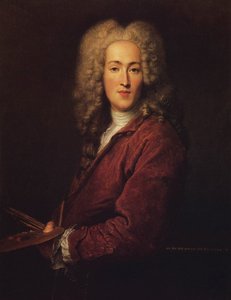
Nicolas Lancret
1690 - 1743 , France
Quick Facts
- Artistic Movement Or Style: Rococo
- Artists Or Movements Influenced By This Artist: ['François Boucher']
- Artists Who Influenced This Artist:
- Pierre d'Ulin
- Jean-Baptiste Gillot
- Antoine Watteau
- Date Of Birth: January 22, 1690
- Date Of Death: September 14, 1743
- Full Name: Nicolas Lancret
- Nationality: French
- Notable Artworks:
- Le déjeuner de jambon
- La servante justifiée
- Le jeu des quatre-coins
- Marie-anne de Camargo
- Place Of Birth: Paris, France

