

 Preview
 Send
Send Share
Share
 Details

 Download
 Similars
 X-Ray
X-Ray Diaporama
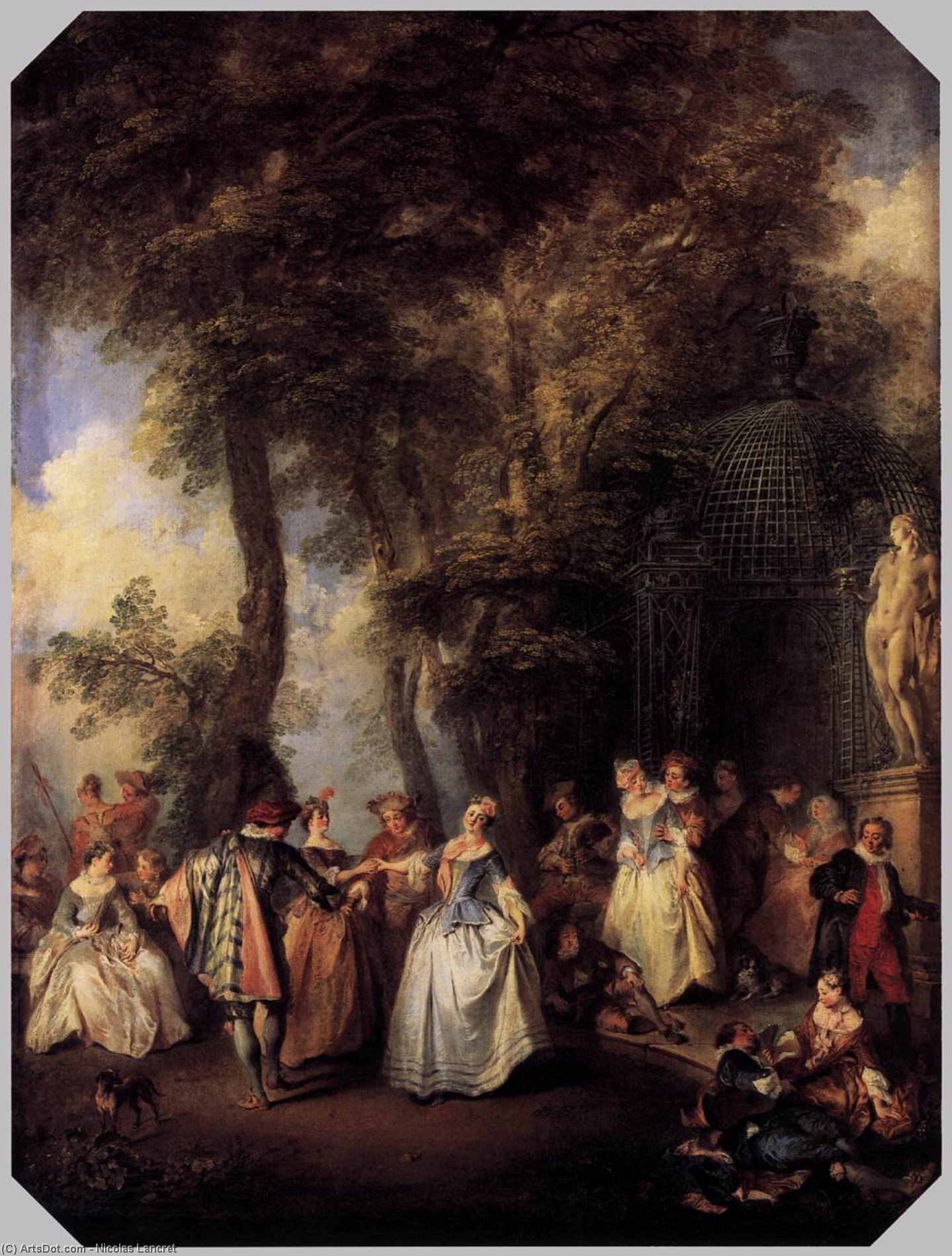
Le Moulinet
 Acrylic On Canvas
- WallArt
- Rococo
 129.0 x 95.0 cm
 Schloss Charlottenburg
 Read More
Purchase a high-resolution, enhanced digital image, far superior to the online preview.
Each file is meticulously prepared by our in-house specialists using advanced tools and expert manual retouching. We ensure every image has exceptional clarity, precise color accuracy, and fine detail.
The final file is delivered via email within 72 hours, optimized for immediate use in professional, editorial, and print environments. This is the same quality trusted by top-tier design studios, publishers, and galleries.
Digital Image
Download a high-resolution file for personal display, printing, and creative projects. ( Buy Print Buy Hand Made Painting)
Included in Every Digital Image Order
Expert Digital Delivery, Guaranteed
When you choose ArtsDot.com, you're not just getting an image - you're receiving a professionally enhanced digital artwork, crafted with precision and backed by a satisfaction guarantee. Here's everything that comes with your order, automatically:

Fast Email Delivery
Your high-resolution digital image file will be emailed to you within 72 hours of ordering - ready for immediate use.

AI-Enhanced Digital File
Your artwork is professionally optimized using advanced AI tools and manual editing, ensuring maximum detail, clarity, and color accuracy.

Free Lifetime Re-Delivery
Accidentally deleted or lost your file? No worries - we'll resend it to you anytime, free of charge.

No Import Fees - Ever
Enjoy your artwork instantly with zero customs, duties, or delivery fees - digital downloads are always tax-free.

Color Accuracy Guarantee
We ensure your digital image reflects the original colors as closely as possible using professional tools and color management.

60-Day Satisfaction Guarantee
If you're not satisfied with your digital image, we'll revise it or refund 100% within 60 days - no questions asked.

100% Money-Back Guarantee
Not satisfied? Get a full refund within 60 days of receiving your digital file - no questions asked.

Bulk Order Discounts
Buy 3 images, save 10% - Buy 5, save 15% - Buy 10+, save 20%. Great for creative projects, galleries, and agencies.
Collectible Description
Nicolas Lancret: A Life in Rococo Charm
Nicolas Lancret’s artistic journey began in Paris, where he was born in 1690. While detailed records of his early life are scarce, it is known that he received initial training under Pierre d’Ulin, a respected history painter. A pivotal moment arrived when he encountered the work of Antoine Watteau, whose influence profoundly shaped Lancret's artistic direction. He subsequently studied with Jean-Baptiste Gillot, who himself had been a student of Watteau, further solidifying his connection to this influential artistic lineage. This period of training laid the foundation for Lancret’s distinctive style, characterized by its lighthearted depictions of Parisian society and celebrations of *fêtes galantes*. Lancret became renowned as a brilliant portrayer of everyday life within French society during the regency of the Duke of Orleans and, later, early reign of King Louis XV. His canvases captured fleeting moments of aristocratic leisure—elegant gatherings in gardens, lively balls adorned with flowers and ribbons, and picnics amidst picturesque landscapes—reflecting the prevailing aesthetic sensibilities of the era. Unlike Watteau’s melancholic visions of Venetian fantasies, Lancret embraced a joyous optimism, imbuing his scenes with warmth and vibrancy. This stylistic divergence stemmed from Lancret's formative encounter with Gillot, who had championed Watteau's expressive approach to painting, resulting in a style that prioritized visual delight and harmonious composition.- Style: Rococo – Lancret’s oeuvre embodies the hallmark characteristics of Rococo art: delicate ornamentation, pastel hues, asymmetrical arrangements, and an emphasis on illusionistic effects. He skillfully employed techniques like *sfumato* to soften contours and create atmospheric depth, mirroring Watteau's masterful manipulation of light and shadow.
- Technique: Lancret excelled in oil painting on canvas, utilizing a loose brushstroke style that prioritized capturing the ephemeral beauty of his subjects. His meticulous attention to detail—particularly in rendering fabrics and floral decorations—demonstrated a mastery of artistic craftmanship.
- Historical Context: Lancret’s paintings flourished during a period marked by opulent court life and aristocratic patronage. The Château de Versailles served as a crucible for artistic innovation, fostering collaborations between artists like Jean Petitot the Elder and Louis Paradis de la Roche, who contributed to Vaux le Vicomte's artistic landscape.
- Symbolism: Lancret’s compositions frequently incorporated symbolic elements—such as statues of nude figures representing classical ideals—to convey moral lessons and elevate the viewer’s experience. The depiction of flowers and foliage served as emblems of fertility, beauty, and springtime, reflecting the Rococo fascination with nature's rejuvenating power.
- Emotional Impact: Lancret’s works evoke a sense of carefree elegance and sensual pleasure, transporting viewers to idealized worlds of aristocratic indulgence. His paintings capture not merely visual splendor but also the emotional resonance of social rituals and celebrations—a testament to his ability to communicate profound feelings through subtle artistic gestures.
Le Moulinet: A Masterpiece of Rococo Illusionism
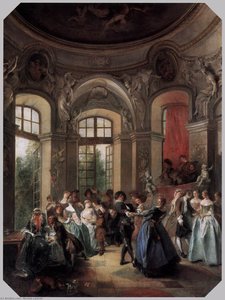
“Le Moulinet,” or “The Reel,” exemplifies Lancret’s signature style—a breathtaking depiction of a Parisian fête galante bathed in dappled sunlight. Executed with remarkable precision and infused with an irresistible charm, this oil painting captures the essence of Rococo artistry: delicate ornamentation, pastel hues, asymmetrical arrangements, and masterful illusionistic effects. The scene unfolds within a formal garden setting, populated by elegantly dressed aristocrats engaged in leisurely pursuits—dancing, conversing, and admiring a magnificent statue of Venus. Lancret’s skillful use of *sfumato* creates an ethereal atmosphere, blurring boundaries between reality and fantasy and immersing the viewer in a world of refined beauty.Detailed Analysis: Composition & Technique
Lancret's compositional brilliance is evident in the layering of planes and perspectives—a technique characteristic of Watteau’s influence—that draws the eye into the heart of the scene. The central group of dancers occupies a prominent position, framed by towering trees whose branches cast intricate shadows across the lawn. Lancret’s meticulous brushwork captures the textures of fabrics—silk gowns shimmering with sequins and embroidery—and floral decorations—bouquets overflowing with roses and lilies—adding to the painting's opulent sensory experience. The artist’s masterful blending of colors—primarily soft blues, pinks, and golds—creates a harmonious palette that enhances the overall mood of tranquility and delight.Beyond the Canvas: Lancret’s Legacy
Nicolas Lancret remains celebrated as one of France's foremost Rococo painters, whose works continue to inspire admiration for their elegance, artistry, and evocative portrayal of aristocratic life. His influence extended beyond his own time, foreshadowing the stylistic innovations of artists like Jean-Honoré Fragonard and Thomas Gainsborough—a testament to Lancret’s enduring contribution to European art history. The Château de Versailles, where Lancret adorned several halls with monumental paintings, stands as a tangible reminder of his artistic prowess and the grandeur of Louis XIV's reign. Explore Vaux le Vicomte’s artistic landscape and discover Jean Petitot the Elder, Louis Paradis de la Roche, and Jean-Baptiste Boulard’s contributions to Vaux le Vicomte's artistic landscape.Related Artworks
Artist Biography
Nicolas Lancret: A Life in Rococo Charm
- Born: Paris, France (January 22, 1690)
- Died: Paris, France (September 14, 1743)
Early Life and Training
Nicolas Lancret's artistic journey began in Paris, where he was born in 1690. While detailed records of his early life are scarce, it is known that he received initial training under Pierre d’Ulin, a respected history painter. A pivotal moment arrived when he encountered the work of Antoine Watteau, whose influence profoundly shaped Lancret's artistic direction. He subsequently studied with Jean-Baptiste Gillot, who himself had been a student of Watteau, further solidifying his connection to this influential artistic lineage. This period of training laid the foundation for Lancret’s distinctive style, characterized by its lighthearted depictions of Parisian society and celebrations of *fêtes galantes*.Artistic Style and Notable Works
Lancret became renowned as a brilliant portrayer of everyday life within French society during the Regency of the Duke of Orleans and the early reign of King Louis XV. His artistic style is marked by charming scenes of balls, fairs, village weddings, and other social gatherings, reflecting the tastes and manners of his time. He excelled at capturing the spirit of Rococo elegance and frivolity.- Notable Works:
- *Le Déjeuner de Jambon* (Chantilly, Musée Condé, 1735): A quintessential example of his genre scenes, depicting a convivial ham breakfast with lively figures.
- *La Servante Justifiée* (1735-1740): Showcases Lancret's ability to portray domestic scenes with wit and charm.
- *Le Jeu des Quatre-Coins*: A playful depiction of a popular game, capturing the energy and amusement of social interaction.
- *Marie-Anne de Camargo* (1730): A portrait demonstrating his skill in depicting fashionable figures.
Influences and Legacy
Lancret’s artistic style bears a clear resemblance to that of Watteau, often leading art historians to compare the two. While some critics have considered Lancret's work to be somewhat less profound than Watteau's, his ability to capture the essence of French society in the 18th century has secured him a significant place in art history. His paintings are celebrated for their lightheartedness and charm, offering valuable insights into the social customs and aesthetics of the Rococo period. Lancret’s influence can be seen in later artists like François Boucher. His works reside in prestigious collections worldwide, including the National Gallery and the Musée d'Orsay, ensuring his legacy continues to inspire appreciation for French Rococo art.Development and Historical Significance
Throughout his career, Lancret demonstrated a gradual evolution in his artistic approach. While initially heavily influenced by Watteau, he developed a more distinctive style characterized by livelier colors and a greater sense of harmony between figures and their surroundings. His later works, such as *Montreir de lanterne magique* and *Family in a Garden*, are considered to represent the peak of his artistic achievement, showcasing an increasing ability to create depth and intimacy within his compositions. Lancret’s historical significance lies in his contribution to the Rococo movement and his ability to document the social life and cultural values of 18th-century France through his charming and accessible paintings.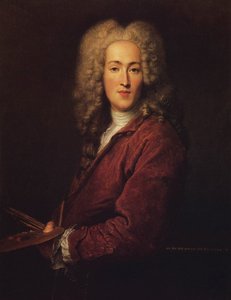
Nicolas Lancret
1690 - 1743 , France
Quick Facts
- Artistic Movement Or Style: Rococo
- Artists Or Movements Influenced By This Artist: ['François Boucher']
- Artists Who Influenced This Artist:
- Pierre d'Ulin
- Jean-Baptiste Gillot
- Antoine Watteau
- Date Of Birth: January 22, 1690
- Date Of Death: September 14, 1743
- Full Name: Nicolas Lancret
- Nationality: French
- Notable Artworks:
- Le déjeuner de jambon
- La servante justifiée
- Le jeu des quatre-coins
- Marie-anne de Camargo
- Place Of Birth: Paris, France

