 Preview
 Send
Send Share
Share
 Details

 Download
 Similars
 X-Ray
X-Ray Diaporama
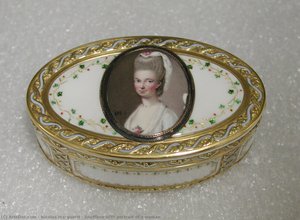
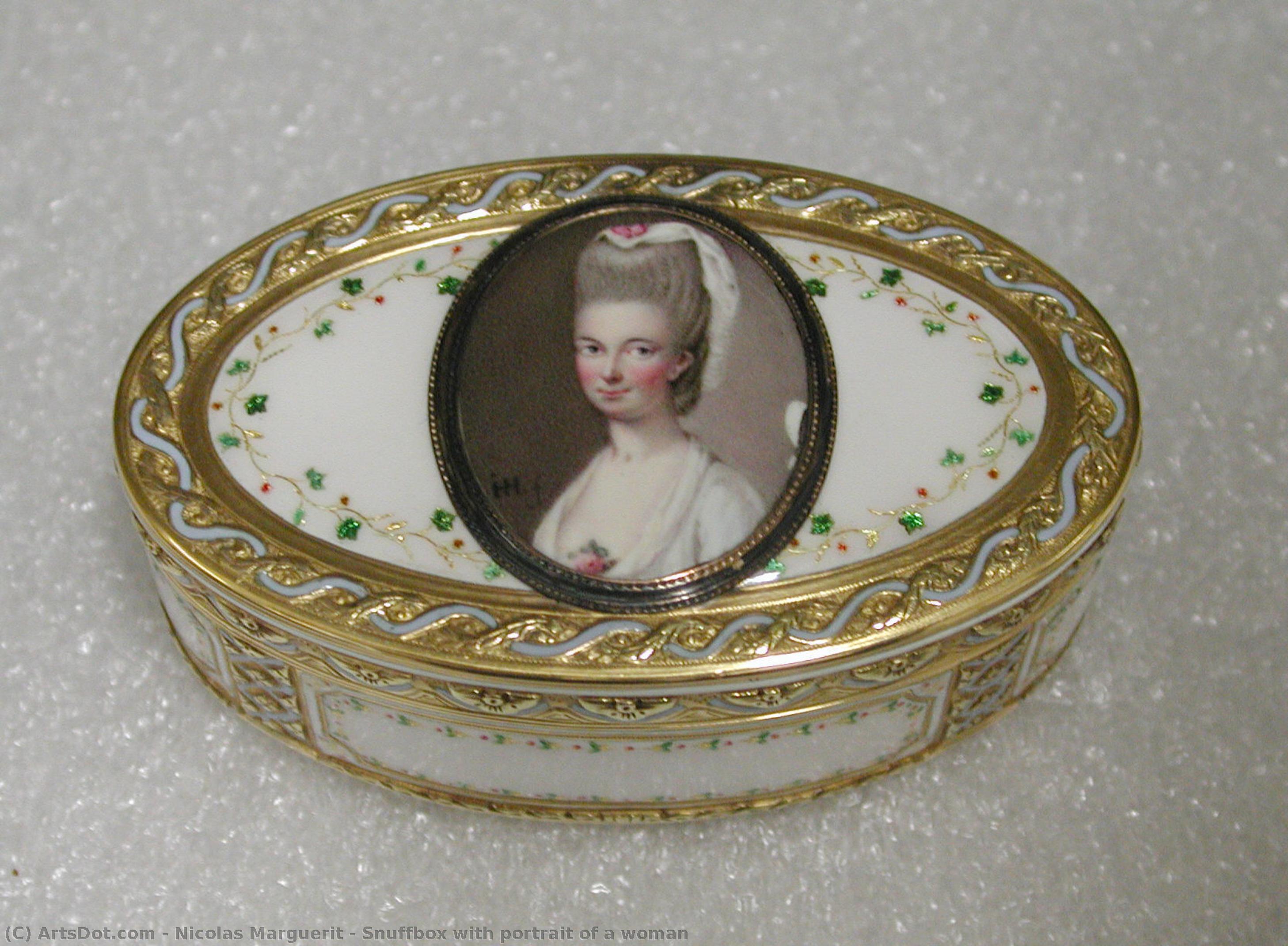
Snuffbox with portrait of a woman
 1775
1775 3.0 x 7.0 cm
 Read More
Giclée / Art Print
Museum-quality giclée or canvas print with fast production and flexible finish options. ( Buy Hand Made Painting Buy Image)




































Pick from our preset sizes that match the artwork's original proportions.

You may enter your own dimensions to fit a specific frame or space. If your selected size does not match the original image's proportions, we will either crop the artwork or extend the image with a mirrored or solid-fill edge. A digital mockup will be sent for your approval before production begins.
Please note that the on-screen preview does not reflect the actual cropping or extension. Only the mockup will accurately show the final composition.
While custom sizes are available, we recommend selecting a dimension from the predefined list to preserve the original proportions.
Worldwide Delivery () in 2 weeks instead of standard 4/5 weeks. (1 September)

Free Worldwide Express Shipping

High-Quality Linen Canvas

Full Shipping Insurance

Customs Tax Refund Guarantee

True Color Matching Guarantee

60-Day Return Policy (Defects Only)

100% Money-Back Guarantee

Bulk Discount Offer
 Glass option is only available in size under 110 CM

Snuffbox with portrait of a woman
Giclée / Art Print
Reproduction Size
-


Total Price
$ 63
Related Artworks




Artist Biography
George Morland: A Life of Rustic Charm and Unconventional Genius
Born in London on June 26, 1763 (or possibly May 26th, according to his own account), George Morland’s life was a fascinating paradox – a prolific artist celebrated for capturing the fleeting beauty of rural England while simultaneously battling personal demons and living a life steeped in debt, dissipation, and even imprisonment. His legacy rests not solely on the quality of his paintings, which are undeniably uneven, but rather on their sheer volume, their remarkable ability to evoke atmosphere, and their profound influence on printmaking. Morland’s story is one of an artist who, despite facing considerable hardship, managed to create a body of work that continues to resonate with viewers today.
Morland's artistic journey began under the tutelage of his father, Henry Morland, a painter and dealer known for his portraits and fantastical scenes. Henry’s workshop provided George with an early foundation in technique, but it was also a place where forgery and restoration were practiced – a practice that would subtly shape George’s own approach to art. He displayed remarkable talent from a young age, producing a prodigious amount of work, often fueled by drink and a restless spirit. His subjects weren't the idealized pastoral scenes favored by many of his contemporaries; instead, Morland focused on the everyday lives of ordinary people – farmers, laborers, animals, and the transient figures found in taverns and stables. These were scenes of working-class rural life, often rendered with an immediacy and a slightly grubby realism that was quite unconventional for the time.
Morland’s style is characterized by its loose, expressive brushwork and a remarkable ability to capture light and shadow. He wasn't interested in meticulous detail or idealized beauty; rather, he sought to convey a sense of atmosphere and movement. His compositions are often crowded with figures and animals, creating a dynamic and bustling scene. While some critics have dismissed his work as crude or lacking technical skill, there’s an undeniable energy and vitality that shines through. He possessed a keen eye for detail, particularly in depicting the textures of fur, wool, and wood – elements that contribute significantly to the realism of his scenes. His use of color was also notable, employing muted tones and subtle gradations to create depth and mood.
The Shadow of Scandal and Popularity
Morland’s life was far from serene. He struggled with debt throughout much of his career, often resorting to desperate measures to earn a living – including selling forged works attributed to his father. His dissolute lifestyle led to periods of imprisonment and exile, further complicating his artistic pursuits. Despite these difficulties, or perhaps because of them, Morland continued to paint relentlessly, producing an astonishing output that numbered in the thousands of canvases. This prolificness, combined with the relatively low price at which his works sold, contributed to their immense popularity.
The demand for Morland’s paintings was so great that numerous prints were made after them, often by his brother-in-law, William Ward. This widespread reproduction undoubtedly fueled his commercial success but also created a problem: the market became flooded with forgeries. The sheer volume of copies circulating led to considerable confusion and skepticism about the authenticity of Morland’s original works. His scandalous reputation – fuelled by rumors of gambling debts and erratic behavior – only added to the mystique surrounding him.
Influence on Printmaking
Morland's impact extends far beyond his own paintings. He played a crucial role in shaping the development of printmaking, particularly in the field of genre scenes. His loose brushwork and dynamic compositions were highly influential on artists like George Cruikshank and Richard Redgrave, who adopted similar techniques to create their own series of prints depicting rural life. The popularity of Morland’s work also encouraged other artists to explore this subject matter, contributing to a broader interest in the depiction of everyday scenes.
Notably, his collaboration with Thomas Girtin is a fascinating chapter in art history. While Girtin initially declined an offer to create a companion piece to Morland's *Mail Coach in a Storm*, he did produce a copy of *Dogs Hesitating about the Pluck* and even collaborated on *The Earth Stopper*, an etching where the figures are attributed to Morland, while the landscape is credited to Girtin. This exchange demonstrates a mutual respect between the two artists and highlights their shared interest in capturing the essence of rural life.
A Lasting Legacy
George Morland died in London on October 29, 1804, at the relatively young age of 40. His death was attributed to a combination of factors – excessive drinking, poor health, and a generally dissolute lifestyle. Despite his personal struggles, Morland’s legacy endures as one of England's most prolific and influential genre painters. His paintings offer a unique glimpse into the lives of ordinary people in rural England during the late 18th and early 19th centuries, and his work continues to be admired for its energy, vitality, and atmospheric quality. The sheer volume of his output—over 3,000 works—is itself a testament to his extraordinary dedication and talent. Morland’s story serves as a poignant reminder that artistic genius can sometimes coexist with personal turmoil, leaving behind a rich and enduring body of work.
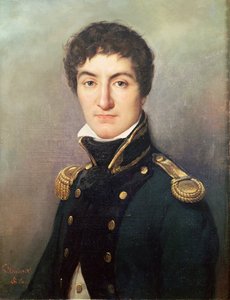
nicolas marguerit
1763 - 1824 , France
Quick Facts
- Artistic Movement Or Style: Genre painting
- Artists Or Movements Influenced By This Artist: ['William Ward']
- Artists Who Influenced This Artist: ['Henry Morland']
- Date Of Birth: June 26, 1763
- Date Of Death: Oct. 29, 1804
- Full Name: George Morland
- Nationality: English
- Notable Artworks:
- Mail Coach in a Storm
- Dogs Hesitating
- Sheep in a Landscape
- Place Of Birth: London, England