

 Preview
 Send
Send Share
Share
 Details

 Download
 Similars
 X-Ray
X-Ray Diaporama
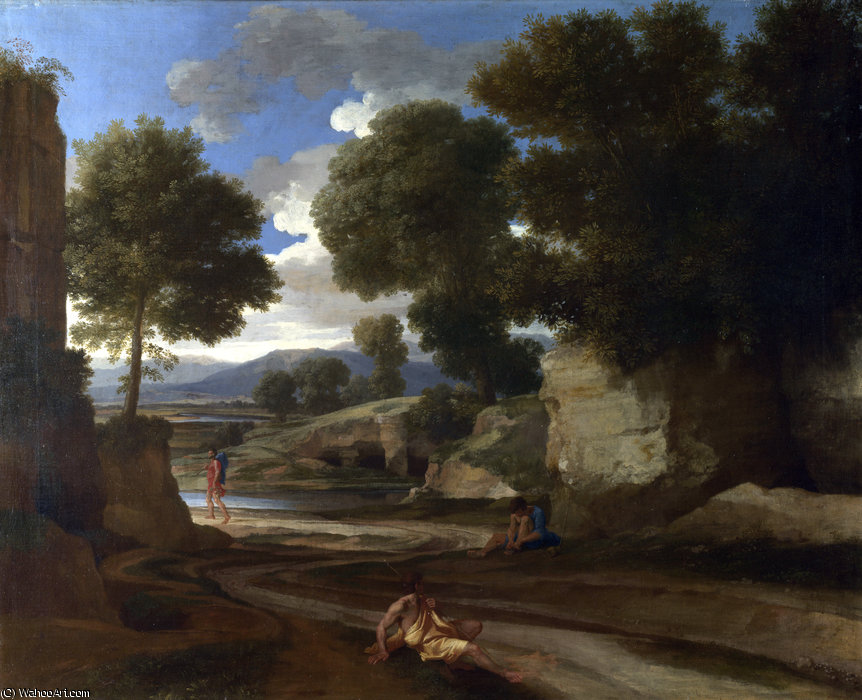
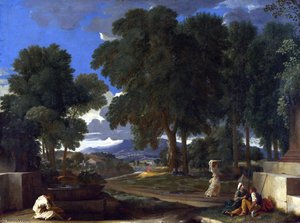
Landscape with Travellers Resting


 Read More
Purchase a high-resolution, enhanced digital image, far superior to the online preview.
Each file is meticulously prepared by our in-house specialists using advanced tools and expert manual retouching. We ensure every image has exceptional clarity, precise color accuracy, and fine detail.
The final file is delivered via email within 72 hours, optimized for immediate use in professional, editorial, and print environments. This is the same quality trusted by top-tier design studios, publishers, and galleries.
Digital Image
Download a high-resolution file for personal display, printing, and creative projects. ( Buy Print Buy Hand Made Painting)
Included in Every Digital Image Order
Expert Digital Delivery, Guaranteed
When you choose ArtsDot.com, you're not just getting an image - you're receiving a professionally enhanced digital artwork, crafted with precision and backed by a satisfaction guarantee. Here's everything that comes with your order, automatically:

Fast Email Delivery
Your high-resolution digital image file will be emailed to you within 72 hours of ordering - ready for immediate use.

AI-Enhanced Digital File
Your artwork is professionally optimized using advanced AI tools and manual editing, ensuring maximum detail, clarity, and color accuracy.

Free Lifetime Re-Delivery
Accidentally deleted or lost your file? No worries - we'll resend it to you anytime, free of charge.

No Import Fees - Ever
Enjoy your artwork instantly with zero customs, duties, or delivery fees - digital downloads are always tax-free.

Color Accuracy Guarantee
We ensure your digital image reflects the original colors as closely as possible using professional tools and color management.

60-Day Satisfaction Guarantee
If you're not satisfied with your digital image, we'll revise it or refund 100% within 60 days - no questions asked.

100% Money-Back Guarantee
Not satisfied? Get a full refund within 60 days of receiving your digital file - no questions asked.

Bulk Order Discounts
Buy 3 images, save 10% - Buy 5, save 15% - Buy 10+, save 20%. Great for creative projects, galleries, and agencies.
Collectible Description
Landscape with Travellers Resting
Nicolas Poussin’s *Landscape with Travellers Resting*, painted around 1638-9, stands as an exemplar of Baroque landscape artistry—a testament to the artist's profound understanding of classical ideals and his masterful manipulation of visual language. Originating from Dulwich Picture Gallery, this monumental canvas embodies Poussin’s signature style: a harmonious blend of observation and imagination that elevates the natural world into a realm of sublime beauty and moral contemplation.Composition and Elements: A Symphony of Light and Space
The painting depicts a tranquil pastoral scene featuring three figures traversing a Roman road amidst rolling hills and scattered trees. Poussin’s compositional genius is immediately apparent in its balanced symmetry—a deliberate echo of classical architectural principles. The central trio, positioned strategically along the path, draws the viewer's gaze upwards towards distant mountains, establishing a visual hierarchy that reinforces the sense of grandeur. Trees are meticulously rendered, serving not merely as decorative elements but also as structural components guiding the eye and framing the figures with graceful curves. Notably, the artist employs dramatic chiaroscuro—the interplay of light and shadow—to sculpt the landscape and imbue it with emotional depth. Soft diffused sunlight illuminates the foreground, highlighting the travellers’ forms while casting cool shadows that deepen the sense of serenity and mystery.Artistic Style and Technique: Classical Reverie Embodied
Poussin's artistic style is firmly rooted in the traditions of Renaissance and Mannerism, yet he transcends these influences by synthesizing them into a uniquely expressive idiom. His technique—characterized by meticulous brushwork and painstaking attention to detail—is evident in every aspect of the painting. The artist employs glazing techniques, layering translucent washes of pigment over underlying grounds to achieve luminous effects and subtle tonal variations. This method allows for an astonishing level of realism while simultaneously conveying a sense of ethereal beauty. Furthermore, Poussin’s masterful use of perspective creates an illusion of depth—drawing the viewer into the landscape as if witnessing it firsthand. The distant mountains are rendered with atmospheric haze, enhancing their majesty and reinforcing the painting's overarching mood of contemplative grandeur.Historical Context: Echoes of Antiquity
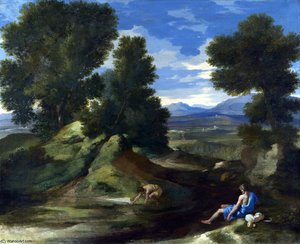
Painted during Poussin’s formative years in Rome—a period marked by an intense engagement with classical sculpture and architecture—*Landscape with Travellers Resting* reflects the artist’s unwavering admiration for the aesthetic ideals of ancient Greece and Rome. The scene draws inspiration from Virgil's *Georgics*, a pastoral poem celebrating rural life and embodying notions of harmony, order, and moral virtue. Poussin’s depiction aligns perfectly with the Baroque fascination for idealized landscapes—a genre that sought to evoke emotions of awe and wonder while conveying spiritual truths. This artwork served as part of a set alongside *Landscape with a Man Washing his Feet at a Fountain*, reflecting the prevailing artistic preoccupation with exploring themes of human dignity and contemplation amidst the grandeur of nature.Symbolism: Tranquility, Virtue, and Divine Presence
Beyond its visual splendor, *Landscape with Travellers Resting* is laden with symbolic significance. The tranquil landscape represents Edenic paradise—a realm untouched by corruption and governed by divine providence. The three figures embody human virtue—representing contemplation, piety, and moral fortitude. Their serene demeanor suggests a detachment from worldly concerns, prioritizing spiritual reflection over material pursuits. The distant mountains symbolize the sublime—the awe-inspiring majesty of God’s creation that inspires humility and reverence. Ultimately, Poussin's masterpiece invites viewers to contemplate the beauty of nature and to embrace the virtues of peace and contemplation—a timeless message resonating across centuries.Related Artworks
Artist Biography
A Life Steeped in Classical Reverie
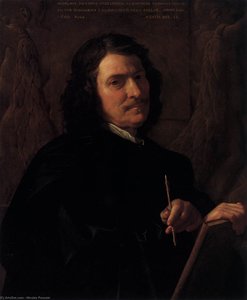
Nicolas Poussin, a name synonymous with the grandeur of French Baroque painting, was nonetheless a soul deeply rooted in Italian soil for much of his artistic life. Born in Le Havre, Normandy, in June 1594, his early years remain somewhat veiled in mystery, yet they undoubtedly laid the foundation for a career that would become pivotal in shaping the classical tradition within French art. Though he briefly studied in Paris during the early 1610s, absorbing influences from lesser-known artists of the time, it was his journey to Rome in 1624 that truly ignited his artistic destiny. This wasn’t merely a geographical relocation; it was an immersion into the heart of antiquity, a pilgrimage to the very source of inspiration that would define his aesthetic vision. Poussin's initial forays into painting were marked by a sensuous quality reminiscent of Venetian masters like Titian, yet even in these early works, a nascent sense of order and intellectual rigor began to emerge—a foreshadowing of the style he would so masterfully refine.
The Roman Years: Forging a Classical Ideal
Rome proved to be more than just a studio for Poussin; it became his intellectual crucible. He found himself amidst a vibrant circle of scholars, archaeologists, and fellow artists, notably Cassiano dal Pozzo, whose profound understanding of classical antiquity profoundly influenced the artist’s approach. Dal Pozzo's dedication to meticulously documenting ancient remains instilled in Poussin a deep respect for historical accuracy and a desire to imbue his paintings with a sense of timelessness. This period saw Poussin move away from the flamboyant exuberance of some of his contemporaries, instead embracing a style characterized by clarity, balance, and a deliberate emphasis on linear composition. He meticulously studied Raphael’s works, absorbing their harmonious arrangements and graceful forms, while simultaneously drawing inspiration from ancient sculptures and literary sources like Ovid's *Metamorphoses*. His paintings began to populate with figures drawn from classical history and mythology, rendered not as mere decorative elements but as embodiments of moral virtues and philosophical ideals.
Themes of History, Myth, and the Sacred
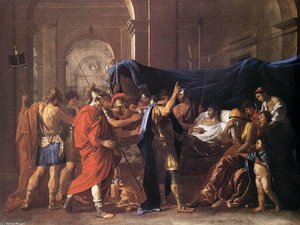
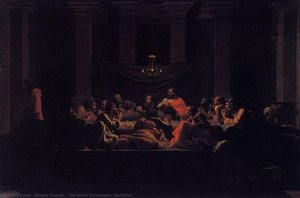
Poussin’s artistic output was remarkably diverse, yet consistently unified by his commitment to these core principles. He frequently depicted scenes from ancient history—the tragic fate of Germanicus, for example—imbued with a sense of stoic dignity and moral weight. His mythological paintings weren't simply retellings of familiar tales; they were explorations of human nature, often laden with allegorical meaning. The *Arcadia* series, particularly the iconic *Et in Arcadia ego*, became emblematic of his philosophical depth, prompting contemplation on mortality and the enduring power of memory. Beyond history and myth, Poussin also turned to religious subjects, most notably in *The Seven Sacraments*—a monumental undertaking that showcased both his theological understanding and compositional prowess. Even within these sacred scenes, however, he maintained a classical restraint, avoiding excessive emotionalism in favor of a serene and dignified presentation. Later in his career, expansive landscapes became increasingly prominent, blending realism with idealized forms to create vistas that evoked a sense of harmony and tranquility.
A Lasting Legacy: Shaping French Art
Despite spending the majority of his career abroad, Nicolas Poussin’s influence on French art was immense. He briefly returned to Paris in 1640 at the behest of Cardinal Richelieu, appointed as First Painter to the King, but found himself stifled by the demands and intrigues of court life. He soon returned to Rome, where he continued to paint until his death in 1665. His dedication to classical principles helped establish a standard for artistic training and practice within France, influencing generations of artists who followed. He became a leading figure in the Académie Royale de Peinture et de Sculpture, solidifying his position as a cornerstone of French Classicism. Artists like Jacques-Louis David and Paul Cézanne openly acknowledged their debt to Poussin’s rigorous approach and intellectual depth. His legacy extends far beyond mere stylistic imitation; it represents a commitment to order, clarity, and the enduring power of classical ideals—a testament to an artist who sought not simply to depict the world but to elevate it through the lens of reason and beauty.
- Notable Works: *The Death of Germanicus*, *The Seven Sacraments Series*, *A Roman Road*, *Orion Blinded Searching for the Sun*, *The Seasons*.
- Key Characteristics: Classical Composition, Linearity, Historical and Mythological Themes, Serene Landscapes.
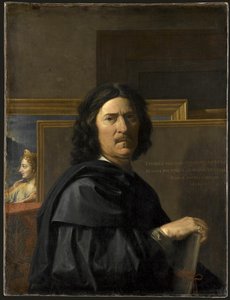
Nicolas Poussin
1594 - 1665 , France
Quick Facts
- Artistic Movement Or Style: Baroque, Classicism
- Artists Or Movements Influenced By This Artist:
- Jacques-Louis David
- Paul Cézanne
- Artists Who Influenced This Artist:
- Raphael
- Titian
- Date Of Birth: 1594
- Date Of Death: 1665
- Full Name: Nicolas Poussin
- Nationality: French
- Notable Artworks:
- The Death of Germanicus
- Seven Sacraments Series
- A Roman Road
- Orion Blinded
- The Seasons
- Place Of Birth: Le Havre, France

