

 Preview
 Send
Send Share
Share
 Details

 Download
 Similars
 X-Ray
X-Ray Diaporama
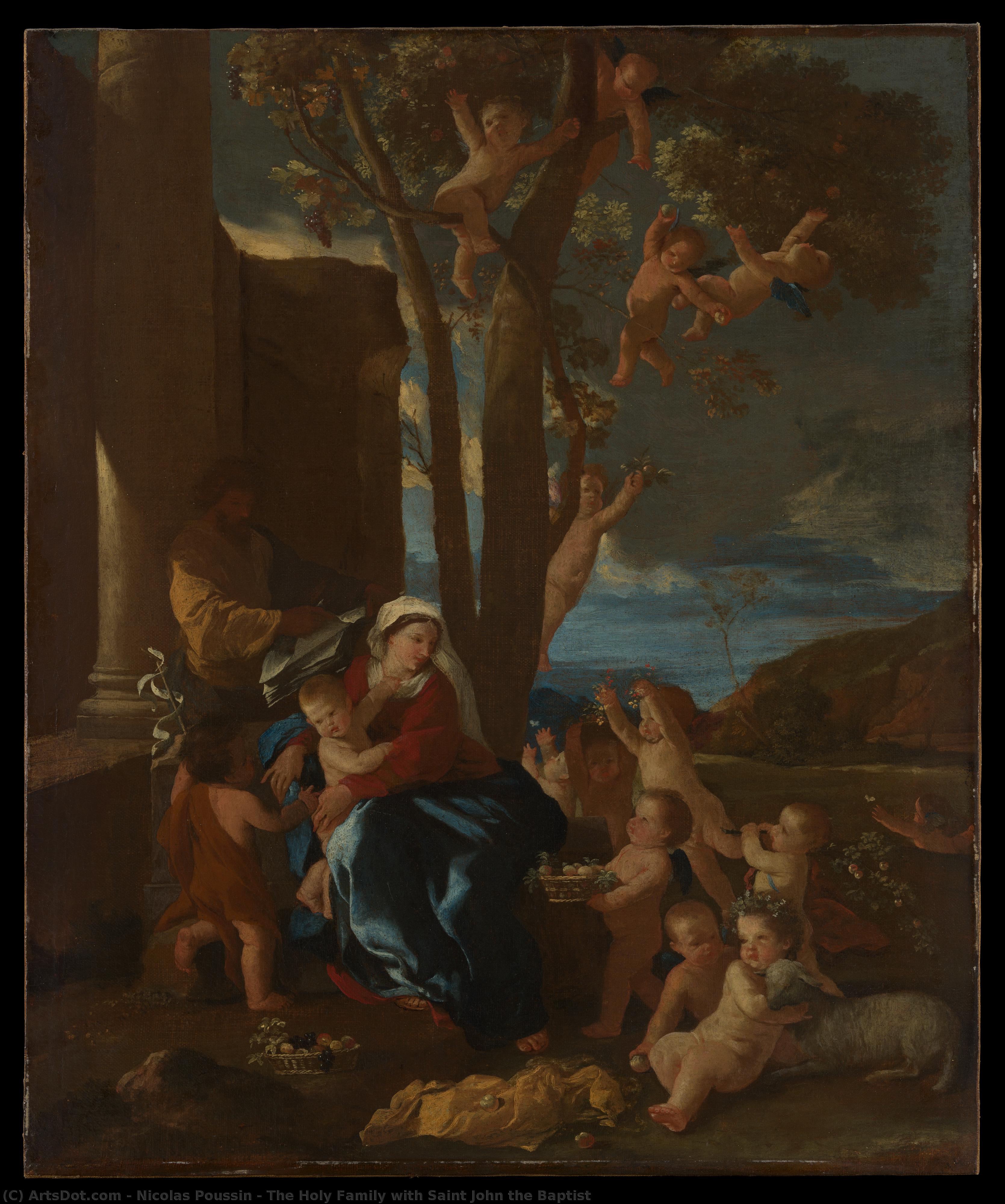
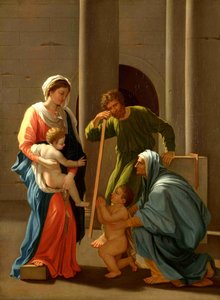
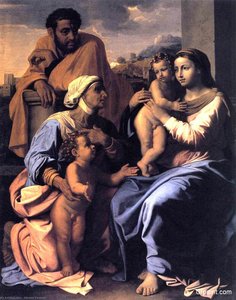
The Holy Family with Saint John the Baptist
 Acrylic On Canvas
- WallArt
- Baroque Style
 1627
1627 76.0 x 64.0 cm
 Metropolitan Museum of Art
 Read More
Purchase a high-resolution, enhanced digital image, far superior to the online preview.
Each file is meticulously prepared by our in-house specialists using advanced tools and expert manual retouching. We ensure every image has exceptional clarity, precise color accuracy, and fine detail.
The final file is delivered via email within 72 hours, optimized for immediate use in professional, editorial, and print environments. This is the same quality trusted by top-tier design studios, publishers, and galleries.
Digital Image
Download a high-resolution file for personal display, printing, and creative projects. ( Buy Print Buy Hand Made Painting)
Included in Every Digital Image Order
Expert Digital Delivery, Guaranteed
When you choose ArtsDot.com, you're not just getting an image - you're receiving a professionally enhanced digital artwork, crafted with precision and backed by a satisfaction guarantee. Here's everything that comes with your order, automatically:

Fast Email Delivery
Your high-resolution digital image file will be emailed to you within 72 hours of ordering - ready for immediate use.

AI-Enhanced Digital File
Your artwork is professionally optimized using advanced AI tools and manual editing, ensuring maximum detail, clarity, and color accuracy.

Free Lifetime Re-Delivery
Accidentally deleted or lost your file? No worries - we'll resend it to you anytime, free of charge.

No Import Fees - Ever
Enjoy your artwork instantly with zero customs, duties, or delivery fees - digital downloads are always tax-free.

Color Accuracy Guarantee
We ensure your digital image reflects the original colors as closely as possible using professional tools and color management.

60-Day Satisfaction Guarantee
If you're not satisfied with your digital image, we'll revise it or refund 100% within 60 days - no questions asked.

100% Money-Back Guarantee
Not satisfied? Get a full refund within 60 days of receiving your digital file - no questions asked.

Bulk Order Discounts
Buy 3 images, save 10% - Buy 5, save 15% - Buy 10+, save 20%. Great for creative projects, galleries, and agencies.
Collectible Description
A Symphony of Light and Symbol: Exploring Nicolas Poussin’s “The Holy Family with Saint John the Baptist”
Nicolas Poussin's "The Holy Family with Saint John the Baptist," painted in 1627, stands as a cornerstone of Baroque art—a testament to its masterful manipulation of light, color, and composition. More than just a depiction of biblical figures, this monumental canvas embodies profound theological concepts interwoven with classical ideals, offering viewers an experience that transcends mere visual pleasure. Its journey from the Venetian influences of Titian to its eventual residence in The Metropolitan Museum of Art speaks volumes about artistic evolution and enduring fascination.Venetian Roots: Echoes of Titian’s Mythological Grandeur
Early in his Roman career, Poussin absorbed the lessons imparted by Titian's monumental mythological paintings, particularly “The Bacchanals.” These works championed dramatic lighting and expansive landscapes—techniques that profoundly impacted Poussin’s artistic sensibilities. He deliberately adopted these stylistic choices to infuse "The Holy Family" with a similar grandeur, mirroring Titian’s ability to convey emotion through visual spectacle. The careful layering of colors and textures reflects this deliberate engagement with Venetian painting traditions.Compositional Harmony: A Classical Landscape Framing Sacred Narrative
The painting's genius lies not only in its subject matter but also in its meticulously crafted composition. Poussin employs a pyramidal structure, anchoring the central figures—Mary, Jesus, and Saint John—within a serene landscape dominated by rolling hills and distant mountains. This classical device harkens back to Renaissance ideals of balance and order, elevating the biblical scene beyond simple piety. The river meandering through the background serves as both a visual conduit and a symbol of life’s flow, reinforcing the painting's overarching theme of divine providence.Symbolic Layers: Decoding the Language of Faith
“The Holy Family” is replete with symbolic elements designed to communicate complex theological ideas. The apple tree laden with fruit represents Adam and Eve’s expulsion from Paradise—a poignant reminder of humanity’s fallibility yet simultaneously hinting at redemption through Christ's incarnation. Similarly, the grape vine encircling the tree symbolizes communion and the Eucharist, emphasizing the spiritual nourishment offered by faith. Each figure possesses deliberate significance: Mary embodies maternal compassion and grace; Jesus holds a bird symbolizing innocence and resurrection; Saint John presents a lamb representing sacrifice and atonement—a carefully orchestrated tableau of Christian iconography.A Legacy Enduring Through Time
Despite significant pigment degradation over centuries, “The Holy Family” retains its captivating emotional impact. Its luminous palette—dominated by blues and golds—creates an atmosphere of tranquility and reverence. The artist’s masterful brushwork contributes to the painting's textural richness, inviting viewers to contemplate its beauty and absorb its profound spiritual message. Today, reproductions of this masterpiece continue to inspire artists and collectors alike, securing Poussin’s place as one of the most influential figures in European art history—a painter who successfully fused classical elegance with religious devotion into an unforgettable visual experience.Related Artworks
Artist Biography
A Life Steeped in Classical Reverie
Nicolas Poussin, a name synonymous with the grandeur of French Baroque painting, was nonetheless a soul deeply rooted in Italian soil for much of his artistic life. Born in Le Havre, Normandy, in June 1594, his early years remain somewhat veiled in mystery, yet they undoubtedly laid the foundation for a career that would become pivotal in shaping the classical tradition within French art. Though he briefly studied in Paris during the early 1610s, absorbing influences from lesser-known artists of the time, it was his journey to Rome in 1624 that truly ignited his artistic destiny. This wasn’t merely a geographical relocation; it was an immersion into the heart of antiquity, a pilgrimage to the very source of inspiration that would define his aesthetic vision. Poussin's initial forays into painting were marked by a sensuous quality reminiscent of Venetian masters like Titian, yet even in these early works, a nascent sense of order and intellectual rigor began to emerge—a foreshadowing of the style he would so masterfully refine.
The Roman Years: Forging a Classical Ideal
Rome proved to be more than just a studio for Poussin; it became his intellectual crucible. He found himself amidst a vibrant circle of scholars, archaeologists, and fellow artists, notably Cassiano dal Pozzo, whose profound understanding of classical antiquity profoundly influenced the artist’s approach. Dal Pozzo's dedication to meticulously documenting ancient remains instilled in Poussin a deep respect for historical accuracy and a desire to imbue his paintings with a sense of timelessness. This period saw Poussin move away from the flamboyant exuberance of some of his contemporaries, instead embracing a style characterized by clarity, balance, and a deliberate emphasis on linear composition. He meticulously studied Raphael’s works, absorbing their harmonious arrangements and graceful forms, while simultaneously drawing inspiration from ancient sculptures and literary sources like Ovid's *Metamorphoses*. His paintings began to populate with figures drawn from classical history and mythology, rendered not as mere decorative elements but as embodiments of moral virtues and philosophical ideals.
Themes of History, Myth, and the Sacred
Poussin’s artistic output was remarkably diverse, yet consistently unified by his commitment to these core principles. He frequently depicted scenes from ancient history—the tragic fate of Germanicus, for example—imbued with a sense of stoic dignity and moral weight. His mythological paintings weren't simply retellings of familiar tales; they were explorations of human nature, often laden with allegorical meaning. The *Arcadia* series, particularly the iconic *Et in Arcadia ego*, became emblematic of his philosophical depth, prompting contemplation on mortality and the enduring power of memory. Beyond history and myth, Poussin also turned to religious subjects, most notably in *The Seven Sacraments*—a monumental undertaking that showcased both his theological understanding and compositional prowess. Even within these sacred scenes, however, he maintained a classical restraint, avoiding excessive emotionalism in favor of a serene and dignified presentation. Later in his career, expansive landscapes became increasingly prominent, blending realism with idealized forms to create vistas that evoked a sense of harmony and tranquility.
A Lasting Legacy: Shaping French Art
Despite spending the majority of his career abroad, Nicolas Poussin’s influence on French art was immense. He briefly returned to Paris in 1640 at the behest of Cardinal Richelieu, appointed as First Painter to the King, but found himself stifled by the demands and intrigues of court life. He soon returned to Rome, where he continued to paint until his death in 1665. His dedication to classical principles helped establish a standard for artistic training and practice within France, influencing generations of artists who followed. He became a leading figure in the Académie Royale de Peinture et de Sculpture, solidifying his position as a cornerstone of French Classicism. Artists like Jacques-Louis David and Paul Cézanne openly acknowledged their debt to Poussin’s rigorous approach and intellectual depth. His legacy extends far beyond mere stylistic imitation; it represents a commitment to order, clarity, and the enduring power of classical ideals—a testament to an artist who sought not simply to depict the world but to elevate it through the lens of reason and beauty.
- Notable Works: *The Death of Germanicus*, *The Seven Sacraments Series*, *A Roman Road*, *Orion Blinded Searching for the Sun*, *The Seasons*.
- Key Characteristics: Classical Composition, Linearity, Historical and Mythological Themes, Serene Landscapes.
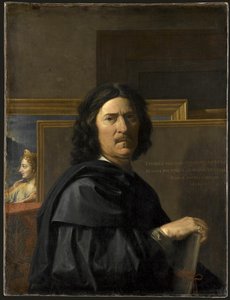
Nicolas Poussin
1594 - 1665 , France
Quick Facts
- Artistic Movement Or Style: Baroque, Classicism
- Artists Or Movements Influenced By This Artist:
- Jacques-Louis David
- Paul Cézanne
- Artists Who Influenced This Artist:
- Raphael
- Titian
- Date Of Birth: 1594
- Date Of Death: 1665
- Full Name: Nicolas Poussin
- Nationality: French
- Notable Artworks:
- The Death of Germanicus
- Seven Sacraments Series
- A Roman Road
- Orion Blinded
- The Seasons
- Place Of Birth: Le Havre, France

