

 Preview
 Send
Send Share
Share
 Details

 Download
 Similars
 X-Ray
X-Ray Diaporama
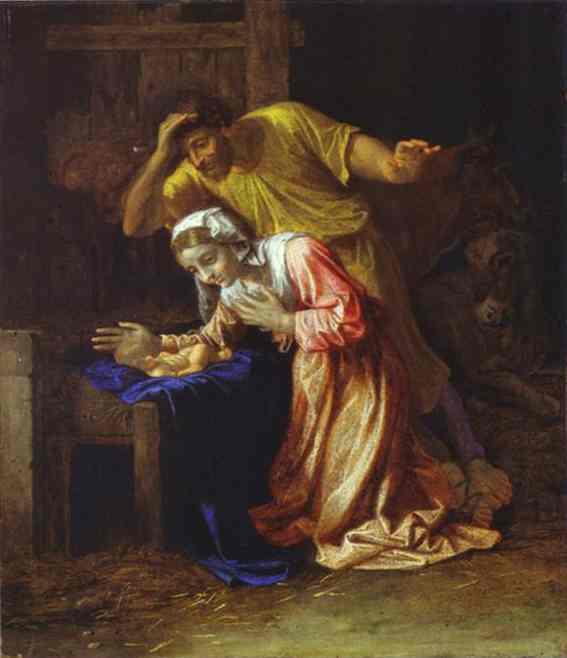
The nativity


 Read More
Purchase a high-resolution, enhanced digital image, far superior to the online preview.
Each file is meticulously prepared by our in-house specialists using advanced tools and expert manual retouching. We ensure every image has exceptional clarity, precise color accuracy, and fine detail.
The final file is delivered via email within 72 hours, optimized for immediate use in professional, editorial, and print environments. This is the same quality trusted by top-tier design studios, publishers, and galleries.
Digital Image
Download a high-resolution file for personal display, printing, and creative projects. ( Buy Print Buy Hand Made Painting)
Included in Every Digital Image Order
Expert Digital Delivery, Guaranteed
When you choose ArtsDot.com, you're not just getting an image - you're receiving a professionally enhanced digital artwork, crafted with precision and backed by a satisfaction guarantee. Here's everything that comes with your order, automatically:

Fast Email Delivery
Your high-resolution digital image file will be emailed to you within 72 hours of ordering - ready for immediate use.

AI-Enhanced Digital File
Your artwork is professionally optimized using advanced AI tools and manual editing, ensuring maximum detail, clarity, and color accuracy.

Free Lifetime Re-Delivery
Accidentally deleted or lost your file? No worries - we'll resend it to you anytime, free of charge.

No Import Fees - Ever
Enjoy your artwork instantly with zero customs, duties, or delivery fees - digital downloads are always tax-free.

Color Accuracy Guarantee
We ensure your digital image reflects the original colors as closely as possible using professional tools and color management.

60-Day Satisfaction Guarantee
If you're not satisfied with your digital image, we'll revise it or refund 100% within 60 days - no questions asked.

100% Money-Back Guarantee
Not satisfied? Get a full refund within 60 days of receiving your digital file - no questions asked.

Bulk Order Discounts
Buy 3 images, save 10% - Buy 5, save 15% - Buy 10+, save 20%. Great for creative projects, galleries, and agencies.
Collectible Description
A Vision of Divine Grace: Poussin’s Sacred Masterpiece
In the quiet, luminous depths of Nicolas Poussin’s The Nativity, viewers are invited into a moment of profound spiritual stillness that transcends the boundaries of time. Completed around 1647, this work is far more than a mere biblical illustration; it is a carefully orchestrated symphony of light and shadow designed to evoke the very essence of faith. At its heart, the painting captures the tender intimacy of the Virgin Mary kneeling before the Christ Child, her posture reflecting a deep, contemplative humility. The scene is set within an earthy, outdoor environment where the rugged textures of the ground contrast beautifully with the ethereal glow surrounding the holy figures. As light dances across the faces of the observers and the soft drapery of their garments, Poussin guides our eyes through a landscape of devotion, making the miraculous feel both monumental and deeply personal.The Intersection of Roman Order and Baroque Drama
Poussin’s technical mastery lies in his ability to bridge the gap between the structured elegance of the Roman Renaissance and the emotive power of the Baroque era. Utilizing the alla prima technique—applying paint directly to the canvas without the traditional layer of underpainting—the artist achieved a breathtaking luminosity that gives the skin of the figures a lifelike, radiant quality. This approach allows for subtle gradations of color that breathe life into the composition. Furthermore, his sophisticated use of chiaroscuro creates dramatic contrasts, where deep, velvety shadows retreat to allow brilliant highlights to emerge, particularly around the central figures of the Nativity. For the collector or designer, this interplay of light and dark offers a dynamic visual weight that can anchor a room, providing a sense of classical grandeur and intellectual depth.A Legacy of Grandeur and Symbolic Depth
Beyond its immediate emotional impact, The Nativity serves as a window into the cultural ambitions of 17th-century France. Created during the transformative reign of Louis XIV, the painting embodies the era's fascination with theatricality and monumental scale. Every element, from the richly ornamented draperies to the carefully placed figures in the periphery, contributes to an overarching allegory of goodness triumphing over darkness. The presence of secondary figures and even the subtle inclusion of horses in the background adds layers of narrative complexity, suggesting a world that is both vast and interconnected by divine providence. To possess a reproduction of such a work is to bring a piece of history into one's space—a testament to an era where art was used to elevate the human spirit and reflect the prestige of a nation. This masterpiece remains an enduring inspiration for those who appreciate art that speaks to the soul through both its beauty and its profound, symbolic intellect.Related Artworks
Artist Biography
A Life Steeped in Classical Reverie
Nicolas Poussin, a name synonymous with the grandeur of French Baroque painting, was nonetheless a soul deeply rooted in Italian soil for much of his artistic life. Born in Le Havre, Normandy, in June 1594, his early years remain somewhat veiled in mystery, yet they undoubtedly laid the foundation for a career that would become pivotal in shaping the classical tradition within French art. Though he briefly studied in Paris during the early 1610s, absorbing influences from lesser-known artists of the time, it was his journey to Rome in 1624 that truly ignited his artistic destiny. This wasn’t merely a geographical relocation; it was an immersion into the heart of antiquity, a pilgrimage to the very source of inspiration that would define his aesthetic vision. Poussin's initial forays into painting were marked by a sensuous quality reminiscent of Venetian masters like Titian, yet even in these early works, a nascent sense of order and intellectual rigor began to emerge—a foreshadowing of the style he would so masterfully refine.
The Roman Years: Forging a Classical Ideal
Rome proved to be more than just a studio for Poussin; it became his intellectual crucible. He found himself amidst a vibrant circle of scholars, archaeologists, and fellow artists, notably Cassiano dal Pozzo, whose profound understanding of classical antiquity profoundly influenced the artist’s approach. Dal Pozzo's dedication to meticulously documenting ancient remains instilled in Poussin a deep respect for historical accuracy and a desire to imbue his paintings with a sense of timelessness. This period saw Poussin move away from the flamboyant exuberance of some of his contemporaries, instead embracing a style characterized by clarity, balance, and a deliberate emphasis on linear composition. He meticulously studied Raphael’s works, absorbing their harmonious arrangements and graceful forms, while simultaneously drawing inspiration from ancient sculptures and literary sources like Ovid's *Metamorphoses*. His paintings began to populate with figures drawn from classical history and mythology, rendered not as mere decorative elements but as embodiments of moral virtues and philosophical ideals.
Themes of History, Myth, and the Sacred
Poussin’s artistic output was remarkably diverse, yet consistently unified by his commitment to these core principles. He frequently depicted scenes from ancient history—the tragic fate of Germanicus, for example—imbued with a sense of stoic dignity and moral weight. His mythological paintings weren't simply retellings of familiar tales; they were explorations of human nature, often laden with allegorical meaning. The *Arcadia* series, particularly the iconic *Et in Arcadia ego*, became emblematic of his philosophical depth, prompting contemplation on mortality and the enduring power of memory. Beyond history and myth, Poussin also turned to religious subjects, most notably in *The Seven Sacraments*—a monumental undertaking that showcased both his theological understanding and compositional prowess. Even within these sacred scenes, however, he maintained a classical restraint, avoiding excessive emotionalism in favor of a serene and dignified presentation. Later in his career, expansive landscapes became increasingly prominent, blending realism with idealized forms to create vistas that evoked a sense of harmony and tranquility.
A Lasting Legacy: Shaping French Art
Despite spending the majority of his career abroad, Nicolas Poussin’s influence on French art was immense. He briefly returned to Paris in 1640 at the behest of Cardinal Richelieu, appointed as First Painter to the King, but found himself stifled by the demands and intrigues of court life. He soon returned to Rome, where he continued to paint until his death in 1665. His dedication to classical principles helped establish a standard for artistic training and practice within France, influencing generations of artists who followed. He became a leading figure in the Académie Royale de Peinture et de Sculpture, solidifying his position as a cornerstone of French Classicism. Artists like Jacques-Louis David and Paul Cézanne openly acknowledged their debt to Poussin’s rigorous approach and intellectual depth. His legacy extends far beyond mere stylistic imitation; it represents a commitment to order, clarity, and the enduring power of classical ideals—a testament to an artist who sought not simply to depict the world but to elevate it through the lens of reason and beauty.
- Notable Works: *The Death of Germanicus*, *The Seven Sacraments Series*, *A Roman Road*, *Orion Blinded Searching for the Sun*, *The Seasons*.
- Key Characteristics: Classical Composition, Linearity, Historical and Mythological Themes, Serene Landscapes.
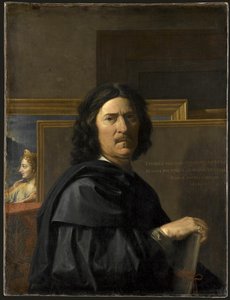
Nicolas Poussin
1594 - 1665 , France
Quick Facts
- Artistic Movement Or Style: Baroque, Classicism
- Artists Or Movements Influenced By This Artist:
- Jacques-Louis David
- Paul Cézanne
- Artists Who Influenced This Artist:
- Raphael
- Titian
- Date Of Birth: 1594
- Date Of Death: 1665
- Full Name: Nicolas Poussin
- Nationality: French
- Notable Artworks:
- The Death of Germanicus
- Seven Sacraments Series
- A Roman Road
- Orion Blinded
- The Seasons
- Place Of Birth: Le Havre, France

