 Preview
 Send
Send Share
Share
 Details

 Download
 Similars
 X-Ray
X-Ray Diaporama
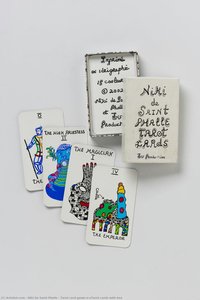
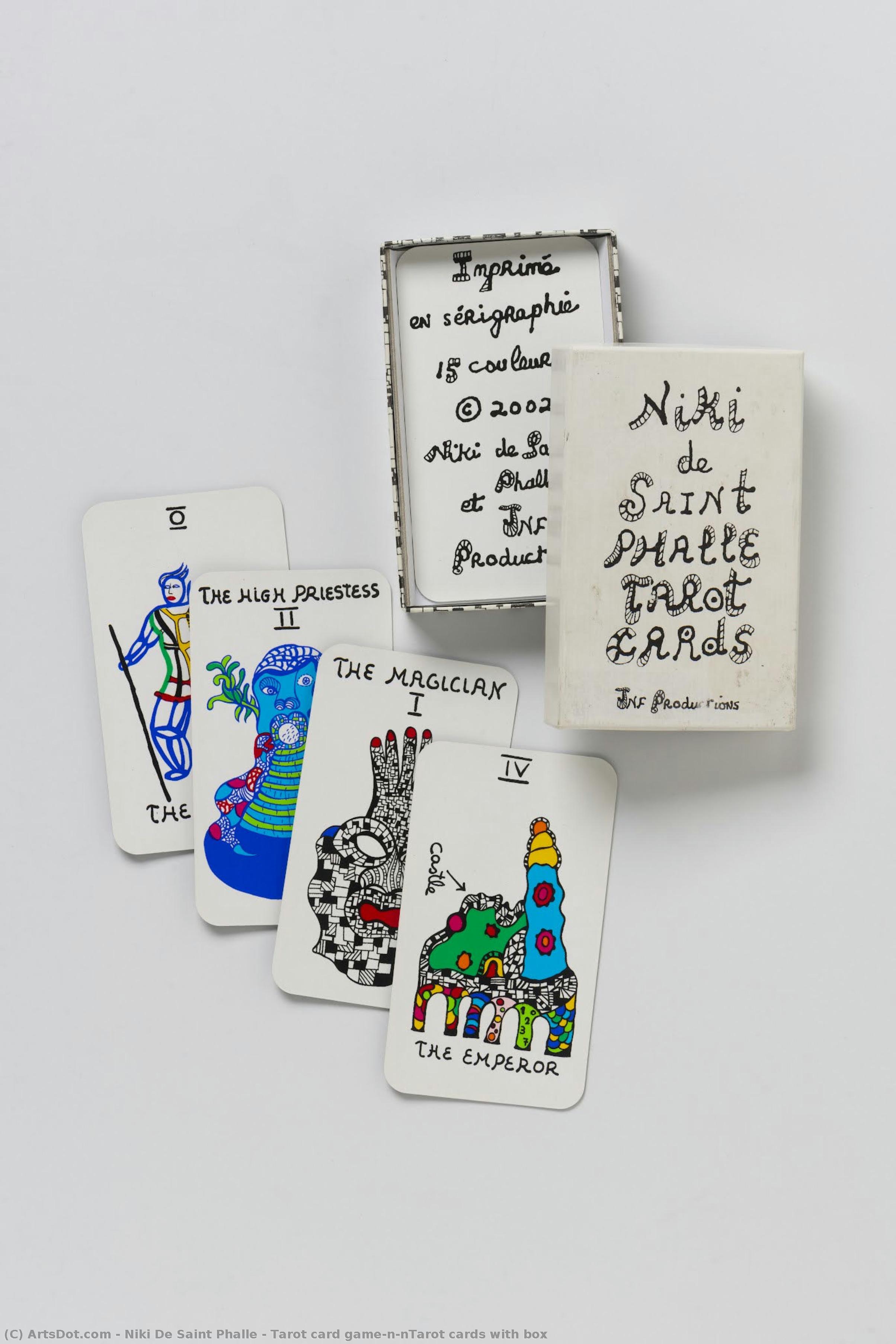
Tarot card game\n\nTarot cards with box
 Acrylic On Canvas
- WallArt
- Surrealist Art
 2002
2002 14.0 x 8.0 cm
 Landesmuseum Württemberg
 Read More
Giclée / Art Print
Museum-quality giclée or canvas print with fast production and flexible finish options. ( Buy Hand Made Painting Buy Image)




P118B $10

P118H $10

P118W $10

P438Z $10

P508JH $12

P508YH $12

P805H $10

P805Z $10

P919BZ $10

P919G $10

P919XJ $10

P959ZH $10

P968JZ $12

W106C $8

W218G $10

W218JH $8

W218Y $10

W307PJ $10

W316G $10

W316PJ $8

W316Y $10

W398PJ $8

W4111J $10

W500HY $15

W500JH $15

W692G $12

W849H $8

W940BG $15

W953PJ $8




Pick from our preset sizes that match the artwork's original proportions.

You may enter your own dimensions to fit a specific frame or space. If your selected size does not match the original image's proportions, we will either crop the artwork or extend the image with a mirrored or solid-fill edge. A digital mockup will be sent for your approval before production begins.
Please note that the on-screen preview does not reflect the actual cropping or extension. Only the mockup will accurately show the final composition.
While custom sizes are available, we recommend selecting a dimension from the predefined list to preserve the original proportions.
Worldwide Delivery () in 2 weeks instead of standard 4/5 weeks. (25 August)

Free Worldwide Express Shipping

High-Quality Linen Canvas

Full Shipping Insurance

Customs Tax Refund Guarantee

True Color Matching Guarantee

60-Day Return Policy (Defects Only)

100% Money-Back Guarantee

Bulk Discount Offer
 Glass option is only available in size under 110 CM

Tarot card game\n\nTarot cards with box
Giclée / Art Print
Reproduction Size
-


Total Price
$ 63
Collectible Description
A Celebration of Feminine Power: Exploring Niki de Saint Phalle’s Tarot Card Game
Niki de Saint Phalle's Tarot Card Game stands as a testament to her singular artistic vision—a bold fusion of Surrealism, Pop Art, and feminist ideals that continues to captivate audiences today. Created in 2002, this striking deck isn’t merely a collection of cards; it’s an immersive experience designed to provoke contemplation and celebrate the strength and resilience of women. Saint Phalle herself described her intention as “to create something beautiful and joyful,” reflecting the vibrant spirit that permeates every illustration and element of this remarkable artwork.The Artist's Vision: A Rebellion Against Convention
Born Catherine Marie-Agnès Fal de Saint Phalle in Neuilly-sur-Seine, France, in 1930, Saint Phalle defied societal expectations from a young age. Her rebellious streak began at her convent school where she famously painted the fig leaves of sculptures red—a defiant gesture against traditional artistic norms and an early indication of her unwavering commitment to challenging conventions. This spirit fueled her exploration of diverse mediums, including sculpture, painting, textiles, and ceramics, cementing her reputation as one of the most influential artists of her generation. Her work consistently confronts societal prejudices and champions marginalized voices, mirroring a lifelong fascination with social justice.A Surrealist Approach: Dreamlike Imagery and Symbolic Representation
Saint Phalle’s artistic style is undeniably rooted in Surrealism, drawing inspiration from the pioneering explorations of Sigmund Freud and André Breton. However, she skillfully blends Surrealist techniques—such as juxtaposition, dreamlike imagery, and irrational associations—with elements of Pop Art's vibrant color palettes and graphic simplicity. The Tarot cards themselves embody this duality; each illustration bursts with bold hues and stylized forms that simultaneously convey a sense of fantasy and immediacy. Saint Phalle’s meticulous attention to detail ensures that every visual element contributes to the overarching narrative, inviting viewers to delve into layers of meaning beyond the surface appearance.Technique and Materials: Bold Printing and Textured Paper
The Tarot Card Game exemplifies Saint Phalle's mastery of printmaking techniques. Utilizing a lithographic process—specifically etching—she achieved exceptional tonal range and textural depth, resulting in prints that possess an unparalleled luminosity and tactile quality. The cards are printed on heavyweight paper stock, chosen to enhance the visual impact of the artwork and provide a durable surface for handling. Saint Phalle’s dedication to craftsmanship underscores her belief that art should engage all senses—sight being paramount—creating a truly immersive experience for the observer.Symbolism: Feminine Archetypes and Universal Themes
Each Tarot card depicts iconic feminine archetypes—the Empress, Venus, Diana—representing nurturing femininity, sensual beauty, and divine grace. These figures are presented in dynamic poses that convey strength, confidence, and independence, challenging stereotypical portrayals of women throughout history. Beyond these specific symbols, Saint Phalle’s artwork explores broader themes of transformation, resilience, and the pursuit of personal fulfillment. The Tarot cards serve as a visual metaphor for navigating life's complexities with courage and optimism—a message that resonates powerfully across cultures and generations.Concluding Reflection: An Enduring Legacy
Niki de Saint Phalle’s Tarot Card Game transcends mere decorative art; it stands as a profound statement about artistic freedom, feminist empowerment, and the transformative power of imagination. Its vibrant colors, stylized imagery, and meticulous craftsmanship continue to inspire artists and collectors alike—a testament to Saint Phalle's enduring legacy as one of the most visionary and rebellious figures in contemporary art.Related Artworks

Artist Biography
A Life Forged in Fire: The Bold Vision of Niki de Saint Phalle
Niki de Saint Phalle, born Catherine Marie-Agnès Fal de Saint Phalle on October 29, 1930, in Neuilly-sur-Seine, France, was an artist who defied categorization. Her life, marked by both privilege and trauma, fueled a creative spirit that exploded onto the art world with vibrant color, audacious forms, and a fiercely independent vision. The early years of her existence were characterized by a shifting landscape; the financial stability of her family crumbled under the weight of the Great Depression, an experience that undoubtedly instilled within her a sense of instability and perhaps, a rebellious streak. Educated in both France and the United States – including a period in New York City – Saint Phalle demonstrated early on a refusal to conform, famously painting the fig leaves of sculptures red at her convent school, a gesture hinting at the iconoclasm that would define her career. Initially drawn to modeling, she soon discovered her true calling lay not in being *seen*, but in *creating* worlds—worlds brimming with joy, sensuality, and unapologetic femininity. A pivotal moment arrived during a stay in Mallorca, Spain, where exposure to the fantastical architecture of Antoni Gaudí ignited within her a desire to build immersive environments, utilizing an astonishing array of materials.From Shooting Paintings to the Birth of the *Nanas*
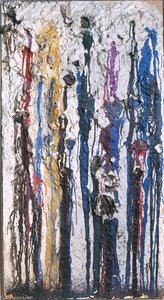
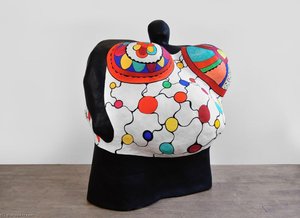
The early 1960s witnessed Saint Phalle’s emergence as a significant force in contemporary art. Her groundbreaking “shooting paintings” – or *Tirs* – were not merely canvases adorned with paint, but performances of destruction and creation intertwined. She constructed assemblages incorporating plaster, fabric, and paint-filled bags, then dramatically shot at them with firearms, allowing the impact to dictate the final composition. These explosive acts challenged conventional artistic processes, injecting an element of chance and raw energy into her work. This radical approach quickly aligned her with the *Nouveau Réalisme* movement, a group that included luminaries like Jean Tinguely, Arman, and Yves Klein, all exploring the relationship between art and everyday life. However, it was the creation of the *Nanas* in the mid-1960s that truly cemented Saint Phalle’s artistic identity. These monumental sculptures – voluptuous, brightly colored female figures – were a joyous celebration of womanhood, rejecting traditional representations and embracing sensuality, power, and playful abandon. The *Nanas* weren't simply depictions of women; they *were* embodiments of feminine energy, unapologetically occupying space and demanding attention. A prime example of this period’s ambition is HON (1966), a collaborative project with Tinguely and Per Olof Ultvedt—a kinetic sculpture that was both whimsical and imposing, showcasing the scale and complexity Saint Phalle embraced.The Tarot Garden: A Monument to Imagination
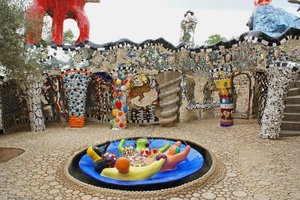
While the *Nanas* remained a recurring motif throughout her career, Niki de Saint Phalle’s artistic vision extended far beyond sculpture. In 1979, she embarked on what would become her most ambitious and enduring project: the *Tarot Garden* in Tuscany, Italy. This sprawling sculpture garden is a fantastical realm inspired by the imagery of the tarot deck, featuring twenty-two monumental structures representing each major arcana. Each sculpture is a unique architectural marvel, constructed from concrete, mosaic tiles, mirrors, and found objects, creating an immersive environment that invites exploration and contemplation. The Tarot Garden wasn’t merely a collection of sculptures; it was a total work of art—a physical manifestation of Saint Phalle's imagination, blending mythology, symbolism, and personal experience. Throughout her career, collaboration played a vital role in Saint Phalle’s artistic process. She worked alongside artists like Jasper Johns, Robert Rauschenberg, Larry Rivers, and architect Mario Botta, enriching her practice through diverse perspectives. Her relationship with Jean Tinguely was particularly significant—a partnership that spanned both their personal lives and creative endeavors, resulting in numerous joint projects characterized by kinetic energy and playful invention.A Legacy of Empowerment and Exuberance
Niki de Saint Phalle’s impact on the art world extends far beyond her individual creations. She is rightfully recognized as a pioneering figure in feminist art history, challenging patriarchal norms and celebrating female strength and sensuality at a time when such expressions were often marginalized. Her monumental sculptures broke barriers in a field historically dominated by men, paving the way for future generations of women artists. Saint Phalle’s distinctive style—a vibrant fusion of Surrealism, Pop Art, and outsider art—created a unique visual language that resonated with audiences worldwide. She wasn't afraid to embrace bold colors, playful forms, and unconventional materials, resulting in works that are both visually stunning and emotionally engaging. Her art is an invitation to joy, a celebration of life’s complexities, and a testament to the power of imagination. Even as her later work explored themes of mythology, religion, and social commentary, it retained the exuberant spirit that defined her entire career. Niki de Saint Phalle passed away on May 21, 2002, leaving behind a rich artistic legacy that continues to inspire artists and captivate viewers with its originality, passion, and unwavering commitment to self-expression. She remains a beacon of creativity, reminding us all to embrace our inner child and dare to dream boldly.Enduring Influence
- Saint Phalle’s work continues to be exhibited in museums and galleries around the world, ensuring her legacy endures for future generations.
- The Tarot Garden remains a popular tourist destination, attracting visitors from across the globe who come to experience its magical atmosphere.
- Her influence can be seen in the work of contemporary artists who explore themes of feminism, body positivity, and environmentalism.
- A recent biographical film, “Niki” (2024), directed by Céline Sallette, has brought renewed attention to her life and art.
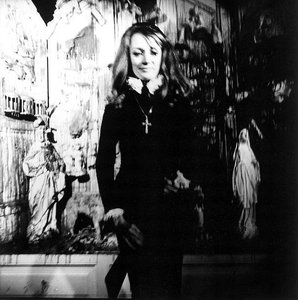
Niki de Saint Phalle
1930 - 2002 , France
Quick Facts
- Artistic Movement Or Style: Nouveau Réalisme, Surrealism
- Artists Or Movements Influenced By This Artist: ['Feminist art']
- Artists Who Influenced This Artist: ['Antoni Gaudí']
- Date Of Birth: October 29, 1930
- Date Of Death: May 21, 2002
- Full Name: Niki de Saint Phalle
- Nationality: French-American
- Notable Artworks:
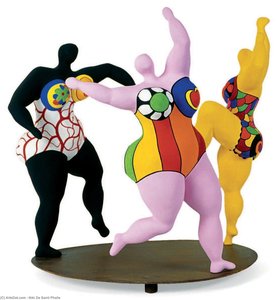
- Les trois graces
- Nana
- Shooting picture
- Tarot Garden
- HON
- Place Of Birth: Neuilly-sur-Seine, France
Related Articles

Goya's Masterpieces: Explore 25 Iconic Paintings & Art Prints | ArtsDot
Delve into the world of Francisco Goya with ArtsDot. Explore 25 iconic paintings – from 'The Third of May' to his haunting Black Paintings. Discover the stories, techniques & emotions behind these Spanish masterpieces. Find museum-quality art reproductions for your home at ArtsDot.com!

About Us
Discover our story! We bring world-class art into your life through expert curation, personalized creations, and free previews. Trusted by individuals and businesses since 2000.
Cultivating Paradise: A Historical & Artistic Exploration of Gardens in Painting
Explore the rich history of gardens in painting! Discover masterpieces from Renaissance to Impressionism & beyond. Learn about symbolism, artists like Monet & Klimt, and find your perfect artwork at ArtsDot.
Giorgio de Chirico: Metaphysical Realities & the Poetics of Absence
Explore the captivating world of Giorgio de Chirico and his groundbreaking Metaphysical painting movement. Discover the philosophical depths & surreal imagery that influenced generations of artists. Learn more at ArtsDot.
Discover the Divine: Inspiring Saint Anthony Artworks to Elevate Your Home Decor
Transform your home with the profound beauty of Saint Anthony artworks. Explore exquisite Baroque reproductions by Murillo and Zurbarán, hand-painted on 100% cotton canvas to bring divine serenity and timeless elegance to your interior design.