 Preview
 Send
Send Share
Share
 Details

 Download
 Similars
 X-Ray
X-Ray Diaporama
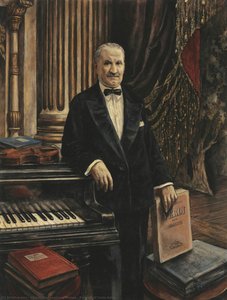
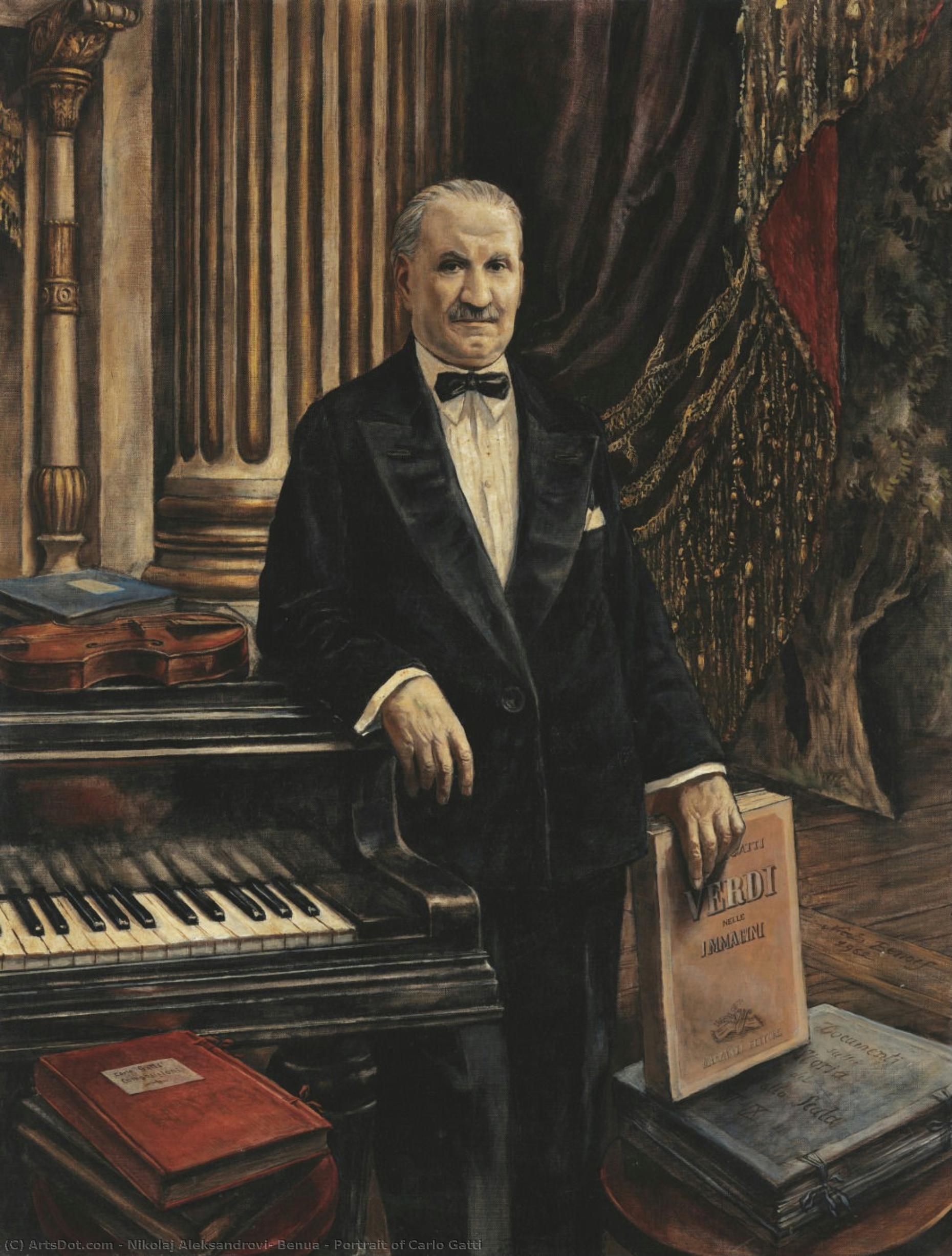
Portrait of Carlo Gatti
 1962
1962 131.0 x 100.0 cm
 Ca’ Granda – Ospedale Maggiore Policlinico
 Read More
Giclée / Art Print
Museum-quality giclée or canvas print with fast production and flexible finish options. ( Buy Hand Made Painting Buy Image)




































Pick from our preset sizes that match the artwork's original proportions.

You may enter your own dimensions to fit a specific frame or space. If your selected size does not match the original image's proportions, we will either crop the artwork or extend the image with a mirrored or solid-fill edge. A digital mockup will be sent for your approval before production begins.
Please note that the on-screen preview does not reflect the actual cropping or extension. Only the mockup will accurately show the final composition.
While custom sizes are available, we recommend selecting a dimension from the predefined list to preserve the original proportions.
Worldwide Delivery () in 2 weeks instead of standard 4/5 weeks. (4 September)

Free Worldwide Express Shipping

High-Quality Linen Canvas

Full Shipping Insurance

Customs Tax Refund Guarantee

True Color Matching Guarantee

60-Day Return Policy (Defects Only)

100% Money-Back Guarantee

Bulk Discount Offer
 Glass option is only available in size under 110 CM

Portrait of Carlo Gatti
Giclée / Art Print
Reproduction Size
-


Total Price
$ 63
Related Artworks








Artist Biography
A Legacy of Light and Stage: The Life of Nikolai Aleksandrovich Benois
In the grand, gilded annals of twentieth-century theatrical history, few names evoke the shimmering opulence of the stage quite like Nikolai Aleksandrovich Benois. Born in 1901 amidst the cultural splendor of Oranienbaum, near Saint Petersburg, Benois was a child of artistic aristocracy. His very existence was woven into the fabric of the Russian avant-garde; he was the son of the legendary Alexandre Benois, a titan of the Mir Iskusstva (World of Art) movement. Growing up in a household where aesthetic discourse was as natural as breathing, Nikolai did not merely learn art—he inherited a vision. Under his father’s meticulous tutelage, he mastered the delicate nuances of watercolor and drawing, developing a technical precision that would later allow him to breathe life into the ephemeral worlds of opera and ballet.
The early years of Benois's career were defined by a profound connection to the imperial traditions of his homeland. Before the tides of history forced him into exile, he worked within the hallowed halls of the Mariinsky Theatre, the jewel of the Russian imperial stage. It was here, amidst the heavy velvets and classical grandeur of the opera house, that he honed his ability to translate historical period detail into visual spectacle. However, the winds of revolution and political upheaval eventually beckoned him toward a broader European horizon. In 1924, Benois embarked on a transformative journey to Paris, a move that would pivot his career from the classical traditions of Russia to the experimental heart of the French ballet scene.
The Avant-Garde Spirit and the Parisian Sojourn
Paris in the 1920s was a crucible of creativity, and Benois found himself at the epicenter of this artistic explosion. His arrival coincided with a period where the boundaries between fine art and performance were being radically redrawn. Working as a resident designer for the Franco-Russian ballet company La Chauve-Souris, he collaborated with the captivating dancer Ida Rubinstein, creating visual landscapes that were as much works of modern art as they were theatrical backdrops. This era was marked by his involvement with the legendary Sergei Diaghilev and the Ballets Russes, a collaboration that placed him at the forefront of the most influential movement in dance history.
During these years, Benois’s style began to reflect a sophisticated synthesis of his Russian roots and French modernism. He possessed a rare ability to utilize gouache and pastel to project illusionistic atmospheres—whether it was an orientalist dreamscape for an opera or a delicate, ethereal setting for a ballet. His work was never merely decorative; it was narrative. Every brushstroke in his stage designs served to deepen the emotional resonance of the music and the movement, creating a holistic sensory experience that captivated audiences across Europe.
The Milanese Master and Eternal Influence
As his career matured, Benois eventually found a permanent home in Italy, settling in Milan where he would leave an indelible mark on the legendary La Scala. For over three decades, he served as a principal scenographer and costume designer, becoming a cornerstone of the theatre's visual identity. His work at La Scala was characterized by a masterful command of period design, often collaborating with visionary directors like Luchino Visconti to create productions that were both historically evocative and visually breathtaking. His ability to navigate the complexities of large-scale opera sets while maintaining an intimate, painterly touch made him a peerless figure in the industry.
The historical significance of Nikolai Aleksandrovich Benois lies in his role as a bridge between eras. He carried the torch of nineteenth-century classical beauty into the fragmented, experimental landscape of the twentieth century. His achievements can be summarized through several key pillars of his artistry:
- Mastery of Scenography: The ability to transform empty stages into immersive, historically rich environments through precise use of color and light.
- Cultural Synthesis: A unique artistic language that blended Russian imperial grandeur with the fluid experimentation of the Parisian avant-garde.
- Collaborative Brilliance: His profound impact on the visual identity of world-renowned institutions such as La Scala, the Royal Theatre in Rome, and the Ballets Russes.
- Technical Versatility: A command over diverse media, from delicate watercolors and sketches to the monumental scale of opera set painting.
When Benois passed away in 1988, he left behind a legacy that continues to inspire designers and historians alike. He remains a symbol of an era when the stage was a canvas for the world's most daring dreams, reminding us that true art is not merely seen, but felt through the magic of atmosphere and design.
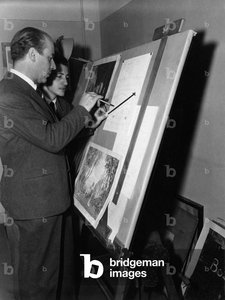
nikolaj aleksandrovič benua
1901 - 1988 , Russia
Quick Facts
- Artistic Movement Or Style: Stage Design
- Artists Or Movements Influenced By This Artist: ['World of Art']
- Artists Who Influenced This Artist: ['Alexandre Benois']
- Date Of Birth: May 2, 1901
- Date Of Death: March 31, 1988
- Full Name: Nikolaj Aleksandrovic Benois
- Nationality: Russian
- Notable Artworks:
- Portrait of Carlo Gatti
- Khovanshchina
- Haymaking
- Place Of Birth: Saint Petersburg, Russia