 Preview
 Send
Send Share
Share
 Details

 Download
 Similars
 X-Ray
X-Ray Diaporama
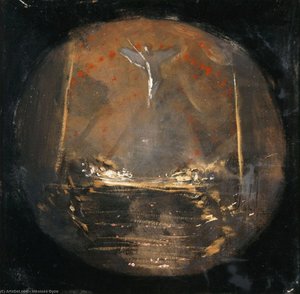
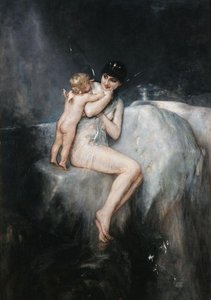
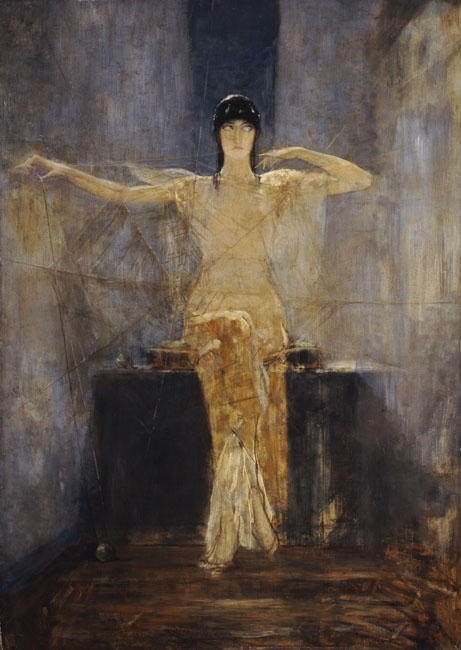
The spider


 Read More
Hand Made Oil Reproduction
Hand-painted oil on canvas in your size and frame, made to order by our artists. ( Buy Print Buy Image)




































Pick from our preset sizes that match the artwork's original proportions.

You may enter your own dimensions to fit a specific frame or space. If your selected size does not match the original image's proportions, we will either crop the artwork or extend the painting with additional hand-painted elements. A digital mockup will be sent for your approval before production begins.
Please note that the on-screen preview does not reflect the actual cropping or extension. Only the mockup will accurately show the final composition.
While custom sizes are available, we recommend selecting a dimension from the predefined list to preserve the original proportions.
After order, ArtsDot.com team will email client for instructions and provide a mockup preview
Worldwide Delivery () in 3/4 weeks instead of standard 5 weeks. (16 August). No compromise on quality.

Free Worldwide Express Shipping

High-Quality Linen Canvas

Full Shipping Insurance

Customs Tax Refund Guarantee

True Color Matching Guarantee

60-Day Return Policy (Defects Only)

100% Money-Back Guarantee

Bulk Discount Offer
 Glass option is only available in size under 110 CM

The spider
Reproduction Medium
Reproduction Size
-


Total Price
$ 263
Related Artworks
Artist Biography
A Life Rooted in Tinos: The Early Years and Artistic Formation of Nikolaos Gyzis
Nikolaos Gyzis emerged from the sun-drenched island of Tinos, Greece, in 1842, a place steeped in artistic tradition that would subtly yet profoundly shape his sensibilities. Born in the village of Sklavochori, young Nikolaos absorbed the visual language of his surroundings – the stark beauty of the Cycladic landscape, the vibrant folk culture, and the enduring presence of religious iconography. This early immersion laid the groundwork for a career that would bridge academic realism with an increasingly impressionistic sensibility. The family’s relocation to Athens in 1850 proved pivotal, opening doors to formal artistic training previously unavailable on Tinos. He began his studies at the School of Fine Arts in 1854, initially as an auditor, eagerly absorbing knowledge before officially enrolling and benefiting from the tutelage of Philippos Margaritis, Agathangelos Triantafyllou, and others who instilled in him a solid foundation in draftsmanship and composition. However, it was a scholarship awarded by the Evangelistria Foundation of Tinos in 1865 that truly propelled his artistic journey, enabling him to pursue advanced studies at the prestigious Academy of Fine Arts in Munich – a city that would become both his adopted home and the crucible for his mature style.Munich and the Shaping of a “School”
The move to Munich marked a turning point. Gyzis quickly integrated into the vibrant German artistic milieu, studying under Hermann Anschutz and Alexander von Wagner before joining the class of Karl von Piloty. This period was crucial in his development, exposing him to new techniques and aesthetic philosophies. He soon became a leading figure within what came to be known as the “Munich School,” a significant 19th-century Greek art movement characterized by its commitment to academic realism blended with genre painting – scenes from everyday life imbued with narrative depth. This school wasn’t merely a stylistic designation; it represented a conscious effort to forge a distinct artistic identity for Greece, one that acknowledged both its classical heritage and the influence of contemporary European trends, particularly those emanating from Bavaria due to historical ties between the two nations. A close friendship and collaborative spirit flourished with fellow Greek artist Nikephoros Lytras, who also studied in Munich. Their shared experiences and mutual encouragement fostered a dynamic exchange of ideas. Early on, Gyzis focused intently on genre painting, depicting scenes inspired by rural Greece, capturing moments of quiet dignity and everyday toil. A journey to the Middle East with Lytras in 1873 broadened his artistic horizons, introducing him to new light conditions, exotic subjects, and a richer palette that would subtly infuse his later work with an orientalist flair.Masterpieces and Evolving Style
Nikolaos Gyzis’s reputation solidified with works like Eros and the Painter (1879), arguably his most celebrated painting. This captivating scene, depicting a painter utterly captivated by Eros – the god of love – became an allegorical statement on the power of inspiration itself. It showcased his mastery of detail, his ability to create psychologically compelling figures, and his burgeoning talent for narrative storytelling. News of Victory (1871), painted in response to the Franco-Prussian War, demonstrated his willingness to engage with contemporary events, transforming a historical moment into a poignant reflection on human emotion. However, it was perhaps After the Destruction of Psara (circa 1896-1898) that revealed the full depth of his artistic and emotional range. This powerful work commemorated the tragic massacre on the island of Psara during the Greek War of Independence, a deeply resonant event in Greek history. The painting is not merely a depiction of devastation; it’s an elegy for lost lives and shattered hopes, rendered with a haunting beauty that transcends mere historical documentation. Towards the end of his life, Gyzis experienced a shift towards religious themes, exemplified by Triumph of Religion. Throughout his career, his style evolved from meticulous realism to more impressionistic compositions, characterized by looser brushwork and a greater emphasis on capturing fleeting moments of light and atmosphere.Professor, Legacy, and Enduring Cultural Impact
In 1886, Gyzis achieved another milestone: he was appointed professor at the Academy of Fine Arts in Munich. For years, he generously shared his knowledge and expertise with a new generation of artists, including Ernst Oppler, Fritz Osswald, Anna May-Rychter, and Stefan Popescu, shaping their artistic development and perpetuating the traditions of the Munich School. He received numerous accolades throughout his career, including gold medals at international exhibitions in Munich and Madrid, and served on critical committees for prestigious art events. Nikolaos Gyzis played a pivotal role in defining Greek art during the 19th century, establishing a distinct national identity while simultaneously engaging with broader European artistic currents. His cultural impact extends beyond the realm of painting; his iconic work The Secret School was featured on the reverse of the Greek 200 drachmas banknote (1996-2001), and the Athenian neighborhood Gyzi is named in his honor – a testament to his enduring legacy. Today, his works are exhibited in museums and private collections across Greece, Germany, and beyond, ensuring that his artistic vision continues to inspire and captivate audiences worldwide.Key Influences and Artistic Significance
The influences on Gyzis were multifaceted. The rich artistic traditions of Tinos, the academic rigor of the Athens School of Fine Arts, and the vibrant artistic environment of Munich all contributed to his unique style. His major themes encompassed genre painting, orientalist scenes, historical events, religious allegory, and the power of inspiration. Key characteristics of his artistic style include an evolution from detailed realism to impressionistic compositions, meticulous technique, vibrant colors, and emotional depth. Historically, Gyzis stands as a leading figure in the Munich School, bridging German and Greek artistic traditions and shaping a distinct national identity for Greece. His art remains profoundly relevant today, offering not only a glimpse into 19th-century life but also a timeless exploration of human emotion, cultural identity, and the enduring power of artistic expression. His paintings are windows into a world both familiar and distant, inviting us to contemplate the complexities of history, the beauty of everyday moments, and the transformative potential of art itself.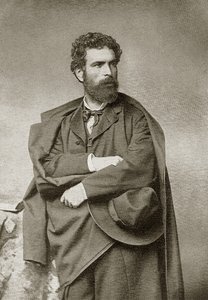
Nikolaos Gyzis
1842 - 1901 , Greece
Quick Facts
- Artistic Movement Or Style: Munich School, Impressionism
- Artists Or Movements Influenced By This Artist: ['Munich School artists']
- Artists Who Influenced This Artist:
- Hermann Anschutz
- Karl von Piloty
- Date Of Birth: March 1, 1842
- Date Of Death: January 4, 1901
- Full Name: Nikolaos Gyzis
- Nationality: Greek
- Notable Artworks:
- Eros and the Painter
- News of Victory
- After Psara's Destruction
- Place Of Birth: Tinos, Greece