

 Preview
 Send
Send Share
Share
 Details

 Download
 Similars
 X-Ray
X-Ray Diaporama
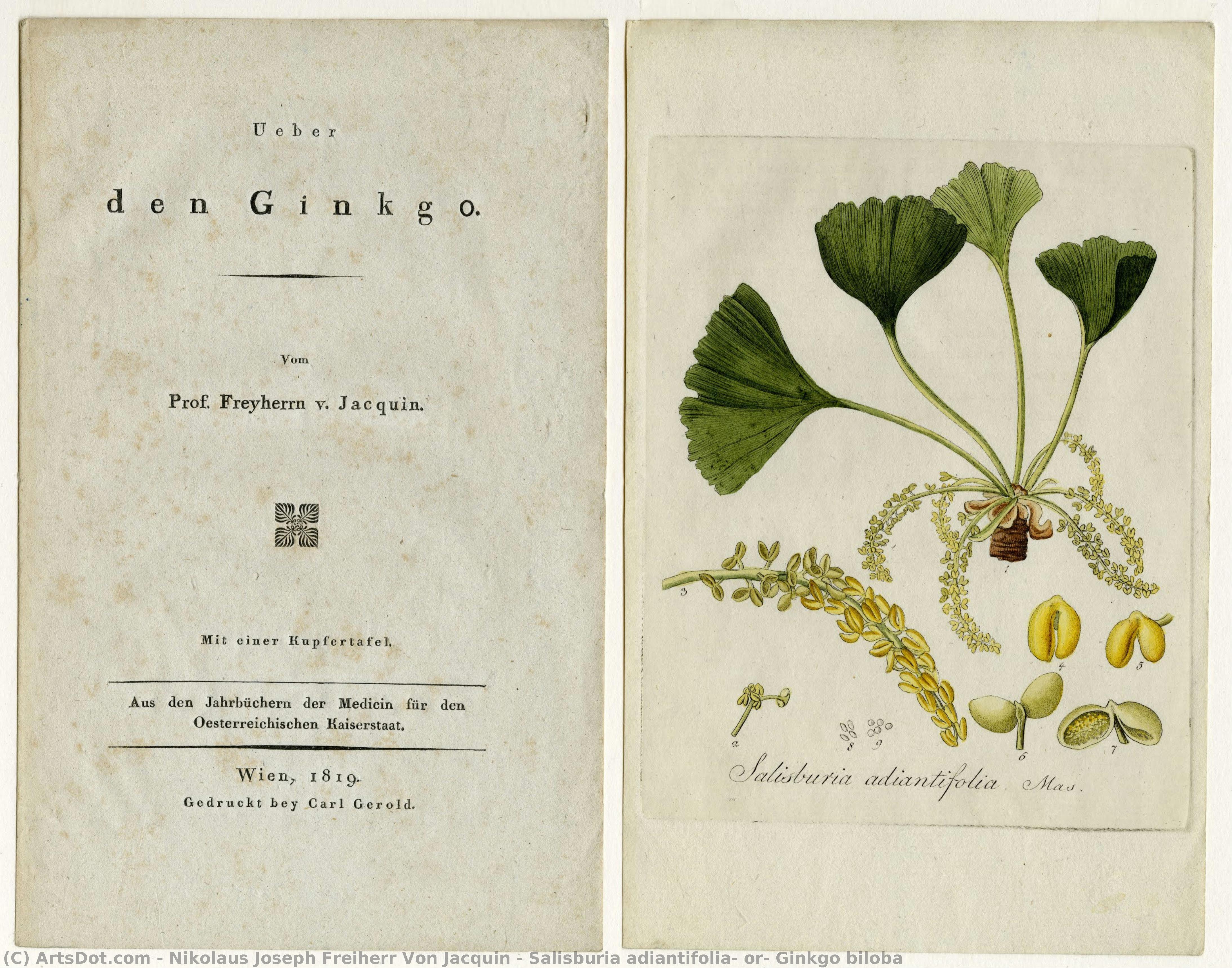
Salisburia adiantifolia, or, Ginkgo biloba
 Print
Print- WallArt
- Botanical Illustration
 1819
1819- 19th Century
 22.0 x 13.0 cm
 The Morton Arboretum
 Read More
Purchase a high-resolution, enhanced digital image, far superior to the online preview.
Each file is meticulously prepared by our in-house specialists using advanced tools and expert manual retouching. We ensure every image has exceptional clarity, precise color accuracy, and fine detail.
The final file is delivered via email within 72 hours, optimized for immediate use in professional, editorial, and print environments. This is the same quality trusted by top-tier design studios, publishers, and galleries.
Digital Image
Download a high-resolution file for personal display, printing, and creative projects. ( Buy Print Buy Hand Made Painting)
Included in Every Digital Image Order
Expert Digital Delivery, Guaranteed
When you choose ArtsDot.com, you're not just getting an image - you're receiving a professionally enhanced digital artwork, crafted with precision and backed by a satisfaction guarantee. Here's everything that comes with your order, automatically:

Fast Email Delivery
Your high-resolution digital image file will be emailed to you within 72 hours of ordering - ready for immediate use.

AI-Enhanced Digital File
Your artwork is professionally optimized using advanced AI tools and manual editing, ensuring maximum detail, clarity, and color accuracy.

Free Lifetime Re-Delivery
Accidentally deleted or lost your file? No worries - we'll resend it to you anytime, free of charge.

No Import Fees - Ever
Enjoy your artwork instantly with zero customs, duties, or delivery fees - digital downloads are always tax-free.

Color Accuracy Guarantee
We ensure your digital image reflects the original colors as closely as possible using professional tools and color management.

60-Day Satisfaction Guarantee
If you're not satisfied with your digital image, we'll revise it or refund 100% within 60 days - no questions asked.

100% Money-Back Guarantee
Not satisfied? Get a full refund within 60 days of receiving your digital file - no questions asked.

Bulk Order Discounts
Buy 3 images, save 10% - Buy 5, save 15% - Buy 10+, save 20%. Great for creative projects, galleries, and agencies.
A Botanical Legacy Captured in Ink
In the delicate dance of line and pigment, few works capture the intersection of scientific rigor and aesthetic grace as profoundly as Salisburia adiantifolia, or, Ginkgo biloba. This exquisite botanical print, dating back to 1819, serves as a window into an era when the pursuit of natural knowledge was inseparable from the artistry of observation. The piece presents the legendary Ginkgo tree—a "living fossil" that has endured through geological epochs—with a precision that honors its unique morphology. Through meticulous depictions of fan-shaped leaves and detailed studies of seeds and pods, the work transcends mere documentation, becoming a poetic meditation on the resilience and intricate beauty of the natural world.
The composition is anchored by the masterful hand of Nikolaus Joseph Freiherr von Jacquin, a name synonymous with the golden age of botanical exploration. The illustration breathes with the spirit of 19th-century Viennese scholarship, as evidenced by the elegant typography that references the medical annals of the Austrian region. Every stroke of the engraver's tool serves to highlight the rhythmic patterns of the foliage and the structural complexity of the reproductive elements. This is not merely a scientific diagram; it is a curated visual narrative that invites the viewer to trace the lifecycle of a species that has witnessed the rise and fall of civilizations.
The Artistry of Scientific Precision
Technically, this work exemplifies the pinnacle of early 19th-century lithographic or copperplate printing techniques. The artist employs a sophisticated interplay of light and shadow to bestow a three-dimensional quality upon the flat surface of the paper. The subtle gradations in tone allow the textures of the Ginkgo leaves—their delicate veins and smooth margins—to feel almost tactile, as if one could reach out and touch the cool, organic surface. This level of detail was essential for the academic purpose of the work, yet it achieves a decorative elegance that is universally captivating.
For the discerning collector or interior designer, this piece offers a timeless sophistication. Its muted, vintage palette and classical structure make it an ideal centerpiece for a curated gallery wall, a scholarly study, or a refined living space. The historical weight of the 1819 publication date adds a layer of prestige, providing a sense of continuity and intellectual depth to any environment. Whether framed in a minimalist modern setting to highlight its graphic clarity or paired with ornate period frames to enhance its antique charm, this reproduction brings the quiet majesty of the natural sciences into the contemporary home.
Symbolism and Emotional Resonance
Beyond its botanical accuracy, the Ginkgo biloba carries profound symbolic weight. Often associated with longevity, endurance, and peace, the subject matter resonates on an emotional level with anyone who finds solace in the enduring cycles of nature. The presence of the seeds, depicted in various stages of development, serves as a poignant reminder of growth, potential, and the persistence of life. To possess such a work is to hold a fragment of history—a moment when human curiosity and artistic mastery converged to celebrate the wonders of the earth.
As an investment in art, this reproduction offers more than just visual appeal; it offers an invitation to slow down and observe. In an age of rapid digital consumption, the steady, deliberate beauty of Jacquin’s botanical study provides a much-needed anchor of tranquility. It is a piece that inspires wonder, encourages contemplation, and serves as a lasting tribute to the enduring elegance of the natural sciences.
Related Artworks


Artist Biography
Thomas Gainsborough: A Painter of Light and Life
Thomas Gainsborough, born in Sudbury, Suffolk, on May 14th, 1727, stands as a pivotal figure in the history of British art. More than just a portrait painter, he was a master of capturing the essence of his subjects – be they noblemen, ladies, or the very landscapes that defined his vision. His career spanned nearly six decades, witnessing and profoundly shaping the transition from Rococo elegance to the burgeoning Romanticism that would dominate the following century. Gainsborough’s legacy rests not only on his technical skill but also on his ability to infuse his paintings with a sense of immediacy, spontaneity, and an intimate understanding of human character.
His early life provided a foundation for his artistic pursuits. Apprenticed at thirteen to a London silversmith, Gainsborough’s initial training focused on craftsmanship rather than art. However, he quickly gravitated towards drawing and etching, finding mentorship with the influential French engraver Hubert Gravelot. Gravelot's connection to Jean-Antoine Watteau, a master of the Rococo style known for his *fête galante* scenes – elegant gatherings in idyllic landscapes – proved particularly formative. Gainsborough absorbed Watteau’s emphasis on atmosphere, delicate brushwork, and the portrayal of fleeting moments of beauty, though he would ultimately forge his own distinctive path.
The Rise to Prominence: Portraits and Landscapes
Gainsborough's career began with portraiture, primarily serving the gentry of Suffolk. These early works established his reputation for capturing likenesses with remarkable accuracy and a subtle awareness of personality. He quickly gained recognition for his ability to render texture – from the velvet of a nobleman’s coat to the sheen of a lady’s hair – with astonishing detail. However, Gainsborough always maintained a deep affection for landscape painting, a passion rooted in his childhood spent amidst the rolling hills and meadows of Suffolk. This dual inclination proved crucial to his artistic development.
Around 1759, seeking greater opportunities and influenced by the fashionable spa town of Bath, Gainsborough moved south. Bath became a hub for portraiture, attracting wealthy patrons eager to immortalize themselves in oils. He quickly established himself as a leading artist, capturing the elegance and sophistication of the era’s elite. His portraits were distinguished not only by their technical brilliance but also by their ability to convey a sense of liveliness and engagement – a departure from the stiff formality often associated with court painters. Simultaneously, he began producing landscape works that showcased his growing mastery of light, color, and composition.
Technique and Style: A Feathered Brushstroke
Gainsborough’s distinctive style is immediately recognizable. His mature work is characterized by a remarkably loose and feathery brushstroke – a technique he consciously adopted to create an impressionistic effect, anticipating the developments of later artists. He employed a palette of muted colors, often relying on subtle gradations of tone rather than bold contrasts. This approach allowed him to capture the atmospheric qualities of light and shadow with remarkable sensitivity.
Unlike his rival, Sir Joshua Reynolds, who drew heavily upon classical art for inspiration, Gainsborough deliberately avoided references to Italian Renaissance models or antique motifs. Instead, he focused on depicting contemporary dress, manners, and landscapes – reflecting the spirit of his time. His portraits are remarkably naturalistic, eschewing idealized beauty in favor of a more honest portrayal of his subjects’ appearance and character. He was also a skilled draughtsman, producing numerous preparatory sketches that reveal his meticulous approach to composition and detail.
Royal Patronage and Artistic Discontent
Gainsborough's success attracted the attention of the royal family, particularly George III and Queen Charlotte. He became a favorite painter of the court, receiving commissions for portraits of members of the royal household. However, his relationship with the Royal Academy, founded in 1768, proved fraught with tension. Gainsborough initially embraced the new institution but later clashed with its leadership over the hanging of his paintings – a dispute that culminated in his withdrawal from the Academy in 1773.
Despite this artistic discord, Gainsborough continued to exhibit his work independently, organizing annual exhibitions at his studio in London. His final years were marked by a renewed appreciation for landscape painting and a growing desire to capture the beauty of the English countryside. He spent time touring the West Country with his nephew, Gainsborough Dupont, and exploring the Lake District with Samuel Kilderbee. Thomas Gainsborough died on August 2nd, 1788, leaving behind a remarkable body of work that continues to captivate audiences today.
Historical Significance and Legacy
Thomas Gainsborough’s influence on subsequent generations of British artists is undeniable. His emphasis on capturing the fleeting qualities of light and atmosphere paved the way for the Romantic movement, while his naturalistic approach to portraiture set a new standard for realism in the genre. His paintings are celebrated not only for their aesthetic beauty but also for their ability to evoke a sense of nostalgia for a bygone era – a testament to Gainsborough’s enduring appeal as one of Britain's greatest artists.
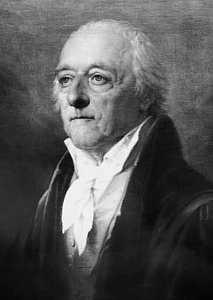
nikolaus joseph freiherr von jacquin
1727 - 1817 , Austria
Quick Facts
- Artistic Movement Or Style: Picturesque, Landscape
- Artists Or Movements Influenced By This Artist: ['Reynolds']
- Artists Who Influenced This Artist:
- Watteau
- Gravelot
- Date Of Birth: May 14, 1727
- Date Of Death: August 2, 1788
- Full Name: Thomas Gainsborough
- Nationality: British
- Notable Artworks:
- Mr and Mrs Andrews
- The Blue Boy
- Morning Walk
- Place Of Birth: Sudbury, Suffolk, UK

