 Preview
 Send
Send Share
Share
 Details

 Download
 Similars
 X-Ray
X-Ray Diaporama
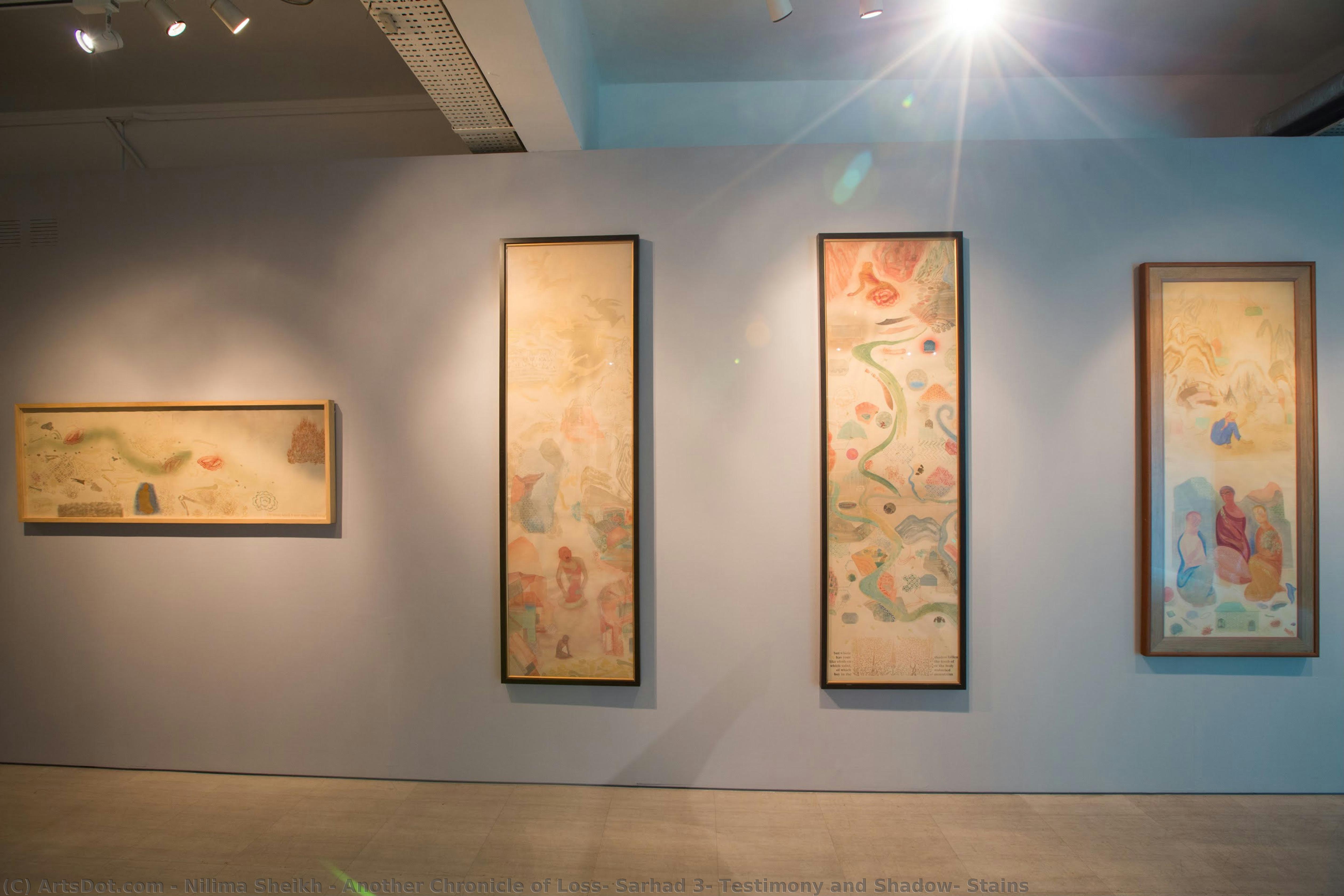
Another Chronicle of Loss, Sarhad 3, Testimony and Shadow, Stains

 Read More
Hand Made Oil Reproduction
Hand-painted oil on canvas in your size and frame, made to order by our artists. ( Buy Print Buy Image)




































Pick from our preset sizes that match the artwork's original proportions.

You may enter your own dimensions to fit a specific frame or space. If your selected size does not match the original image's proportions, we will either crop the artwork or extend the painting with additional hand-painted elements. A digital mockup will be sent for your approval before production begins.
Please note that the on-screen preview does not reflect the actual cropping or extension. Only the mockup will accurately show the final composition.
While custom sizes are available, we recommend selecting a dimension from the predefined list to preserve the original proportions.
After order, ArtsDot.com team will email client for instructions and provide a mockup preview
Worldwide Delivery () in 3/4 weeks instead of standard 5 weeks. (23 August). No compromise on quality.

Free Worldwide Express Shipping

High-Quality Linen Canvas

Full Shipping Insurance

Customs Tax Refund Guarantee

True Color Matching Guarantee

60-Day Return Policy (Defects Only)

100% Money-Back Guarantee

Bulk Discount Offer
 Glass option is only available in size under 110 CM

Another Chronicle of Loss, Sarhad 3, Testimony and Shadow, Stains
Reproduction Medium
Reproduction Size
-


Total Price
$ 263
Related Artworks










Artist Biography
A Tapestry of Memory and Displacement
Born in the vibrant heart of New Delhi on November 18, 1945, Nilima Sheikh has spent her career weaving together the fragmented threads of history, identity, and human movement. Her artistic journey is not merely a progression of technique but a profound exploration of what it means to belong to a land that is often defined by its borders and conflicts. While her early training in Western oil painting provided a foundational understanding of form and light, she found her true voice by looking backward into the rich, intricate traditions of India. By embracing the delicate language of miniature manuscript painting—specifically the pre-modern Rajput and Mughal court styles—she transformed the canvas into a space where the ancient and the contemporary coexist.
Sheikh’s practice is deeply rooted in the concept of the metanarrative, where personal memory intersects with large-scale historical shifts. Her work often functions as a visual chronicle of displacement, capturing the quiet ache of longing for a lost heritage and the turbulent realities of communal violence. Through her use of tempera, casein, and handmade papers, she creates surfaces that feel as much like historical artifacts as they do modern artworks. This meticulous approach allows her to layer meaning, much like the geological strata of the landscapes she depicts, creating a sense of depth that is both physical and emotional.
The Alchemy of Tradition and Feminism
The evolution of Sheikh’s aesthetic was significantly shaped by her intellectual and social environment. Her time studying history at Delhi University instilled in her a rigorous research-based methodology, leading her to treat every painting as an act of reclamation. She does not simply paint scenes; she reconstructs lost worlds using folktales, colonial-era manuals, and the writings of Sufi mystics and Kashmiri poets. This additive process is further enriched by her collaborations with traditional artisans, such as the Sanjhi stencil artists of Mathura, ensuring that her work remains a living bridge to sustainable cultural practices.
Parallel to this historical inquiry is a steadfast commitment to feminist perspectives. Influenced by the works of artists like Nancy Spero and Ana Mendieta, Sheikh explores the many facets of womanhood—not as static figures, but as social subjects navigating the realms of the sacred and the biographical. Her work often highlights the vulnerability and resilience of women caught in the crosshairs of nationalism and conflict. In her celebrated series, Each Night Put Kashmir in Your Dreams, she uses the format of double-sided canvas scrolls to map the cartography of pain and grief within the Kashmir valley, presenting a narrative that is as much about the body as it is about the territory.
Legacy and Global Resonance
Nilima Sheikh’s contributions to contemporary art have earned her significant international recognition, placing her work in dialogue with global discourses on migration and memory. Her ability to synthesize diverse visual lexicons—ranging from Persian and Turkish manuscripts to the landscape patterns of India—has made her a singular figure in the art world. Major milestones in her career include:
- The Art Institute of Chicago: Her 2014 debut museum exhibition, which brought her intricate explorations of history and identity to a wide international audience.
- documenta 14: Her participation in this prestigious exhibition in Athens and Kassel, showcasing her ability to engage with complex political and social themes on a global stage.
- Cultural Advocacy: Her lifelong dedication to the sustainability of traditional Indian painting techniques and her role in preserving the aesthetic values of the miniature tradition.
Today, Sheikh remains a vital voice in contemporary art, reminding us that history is not a closed book but a continuous, unfolding landscape. Through her hands, the scars of partition, the echoes of ancient myths, and the quiet whispers of displaced souls are given a permanent, beautiful, and hauntingly resonant form.
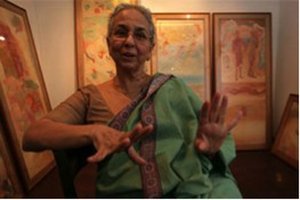
Nilima Sheikh
1945 - , India
Quick Facts
- Artistic Movement Or Style: Contemporary Art
- Artists Or Movements Influenced By This Artist:
- Nancy Spero
- May Stevens
- Ana Mendieta
- Artists Who Influenced This Artist:
- Kanwal Krishna
- Devyani Krishna
- K. G. Subramanyan
- Date Of Birth: November 18, 1945
- Full Name: Nilima Sheikh
- Nationality: Indian
- Notable Artworks: ['Another Chronicle of Loss, Sarhad 3, Testimony and Shadow']
- Place Of Birth: New Delhi, India