 Preview
 Send
Send Share
Share
 Details

 Download
 Similars
 X-Ray
X-Ray Diaporama
 Stats
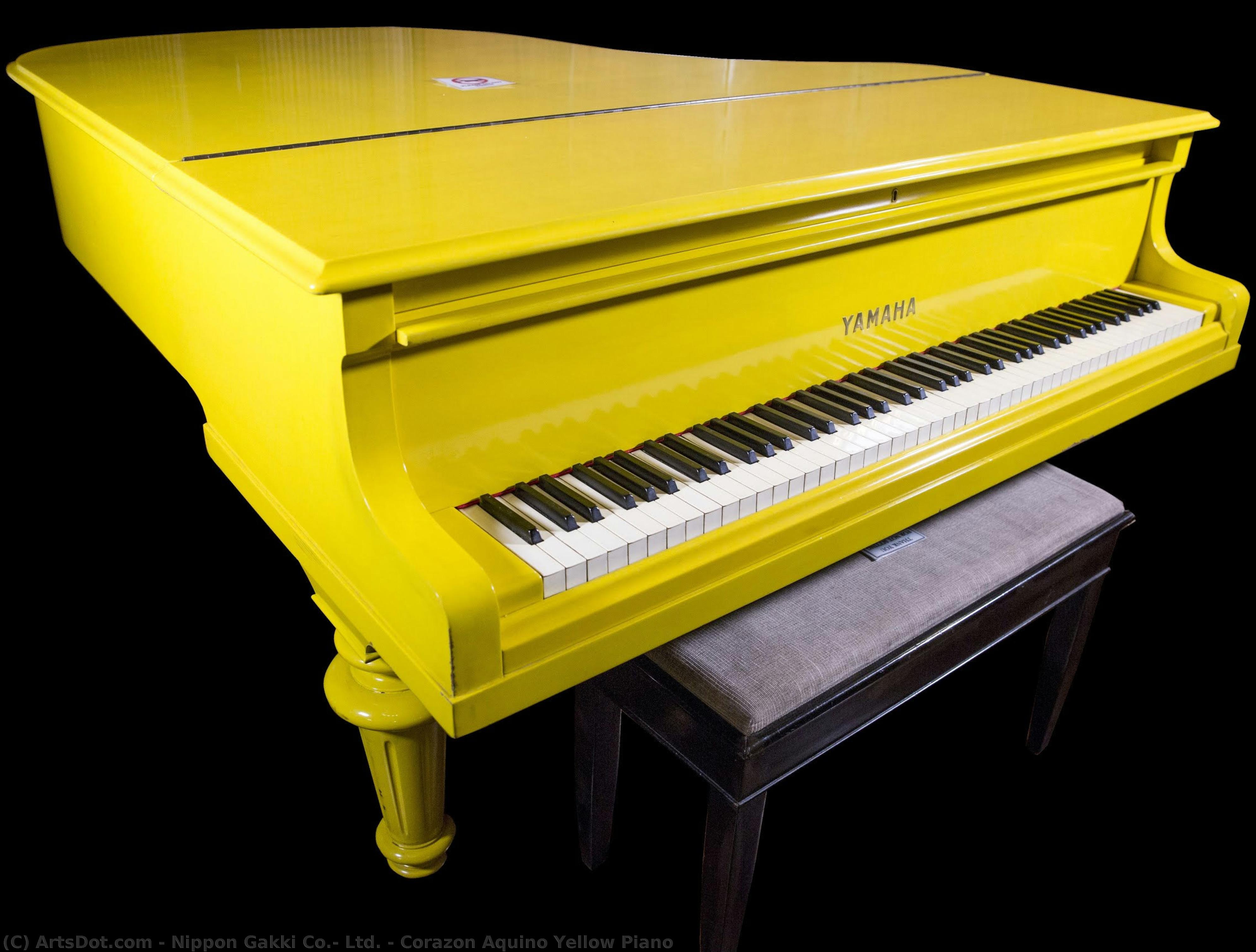
StatsCorazon Aquino Yellow Piano

 Read More
Giclée / Art Print
Museum-quality giclée or canvas print with fast production and flexible finish options. ( Buy Hand Made Painting Switch to Digital Image)




































Pick from our preset sizes that match the artwork's original proportions.

You may enter your own dimensions to fit a specific frame or space. If your selected size does not match the original image's proportions, we will either crop the artwork or extend the image with a mirrored or solid-fill edge. A digital mockup will be sent for your approval before production begins.
Please note that the on-screen preview does not reflect the actual cropping or extension. Only the mockup will accurately show the final composition.
While custom sizes are available, we recommend selecting a dimension from the predefined list to preserve the original proportions.
Worldwide Delivery () in 2 weeks instead of standard 4/5 weeks. (11 September)

Free Worldwide Express Shipping

High-Quality Linen Canvas

Full Shipping Insurance

Customs Tax Refund Guarantee

True Color Matching Guarantee

100-Day Return Policy (Defects Only)

100% Money-Back Guarantee

Bulk Discount Offer
 Glass option is only available in size under 110 CM

Corazon Aquino Yellow Piano
Giclée / Art Print
Reproduction Size
-


Total Price
$ 63
Related Artworks








Artist Biography
From Reeds to Resonance: The Legacy of Nippon Gakki
The story of Nippon Gakki Co., Ltd.—better known globally as Yamaha Corporation—is a remarkable testament to the power of innovation, adaptation, and an unwavering commitment to musical excellence. It’s a narrative that begins not with concert halls or gleaming instruments, but with the humble ambition of Torakusu Yamaha to repair reed organs in 1887. This initial foray into instrument maintenance quickly blossomed into manufacturing, driven by a keen understanding of mechanical principles and a desire to elevate the quality of musical sound available in Japan. Yamaha’s early success wasn't immediate; it was forged through meticulous craftsmanship and a dedication to overcoming technical challenges. The company initially focused on producing reed organs and harmoniums, instruments that were gaining popularity but often suffered from inconsistencies in build and tone. Torakusu Yamaha’s genius lay in his ability to standardize production while simultaneously improving the acoustic properties of these instruments, establishing a reputation for reliability and superior sound quality. This foundation would prove crucial as the company expanded its horizons beyond repair and into full-scale instrument creation.Expanding Horizons: From Organs to Pianos and Beyond
The turn of the 20th century saw Nippon Gakki embark on a period of ambitious diversification. Recognizing the growing demand for pianos, Yamaha began production in 1900, facing stiff competition from established European manufacturers. However, the company didn’t attempt to simply replicate existing designs; instead, it focused on incorporating its unique engineering expertise and adapting piano construction techniques to suit Japanese aesthetics and playing styles. This commitment to innovation led to the development of pianos with a distinctive tone—clear, resonant, and capable of expressing a wide range of musical nuances. The company’s dedication extended beyond acoustic instruments. In the post-World War II era, Yamaha boldly ventured into new territories, driven by both necessity and opportunity. The scarcity of materials prompted exploration of alternative manufacturing processes, leading to breakthroughs in motorcycle production—a surprising but ultimately successful diversification that provided vital financial stability during a period of reconstruction. This spirit of adaptability would become a defining characteristic of the company’s identity.A Symphony of Innovation: Technological Advancements
Yamaha's influence extends far beyond the realm of traditional instruments. The latter half of the 20th century witnessed an explosion of technological innovation, and Yamaha was at the forefront of many key developments in electronic music. The company pioneered the development of synthesizers, drum machines, and digital audio workstations (DAWs), tools that revolutionized music production and empowered a new generation of artists. The DX7 synthesizer, released in 1983, became an iconic instrument, its distinctive FM synthesis sound shaping the sonic landscape of pop music throughout the 1980s and beyond. This wasn’t merely about creating electronic alternatives to acoustic instruments; it was about expanding the possibilities of musical expression itself. Yamaha's commitment to research and development continued unabated, leading to advancements in audio technology, including surround sound systems, professional mixing consoles, and high-fidelity speakers.Global Resonance: A Cultural Ambassador
Today, Yamaha Corporation is a global powerhouse, its products found in concert halls, recording studios, schools, and homes around the world. The company’s impact extends beyond manufacturing; it actively supports music education through initiatives like the Yamaha Music Foundation, providing opportunities for aspiring musicians of all ages and backgrounds. Yamaha instruments are synonymous with quality, reliability, and innovation, trusted by professional musicians and cherished by amateur enthusiasts alike. The company's commitment to cultural exchange is also noteworthy, sponsoring numerous musical events and fostering collaborations between artists from diverse traditions. This dedication has cemented Yamaha’s position not just as a manufacturer of instruments, but as a true ambassador for music itself. From its humble beginnings repairing reed organs, Nippon Gakki Co., Ltd. has evolved into a global leader, shaping the sound of music and inspiring generations of musicians to explore their creative potential.Major Achievements & Historical Significance
- 1887: Founding of Nippon Gakki Co., Ltd. by Torakusu Yamaha, initially focused on reed organ repair.
- 1900: Commencement of piano manufacturing, establishing a distinct Japanese aesthetic in instrument design.
- Post-WWII: Diversification into motorcycle production to ensure financial stability and foster innovation.
- 1983: Release of the DX7 synthesizer, revolutionizing electronic music with FM synthesis technology.
- Ongoing: Continued leadership in audio technology, musical instrument manufacturing, and support for music education globally.