 Preview
 Send
Send Share
Share
 Details

 Download
 Similars
 X-Ray
X-Ray Diaporama
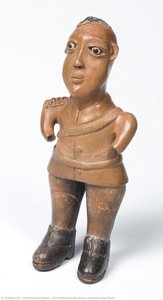
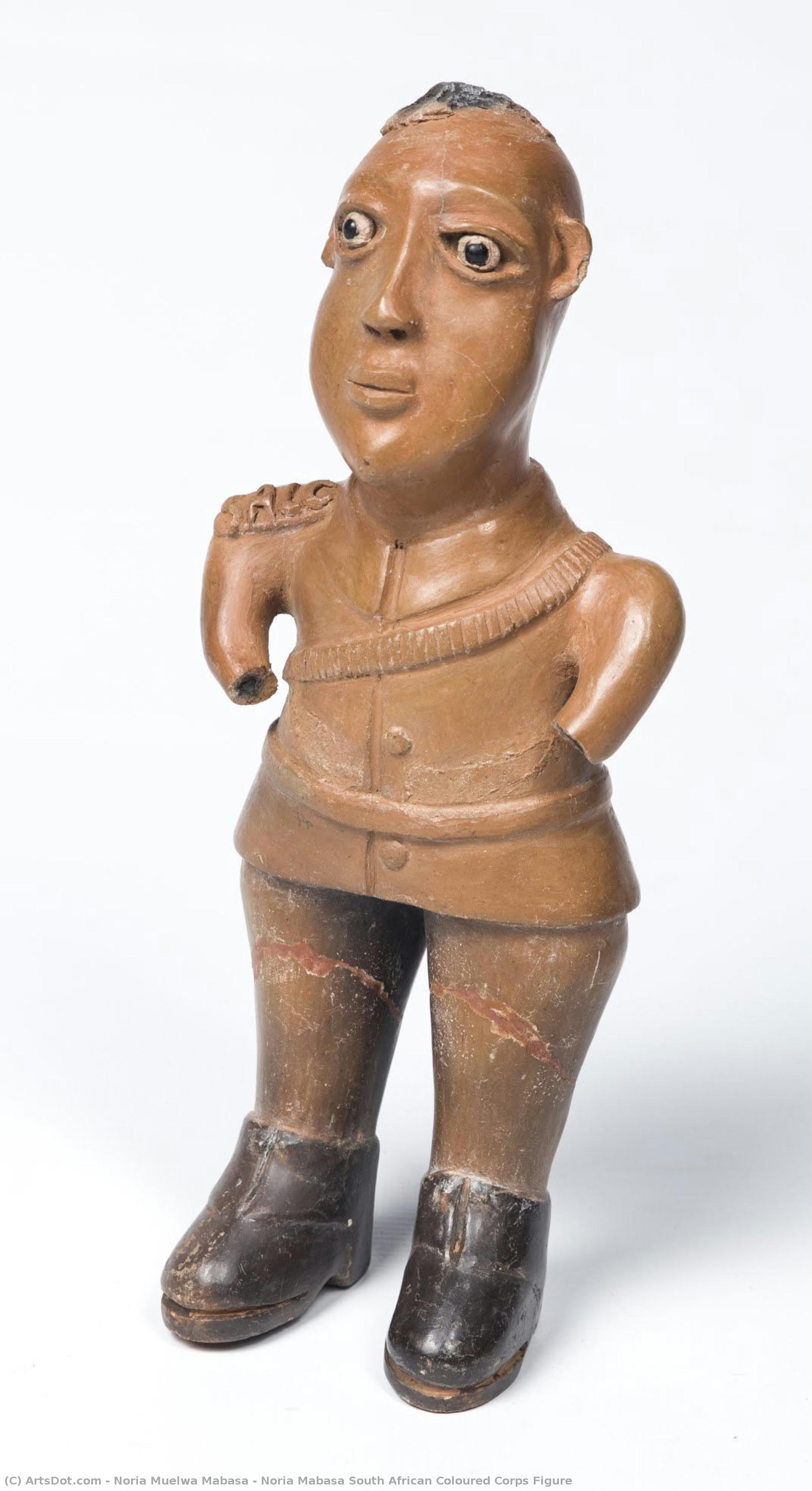
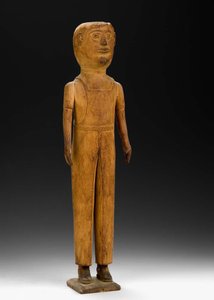
Noria Mabasa South African Coloured Corps Figure


 Read More
Hand Made Oil Reproduction
Hand-painted oil on canvas in your size and frame, made to order by our artists. ( Buy Print Buy Image)




































Pick from our preset sizes that match the artwork's original proportions.

You may enter your own dimensions to fit a specific frame or space. If your selected size does not match the original image's proportions, we will either crop the artwork or extend the painting with additional hand-painted elements. A digital mockup will be sent for your approval before production begins.
Please note that the on-screen preview does not reflect the actual cropping or extension. Only the mockup will accurately show the final composition.
While custom sizes are available, we recommend selecting a dimension from the predefined list to preserve the original proportions.
After order, ArtsDot.com team will email client for instructions and provide a mockup preview
Worldwide Delivery () in 3/4 weeks instead of standard 5 weeks. (31 August). No compromise on quality.

Free Worldwide Express Shipping

High-Quality Linen Canvas

Full Shipping Insurance

Customs Tax Refund Guarantee

True Color Matching Guarantee

60-Day Return Policy (Defects Only)

100% Money-Back Guarantee

Bulk Discount Offer
 Glass option is only available in size under 110 CM

Noria Mabasa South African Coloured Corps Figure
Reproduction Medium
Reproduction Size
-


Total Price
$ 263
Related Artworks



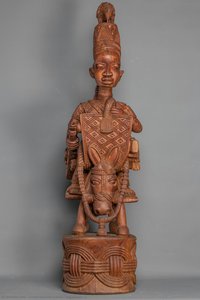
Artist Biography
A Life Rooted in the Earth: The Story of Noria Mabasa
Noria Muelwa Mabasa, born on May 10, 1938, in the small village of Shigalo, Limpopo Province, South Africa, is more than just an artist; she is a storyteller carved from wood and molded from clay. Her life’s journey, deeply intertwined with the traditions and spirituality of her Venda heritage, has blossomed into a remarkable career that has earned her international acclaim and cemented her position as one of South Africa's leading contemporary artists. Growing up in a rural setting, Mabasa received limited formal education—just one year of schooling before household responsibilities demanded her attention. This early connection to the land and its rhythms, however, proved far more formative than any classroom could have been. It was a grounding that would later infuse her art with an authenticity and power that resonates deeply with viewers across cultures. A pivotal moment arrived in 1965 when she separated from her husband after falling ill. Returning to her birthplace, she experienced vivid dreams guiding her towards artistic expression, specifically the manipulation of clay. These weren’t merely nocturnal visions; they were ancestral whispers, prompting a self-taught exploration into traditional crafts and the creation of small figures gifted to local children—the first seeds of a blossoming vocation.From Clay to Wood: A Spiritual Awakening
Mabasa's initial foray into art began with clay in 1974, making her the first Tsonga woman to work in this medium. Her early ceramic sculptures, painted with vibrant enamel hues, quickly gained recognition for their naturalistic forms and evocative depictions of everyday life. However, it was a chance encounter with Venda sculptor Nelson Makhuba in 1983 that propelled her into the realm of woodcarving. Makhuba encouraged Mabasa to explore this new material, recognizing her innate talent and potential. This transition wasn’t simply about changing mediums; it was a spiritual awakening. Wood, she found, offered a different kind of permanence—a resilience that mirrored the strength and endurance of the women who inspired her work. Her early wooden sculptures were directly influenced by clay figures and traditional *matano* figures used in domba initiation ceremonies, demonstrating a deep respect for ancestral practices and cultural heritage. The choice to work with wood also held practical advantages; as she herself noted, it “isn’t as fragile as clay,” allowing her to create larger, more ambitious pieces that could withstand the test of time.Themes of Culture, Feminism, and Mythology
Mabasa's art is profoundly thematic, deeply rooted in the metaphysical world and centered around the experiences of women. Her sculptures are not merely representations of figures; they are vessels of stories—narratives of Venda mythology, spirituality, and the challenges and triumphs of daily life. She masterfully blends figurative and functional elements, often creating pots that take on human forms or feature expressive faces, blurring the lines between art and utility. The female form is central to her work, embodying strength, resilience, and a connection to the earth. Her sculptures frequently address issues pertaining to women’s roles in society, challenging traditional norms and celebrating their power and agency. Beyond feminism, Mabasa's pieces are imbued with the rich symbolism of Venda culture. Recurring motifs—animals, ancestral spirits, and scenes from local folklore—speak to a deep understanding of her heritage and a desire to preserve it for future generations.Recognition and Legacy: An Order of the Baobab Honoree
Noria Mabasa’s artistic journey has been marked by numerous accolades and international exhibitions, solidifying her reputation as a leading contemporary artist. In 2002, she was honored with the Silver category of the Order of the Baobab—a prestigious South African national award recognizing exceptional contributions to society. This recognition not only celebrated her artistry but also acknowledged her role in preserving and promoting Venda culture. Her works have been showcased globally, captivating audiences with their intricate detail, emotional depth, and powerful symbolism. Pieces like *The Flood* (1994), a monumental sculpture carved from a fig tree trunk depicting the devastation of floods on local villages, stand as testaments to her technical skill and artistic vision. Another notable work, *The Drum of Thunder*, sold for 150,000 South African Rand in 2017, demonstrating the growing demand for her art within the international market. Today, Mabasa continues to create from her home gallery, inspiring countless artists with her dedication to her craft and unwavering commitment to her cultural roots. Her legacy extends beyond her sculptures; it is a story of resilience, spiritual awakening, and the power of art to connect us to our past, present, and future.A Continuing Voice: Mabasa’s Enduring Influence
Noria Mabasa's impact on the South African art scene—and beyond—is undeniable. She has not only elevated the profile of Venda art but also paved the way for other female artists in a traditionally male-dominated field. Her work serves as a powerful reminder of the importance of preserving cultural heritage and celebrating the strength and resilience of women. Her sculptures, often imbued with personal narratives and ancestral wisdom, offer viewers a glimpse into a world rich with mythology, spirituality, and profound human connection. Mabasa’s enduring influence lies in her ability to seamlessly blend tradition and innovation, creating art that is both deeply rooted in her cultural heritage and universally relevant. She remains a vital voice—a storyteller carved from wood and molded from clay—whose work continues to inspire and captivate audiences around the globe.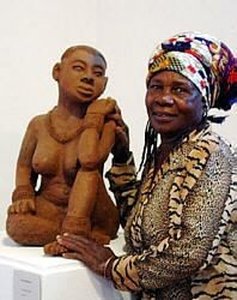
noria muelwa mabasa
1938 - , South Africa
Quick Facts
- Artistic Movement Or Style: Contemporary art
- Artists Who Influenced This Artist: ['Nelson Makhuba']
- Date Of Birth: May 10, 1938
- Full Name: Noria Muelwa Mabasa
- Nationality: South African
- Notable Artworks:
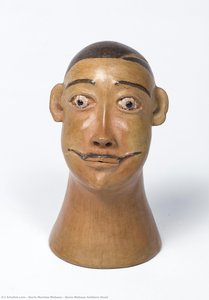
- Soldiers Head
- Coloured Corps Figure
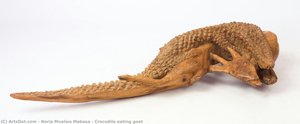
- Crocodile eating goat
- The Flood (1994)
- Drum of Thunder
- Place Of Birth: Hoepie, South Africa