

![[front View Of Stone Jaguar. Temple Of The Jaguars] — Octavio Medellín](/media/artworks/images-full/9c/3d/9c3d7cba37571b538663102471fddfff.jpg)
 Send
Send Share
Share
 Details

 Download
 Similars
 Diaporama
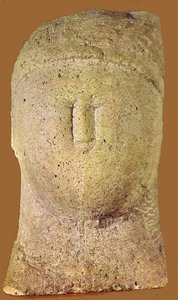
[Front View of Stone Jaguar. Temple of the Jaguars]
 Stone
Stone- Sculpture
- Contemporary Realism
 1938
1938 21.0 x 25.0 cm
 Southern Methodist University Libraries Digital Collections
 Read More
Purchase a high-resolution, enhanced digital image, far superior to the online preview.
Each file is meticulously prepared by our in-house specialists using advanced tools and expert manual retouching. We ensure every image has exceptional clarity, precise color accuracy, and fine detail.
The final file is delivered via email within 72 hours, optimized for immediate use in professional, editorial, and print environments. This is the same quality trusted by top-tier design studios, publishers, and galleries.
Digital Image
Download a high-resolution file for personal display, printing, and creative projects. ( Buy Print Buy Hand Made Painting)
Included in Every Digital Image Order
Expert Digital Delivery, Guaranteed
When you choose ArtsDot.com, you're not just getting an image - you're receiving a professionally enhanced digital artwork, crafted with precision and backed by a satisfaction guarantee. Here's everything that comes with your order, automatically:

Fast Email Delivery
Your high-resolution digital image file will be emailed to you within 72 hours of ordering - ready for immediate use.

AI-Enhanced Digital File
Your artwork is professionally optimized using advanced AI tools and manual editing, ensuring maximum detail, clarity, and color accuracy.

Free Lifetime Re-Delivery
Accidentally deleted or lost your file? No worries - we'll resend it to you anytime, free of charge.

No Import Fees - Ever
Enjoy your artwork instantly with zero customs, duties, or delivery fees - digital downloads are always tax-free.

Color Accuracy Guarantee
We ensure your digital image reflects the original colors as closely as possible using professional tools and color management.

60-Day Satisfaction Guarantee
If you're not satisfied with your digital image, we'll revise it or refund 100% within 60 days - no questions asked.

100% Money-Back Guarantee
Not satisfied? Get a full refund within 60 days of receiving your digital file - no questions asked.

Bulk Order Discounts
Buy 3 images, save 10% - Buy 5, save 15% - Buy 10+, save 20%. Great for creative projects, galleries, and agencies.
Octavio Medellín’s Vision of Maya Cosmology
Octavio Medellín (1907–1999) stands as a pivotal figure in Mexican American art history, particularly renowned for his monumental sculptures that embody the spirit of the Southwest and draw heavily from Mayan iconography. Born in Matehuala, San Luis Potosí, Medellín’s formative years coincided with the tumultuous era of the Mexican Revolution—a period that instilled within him an unwavering dedication to artistic expression rooted in social consciousness.
- Early Life & Influence: Medellín's upbringing amidst revolutionary upheaval profoundly shaped his worldview. Witnessing firsthand the violence and displacement of his time fueled a lifelong fascination with resilience and storytelling through art, mirroring the enduring narratives of indigenous cultures.
- Formal Training & Artistic Exploration: He pursued formal artistic training at the San Antonio Art Institute and later honed his skills at the Chicago Art Institute, immersing himself in diverse artistic traditions—from European Modernism to Mexican Folk Art. This multifaceted exposure cultivated Medellín’s distinctive style, characterized by a harmonious blend of abstraction and figurative representation.
- The Maya Revival: Medellín's artistic breakthrough arrived with his embrace of Mayan symbolism and cosmology. Inspired by the grandeur of ancient ruins like Tikal and Uxmal, he embarked on a quest to translate the profound spiritual concepts of Mesoamerican culture into sculptural form.
Medellín’s sculptures are distinguished by their meticulous craftsmanship—primarily utilizing limestone and sapodilla wood—reflecting a commitment to honoring both tradition and innovation. The artist meticulously studied Mayan glyphs and architectural designs, incorporating geometric patterns and stylized figures into his works. These elements serve as visual anchors for conveying narratives of creation, sacrifice, and cyclical time—themes central to Maya belief systems.
- Technique & Material Choice: Medellín’s mastery of lost-wax casting ensured the preservation of intricate details and textural surfaces. The selection of sapodilla wood—a locally sourced material—added warmth and resonance to his sculptures, aligning them with the natural environment of Texas.
- Symbolism & Narrative Content: Recurring motifs such as serpents, jaguars, and stylized human figures encapsulate Maya cosmological concepts—representing divine power, primal forces, and the interconnectedness of humanity and nature. Medellín’s sculptures invite contemplation on these timeless themes.
The legacy of Octavio Medellín extends beyond his artistic output; he championed the importance of cultural heritage and fostered a vibrant creative community in Dallas. His donation to Southern Methodist University solidified his contribution to art scholarship, ensuring that future generations would appreciate the profound beauty and intellectual depth of his sculptures—testaments to a singular vision of Maya artistry.
“I went to Mexico to see art. Actually, the art was the people. To see the people. To learn about the people.”Related Artworks

![[carved Stone Figure, Nunnery Quadrangle, Uxmal] — Octavio Medellín, Archaeological Documentation](/media/artworks/images-thumb/cd/72/cd72ede773e8f67633d88d21707b2444.jpg)
![[chac Mool, Temple Of The Warriors, Chichen Itza] — Octavio Medellín, Contemporary Realism](/media/artworks/images-thumb/51/2f/512fe9e07a7b8879b896b3a926d27f0e.jpg)
![[relief Carving, Mayan Ruins, Chichen Itza] — Octavio Medellín, Contemporary Realism](/media/artworks/images-thumb/13/6b/136b767db5d730e784923c743e4fd201.jpg)
![[carved Mayan Stone Figure, Mayan Ruins Chichen Itza] — Octavio Medellín, Documentary Photography](/media/artworks/images-thumb/3e/74/3e7411e624d6a7864e9a67148e78f93c.jpg)
![[relief Carving, Mayan Ruins, Chichen Itza] — Octavio Medellín](/media/artworks/images-thumb/89/ac/89ac0584d944fdc074322df64d86e554.jpg)
![[carved Mayan Stone Figure, Mayan Ruins Chichen Itza] — Octavio Medellín](/media/artworks/images-thumb/8a/96/8a96ed0ee06e97491c559b37052be747.jpg)
![[relief Carving, Mayan Ruins, Chichen Itza] — Octavio Medellín, Other](/media/artworks/images-thumb/35/67/3567d62fed8ff025fad1ec7099d10b4a.jpg)
![Xtol: Dance Of The Ancient Mayan People, [plate Viii] — Octavio Medellín, Mexican Modernism](/media/artworks/images-thumb/f7/70/f770dbc0dcc4255fefd37ee543983d49.jpg)
Artist Biography
A Life Forged in Revolution: The Journey of Octavio Medellín
Octavio Medellín’s story is one deeply intertwined with the tumultuous currents of 20th-century history and a profound dedication to artistic expression. Born in 1907 in Matehuala, San Luis Potosí, Mexico, his early life was irrevocably shaped by the Mexican Revolution. The violence and upheaval prompted his family’s relocation to San Antonio, Texas, in 1920, seeking refuge from a homeland consumed by conflict. This displacement wasn't merely a geographical shift; it became a foundational element of Medellín’s artistic identity—a constant negotiation between two cultures, a yearning for roots, and an exploration of universal human experiences. Even as a young boy, before fully embracing his artistic path, he demonstrated resilience and resourcefulness, taking on odd jobs to support his widowed mother after the tragic loss of his father during the revolution. This early exposure to hardship instilled in him a deep empathy and a commitment to representing the lives of ordinary people through his art.From Mayan Echoes to Abstract Forms: An Artistic Evolution
Medellín’s formal artistic education began at the San Antonio School of Art, followed by studies at the prestigious Chicago Art Institute and the Guggenheim Museum. However, it was a transformative journey back to Mexico in 1929 that truly ignited his creative spirit. Immersing himself in the country's rich artistic heritage, he absorbed the techniques and symbolism of native art and craft traditions. The ancient Mayan and Toltec ruins became a source of endless fascination, their intricate carvings and profound spiritual resonance deeply influencing his early work. This influence is strikingly evident in pieces like “Friend & Helper to Consuelo, When We Lived in Piste, Yucatan,” a black-and-white photograph capturing the majestic Temple of the Warriors at Chichen Itza, and "Carved Stone Figure, Nunnery Quadrangle, Uxmal," showcasing his keen eye for detail and archaeological documentation. These works weren’t simply representations; they were acts of reverence, attempts to understand and connect with a lost civilization. Yet, Medellín was not content to remain solely within the realm of historical imitation. Throughout the 1950s, 60s, and 70s, his artistic style underwent a significant evolution, moving away from explicitly Mexican-influenced figurative sculpture towards more abstract forms. This shift wasn’t an abandonment of his heritage but rather a distillation of its essence—a search for universal truths expressed through simplified shapes and powerful textures. His later linocut prints, such as the vibrant “Untitled” piece from 1975, demonstrate this transition beautifully, blending Aztec/Mayan motifs with bold colors and a distinctly modern sensibility. He believed that "sincere art must be elemental and close to the earth," striving for an artistic language that transcended cultural boundaries.A Legacy of Teaching and Community
Beyond his accomplishments as a sculptor, Octavio Medellín left an indelible mark as an educator. For over three decades, he nurtured generations of artists at institutions like the Dallas Museum of Fine Arts (now the DMA), North Texas State College (UNT), and most notably, through the founding of the Creative Arts Center of Dallas in 1966. He wasn’t merely imparting technical skills; he was fostering a philosophy—a belief in the power of art to connect people, to heal wounds, and to celebrate the human spirit. The Creative Arts Center became a haven for artists from all backgrounds, a place where experimentation and collaboration were encouraged. His influence extended far beyond the classroom, shaping the Texas art scene and inspiring countless individuals to pursue their creative passions.Recognition and Enduring Significance
Medellín’s contributions have been increasingly recognized in recent years. The 2022 retrospective, “Octavio Medellín: Spirit and Form” at the Dallas Museum of Art, was a landmark event—the artist's first major museum exhibition—bringing renewed attention to his remarkable body of work. The city of Dallas officially proclaimed January 26th as Octavio Medellín Day in 2022, a testament to his lasting impact on the community. His sculptures and prints can be found in prominent collections such as the Eiteljorg Museum of American Indians and Western Art, and continue to captivate audiences with their emotional depth and artistic power.A Voice Rooted in Place
Octavio Medellín’s art is more than just aesthetically pleasing; it's a poignant reflection of his life experiences—the trauma of revolution, the challenges of immigration, and the search for identity. He masterfully blended ancient traditions with modern sensibilities, creating a unique artistic voice that resonated deeply with his time and continues to speak to us today. His work serves as a powerful reminder of the importance of cultural heritage, the transformative power of art, and the enduring human need for connection and understanding. He was an artist who truly believed in the soul of materials, and through them, he gave voice to the spirit of his people.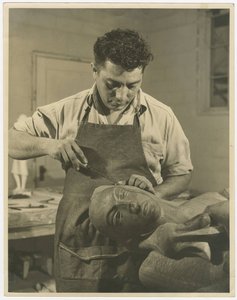
Octavio Medellín
1907 - 1999 , Mexico
Quick Facts
- Artistic Movement Or Style: Abstract sculpture
- Artists Or Movements Influenced By This Artist: ['Texas art scene']
- Artists Who Influenced This Artist:
- Frida Kahlo
- Carlos Mérida
- Date Of Birth: 1907
- Date Of Death: 1999
- Full Name: Octavio Medellín
- Nationality: Mexican American
- Notable Artworks:
- Friend & Helper
- Carved Stone Figure
- Untitled
- Place Of Birth: Matehuala, Mexico

