

![Xtol: Dance Of The Ancient Mayan People, [plate Viii] — Octavio Medellín](/media/artworks/images-full/d6/62/d6625c6f86169eacb24a19cb32b9b6eb.jpg)
 Preview
 Send
Send Share
Share
 Details

 Download
 Similars
 X-Ray
X-Ray Diaporama
Xtol: Dance of the Ancient Mayan People, [Plate VIII]
 Linocut
- Mexican Modernism
 1947
1947- Modern
 33.0 x 26.0 cm
 Southern Methodist University Libraries Digital Collections
 Read More
Hand Made Oil Reproduction
Hand-painted oil on canvas in your size and frame, made to order by our artists. ( Buy Print Buy Image)




P118B $10

P118H $10

P118W $10

P438Z $10

P508JH $12

P508YH $12

P805H $10

P805Z $10

P919BZ $10

P919G $10

P919XJ $10

P959ZH $10

P968JZ $12

W106C $8

W218G $10

W218JH $8

W218Y $10

W307PJ $10

W316G $10

W316PJ $8

W316Y $10

W398PJ $8

W4111J $10

W500HY $15

W500JH $15

W692G $12

W849H $8

W940BG $15

W953PJ $8




Pick from our preset sizes that match the artwork's original proportions.

You may enter your own dimensions to fit a specific frame or space. If your selected size does not match the original image's proportions, we will either crop the artwork or extend the painting with additional hand-painted elements. A digital mockup will be sent for your approval before production begins.
Please note that the on-screen preview does not reflect the actual cropping or extension. Only the mockup will accurately show the final composition.
While custom sizes are available, we recommend selecting a dimension from the predefined list to preserve the original proportions.
After order, ArtsDot.com team will email client for instructions and provide a mockup preview
Worldwide Delivery () in 3/4 weeks instead of standard 5 weeks. (24 August). No compromise on quality.

Free Worldwide Express Shipping

High-Quality Linen Canvas

Full Shipping Insurance

Customs Tax Refund Guarantee

True Color Matching Guarantee

60-Day Return Policy (Defects Only)

100% Money-Back Guarantee

Bulk Discount Offer
 Glass option is only available in size under 110 CM

Xtol: Dance of the Ancient Mayan People, [Plate VIII]
Reproduction Medium
Reproduction Size
-


Total Price
$ 263
Artwork Description
A Rhythmic Echo from the Past
In the evocative linocut Xtol: Dance of the Ancient Mayan People, [Plate VIII], created in 1947, the viewer is transported to a primordial era where movement and ritual intertwine. The artwork captures a moment of profound cultural expression, depicting a group of ancient Mayan figures engaged in a ceremonial dance. Through the deliberate, rhythmic application of the linocut technique, Octavio Medellín breathes life into a scene that feels both deeply historical and vibrantly present. Each figure, rendered with striking silhouettes, contributes to a larger tapestry of motion, their poses suggesting a sacred choreography that honors the gods and the earth itself. The presence of spears among the dancers adds a layer of solemnity and protection to the festivities, hinting at a society where art, spirituality, and survival were inextricably linked.
The mastery of the linocut medium is central to the emotional resonance of this piece. By carving into the surface with precision, Medellín utilizes the stark contrast between light and shadow to create depth and drama. The technique allows for bold, sweeping lines that mimic the fluid motions of the dancers, while the intricate details of their traditional attire provide a sense of texture and cultural richness. This method of printmaking lends the work an organic, earthy quality that perfectly complements the subject matter. For the collector or interior designer, this piece offers a powerful visual anchor; its monochromatic intensity and graphic strength make it a sophisticated addition to any space, providing a window into the soul of Mesoamerican heritage.
The Legacy of Octavio Medellín
To understand the depth of Xtol, one must consider the life of its creator, Octavio Medellín. Born in 1907 amidst the turbulent landscape of the Mexican Revolution, Medellín’s identity was forged in the crucible of displacement and cultural duality. His journey from the heart of Mexico to San Antonio, Texas, instilled in him a lifelong fascination with ancestral roots and the universal language of human struggle and triumph. This specific work, part of his exploration into Mayan themes, reflects a profound reverence for the indigenous spirit that persists through generations.
The symbolism within the dance transcends mere historical reenactment; it serves as an allegory for resilience and the continuity of tradition. The dancers do not merely move; they reclaim a lost world through their ritualistic gestures. For those seeking to adorn their homes with art that tells a story, this reproduction offers more than just aesthetic beauty. It provides a connection to the enduring strength of human culture, making it an inspiring choice for anyone looking to infuse their environment with historical depth, emotional gravity, and the timeless elegance of Mexican-American artistic mastery.
Related Artworks
![Xtol: Dance Of The Ancient Mayan People, [front And Back Cover] — Octavio Medellín, Mexican Muralism](/media/artworks/images-thumb/3b/7f/3b7f31eb30c8867b3e82b4bcf6f17b6e.jpg)
![Xtol: Dance Of The Ancient Mayan People, [plate Vii] — Octavio Medellín, Ethnographic Illustration](/media/artworks/images-thumb/fb/04/fb0417e7a415d960a39d62d4cacf98f9.jpg)
![[relief Carving, Mayan Ruins, Chichen Itza] — Octavio Medellín, Contemporary Realism](/media/artworks/images-thumb/13/6b/136b767db5d730e784923c743e4fd201.jpg)
![[carved Mayan Stone Figure, Mayan Ruins Chichen Itza] — Octavio Medellín, Documentary Photography](/media/artworks/images-thumb/3e/74/3e7411e624d6a7864e9a67148e78f93c.jpg)
Artist Biography
A Life Forged in Revolution: The Journey of Octavio Medellín
Octavio Medellín’s story is one deeply intertwined with the tumultuous currents of 20th-century history and a profound dedication to artistic expression. Born in 1907 in Matehuala, San Luis Potosí, Mexico, his early life was irrevocably shaped by the Mexican Revolution. The violence and upheaval prompted his family’s relocation to San Antonio, Texas, in 1920, seeking refuge from a homeland consumed by conflict. This displacement wasn't merely a geographical shift; it became a foundational element of Medellín’s artistic identity—a constant negotiation between two cultures, a yearning for roots, and an exploration of universal human experiences. Even as a young boy, before fully embracing his artistic path, he demonstrated resilience and resourcefulness, taking on odd jobs to support his widowed mother after the tragic loss of his father during the revolution. This early exposure to hardship instilled in him a deep empathy and a commitment to representing the lives of ordinary people through his art.From Mayan Echoes to Abstract Forms: An Artistic Evolution
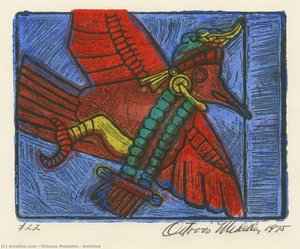
Medellín’s formal artistic education began at the San Antonio School of Art, followed by studies at the prestigious Chicago Art Institute and the Guggenheim Museum. However, it was a transformative journey back to Mexico in 1929 that truly ignited his creative spirit. Immersing himself in the country's rich artistic heritage, he absorbed the techniques and symbolism of native art and craft traditions. The ancient Mayan and Toltec ruins became a source of endless fascination, their intricate carvings and profound spiritual resonance deeply influencing his early work. This influence is strikingly evident in pieces like “Friend & Helper to Consuelo, When We Lived in Piste, Yucatan,” a black-and-white photograph capturing the majestic Temple of the Warriors at Chichen Itza, and "Carved Stone Figure, Nunnery Quadrangle, Uxmal," showcasing his keen eye for detail and archaeological documentation. These works weren’t simply representations; they were acts of reverence, attempts to understand and connect with a lost civilization. Yet, Medellín was not content to remain solely within the realm of historical imitation. Throughout the 1950s, 60s, and 70s, his artistic style underwent a significant evolution, moving away from explicitly Mexican-influenced figurative sculpture towards more abstract forms. This shift wasn’t an abandonment of his heritage but rather a distillation of its essence—a search for universal truths expressed through simplified shapes and powerful textures. His later linocut prints, such as the vibrant “Untitled” piece from 1975, demonstrate this transition beautifully, blending Aztec/Mayan motifs with bold colors and a distinctly modern sensibility. He believed that "sincere art must be elemental and close to the earth," striving for an artistic language that transcended cultural boundaries.A Legacy of Teaching and Community
Beyond his accomplishments as a sculptor, Octavio Medellín left an indelible mark as an educator. For over three decades, he nurtured generations of artists at institutions like the Dallas Museum of Fine Arts (now the DMA), North Texas State College (UNT), and most notably, through the founding of the Creative Arts Center of Dallas in 1966. He wasn’t merely imparting technical skills; he was fostering a philosophy—a belief in the power of art to connect people, to heal wounds, and to celebrate the human spirit. The Creative Arts Center became a haven for artists from all backgrounds, a place where experimentation and collaboration were encouraged. His influence extended far beyond the classroom, shaping the Texas art scene and inspiring countless individuals to pursue their creative passions.Recognition and Enduring Significance
Medellín’s contributions have been increasingly recognized in recent years. The 2022 retrospective, “Octavio Medellín: Spirit and Form” at the Dallas Museum of Art, was a landmark event—the artist's first major museum exhibition—bringing renewed attention to his remarkable body of work. The city of Dallas officially proclaimed January 26th as Octavio Medellín Day in 2022, a testament to his lasting impact on the community. His sculptures and prints can be found in prominent collections such as the Eiteljorg Museum of American Indians and Western Art, and continue to captivate audiences with their emotional depth and artistic power.A Voice Rooted in Place
Octavio Medellín’s art is more than just aesthetically pleasing; it's a poignant reflection of his life experiences—the trauma of revolution, the challenges of immigration, and the search for identity. He masterfully blended ancient traditions with modern sensibilities, creating a unique artistic voice that resonated deeply with his time and continues to speak to us today. His work serves as a powerful reminder of the importance of cultural heritage, the transformative power of art, and the enduring human need for connection and understanding. He was an artist who truly believed in the soul of materials, and through them, he gave voice to the spirit of his people.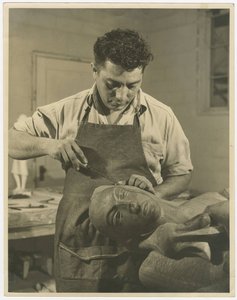
Octavio Medellín
1907 - 1999 , Mexico
Quick Facts
- Artistic Movement Or Style: Abstract sculpture
- Artists Or Movements Influenced By This Artist: ['Texas art scene']
- Artists Who Influenced This Artist:
- Frida Kahlo
- Carlos Mérida
- Date Of Birth: 1907
- Date Of Death: 1999
- Full Name: Octavio Medellín
- Nationality: Mexican American
- Notable Artworks:
- Friend & Helper
- Carved Stone Figure
- Untitled
- Place Of Birth: Matehuala, Mexico
Related Articles

Giclée Prints: Archival Quality & Aesthetic Nuances for the Discerning Collector
Explore the world of giclée prints with ArtsDot. Learn about archival quality, aesthetic nuances & investment potential. Expert guidance for discerning art collectors seeking museum-quality reproductions and lasting value.

The Enduring Legacy of Fine Art Prints: Technique, History & Aesthetic Impact
Explore the rich history & techniques of fine art prints. Discover investment potential, assess authenticity, and learn how to preserve your collection with expert guidance. Trusted insights for discerning collectors.

Hokusai's Masterpieces: 25 Iconic Prints & Paintings for Art Lovers | ArtsDot
Journey through Katsushika Hokusai’s 25 most iconic artworks, including *The Great Wave*. Explore the ukiyo-e master's history, style & timeless Japanese woodblock prints. Find museum-quality reproductions for your home at ArtsDot.com.

Echoes of Time: Exploring the Enduring Appeal & Historical Context of Vintage Art Prints
Explore the captivating world of vintage art prints! Discover their history, collecting tips & enduring appeal. Expert insights on chromolithography and building a legacy collection with ArtsDot.
The Enduring Legacy of Woodblock Printmaking: Technique, History & Artistic Expression
Explore the rich history of woodblock printmaking – from ancient techniques to Ukiyo-e masterpieces. Discover expert insights on collecting, preserving & appreciating this enduring art form.
![[Carved Stone Figure, Nunnery Quadrangle, Uxmal]](/media/artworks/images-thumb/cd/72/cd72ede773e8f67633d88d21707b2444.jpg)
![[Chac Mool, Temple of the Warriors, Chichen Itza]](/media/artworks/images-thumb/51/2f/512fe9e07a7b8879b896b3a926d27f0e.jpg)
![[Relief Carving, Mayan Ruins, Chichen Itza]](/media/artworks/images-thumb/35/67/3567d62fed8ff025fad1ec7099d10b4a.jpg)
![[Feathered Serpent and Human Figure Relief, Temple of the Warriors, Chichen Itza]](/media/artworks/images-thumb/92/58/92587b847ea0fecdbbde0aa8e3425bbc.jpg)
![[Carved Mayan Stone Figure, Mayan Ruins Chichen Itza]](/media/artworks/images-thumb/e1/f9/e1f9618e9631f2e8c2786064d7aa9ffa.jpg)
![[Relief Carvings, Mayan Ruins, Chichen Itza]](/media/artworks/images-thumb/93/82/938239a873a8b6b93e9cd29c9aa35d84.jpg)
![[Front View of Stone Jaguar. Temple of the Jaguars]](/media/artworks/images-thumb/fb/24/fb24cc9cbf62fec18531cf7c09f13227.jpg)
![Xtol: Dance of the Ancient Mayan People, [Plate VIII]](/media/artworks/images-thumb/f7/70/f770dbc0dcc4255fefd37ee543983d49.jpg)

